About the Author
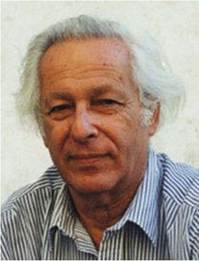
Samir Amin (Egypt/France), was born in Cairo as son of an Egyptian father and a French mother (both medical doctors).
He spent his childhood and youth in Port Said, where he attended a French High School and obtained a Baccalaureat (1947). He studied in Paris (1947-1957) with degrees in political science (1952), statistics (1956) and economics (1957). His PhD thesis (1957) was on: The origins of underdevelopment— capitalist accumulation on a world scale but retitled The structural effects of the international integration of precapitalist economies. A theoretical study of the mechanism which creates so-called underdeveloped economies. He worked in Cairo (1957-1960) for the government’s “Institution for Economic Management”. He was an adviser to the Ministry of Planning in Bamako (Mali) (1960-1963). In 1963 received a fellowship at the Institut Africain de Developpement Economique et de Planification (IDEP), where he worked until 1970 besides being a professor at the university of Poitiers, Dakar and Paris (of Paris VIII, Vincennes). In 1970 he became director of the IDEP, which he managed until 1980. In 1980 Amin left the IDEP and became a director of the Third World Forum in Dakar.Samir Amin wrote more than 30 books: Les effets structurels de ^integration internationale des economies precapitalistes. Une etude theorique du mecanisme qui a engendre les eonomies dites sous-developpees (1957); Trois experiences africaines de developpement: le Mali, la Guinee et le Ghana (1965); L'economie du Maghreb, 2 vols. (1966); Le developpement du capitalisme en Cote d'Ivoire (1967); Le monde des affaires senegalais (1969); The Class struggle in Africa (1969); Le Maghreb moderne (The Magrheb in the Modern World) (1970); 1970, L'accumulation a l'echelle mondiale (mdoAccumulation on a world scale) (1970); with C.
Coquery-Vidrovitch, Histoire economique du Congo 1880-1968 (1970); L'Afrique de l'Ouest bloquee (1971); Le developpement inegal (Unequal development) (1973); L'echange inegal et la loi de la valeur (1973); Neocolonialism in West Africa (1973); ‘Le developpement inegal. Essai sur les formations sociales du capitalisme peripherique' Paris: Editions de Minuit (1973); L'echange inegal et la loi de la valeur (1973); with K. Vergopoulos): La question paysanne et le capitalism (1974); with A. Faire, M. Hussein and G. Massiah): La crise de Pimperialisme (1975); ‘Unequal Development: An Essay on the Social Formations of Peripheral Capitalism' New York: Monthly Review Press (1976); L'imperialisme et le developpement inegal (Imperialism and unequal development) (1976); La nation arabe (The Arab Nation) (1976); La loi de la valeur et le materialisme historique (The law of value and historical materialism) (1977); Classe et nation dans l'histoire et la crise contemporaine (Class and nation, historically and in the current crisis) (1979); L'economie arabe contemporaine (The Arab economy today) (1980); L'avenir du Maoisme (The Future of Maoism) (1981); Irak et Syrie 1960-1980 (1982); with G. Arrighi, A. G. Frank and I. Wallerstein): La crise, quelle crise? (Crisis, what crisis?) (1982); Transforming the world-economy? Nine critical essays on the new international economic order (1984); La deconnexion (Delinking: towards a polycentric world) (1985); 1988, Imperialisme et sous-developpement en Afrique (expanded edition of 1976) (1988); L'eurocentrisme (Eurocentrism) (1988); with F. Yachir): La Mediterranee dans le systeme mondial (1988); La faillite du developpement en Afrique et dans le tiers monde (1989); Transforming the revolution: social movements and the world system (1990); Itineraire intellectual; regards sur le demi-siecle 1945-90 (Re-reading the post-war period: an Intellectual Itinerary) (1990); L'Empire du chaos (Empire of chaos) (1991); Les enjeux strategiques en Mediterranee (1991); with G. Arrighi, A. G. Frank et I. Wallerstein): Le grand tumult (1991); ‘Empire of Chaos' New York: Monthly Review Press (1992); L'Ethnie a l'assaut des nations (1994); La gestion capitaliste de la crise (1995); Les defis de la mondialisation (1996); Critique de l'air du temps (1997); Spectres of capitalism: a critique of current intellectual fashions (1999); L'hegemonisme des Etats-Unis et l'effacement du projet europeen (2000); Mondialisation, comprehendre pour agir (2002); Obsolescent Capitalism (2003); The Liberal Virus: Permanent War and the Americanization of the World (2004); with Ali El Kenz, Europe and the Arab world; patterns and prospects for the new relationship (2005); 2006, Beyond US Hegemony: Assessing the Prospects for a Multipolar World (2006); with James Membrez, The World We Wish to See: Revolutionary Objectives in the Twenty-First Century (2008); ‘Aid for Development' in ‘Aid to Africa: Redeemer or Coloniser? (2009); ‘Eurocentrism—Modernity, Religion and Democracy: A Critique of Eurocentrism and Culturalism' (2010); ‘Ending the Crisis of Capitalism or Ending Capitalism?' (2010), ‘Global History—a Viewfrom the South’ (2010); ‘Maldevelopment—Anatomy of a Global Failure’ (2011).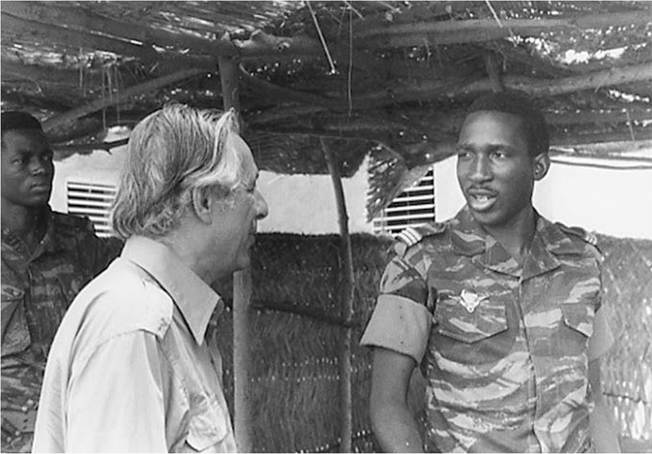
Samir Amin with Thomas Sarkaya in 1983. Source Personal photo collection of the author
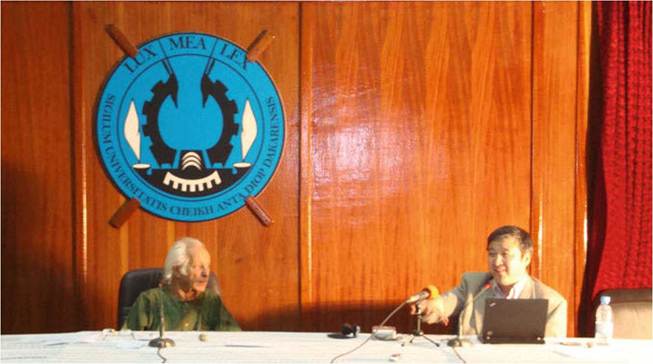
Samir Amin with Wang Hui at the World Social Forum, Dakar, February 2011. Source Personal photo collection of the author