Sedentism, the first villages, and Neolithic material culture
Traditional hallmarks of the Neolithic are sedentary village life and a rich material culture. And yet, what ‘sedentism' really means is much debated. Indeed, an age-old question is a variant on the adage ‘What came first - the chicken or the egg?', here expressed as ‘What came first - sedentism or domestication?' In the Near East, this issue appears resolved by the presence of at least semi-sedentary Natufian communities that did not have domesticated resources.
It is important to note that there is an enormous range of site types throughout both the Natufian and the Neolithic that reflect a sliding scale of sedentism. These range from artefact scatters, ritual centres, villages, and ‘mega-sites' (see Chapter 9).Some early Natufian groups lived in small villages or hamlets. Although there are a few exceptions, most structures are interpreted as domestic dwellings. Less elaborate and more mobile adaptations over a larger geographic area occurred in the late Natufian. The exception to this appears to be large middle Euphrates Syrian villages such as Abu Hureyra or Mureybat during the equivalent of both early and late Natufian. Natufian architecture is typically characterized by semi-subterranean structures, usually circular or semicircular, and most are usually 3 to 6 m in diameter. At Abu Hureyra, however, the first structures are complex, multi-chambered pit-dwellings, followed by above-ground timber-and-reed huts. While most Natufian sites with architecture contain only a few structures, their solid construction and the fact that structures are often grouped together in small clusters suggest that they qualify as ‘villages' or as small hamlets.[418]
Sedentism is better established during the PPNA, and some sites are much larger than their Natufian predecessors. Large villages likely housed hundreds of people, but smaller hamlets and sites of limited activity also occurred.
Domestic architecture is varied, although the basic form of dwellings continues to be circular or oval, but not semi-subterranean. In the north, some PPNA structures are rectangular or subrectangular. Some structures are quite large, up to 5-8 m in diameter. At Mureybat, one structure has traces of a painted fresco decoration, ranking as among the earliest uses of art that is integral to architecture. PPNA Jericho stands out from many other sites in size and duration, estimated at some 10 acres and including over twenty-five building levels.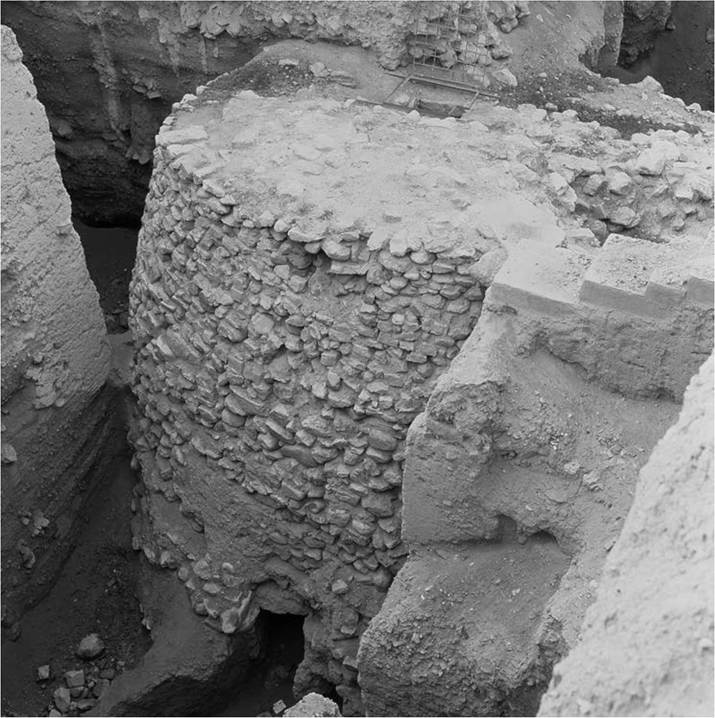
Figure 8.ι View of the Round Tower at Jericho, 8000 bce.
There are also examples of non-domestic PPNA architecture. For example, at Tell Abr 3 and Jerf el Ahmar in Syria and Wadi Feinan 16 in Jordan, a few structures may have been communal buildings.[419] Wadi Feinan 16 particularly stands out due to its overall small size and remote location. Even more dramatic non-domestic architecture occurs at two PPNA sites. The large stone tower (Figure 8.1) and walls at Jericho have long stood out from contemporary sites. Although Kenyon believed that the tower and associated walls were built for defence, Bar-Yosef argued that the wall system was linked to the diversion of flash floods and that the tower might have been a shrine.[420] Ronen and Adler believe that the entire wall and tower complex were magical, perhaps used to protect the settlement from dangerous ‘evil spirits'.[421]
By far the most impressive and unique site, however, is Gobekli Tepe in Turkey. This is a huge locality, approximately 22 acres, with a depth up to 15 m, that was occupied during both the PPNA and PPNB. There is limited indication of domestic daily life at the site, and it has been interpreted as both a ritual site and a regional meeting place for the exchange of goods and ideas.
Its excavators believe that it was built not by true Neolithic people but rather by a predominantly hunter-gatherer society.[422] This conclusion is supported by the lack of domesticated plants or animals. This, however, could be too strong an interpretation. The lack of domesticates does not necessarily mean that Gobekli Tepe's occupants were hunters and gatherers, especially during its later PPNB occupation. Rather it could simply imply that whatever function the site had did not require domesticates during its use. Additionally, Banning has questioned the ritual significance of Gobekli Tepe.[423] Regardless of interpretation, there is no denying Gobekli Tepe's impressive architecture. Several large (10-30 m in diameter) concentric circular or oval stone enclosures containing carved upright stelae or pillars form the site. The elaborate motifs (Figure 8.2) primarily include animals, often life-size, as well as human arms and landscape portrayals. The enclosures were completely buried by presumably intentional backfilling.Distinctive architecture is a PPNB hallmark. Many sites have spectacularly preserved architecture, often standing to three or more metres. The past two decades have witnessed several detailed analyses of this architecture as a way of understanding social organization, household composition, economic patterns, site and regional patterning, and the relationship between domestic and non-domestic architecture.[424]
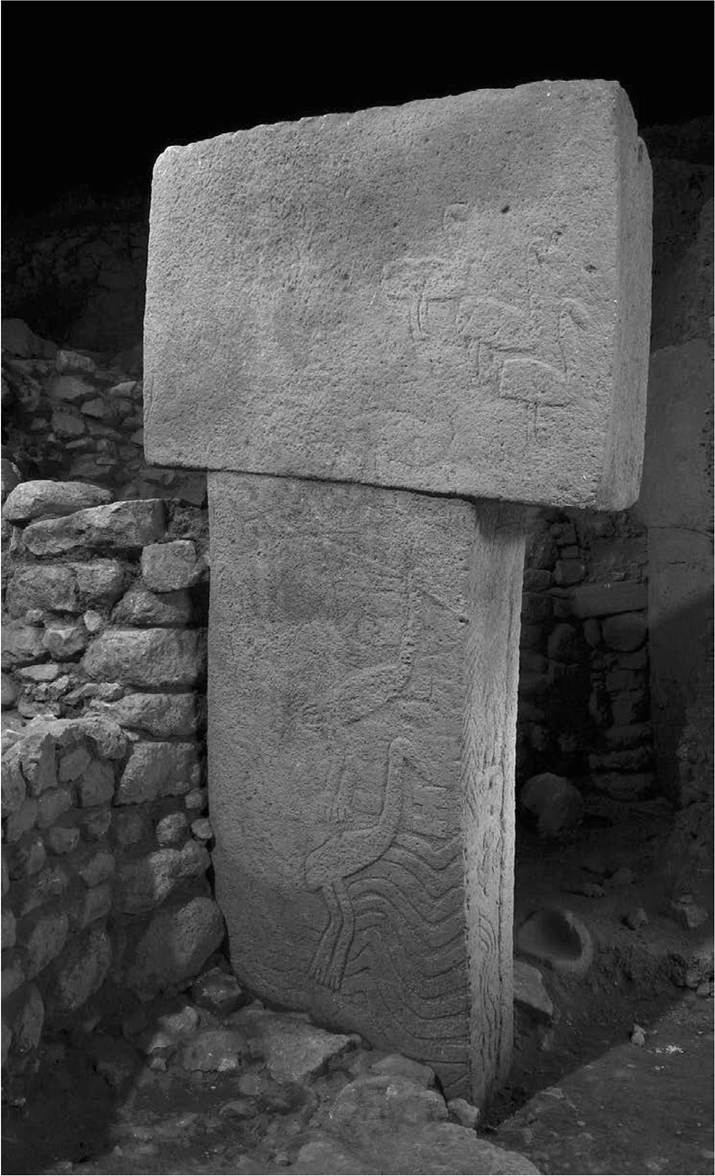
Figure 8.2 One of the carved columns from Gobekli Tepe.
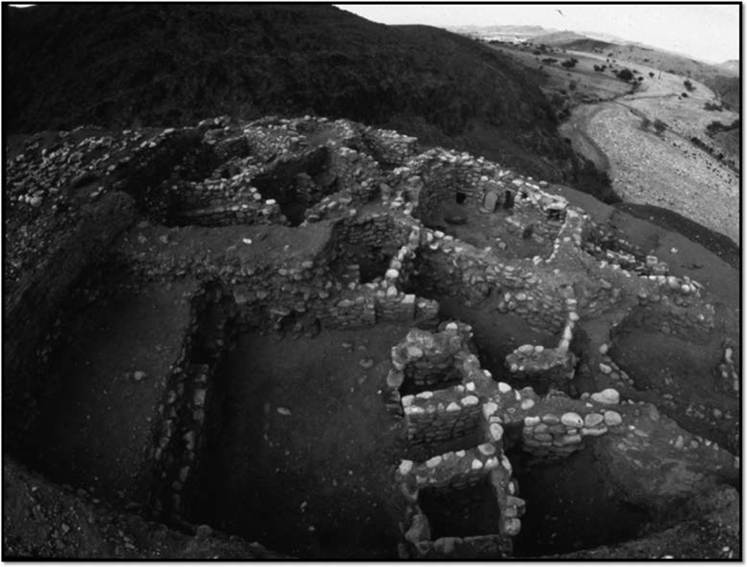
Figure 8.3 PPNB architecture at Ghwair I, southern Jordan.
The PPNB witnessed the development of architectural complexity, and villages often consisted of multi-room rectangular structures. The major innovation from the PPNA to the PPNB is the change from circular or oval structures to well-formed rectangular rooms (Figure 8.3), resulting in a pattern still observed today at small Near Eastern villages (Figure 8.4).
Despite this, however, some PPNB settlements, especially in the arid regions, consisted of circular architecture. While there is overall architectural continuity throughout the PPNB, there is regional and chronological variation, and changes occurred during the late PPNB, especially at the megasites, where the number of rooms in structures often increased, but their size decreased. Many PPNB structures are elaborate, and some of the two-storey units often contain internal stairways. Generally, structures are linked into roomblocks, frequently forming an almost ‘condominium' morphology. The floors of many structures were made of high quality plaster, often painted. Burials often occurred beneath these floors. A notable activity during much of the PPNB was extensive ‘remodelling' of individual structures.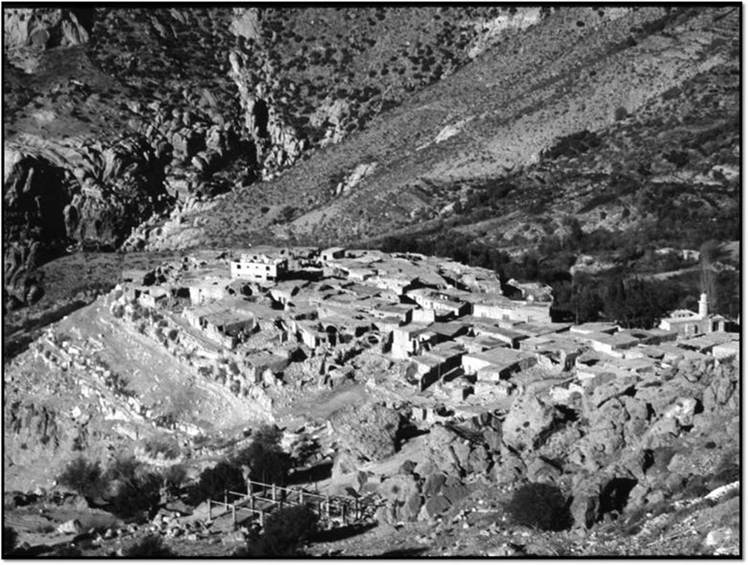
Figure 8.4 The modern village of Dana, near Ghwair I in southern Jordan, as an analogy for a PPNB village.
In addition to domestic architecture, there is considerable evidence for non-domestic structures with communal or ritual significance. There also are examples of elaborate non-residential sites. Non-residential architecture includes distinctive buildings both within and outside of settlement boundaries. These often differed from residential structures in that they were larger and had different artefact compositions, suggesting use for either ritual or community-wide purposes. Sometimes, non-domestic buildings were incorporated into residential units.
Specialized PPNB sites that lack residential architecture include Kfar Ha- Horesh in Israel, a site apparently constructed primarily for mortuary purposes.[425] As with the PPNA, Gobekli Tepe is perhaps the most dramatic example of a non-residential site. Some non-domestic sites that likely do not relate to symbolic behaviour occur in the arid zones. These are desert-kites, linear stone features usually interpreted as elaborate game drives used in gazelle hunting.[426]
Architectural data for the PPNC is more limited than for the PPNB, with most data coming from 'Ain Ghazal.
At that site, there was considerable re-use of late PPNB domestic structures, with two primary house plans. One consists of small rectangular structures, while the other includes semisubterranean pier and cell houses. A major change is in the use of plaster flooring, which deteriorated in quality, perhaps due to ecological reasons. Non-residential architecture at 'Ain Ghazal includes a massive but low wall that probably separated courtyard areas and a walled street.[427]Kenyon's initial characterization of the PN as retrogressive has influenced generations of scholars. She interpreted circular structures in the PN levels at Jericho as either dwellings or quarries for mud-brick material. This contributed to the image of PN peoples as partially nomadic and no longer constructing substantial architecture. We now know that this is an incorrect perception. Indeed, it was during the PN that some of the largest Neolithic sites in the Near East were constructed, perhaps the most famous of which is Qatalhoyuk in Turkey, although substantial villages were also present in the Levant.
PN architecture generally is characterized by single- or multiple-roomed rectangular buildings, although round structures also occur, as at Jericho. Gypsum or lime plaster is often used for flooring, but not as frequently as during the PPNB. Most structures range from 10 to 30 m2, and some multiroom buildings were two-storey.[428] There is considerable geographic variation in architectural and village layouts. Perhaps most distinctive is the ‘agglutinative plan' layout of large settlements in central Turkey, which appear to represent original Anatolian creations. These sites were large agglomerations that were very tightly packed together. At Qatalhoyuk, approximately every other room was some sort of domestic sanctuary containing frescoes and sculpted figures, as well as burials. Often, the wall art depicts headless human corpses.
The inclusion of sanctuaries within domestic structures further blurs the distinction between public and private architecture.In the southern Levant, many sites reinforced Kenyon's original characterization of the ephemeral nature of the PN. More recent excavations, however, have shown considerable architectural variability that contradicts Kenyon's original characterizations. For example, renewed excavations at Shaar Hagolan in Israel have documented extensive and elaborate rectangular architecture, including a new pattern - the courtyard house built along streets and alleys - as well as large structures interpreted as communal buildings.[429]
At 'Ain Ghazal, substantial architecture during the early PN occupation consists of large (c. 9 ? 5 m) rectilinear houses that had mud floors and contained multiple rooms, and a large apsidal structure, remodelled from a late PPNB structure, that is interpreted as a public building. Other architecture includes courtyard or compound walls, and continued use and remodelling of a large wall originally constructed during the PPNC. Towards the end of the site's final occupation, however, there is evidence for temporary structures, possibly tents, replacing the more permanent facilities.[430]