The Malian Experience
His decision to move to Mali was influenced by the new left-wing orientation of the country with the coming to power of President Modibo Keita in 1960. He settled in Bamako as an expert (he distances himself from this title by using ‘scare quotes’) for the Malian Ministry of Planning.
He worked with prominent French economists such as Jean Benard and Charles Bettelheim. Samir Amin was in charge, with his Malian colleagues, of the implementation of the Plan. He served in this capacity for 3 years, from 1960 to 1963. He learnt a lot in the course of this third experience. However, it looked as if some of the mistakes he had witnessed in Egypt were being repeated in the same manner, and he considered this very negative in the longer-term perspective. He believed that macroeconomic choices were less and less socially progressive, and took the longer-term prospect into account less and less. Development for whom? Development for what?Another mistake that he detected in Mali was an increasingly strong tendency to talk about policies that aimed at ‘closing the gap’, because, in his opinion, there was no possibility of ‘closing the gap’ within the dominant system. This obsession with ‘closing the gap’ had encouraged Malian leaders to place emphasis on maximizing growth, no matter that social conditions were deteriorating and even if this meant in particular a complete scorn for democracy: not just for political democracy, flouted by the single-party system, but also for social democracy, that is to say real participation by workers in the decision-making process. These trends motivated his departure from Mali after a three-year practical stay which had been a thrilling experience rich in lessons.
Despite the passage of time since then, Samir Amin’s stay in Mali has left a lasting impression and abiding memories. He was the guest of honour during the fiftieth anniversary of Malian independence there in September 2010. Ceremonies were organized in his honour both by the party currently in power and by the party of former President Modibo Keita. Tributes were also paid by
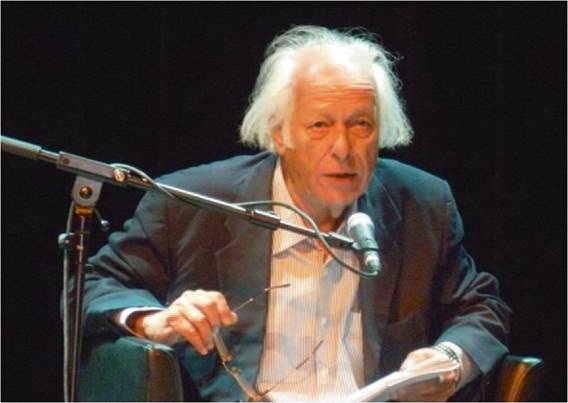
Samir Amin. Photograph from the personal photo collection of the author
civil society, notably by the Forum for Another Mali (FORAM), led by Mrs Aminata Dramane Traore, former Minister of Culture. All the ceremonies were as much expressions of gratitude as a token of appreciation for the quality of Samir Amin’s work in the construction of the new republic in the early days of its independence.
Although he definitively abandoned his functions as a ‘bureaucrat’ after he left Mali, Samir Amin continued to act as an adviser for several governments in the global South and for African and international institutions. Countries such as China, Vietnam, Algeria, Venezuela, and Bolivia have benefited and continue to benefit from his reflection and advice.
1.7