The middle Niger legacy of the Tichitt tradition
Although a gap of almost 500 years divides the last dated vestiges of Tichitt and the earliest possible advent of the historical empire of Ghana (or Wagadu), there has long been speculation that there is some form of connection between the two.[1121] Most importantly, the Soninke peoples who founded Ghana/Wagadu are seen as descendants of the Tichitt diaspora, although this largely linguistic speculation had no archaeological support until the 1990s.[1122] Bit by bit, largely through the presence of distinctive Tichitt tradition ceramics at the northern margins of the middle Niger and in the lowest layers of the region's great tell sites, connections have become apparent.
Classic Tichitt ceramics (decorated largely with cord-wrapped roulettes) - termed Faita pottery in Mali - occur at small levee-top sites beside the ancient Mema floodplain of the middle Niger, particularly in an area known locally as 'Ndondi Tossokel' (Figure 19.7). These single-component sites, although eroding, feature small intact middens containing cattle bone, broken pottery, and worked, imported stone (largely phthanite siltstone from the Mauritanian Dhars, used for both chipped and polished implements).[1123] The forms of polished implement at the early Faita sites conform to Amblard's typology of polished stone axes and rings from Tichitt.[1124] Assemblages identical to those from Ndondi Tossokel also occur atop Saberi Faita, the last inselberg of the Tichitt chain, situated on the Mauritanian border with Mali. Spread over 6 ha, this site also features grinding equipment, and remnants of stone walling, which is absent from early Faita sites along the Mema floodplain. Such Tichitt assemblages in the middle Niger have their earliest direct date at the site of Kolima-Sud, a deeply stratified floodplain site, where Faita pottery and imported stone co-occur with ceramics of local fisherfolk from c.
1300 BCE.40 As has been extensively argued elsewhere, this site was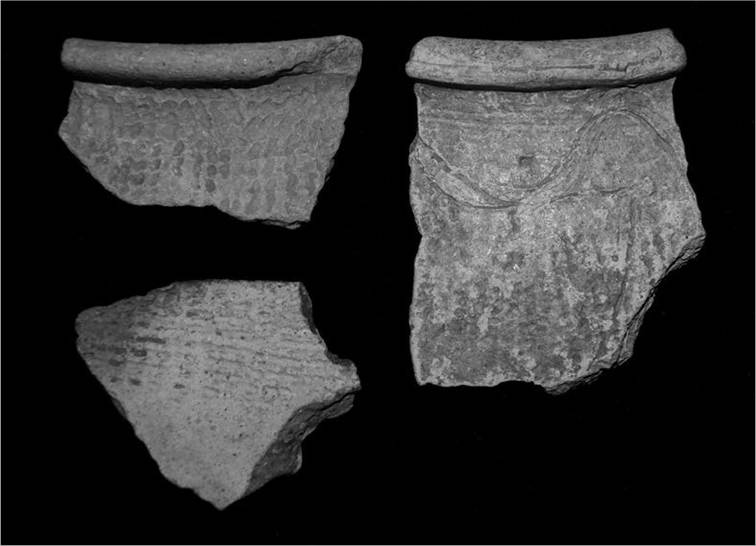
Figure 19.7 Classic Tichitt rim forms from Ndondi Tossokel, in the middle Niger.
first occupied by local fisherfolk,[1125] and subsequently had an additional seasonal presence of Tichitt-derived pastoralists, as witnessed by the appearance of classic Tichitt pottery, cattle remains, phthanite, and cattle figurines.
Tichitt pottery's only qualitative difference from that of the Mauritanian Dhars and the early Faita Facies is that of temper: grog and bone temper dominates chaff in the latter, instead of vice versa. The explanation for this is probably tied to access, or lack thereof, to crop processing waste. As it has been hypothesized that early Faita represents the seasonal presence of a transhumant pastoral segment from the Mauritanian Dhars in the middle Niger floodplain,[1126] they would hardly have had access to millet chaff in this ecologically unsuitable area.
Around 900 bce, a broad settlement transformation took place in the middle Niger. Instead of a seasonal pastoral presence with ephemeral camps and/or short-term co-occupations with fisherfolk (as at Kobadi and Kolima-Sud), this extension of the Tichitt tradition began to make its own more permanent settlements. These ranged from the 10 ha site of Kolima Sud-Est, with rammed-earth architecture, dated to c. 900-400 bce,[1127] to the founding layers of the tell complexes at Akumbu.[1128] Further south, in the Macina region, there is one of Mali's most ancient urban tells, Dia Shoma, where Tichitt ceramics appear in the first occupation phase of 800-0 bce alongside earthen architecture and iron metallurgy.[1129]
In sum, the Tichitt diaspora may be found at the base of the middle Niger's urban civilization whose basis lies in the first-millennium bce layers of tells like Akumbu and Dia. Indeed, in the waning days of the Tichitt tradition in the Mauritanian Dhars, a major settlement centre of 12 to 20 ha already existed at Dia Shoma.[1130] Thus, perhaps the continuity between Dhar Tichitt and middle Niger civilization - from which the empires of Ghana and Mali would arise - is not so far-fetched as it once seemed. Tichitt, and its role in the advent of Sahelian West African civilization, merits much more attention than it has heretofore received, and it may still be justly said that only a spoonful of soil has been sifted along the middle Niger and Mauritanian escarpments for every heaped shovel-full along the Nile.