Archaeologists have long hypothesized the causes of the transition from foraging to food production.
Beginning with Childe, the theoretical conception of the transition has often been one of transformative change, in which a force such as demographic growth or environmental variation caused the population to elect to produce food.
Later theories, such as Rindos's co- evolutionary model, identified selection rather than population-level forces as the means by which the transition occurred.1 More recently, human behavioural ecology theory has similarly focused on social and economic issues that shape individual decisions, but identified fitness-related goals as the primary impetus that directs human choice.[1203] [1204] Fundamentally, behavioural ecology assumes that human decision-making is formed by evolution. It also emphasizes the structure and variability of the environment in the success or failure of human strategies. Most archaeologists investigating the shift to food production cautiously employ various aspects of these and other approaches, adapting them to the variable conditions in their particular study area. This is the approach our research team has taken in examining the emergence of food production in northern Peru during the early to middle Holocene period.Determining the environmental stimuli and constraints of subsistence practices and especially food production in the Central Andean region of South America from excavated archaeological contexts involves the analysis of palaeoecological data drawn from various disciplines, including macro- botanical and microbotanical remains and habitat-specific vertebrate (e.g. rodents, birds, and reptiles) and invertebrate remains (e.g. molluscs, snails, insects).[1205] Faunal and floral evidence for early mixed foraging and horticultural economies also includes the study of relative frequencies of different non-domesticated and domesticated species.
In addition, the domestication and adoption of certain plant foods are common proxies for both intensification and risk-management processes aimed at sustaining growing populations. The presence of nutritious cereals, such as quinoa in the Andes, versus more bulk productive species, such as corn, potatoes, and beans, is a direct indicator of the intensity of food production.These exemplary types of palaeoecological and subsistence knowledge are essential to understanding the evolution of early food-producing societies. Furthermore, the size and rate of growth of early human populations had important ramifications for the production of food surplus, and the development of later, more complex, hierarchically structured urban societies with a stratum of elites at the apex. To closely examine these aspects of the past, the archaeological record of technology, economy, social organization, and demographic structure of early populations is significant. Based on analogies with a range of ethnographic and historical cases, it is possible that the socioeconomic organization of emergent food-producing societies corresponds to common-pool resource institutions, communal land use, and ‘the commons'.[1206] Understanding the long-term histories of such institutions as communal resource use requires archaeological evidence of how such forms of socioeconomic organization were created, maintained, and changed and what environmental and social parameters influenced the decisionmaking of these societies.
Some of the best-documented palaeoecological and archaeological evidence for the early adoption of cultigens and food production in South America comes from the multiple, closely juxtaposed resource zones of the western slopes of the Andes in northern Peru (Figure 21.ι), where plant macro- and micro-remains, the latter from starch grains, phytoliths, pollen, and the calculus of human teeth, reveal the presence of several
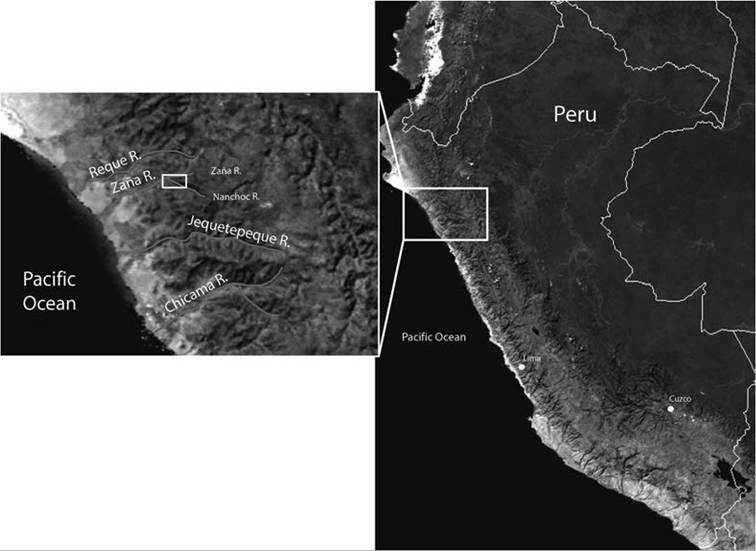
Figure 21.ι Location map of the Nanchoc valley in Peru
important food crops.
In the Nanchoc valley, located at 1,500-1,800 m above sea level, major crops were adopted between 10,000 and 7,000 years ago, including squash (Cucurbita moschata), peanuts (Arachis sp.), common bean (Phaseolus), pacay, a tree fruit (Inga feuilleei), quinoa (Chenopodium), coca (Erythroxylum novogranatense var. truxillense), and industrial cotton (Gossypium). Macrobotanical remains and the bones of various large and small animal species from excavated sites in the valley provide evidence for the shift from broad-spectrum subsistence to an agricultural economy in a seasonally dry tropical montane forest flanked by thorny scrub and humid forests on the western slopes of the Andes.[1207] The evidence indicates that by 6,500 years ago an effective agricultural system exploiting small but fertile alluvial patches along the Nanchoc River and employing a wide range of wild and domesticated seed, tree, vegetable, and root crops provided balanced, nutritious, and stable diets to the inhabitants of the valley.[1208]
More on the topic Archaeologists have long hypothesized the causes of the transition from foraging to food production.:
- Archaeologists have long hypothesized the causes of the transition from foraging to food production.
- Barker Graeme, Goucher Candice (ed.). The Cambridge World History. Volume 2. A World with Agriculture, 12,000 BCE-500 CE. Cambridge University Press,2015. — 668 p., 2015