Environmental parameters
There are three significant environmental drivers that potentially affected early food production in the Nanchoc valley during the early to middle Holocene period. First, increased seasonal moisture between 10,000 and 7,000 bp produced several results amenable to incipient crop use in the valley.
Previously arid landscapes became less dry, resulting in the presence of greater surface vegetation similar to the patchy tropical forested slopes in the region today.[1209] Second, episodic El Nino and flood intensity increased, beginning as early as 5,000 years ago. However, between 7,000 and 4,000 years ago, higher precipitation levels were also linked to a significant increase in temperature. Third, changes in the sea level also had an impact on regional climatic conditions, with shifting prevailing winds altering temperatures and precipitation rates, resulting in more arid conditions after 7,000 bp, despite intermittent El Nino floods.In the Nanchoc valley, the intensified adoption of cultigens primarily took place between 7,000 and 4,000 bp, roughly the peak period of aridity during the hypsithermal.[1210] Although local palaeoecological data from the valley do not reflect a period of severe aridity, a warm, usually dry environment did exist. How stable or unstable these conditions were is not known. It is probable that some foraging and incipient horticultural groups shifted in and out of an increased reliance on plant foods as they found themselves in varying climatic, subsistence, and/or social crises. In addition to environmental parameters, it is also probable that social conditions, such as settlement dispersion or aggregation, shared technological inventions, and cultural transmission of new ideas and experiences, were important factors determining economic and dietary choices in the valley.
In these and other cases, we know that some terminal Pleistocene hunters and gatherers solved nutritional and seasonal scheduling problems associated with non-domesticated plant foods by continuing to rely on large and small game animals and, in some cases, a few cultivated plants (i.e. squash, Cucurbita moschata) while likely coping with short-term climatic changes.[1211]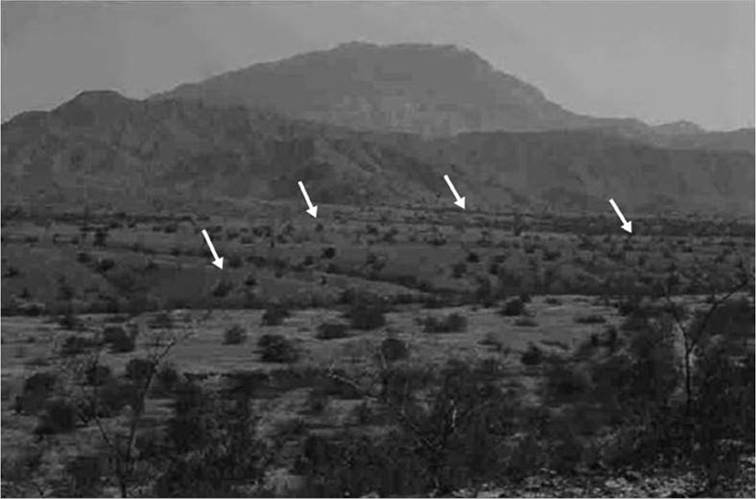
Figure 21.2 The location of Las Pircas sites on the alluvial fans of the Nanchoc valley.
Although we do not fully comprehend why particular environmental locations were selected over others in the Nanchoc valley, a few semi- sedentary settlements appear early in the interiors of small quebrada or alluvial fans around 9,000 bp. These are locations inferred to be the most suitable settings for food production, because they contain some of the richest soils and they are characterized by the presence of small intermittent streams that provide seasonal run-off water for archaeologically documented household garden plots (Figure 21.2).