The cultural sequence of the Nanchoc valley
Preserved charcoal from excavated house remains and garden plots was suitable for radiocarbon assays, which provide a chronology for several phases of human occupation from the late Pleistocene to the middle Holocene period (c.
11,500-5,000 bp). Three archaeological phases in the valley have been recorded.10The early El Palto phase (c. 11,500-10,000 bp) is associated with a pattern of scheduled, possibly seasonal movements between coastal and upland locations in northern Peru, where various plants, animals, and seafood were available during all or at different times of the year. Regional and local variation in stone tools, dated around 10,000 bp, and the use of small domestic structures (Figure 21.3) and local raw lithic material suggest the economic exploitation of circumscribed local territories (primarily alluvial fans drained by small streams) and possibly semi-sedentism by Paijan settlers. Domesticated squash (Cucurbita moschata) was adopted at this time. The constriction of territory, reduced mobility, and localization of population continued and accelerated past 9,000 bp into the following Las Pircas and Tierra Blanca phases. In some areas of the valley, this pattern of resource exploitation began to change between 9,000 and 7,000 years ago when people of the Las Pircas phase began to settle more permanently on selected alluvial fans.
Las Pircas foragers began a permanent or perhaps sedentary life at higher elevations between 9,000 and 7,000 bp, with small organized settlements, burial of the dead, domestic circular houses, subtle social differences in the artefact inventory, and small garden plots near their homesteads (Figure 21.4). Unifacial stone tools, a varied ground stone technology, simple food storage, and a food economy based primarily on the exploitation of a wide variety of plants and animals dominated the technology.
Las Pircas sites yielded wild and cultivated squash, Chenopodium (e.g. quinoa), peanut, yucca, manioc, and several unidentified fruits. Low frequencies of exotic materials (e.g. marine shell, carved stingray spines, quartz crystals, and raw stone material) suggest minor contact with distant coastal and highland areas. Las Pircas sites are generally interpreted as small-scale ephemeral occupations, roughly similar to ethnographic foraging groups.During the Tierra Blanca phase (7,000-5,000 bp), settlements aggregated closer to the valley floor and its fertile soils. House styles changed (from small circular to larger, multiple-room rectangular: Figure 21.5), cotton, beans, and coca were added, and residents constructed an artificial agricultural system associated with irrigation canals and sedentism. (Corn does not appear in the local archaeological record until about 4,000 years ago.) Although exotics disappeared, the separation of public and private or domestic space was pronounced, as evidenced by dual, stone-lined, multi-tiered earthen mounds at the Cementerio de Nanchoc site in the valley (Figure 21.6). At this site, lime was produced in a controlled, presumably public ritual context for probable use with coca leaves and/or as a food supplement (Figure 21.7). The mounds were located on an alluvial fan separated from but also accessible by all households. For reasons not fully understood, sedentism and food
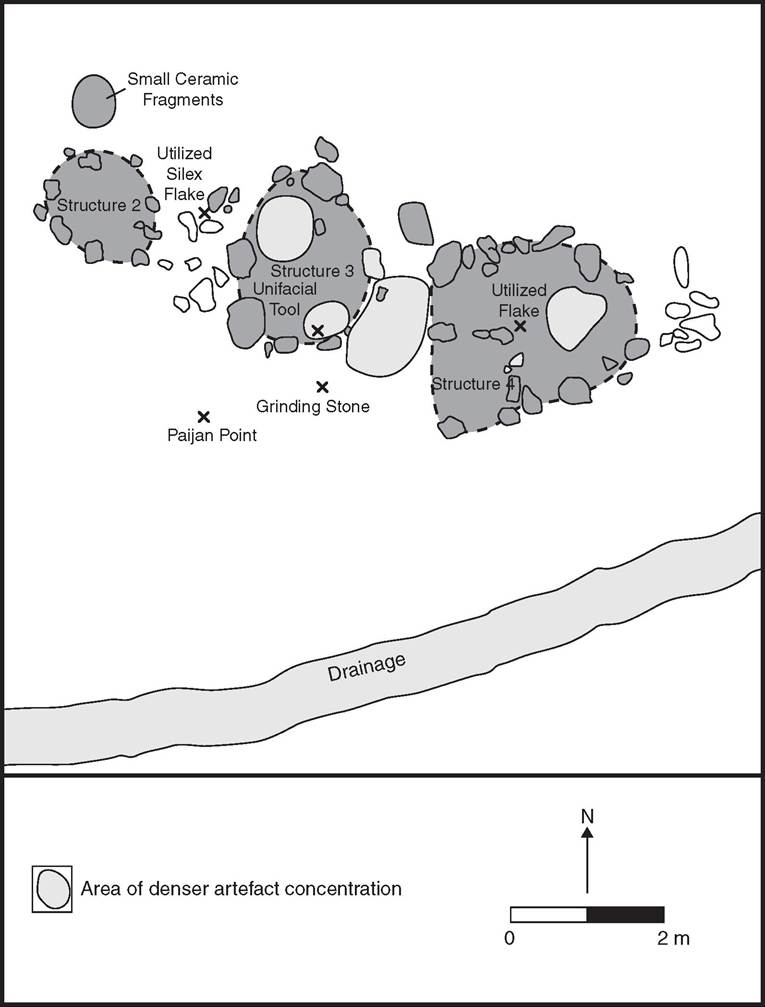
Figure 21.3 Schematic drawing of Paijan house remains dated around 10,000 bp.
production did not occur everywhere in this valley during this phase. Some groups continued practising a mobile foraging way of life well after more cultigens were introduced into the area. Between 6,000 and 5,000 bp, farmers and foragers co-existed and were co-dependent on one another.
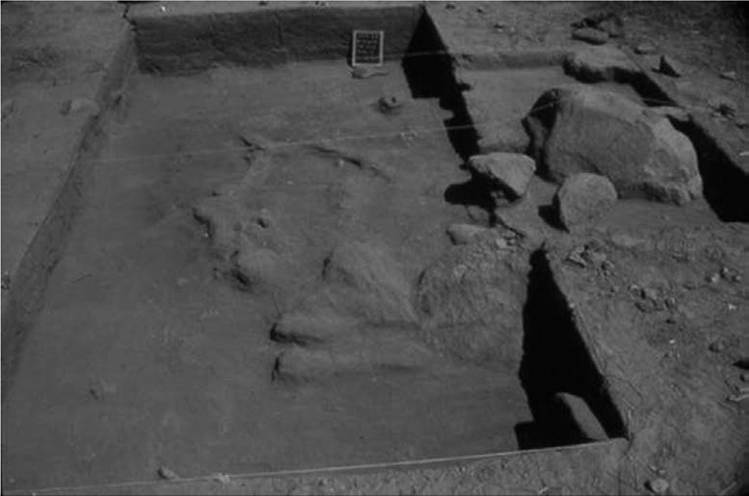
Figure 21.4 The remains of an excavated Las Pircas house.
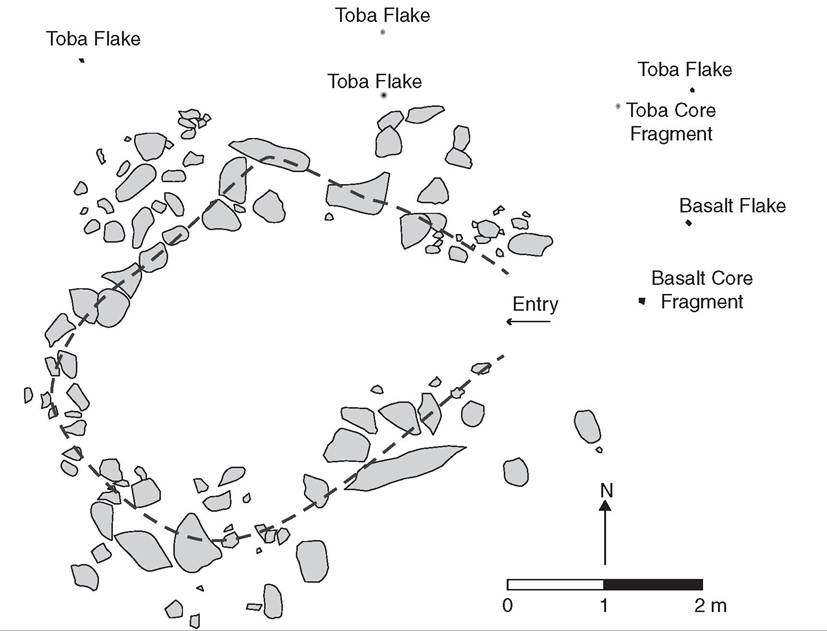
Figure 21.5 The foundation of a rectangular-shaped Tierra Blanca house form.
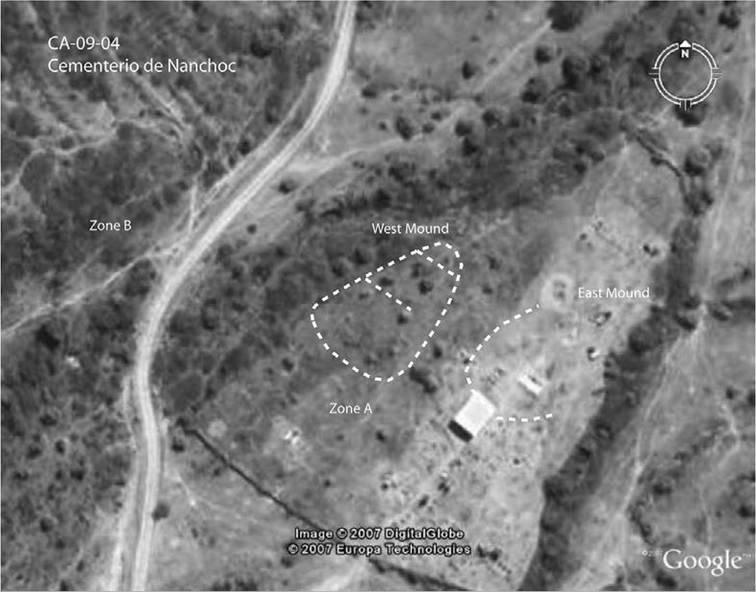
Figure 21.6 Outline of the two mounds at the Cementerio de Nanchoc site.
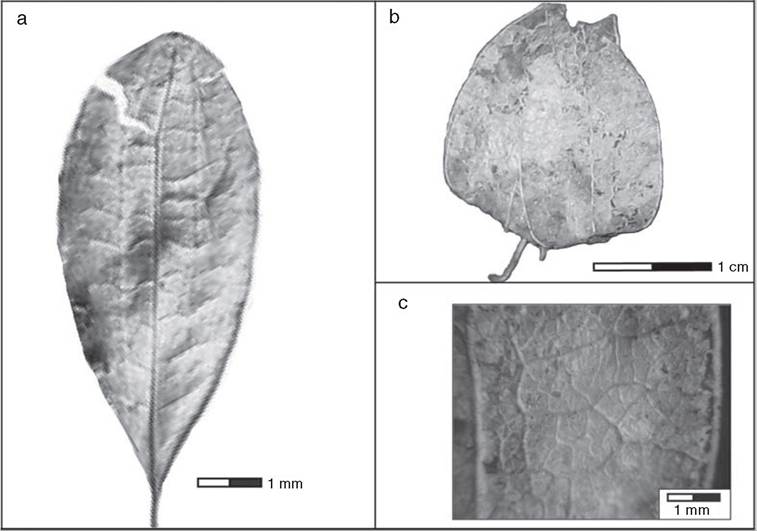
Figure 21.7 Coca leaves excavated from a Tierra Blanca house floor.
There is widespread evidence that the transition from foraging to food production in parts of the valley altered aspects of the material culture. For instance, there is evidence for increased utilization of food crops in association with changes in grinding stone tools, houses, and storage pits, which appear to be a direct product of food production. It is possible to equate changes in house form or design with functional changes in the subsistence regime. For instance, circular forms of the Las Pircas phase are associated with a semi-sedentary to incipient sedentary life and with a broadspectrum economy focused on foraging and a few food crops. However, in the Tierra Blanca phase, the reverse occurs, with the rectangular house form associated primarily with plant food production and secondarily with foraging.
Though people still relied on foraging for some subsistence means during the Tierra Blanca phase, the rich resources of the seasonally dry tropical forest, combined with food crops (i.e. squash, beans, yucca, avocado, chile pepper, peanut, quinoa), allowed for a more settled way of life.11 During this period, several new sociocultural traits were developed: planning and decision-making, risk management, communal land use, resource sharing between different groups, and technological innovation. And this happened during the peak aridity of the hypsithermal between 7,000 and 4,000 bp.
In summary, in some localities of the valley, the palaeoecological and archaeological analyses relate climatic and environmental change to specific stone tool industries, dietary regimes, site and house forms, food crops, and differential human responses.
Between 11,000 and 10,000 bp, there occurred a compression of terminal Pleistocene and later early Holocene people into several circumscribed habitats from the coastal plains to the mountain slopes of the Nanchoc valley. This probably led to increased contact and promoted the later development of more complex social relationships evidenced during the following Las Pircas and Tierra Blanca phases. There is archaeological evidence that terminal Pleistocene and early Holocene groups began to decrease their mobility, aggregate, and establish more permanent camps at the edge of the dry thorn forest near active springs equidistant from the desert coast to the west and the seasonally dry forests to the east. These sites were highly localized, as indicated by the presence of local lithic raw material and various floral and faunal foods indigenous to the seasonally dry environment. Sites of the following Las Pircas and early Tierra Blanca phases, dated between 9,000 and 5,000 bp, were associated with a more stable environment, albeit increasingly more arid, and with more prolonged social contact and exchange. This led to enhanced conditions for population growth and greater cultural complexity, as evidenced by the presence of large and numerous grinding stones, irrigation canals and increased crop production, and permanent domestic structures forming small, aggregated household communities. The development of more permanent and extensive forms of sedentism and small, complex food-producing societies in the Nanchoc valley and in a few other areas on the coast and in the highlands occurred between 5,000 and 3,500 bp. During this period, maritime and agricultural villages on the coast increased in size, and the first large-scale monumental, non-domestic architecture appeared in the form of stone platform mounds and small ceremonial pyramids. A few examples are the sites of Huaca Prieta, Alto Salaverry, Aspero, Huaynuna, Caral, and Garagay.[1212] [1213]
More on the topic The cultural sequence of the Nanchoc valley:
- The cultural sequence of the Nanchoc valley
- Barker Graeme, Goucher Candice (ed.). The Cambridge World History. Volume 2. A World with Agriculture, 12,000 BCE-500 CE. Cambridge University Press,2015. — 668 p., 2015
- Figures
- Early food-producing societies