Beginnings of food production
Pastoralism was the earliest form of food production in sub-Saharan Africa, developing first in North Africa c. 8,000 years ago,[1034] and gradually spreading southwards during the early to mid-Holocene while rainfall across the Sahara was significantly higher than it is today.
Two consequences of these higher rainfall regimes were the presence of numerous sources of permanent surface water, and comparatively lush savanna-like vegetation, providing ideal conditions for groups of mobile, cattle-centred, ceramic-using societies. By the fifth millennium bce these were present across Chad and areas further east, where they encountered groups of complex hunter-gatherer-fishers, many of which were also ceramic-using, in the western Sahara.[1035] By the late fifth to early fourth millennium bce cattle-keeping societies had spread to the southern edges of the western Sahara, as attested by finds from Adrar Bous in the Tenere desert of Niger (Map 18.1).[1036] With the onset of drier conditions after c. 2500 bce linked to changes in the position of the intertropical convergence zone, groups began moving southwards, especially along the better-watered river valleys and drainage systems, which had become, with the increasing aridity and reduction in swampy conditions that favoured malaria- and trypanosomiasis-bearing vectors, more hospitable to pastoralists.Overall, the initial food-producing societies practised a broad spectrum economy, but to varying degrees, as signalled by the different proportions of wild to domestic taxa, the relative abundance of different species, and variety of fish represented in faunal assemblages at different sites. These indicate that domesticated cattle and small stock were present from the mid third millennium bce in the Tilemsi valley (Figure 18.1), some 80-85 km north of Gao, Mali; from around 2200 bce in the eastern inland Niger delta, Mali, at Winde Koroji Ouest; and from c.
1600 bce at Kobadi and Kolima Sud.[1037] Domestic livestock are also present at several pioneer settlements along the Tichitt- Oulata-Nema escarpment in Mauritania by c. 2200 bce (see Chapter 19). In the lower Tilemsi valley, although domestic taxa are abundant, wild resources, including water-dependent species, remained important, along with fish and shellfish. At Kobadi, on the other hand, there is evidence for the presence of specialist fishing communities by the early second millennium bce and a more uniform subsistence repertoire. Further south and east in northern Burkina Faso, sites dated to between 2200 and 1000 bce, and associated with highly mobile Late Stone Age (LSA) groups, contain some sparse evidence for the cultivation of pearl millet, along with the exploitation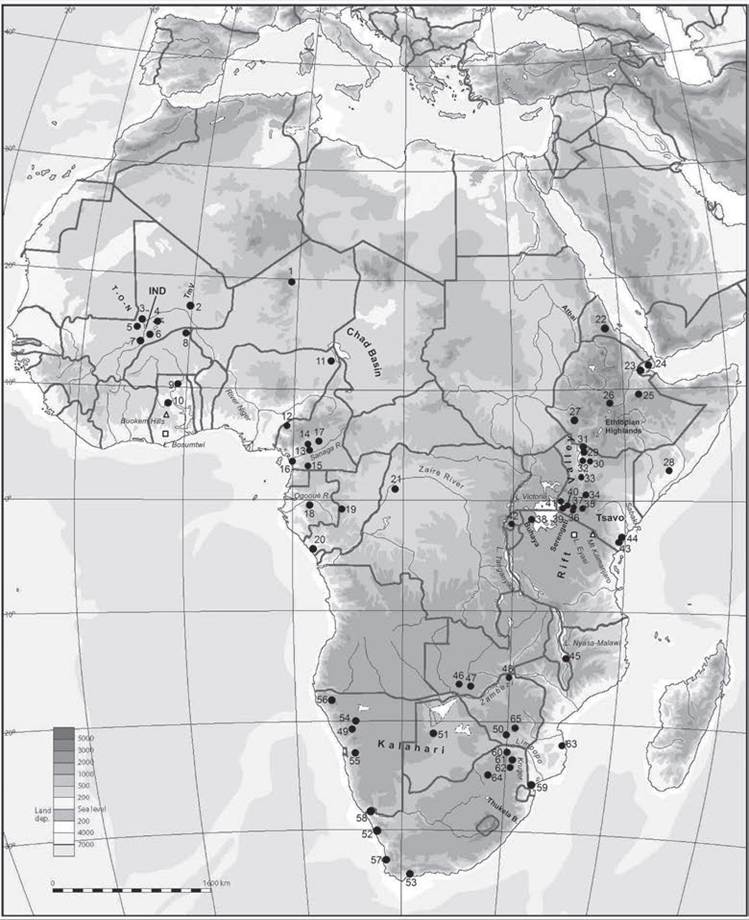
Map 18.1 i. Adrar Bous; 2. Korkorichinikat; 3. Winde Koroji Quest; 4. Winde Koroji Quest; 5. Kobadi; 6. Kolima Sud; 7. Ti-N Akof; 8. Laga Qda; 9. Asa Koma; 10. FeJx3; 11. Gogoshiis Qabe; 12. Handoga; 13. Asmara; 14. Kumali; 15. Dongodien; 16. North Horr; 17. Ilert;
18. Jarigole; 19. Lokori; 20. Ql Ngoroi; 21. Enkapune ya Muto; 22. Birimi; 23. K6; 24. Jenne- jeno; 25. Zilum; 26. Ngamuriak; 27. Sugenya; 28. KM2 & 3; 29. Gogo Falls; 30. Wadh Lang'o; 31. Usenge 3; 32. Kabusanze; 33. Mgombani; 34. Panga ya Saidi; 35. Shum Laka; 36. Qliga; 37. Nkang; 38. Abang Minko; 39. Bwambe-Sommet; 40. Nanga Eboko; 41. Toube 1;
42. Abeke; 43. Tchissinga West; 44. Leopard Cave; 45. Bambata Cave; 46. Toteng;
47. Spoegrivier; 48. Blombos Cave; 49. Geduld; 50. Mirabib; 51. Qrunwange 95/1;
52. Kasteelberg Hill; 53. Jakkalsberg; 54. Situmpa; 55. Matola; 56. Happy Rest; 57. Klein Africa; 58. Silver Leaves; 59. Nkope Hill; 60. Kalundu; 61. Kadzi; 62. Chibuene;
63. Broederstroom; 64. Mabveni, Zimbabwe; IND = Inland Niger Delta sites.
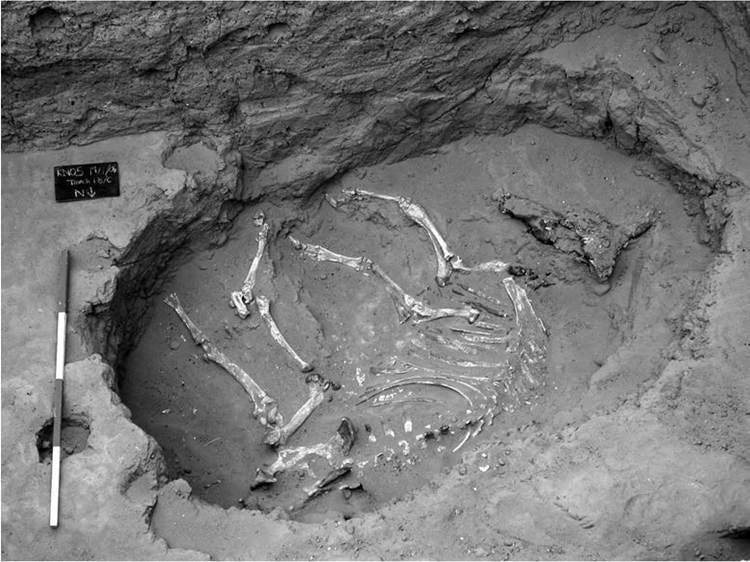
Figure 18.1 Cattle burial from basal levels at Karkarichinkat Nord, Mali, c.
2600 bce.of a range of wild fruits (as at the site of Tin-Akof) from as early as c. 1800 B c E,[1038] but lack direct evidence for the presence of domesticated livestock until the start of the Christian era.[1039]
The arrival of these groups in the West African Sahel is attested archaeo- logically by the presence of distinctive bifacially retouched projectile points broadly the same as examples found widely distributed across the Sahara.[1040] In places, these stone points are associated with distinctive geometrically decorated ceramics similar to types from broadly contemporary sites in the eastern and south-central Sahara. Ultimately, three distinct material culture traditions emerged, as reflected in the variations between ceramic and stone-tool assemblages, although they have overlapping geographic distributions. These are the Kobadi tradition centred on the Azawad, Mema, and Gourma regions; the Tichitt tradition present along the Tichitt-Oulata-Nema escarpment and in the Mema; and the Winde Koroji (or Tilemsi) tradition present in Tilemsi and the Gourma.
The West African Sahel has also long been known as a locus of the domestication of pearl millet (Pennisetum glaucum). Based on the distribution of its wild ancestor (P. glaucum violaceum), Harlan argued that in contrast to the domestication of Southwest Asian cereals such as emmer, einkorn, and barley, it is unlikely that initial domestication of African cereals such as pearl millet and sorghum was restricted to a single, primary centre, and instead there were most likely several independent episodes of domestication of pearl millet across the West African Sahel.[1041] This has been confirmed by more recent research. Currently, the oldest finds of millet in this region come from a sample of excavated sites in the Karkarichinkat region of the lower Tilemsi valley, northern Mali, where they have been dated to between c.
2600 and 2000 BCE (Figure 18.2).[1042] Within five hundred years or so of these initial occurrences, the cultivation of pearl millet was widespread across the Sahel, with well-dated evidence, in the form of actual plant remains or crop impressions on pottery, now known from various sites. These include several sites in the Dhar Nema, Mauritania, by c. 1700 bce, along with a number of other sites in the Dhar Tichitt and Dhar Walata, and Ounjougou (Bandiagara escarpment, Mali), by c. 1700-1500 bce. The numerous grinding stones found at certain sites, such as those in Dhar Nema, also highlight the significance of grains in local diets, although not all of these need have been morphologically ‘domestic' species. Towards the close of the second millennium bce, pearl millet was also being cultivated quite widely in northeastern Nigeria in the Chad basin.[1043] [1044]As in the West African Sahel, livestock herding, particularly cattle, was practised in northeastern Africa somewhat earlier than crop cultivation, as attested at the Laga Oda rock shelter in the Ethiopian highlands and the open-air site of Asa Koma near Lake Abhe, Djibouti, both dating to around 2000 BCE.11 Other early finds are known from various third- and second- millennium BCE Sudanese Atabi sites near the modern-day border with
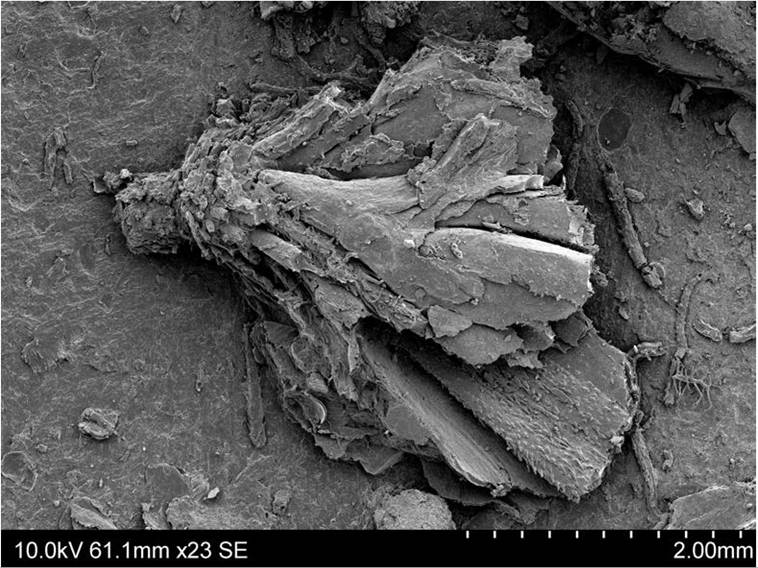
Figure 18.2 SEM image of the domestic pearl millet rachis and involucre from Er Neg, lower Tilemsi valley, Mali, c. 2000 bce.
Eritrea, many of which also include caprine remains; site FeJx 3 on Lake Besaka in the Ethiopian Rift Valley and Gobedra, Ethiopia, both date to c. 1500-500 bce; and the Gogoshiis Qabe rock shelter, Somalia, dates to between 2300 and 1000 bce.[1045] At both Asa Koma and Laga Oda, the cattle remains were associated with large assemblages of wild fauna (and freshwater fish in the case of Asa Koma), and material culture assemblages typical of earlier foraging populations, suggesting both sites represent the beginnings of localized adoption of food production by autochthonous groups.
The same seems to be the case at the site of Handoga (Djibouti), where the earliest cattle remains, dating to the second millennium bce, made up a very tiny proportion of the overall faunal assemblage, which was dominated by wild terrestrial fauna and fish.[1046] Evidence for such continuities was largely lacking at FeJx 3, and certain material traces suggest that the site was occupied by early immigrant herders or agropastoralists.In contrast to cattle, on current evidence both sheep and goats were incorporated into food-producing economies rather later, although dates for the first occurrence of caprines are variable. These range from the late second millennium bce at Gogoshiis Qabe, early to mid first millennium bce on Ancient Ona tradition sites around Asmara, Eritrea,[1047] and c. 100 ce at Kumali rock shelter, southwest Ethiopia.[1048] [1049] [1050] The general trend, which has some similarity to that documented for the western Sahel, thus seems to have been an initial introduction of domesticated cattle and their adoption among some pre-existing hunter-gatherer-fishers, followed by a later adoption of small stock and corresponding diminishing contributions of wild species to overall diet and subsistence strategies.
Regarding crop cultivation, the Ethiopian highlands are known to have been a centre of local plant domestication, including the African cereal tef, and enset (a starchy, banana-like tuber), but also coffee (Coffea arabica), noog (Guizotia abyssinica), probably finger millet, and possibly sorghum. There is little direct evidence for crop cultivation during the second millennium bce, although there is indirect evidence for the exploitation of indigenous wild grasses from Laga Oda rock shelter contemporary with the herding of domesticated cattle.16 The domestication of local species may well have derived from the intensification of such practices, and the presence of grinding equipment attests to their processing (Figure 18.3).
Domestic livestock (cattle and caprines) were also present in the Lake Turkana basin, northern Kenya, by c. 2200 bce, associated with at least two new pottery types (Nderit and Ileret). These new material and subsistence traditions are regarded conventionally as marking the commencement of the Pastoral Neolithic. This material occurs in conjunction with a microlithicbased LSA stone tool technology at sites such as Dongodien, North Horr, and Ileret.17 Obsidian, probably obtained locally, now became the preferred raw material, and this period also witnessed the first appearance of stone bowls made from lava, pumice, and similar ‘soft' rocks. In the same general vicinity of northern Kenya, new forms of inhumation burial marked by large stone
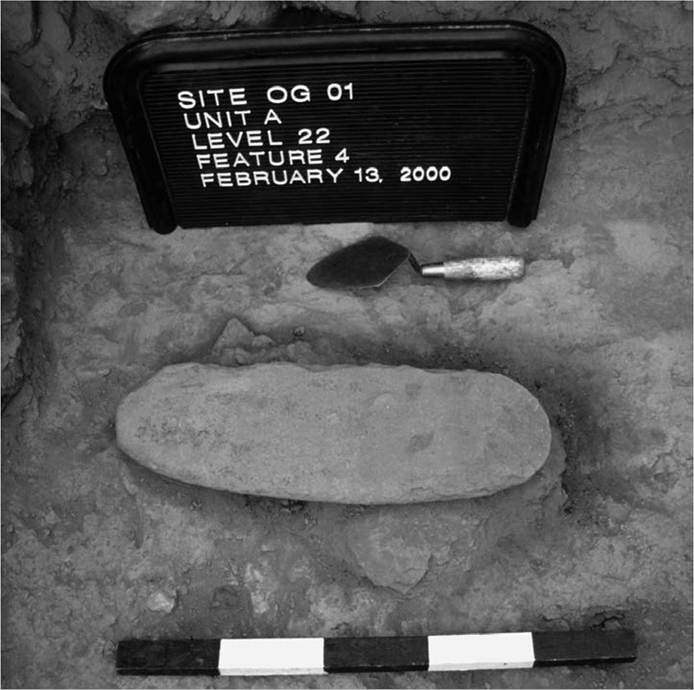
Figure 18.3 In situ andesite grinding stone associated with carbonized barley seeds (in burned soil and charcoal below) from the Ancient Ona Culture site of Ona Gudo, Asmara plateau, Eritrea, c. 800-400 bce.
monoliths, as at Jarigole and Lokori, similarly appear between c. 3000 and 2000 BCE (Figure 18.4).[1051] Although none of the known examples are directly associated with settlements, one possible interpretation of these sites is that they functioned as ‘gathering places' for various ritual practices aimed at reinforcing social networks between different mobile and possibly widely dispersed communities.
These changes in the archaeological record support the hypothesis of population migration into the Lake Turkana basin and the case for these newcomers bringing with them livestock (domesticated outside the region) and new ways of exploiting the landscape. The available historical linguistic
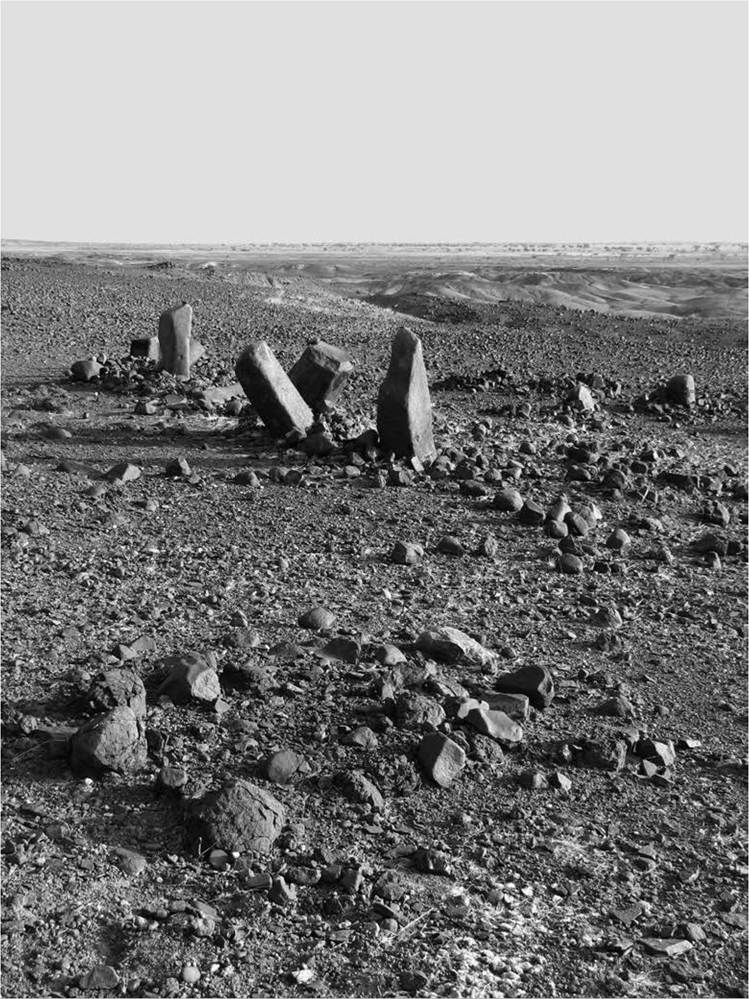
Figure 18.4 Lothagam West (GeJiio) Pastoral Neolithic pillar site, West Turkana, Kenya.
evidence suggests these migrant communities may have spread in small groups from South Sudan, Ethiopia, and possibly Somalia, and some were speakers of proto-Southern Cushitic languages. The apparent independent evolution in East Africa of the allele associated with lactase persistence some 7,000-3,000 years ago likewise lends support to such arguments, especially as
its very rapid spread is consistent with genetic models of population migration.[1052] The geographic distribution of various disease vectors, especially tsetse fly, would have constrained initial settlement to certain areas and restricted southward movement until the development of more disease resistant herds and/or new strategies had been adopted for manipulating habitats so as to limit infection.[1053] Other factors may well have played a role, however, and it is clear that these pioneer communities interacted with autochthonous LSA hunter-gatherer-fishers.
Further south in the central Rift Valley and eastern highlands of Kenya, the earliest traces of domestic livestock typically first occur in rock shelters associated with LSA hunter-gatherers around c. 2500-2000 bce, as attested at sites such as Ol Ngoroi (Figure 18.5) on the Laikipia plateau and Enkapune
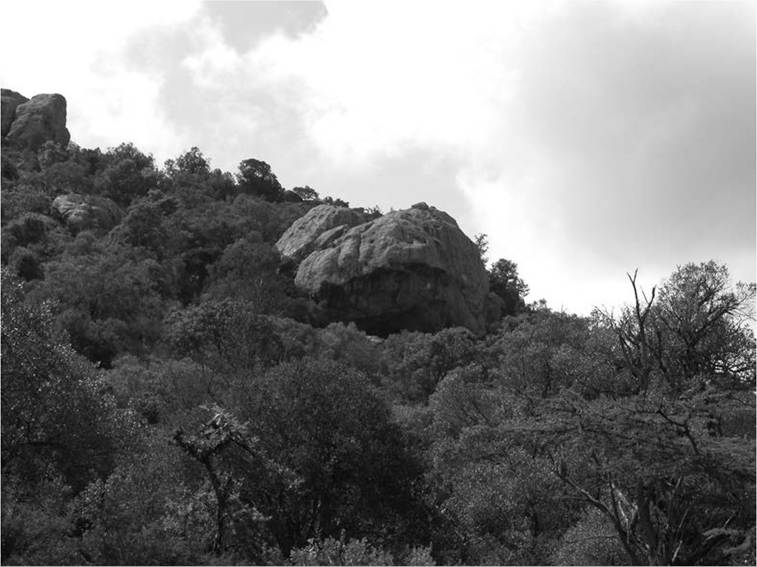
Figure 18.5 Ol Ngoroi rock shelter, Lolldaiga hills, Kenya.
ya Muto in the central Rift.[1054] Domesticated caprines were also present at several sites around Lake Victoria by c. 2400-2150 bce, although only in small numbers and on sites associated with LSA Kansyore hunter-fisher- gatherers.[1055] Further south and east, evidence for the presence of specialized pastoralist economies is documented at several sites in the Tsavo and middle Sabaki River areas of southeast Kenya by c. 1800-1700 bce ;[1056] the Maasai Mara, southwestern Kenya, by c. 1200-100 bce; and in open woodlands and grasslands on the Serengeti plains, the western slopes of Mt Kilimanjaro, and around the Lake Eyasi basin, Tanzania, by the mid to late first millennium bce.[1057]