Consolidation of food production
Following initial adoption of domesticated plant and animal species, and their integration into pre-existing hunting and gathering subsistence strategies, subsequent millennia witnessed the local domestication of a number of other key crops.
In West Africa these included cowpea (Vigna unguiculata) and oil palm (Elaeis guineensis), both by c. 1700 bce, African rice (Oryzaglaberrima), Bambara groundnut (Vigna subterranea), and the baobab tree (Adansonia digitata) between c. 1000 and500 bce, and fonio (Digitaria exilis) by the mid first millennium ce.[1058] Around the forest margins, West African yams (Dioscorea spp.) were almost certainly domesticated by c. 2000-1500 bce (and, if using historical linguistic reconstructions as a guide, perhaps significantly earlier),[1059] although direct archaeobotani- cal evidence is scarce. A wide range of other tubers, roots, vines, and leafy greens were also cultivated or otherwise ‘managed' on a routine basis, along with several tree species, including Parkia biglobosa (locust bean tree, or nere; exploited for its fruit, from which a fermented condiment is made, and its seed pods) and Vitellaria paradoxa (shea or karite; although used for firewood and charcoal, the shea tree is mostly prized for its nuts, which can be processed to produce butter for cooking and cosmetics).
Botanical remains recovered from a number of sites in the West African forest zone likewise indicate a continuing importance of wild resources, including Digitaria, hackberry (Celtis), incense tree (Canarium schweinfurthii), and oil palm (Elaeis guineensis). More active husbandry of the latter (for which there is plentiful evidence in the form of charred macro-remains from numerous Kintampo sites, increasing in frequency over time), leading ultimately to its domestication,[1060] has also been inferred from sharp increases in its pollen signature and related evidence for forest clearance (as oil palm is shade intolerant, it does not fare well in thick forest) in sediment cores from Lake Bosumtwi, Ghana, around 1500 bce, and 800 bce in the Niger delta region.
Increased regional aridity owing to climate change during the period c. 2500-1400 bce, which triggered the marked decline in tree cover and corresponding expansion of savanna vegetation referred to as the ‘Dahomey Gap',[1061] may have also further encouraged the spread of oil palm.Alongside this evidence for oil palm arboriculture, the cultivation of pearl millet is attested in Kintampo contexts (Figure 18.6) dated to between c. 1740 and 1130 bce at the site of Birimi, northern Ghana.[1062] Across the savanna zone, new crops were also added to this repertoire, including locally domesticated species such as cowpea (Vigna unguiculata), African rice (Oryza glaberrima), fonio (Digitaria exilis), and yam (Dioscorea sp.). With the exception of cowpea (attested archaeologically from several rock shelters in the Buokem hills, central Ghana, from c. 1830-1590 bce, and also at K6, where it may have been used as animal fodder), the earliest securely dated evidence for these is significantly later. Sorghum, likely domesticated further north and east, was also cultivated in the drier areas, although again direct evidence for its presence is comparatively late (in Senegal, for instance, sorghum is not attested in archaeological contexts until around the bce / ce transition).[1063]
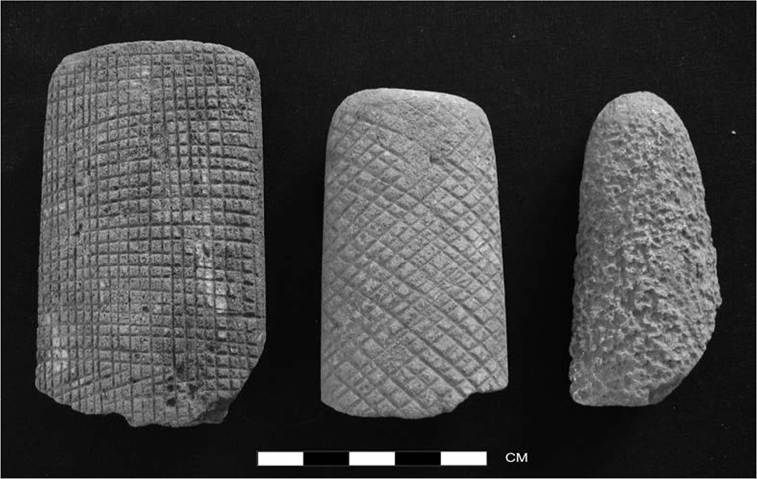
Figure 18.6 Terracotta ‘cigars' from Birimi, Ghana - this artefact form is especially diagnostic of the Kintampo culture.
Regionally, the particular crop and livestock repertoires varied considerably, depending on local ecological conditions and the distribution of the wild ancestors of the key domesticates. As agriculture became more widespread, especially in the savanna regions, local types and hybrids also evolved. Sanga cattle, a crossbreed between local African taurine cattle and South Asian humped zebu (which were present on the continent by at least the mid first millennium ce and possibly earlier), and the breeds of fat-tailed sheep common in East and southern Africa, are perhaps the best-known examples, although many other local breeds of cattle, sheep, and goat are known, among them the various West African shorthorn cattle breeds, including N'Dama, Baoule, and Somba.
Breeds of dwarf sheep and goats are also known, especially in forested zones but also further north. The earliest examples of dwarf goats, dated to the second millennium bce, come from Kintampo sites in Ghana, with rather more recent occurrences known from sites further north, including Jenne-jeno (Mali) and the Gajiganna phase ιιι site of Zilum (Nigeria).[1064] Particular characteristics of many of these dwarf species are their greater tick resistance and tolerance to disease, such as trypanosomiasis and theileriosis, and their ability to thrive in drier habitats and withstand recurrent drought. Moreover, the genesis of these local breeds and manipulation of their habitats were critical to the eventual southward spread of livestock across the continent (and hence the ‘domestication' of the landscapes they inhabited), and likely explains the timing of the initial introduction of different species into specific regions.[1065]In East Africa after c. 1500 bce, early pastoralist sites tend to become larger in extent and begin to display a remarkable degree of material, economic, and spatial variability. Two broad cultural traditions, known as the Savanna Pastoral Neolithic and Elementeitan, can be discerned partly in terms of material culture differences, settlement locations, and herd management strategies.33 Ground stone artefacts, including axes, adzes, ‘horn straighteners', and stone bowls (Figure 18.7), accompany flaked stone industries, principally on obsidian. In general terms, faunal assemblages from both Elementeitan and Savanna Pastoral Neolithic sites tend to indicate a commitment to cattle and sheep/goat pastoralism among both societies. By c. 1000 BcE at least some herding communities, as at Ngamuriak and Sugenya in the Maasai Mara (Kenya), were able to sustain a subsistence pattern dependent almost exclusively upon domestic stock, which may have been facilitated in

Figure 18.7 Example of a Pastoral Neolithic stone bowl, from site GvJh73, central Rift Valley, Kenya.
part by the emergence of a bimodal rainfall regime around this time. There is, nonetheless, some internal diversity and differing degrees of dependence upon domestic herds, ranging from a generalized pattern of hunting, fishing, gathering, and herding to specialized livestock production, in both traditions.
From c. 500 bce onwards, evidence for early farming communities, which are also associated with the first use of metal in the region, begins to appear in the archaeological record, initially to the west of Lake Victoria in parts of modern-day Rwanda, Burundi, and Uganda, then from c. 200 ce to the east of Lake Victoria in western, central, and coastal Kenya, and northern and coastal Tanzania. By 500-700 ce, these farming communities occupied most of East Africa except the arid and semi-arid regions, including the northern and central Rift Valley and adjacent areas further south. Historical linguists believe these communities were also the first speakers of proto-Eastern Bantu (also referred to as tMashariki') to have occupied the region, having spread originally from a proto-Bantu ‘homeland' in northern Cameroon and southern Nigeria. Archaeologists have sought to classify the ceramics associated with these early farming communities (EFC; also referred to as the Early Iron Age or EIA) principally in terms of formal and stylistic variations. Since at least some of the chronologically later types are found further south and/or east of the earliest dated EFC ceramics, this has tended to reinforce a view that the expansion of EFCs across the region was, principally, as a consequence of population growth and subsequent settlement migration and that, in turn, this provided the primary mechanism by which Eastern Bantu languages and knowledge of metal-working were introduced into southern and east-Central Africa.
As they expanded their geographic range, these early farming communities would have encountered both hunter-gathering (associated with LSA material traditions) and early herding societies (associated with Pastoral Neolithic traditions).
The influence of Central Sudanic and Eastern Sahelian speakers on the EFC Mashariki populations during the last millennium BcE is particularly clearly attested by a wide range of Sudanic and Sahelian loanwords in Eastern Bantu languages for livestock, cereals, various economic practices, and certain items of material culture.[1066] Equally, exchange and interaction between EFC LSA and Pastoral Neolithic ‘groups' can be demonstrated archaeologically at a number of sites.[1067]
Figure 18.8 In situ Urewe hemispherical bowl and dimple-based pot from site LOL-13, Lolui Island, Uganda.
From an archaeological perspective, the earliest dated sites associated with the adoption of iron metallurgy and crop cultivation are those at which Urewe ware (Figure 18.8), named after the type site close to the Yala River in western Kenya, occurs. The earliest Urewe sites all lie to the west of Lake Victoria and are especially concentrated around Buhaya in Tanzania and the Kivu-Rusizi River region in Rwanda/Burundi. Radiocarbon dates suggest an initial appearance here between the eighth and sixth centuries bce. Urewe ware had a fairly wide distribution across much of Rwanda, Burundi, and neighbouring parts of southwestern Uganda, western Kenya, and northwestern Tanzania.[1068] Urewe ware sites are also closely associated with the first appearance of iron-working in the Great Lakes region and considerable research effort has been directed at elucidating the origins and nature of this technology. Archaeological evidence from excavated sites such as KM2 and KM3, near Kemondo Bay (Tanzania), for instance, in conjunction with the results of experimental and ethnographic studies, indicate that EFC smelters had a sophisticated knowledge of the physical and chemical processes involved, and by the first millennium c e were capable of generating furnace temperatures high enough to produce carbon steel.[1069]
It is generally assumed that EFC populations were mixed farmers, who placed rather more emphasis on crop cultivation than on herding, and this is suggested by a preference for settlement locations close to better-watered areas along the intersection between submontane forest and woody savanna.
Actual evidence for subsistence strategies from Urewe sites is quite rare, however. Important exceptions are the sites of Gogo Falls and Wadh Lang'o in South Nyanza, and Usenge 3 in North Nyanza, all in western Kenya, from which evidence for the exploitation of both cattle and small stock has been recovered. Recent excavations at various sites in Rwanda also provide important new data of relevance to understanding early agricultural practices in the region, including remains of pearl millet, sorghum, and legumes (most probably cowpea) from the site of Kabusanze, dated to c. 380-420 ce and associated with classic Urewe ceramics.[1070] Direct evidence for the cultivation of different pan-African native crops is also known from the open air site of Mgombani (dated to c. 660-890 ce), southern Kenya, and Panga ya Saidi, a large limestone cave in the nearby Dzitsoni uplands likely occupied by terminal LSA hunter-gatherers. Both sites have yielded grains of domesticated sorghum, pearl millet and finger millet, and baobab seeds, while pulse seeds of Vigna sp. (possibly cowpea) were recovered from Mgombani.[1071]