Beginnings in the south: early rice farmers of the Yangtze basin
It has been posited for some decades that rice farming (Figure 12.4) originated in the Yangtze basin. From the discovery during the 1970s excavations of substantial quantities of rice at the Neolithic waterlogged site of Hemudu (7,000-6,300 B P; Figure 12.5), to discoveries in the 1990s on middle Yangtze sites such as Pengtoushan and Bashidang, the Yangtze region has featured at the start of most accounts of rice origins.[664] There has long been an archaeological
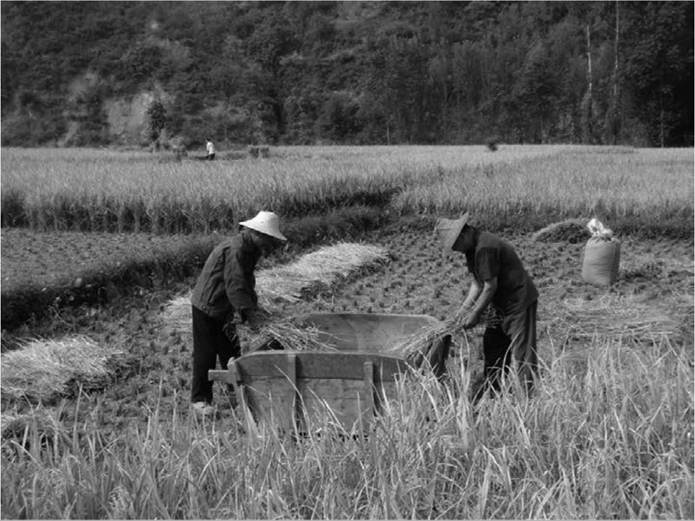
Figure 12.4 Rice field in Zhejiang province.
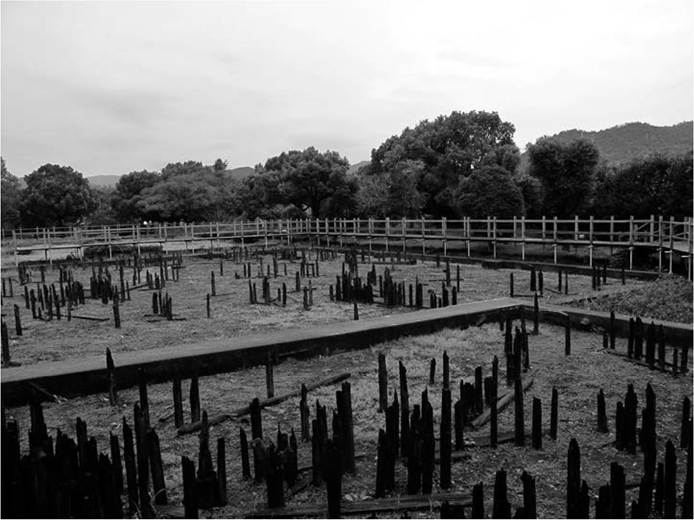
Figure 12.5 The Neolithic site of Hemudu.
and genetic case to be made for the separate origins of indica domesticated rice in India,[665] although it now appears that distinct early cultivation practices in India were enhanced by hybridization with introduced domesticated rice forms from East Asia around 4,000 years ago.[666]
Analyses of phytoliths recovered from Pleistocene caves on the southern margins of the Yangtze basin have also led to suggestions of Pleistocene rice domestication in the region,[667] although clear criteria for determining either cultivation practices or morphological domestication of rice have been lacking. Instead what is evident is that, from 18,000 bp, mobile hunter-gatherer societies in the Yangtze region developed ceramics as a novel form of postharvest food processing,[668] with more sedentary forager villages occurring from around 9,000 bp. Although wild rice was present from at least 15,000 bp, it is unclear how significant this was for these hunter-gatherer systems. More recent improvements in archaeobotanical recovery have indicated that rice domestication was underway during, and only completed after, the Hemudu cultural phase in the lower Yangtze valley, i.e.
7,000-6,000 bp.[669] This points to a start of cultivation in this region of c. 10,000-9,000 years ago; in the middle Yangtze valley it could have begun somewhat earlier but may represent a parallel process to the lower Yangtze. Indeed, sites on the Huai River and other northern tributaries of the Yangtze, such as the Han River, could indicate additional centres of early rice cultivation. Evidence for the very earliest cultivation and the start of the rice domestication process remains obscure: current archaeological evidence makes the end of the domestication process clear, rather than its beginnings.It has also become clear from recent archaeobotanical studies that rice cultivation emerged in the context of broad spectrum foraging focused on the collection of tree nuts, especially acorns of various oak species, and wetland nuts, especially water chestnuts (Trapa natans) and foxnuts (Euryale ferox). Besides gathering and storing these nuts, increasingly sedentary societies began to manage the shallow freshwater wetland margins for the production and planting of perennial wild rice (Oryza rufipogon sensu stricto). Freshwater fish were also heavily exploited in these environments. In the Hangzhou Bay region, the Kuahuqiao and Hemudu cultures had villages of post-built long- houses, suggestive of large extended household groups, continuing a tradition already evident at the earlier sedentary forager village of Shangshan (10,000-8,500 bp). In the middle Yangtze Pengtoushan culture, houses included mainly large ovoid huts with sunken floors, perhaps for smaller groups. There were just a few rectilinear buildings, with rectilinear architecture becoming more standard during the subsequent Daxi period (6,500 years bp). Rice increasingly supplemented nuts and gradually displaced them as a dietary staple over the course of perhaps 2,000 to 3,000 years. During this same period rice evolved domestication traits - adaptations to being cultivated and harvested - including loss of wild-type seed dispersal, a key trait for documenting domestication archaeologically, but also increasing grain size and by inference such traits as closed panicles, increased seed number, erect growth habit, and increased annuality.
The growing quantity of archaeobotanical evidence, as well as sites with preserved field systems, allows the reconstruction of early cultivation systems. Rice was initially managed along wetland margins that were expanded to control water depth, possibly through dry season burning and clearance as well as soil preparation. From the period at which rice remains display clear domestication traits, around 6,000 years ago, artificial field systems are evident, for example in the lower Yangtze region, east of Taihu Lake, at the sites of Chuodun and Caoxieshan.[670] These early fields consisted of small dug-out, ovoid puddle fields in the order of 1-2 m in diameter (Figure 12.6). This technology indicates small-scale but intensive management of rice, in which soils could be fertilized, water readily drained, and harvests easily secured. This is also associated with smaller houses, perhaps indicative of nuclear families. At Chengtoushan in the middle Yangtze, features interpreted as belonging to elongated fields following natural contours and defined by raised banks (c. 2.7 m wide and over 20 m long), in the context of associated archaeobotany, are suggestive of shallow-water, wet rice
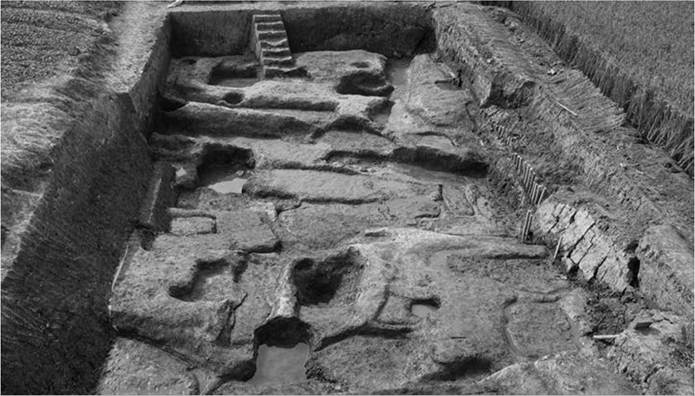
Figure 12.6 Field systems at Chuodun, dating to 4000 cal bce.
cultivation.[671] Houses were also elongated and rectangular, more permanent, and suggestive of larger households than those of earlier Bashidang and Pengtoushan.
By about 6,000 years ago (the Daxi period in the middle Yangtze and the late Majiabang in the lower Yangtze), domesticated rice had become established as the key dietary staple for Neolithic societies, and the basis in subsequent centuries for the emergence of increasing social complexity and population growth. In the middle Yangtze valley the increased productivity and reliance on rice supported the growth of population, as reflected in the scale of the third- millennium BCE settlements of the Qiujialing and Shijiahe cultures.
In the lower Yangtze, Liangzhu society (3300-2300 bce), with its centres of urban character, elaborate jades, and other craft objects, was supported by intensively cultivated landscapes of rice. The central site of Liangzhu included impressive city walls, canal systems for transport, artificial platforms for occupation, and elite burials (such as the Mojiashan site). The nearby site of Maoshan has yielded extensive paddy-field systems that would be familiar to a modern rice farmer, with long walkways and embankments defining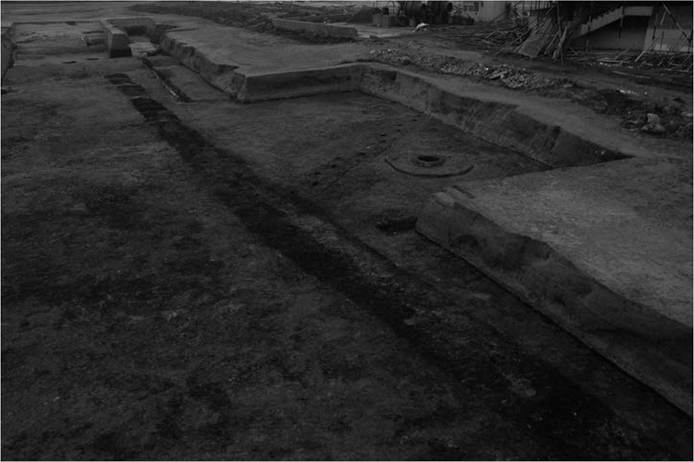
Figure 12.7 Paddy-field systems at Maoshan dating to 4700-4200 cal bce
square to rectilinear fields that could be irrigated from local streams (Figure 12.7). Pigs, melons, and bottle gourds are the only other clearly documented domesticates aside from rice. Cultivation of fruit trees like persimmon and peach, and fibre crops like ramie and mulberry for silkworms, is also probable. The first preserved textiles come from Liangzhu contexts and indicate production of ramie and silk, but spindle whorls suggest that textile traditions extend back to the early rice cultivators of Kuahuqiao and Hemudu, as well as the Neolithic middle Yangtze.
The established rice agriculture of the later Neolithic of the Yangtze provided the basis for the spread of agriculture further south, to the southern provinces of Fujian, Guangdong, and Guangxi. The arrival of rice in these regions took place around 5,000-4,500 years ago.[672] Foxtail millet also spread, at least to Guangxi, pointing towards the middle Yangtze as the source region, as millets were unknown in the lower Yangtze. This is supported by material culture parallels as well.[673] From southern China rice and millet had spread further to mainland Southeast Asia by 4,000 years ago.[674] Prior to the arrival of rice, there is evidence for the consumption of starchy foods, such as palm starch, bananas, arrow root, and Job's Tears, although it is unclear whether any of these were cultivated, as opposed to gathered.[675] Once adopted, rice cultivation probably remained limited for some time, with evidence for population growth, and agricultural impacts on the wider landscape evident in erosional signatures in offshore ocean sediments, only from around 500 b c e.[676]
Unlike in northern China, with its two millets, there was no complementarity of crops in the basic subsistence of the Neolithic Yangtze, nor were any secondary crops of importance added to the subsistence suite, as soybean was in the north.
This is in contrast with the diversity of crops domesticated in Southwest Asia or parts of South Asia, which included multiple cereals and legumes (see Chapter 10). The first two to three millennia of farming in the Yangtze basin focused almost exclusively on rice, although there is evidence for small-scale cultivation of adopted foxtail millet in the middle Yangtze. There is also the possibility that the mint 'shiso' (Perillafrutescens) and melon (Cucumis melo) were cultivated at Chengtoushan from the Daxi period, although we lack clear morphological evidence of domestication.[677] While agriculture in the Yellow River region diversified through secondary domestications (e.g. soybean, hemp) and adoptions (e.g. wheat, rice) and developed an ideology of diversity (the ‘five grains' tradition discussed below), early Yangtze agriculture was single-mindedly about rice. Agriculture eventually diversified in the region, especially after 4,000 years ago as the Yangtze was drawn into the orbit of the states that emerged along the Yellow River, and crops such as wheat and soybean spread to the south.