Deep-seated culinary traditions of the East: boiling and steaming
Compared to other regions of the world, a striking feature of East Asian archaeology is the early date at which ceramics are found. Current evidence places pottery in the Yangtze region back some 18,000 years, with ceramics nearly as old in parts of Siberia and Japan, while in northern China ceramics were being made by the start of the Holocene 12,000 years ago.[636] These early ceramics were associated with hunter-gatherers, who used them for boiling fish and plant foods.
By contrast, in Southwest Asia ceramics develop relatively late, c. 8,500 years ago, millennia after the beginnings of cultivation and domestication. While the Pre-Pottery Neolithic cultures of Southwest Asia made extensive use of querns for flour production and constructed clay ovens (tandoors) for baking bread and roasting foods (see Chapter 8), Neolithic China elaborated forms of ceramic vessel for boiling, steaming, and serving.[637]So, in Western Asia early crops were processed for a flour-focused food system. While grinding stones were used in prehistoric China, boiling and steaming of grains and other foods appear to have been and remained the predominant East Asian methods for preparing foods. This contrast had consequences for the selection of grain quality features, with gluten proteins being selected in Western Eurasia for bread-making properties and starch properties being more variably selected in East Asian cereals, such as rice, millets, and even wheat varieties. It is clear that cooking traditions have persisted as distinctive and contrasting in China (and East Asia) as opposed to Southwest, Central, or South Asia.[638]
The ultimate expression of the East Asian culinary selection of grain quality is found in the sticky (or ‘glutinous') cereals, including sticky rice and sticky millets.
This stickiness is conferred by mutations to the waxy gene which reduce the amylose form of starch and increase the amylopectin form. Cereals with this trait, the glutinous rice, millets, and maize, are largely exclusive to East and Southeast Asia, defining what has been referred to as the ‘glutinous endosperm starch' culture area.[639] That this trait has evolved in parallel in several species and multiple times in some of these, such as foxtail millet, points to a strong cultural preference since prehistory in at least part of China.Beginnings in the north: from millets to soybean and hemp
Two types of millet, broomcorn (Panicum miliaceum) and foxtail millet (Setaria italica: Figure 12.2), are believed to have originated in northern
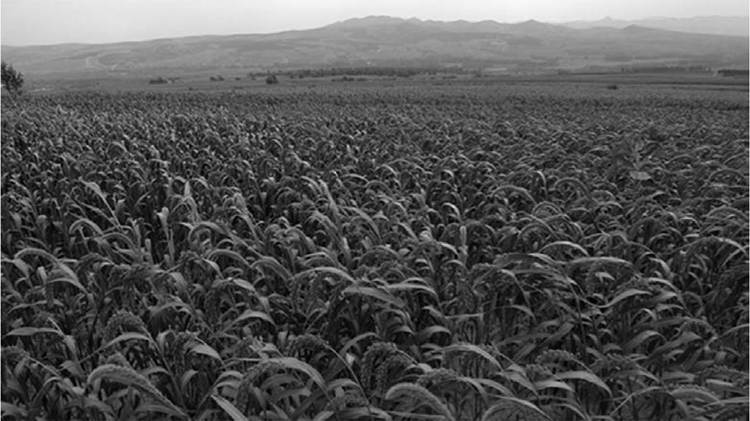
Figure 12.2 Foxtail millet field in Aohan, near the Xinglonggou site
China. While these species are referred to by different names in Chinese in the past and present, the most common names are respectively shu and su. These were the staple calorie sources of the developed Neolithic in central China (the Yangshao, Dawenkou, and Longshan traditions), as well as the staple grains during the Shang and Zhou dynasties.[640] [641]
The wild ancestor of foxtail millet is Setaria viridis, which is an annual grass widely distributed over a large part of East Asia. However, determining its original wild range and habitat is complicated by its proclivity for anthropogenic habits, both as an arable weed and as a volunteer on roadsides, probably including feral populations that derive genetically from the crop. (Indeed S. viridis is a widespread weed in North America where it was introduced through European plant translocations in the past few hundred years.) Nevertheless, probable primary habitats can be found in natural disturbed settings such as upper floodplains, including along the Yellow River and its many tributaries.
The wild progenitor for broomcorn millet, by contrast, remains debated. A candidate, at least in morphological terms, is provided by Panicum miliaceum var. ruderale, inferred as the wild progenitor by some scholars.11 These ruderale types are widespread as weeds from eastern Europe to East Asia, but are unknown from non-anthropogenic habitats, making them plausibly feral. In contrast to foxtail millet, wild populations in likely primary habitats are unknown, although we expect them to have occurred in the drier north of the loess plateau and the Chinese steppe.
It remains the case that our knowledge about how the domesticated forms of broomcorn and foxtail millet evolved from their wild ancestor is limited. Unlike in the case of rice, wheat, or barley, archaeological data on the loss of seed dispersal, a key domestication trait, are lacking. Nevertheless, in most seed crops an increase in grain size evolved alongside the non-shattering trait.[642] This is one proxy that has shown potential for the Chinese millets. It has been noticed that millet grains show a gradual increase in size and change in shape over the Neolithic period. This has led scholars to speculate that the broomcorn millet (Figure 12.3) from the early Neolithic sites such as Xinglonggou (discussed in Chapter 13) is intermediate in caryopsis size and shape between modern domesticated and wild forms, and therefore
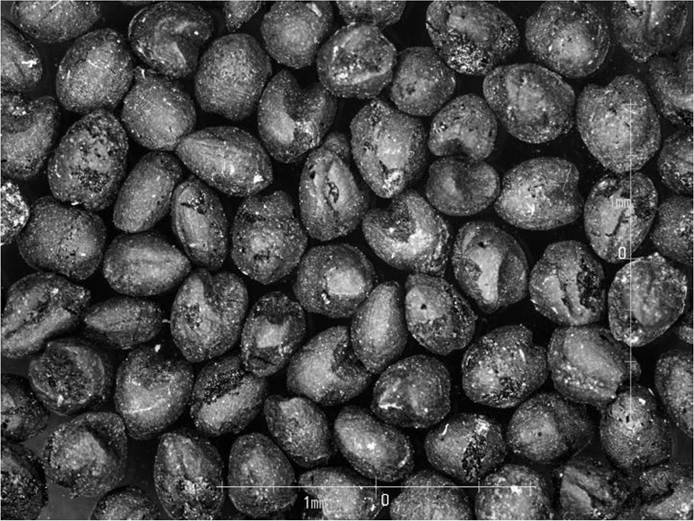
Figure 12.3 Carbonized remains of millet from Xinglonggou, dating to 7700 cal bce.
represents an early stage of domestication.[643] The increase of grain size and change of shape also appear to be associated with the increasing proportions of millet grains among archaeobotanical assemblages in northern China. Although the timing and process of millet domestication remain to be resolved, the above evidence would suggest that the domestication of millet and the development of early cultivation systems in northern China were a protracted process.
Recent genetic research has clarified the geographic relationships of broomcorn millet.1[644] While SSR microsatellite studies accommodate both a single (northern Chinese) origin and a dual origin across Eurasia, studies of loci affecting the ‘waxy gene' (for grain ‘stickiness', see above) are more concordant with an origin in a single region of northern China and a westward spread from there.Two terminal Pleistocene sites on the loess plateau in Shanxi province have provided residue evidence and tool use-wear evidence for pre- agricultural plant use. Starch granules from Shizitan (c. 12,700-11,600 bp) have been identified for a range of plants including acorns (Quercus sp.), beans (Vigna sp.), tubers (Dioscorea sp.), and panicoid grasses.[645] The Panicoideae is the subfamily in which both broomcorn and foxtail are placed. In a separate account of the use-wear on grinding implements from Xiachuan (c. 23,900-16,400 bp), archaeologists have observed various patterns that may have resulted from different pounding and grinding movements.[646] One of those patterns appears to be similar to those for the grinding of moistened grains with soft husks. None of these data is directly associated with macrofossil evidence for millet, but they nevertheless indicate the use of postharvest processing techniques that would be appropriate for incorporating grains in the diet. Prior to the domestication of millets, the development of ceramic vessels suitable for boiling offered another possible method of preparing these hard seeds for consumption.
Turning from the Pleistocene to the early Holocene, the archaeobotanical record for millet in northern China is clearer. Alongside records of charred grains, evidence from phytoliths and starch granules has moved back the earliest published dates associated with millet by two millennia. This comes from a range of sites in Hebei province, including Nanzhuangtou, Donghulin, and Cishan.
The earliest date in a published claim is currently in the eleventh millennium bce. In the case of foxtail millet, processing of Setaria italica and/ or S. viridis by the start of the Holocene at Donghulin, Beijing (c. 7500 bce), and Nanzhuangtou, Hebei (c. 9500 bce), has been inferred from recent starch grain studies.[647] In the case of Panicum miliaceum, the earliest published claims relate to phytoliths from the site of Cishan, retrieved from pits in stratigraphic section.[648] While morphological identification as Panicum miliaceum may be plausible, the wild form cannot be ruled out. AMS radiocarbon dates on associated pit sediments range between 8500 and 7500 bce.The earliest macrofossil evidence dates to the turn of the seventh/sixth millennia bce. Several localities report charred broomcorn and foxtail millet grains from prior to 5000 cal bce.[649] They include Xinglonggou in Inner Mongolia; Xinle in Liaoning; Yuezhuang in Shandong; Donghulin in Beijing; Cishan in Hebei; Peiligang, Shawoli, and Wuluoxipo in Henan; and Dadiwan in Gansu.
A striking feature of the geographic distribution of the millet sites in this period is their concentration along the margins of the loess plateau and the Inner Mongolian plateau. To the east of these plateaux lie northern China's two major alluvial plains, the Huabei plain (the North China plain) and the Dongbei plain (the Northeast plain). A chain of low mountains, broadly running northeast-southwest, extends over some 2,500 km along the boundary between the plateaux and the floodplains. The pre-5000 bce millet sites listed above are all situated on foothills and share a similar relationship to the mountain chain. Beyond this mountain chain, other early millet sites are situated in the same relationship with mountains, as for instance Dadiwan in relation to the Qinling mountains and Yuezhuang to the Yitai mountains.
The common feature of those millet sites is their recurrent location at a position above the nearest river course, at the break of slope between the uplands and the softer sediments of the foothills, at points where rainwater can be captured in freely draining fertile plots.[650] Although involving different sediment types and different landform histories, this distribution resonates with the alluvial locales of early farming sites in Southwest Asia.
That pattern, described as ‘geological opportunism' by Claudio Vita-Finzi and ‘catchment farming' by Andrew Sherratt, chimes with the millet landscapes of northern China.[651]An enigmatic feature of the records for broomcorn millet is its apparent occurrence on both sides of the Old World. During the sixth and fifth millennia bce, some twenty sites from Europe and the Caucasus report broomcorn millet identified to species level.[652] However, direct radiocarbon dating of grains of European broomcorn millet has indicated that at least some, and possibly all, of these ‘early' records are spurious (i.e. intrusions of recent-age seeds into Neolithic layers). The date at which Asian millets reached Europe remains a matter for enquiry and confirmation.
Useful as they are for establishing geographic patterns and chronology, the contribution of millet to the diet is difficult to infer from recorded quantities of archaeological grain, sensitive as they are to archaeological site formation processes (the intrusion problem mentioned above). The dietary contribution of millets is more effectively approached through palaeodietary analyses of stable isotope measurements from bone. A growing body of human stable isotopic values indicates that consumption of C4 crops (which in this region we presume to derive from broomcorn and/or foxtail millet) became common in all regions of northern China from 5000 cal bce onwards.[653] However, the earlier isotopic pattern is more variable, both between sites and between individual consumers. Among human skeletal remains from the five cultures reporting millet pre-5000 bce, one is consistent with no millet consumption and two are consistent with a mix of C4 and C3 consumption.[654] In only one of the five pre-5000 bce cultures, Xinglongwa, does the carbon isotope signal indicate millet consumption on a significant scale (see Chapter 13).
Turning our attention from the east of Eurasia to the west, although the archaeobotanical record for this period includes millet taxa, stable isotopic studies have demonstrated that Neolithic Western Eurasian diets were largely based on C3 resources. The consumption of C4 crops here is not isotopically demonstrated until the Bronze Age (1500-1100 bce) in Italy and the Iron Age (800-400 bce) in central Europe, and it was never as prominent as it was in Neolithic northern China.[655]
In summary, the published records of archaeological grain finds have suggested an expanded reliance on millets throughout northern China by c. 5000 bce. Prior to this, although many archaeological cultures are recorded as using millet to some degree, there is only one, Xinglongwa, in which millet constitutes a significant component of the carbon diet.
Neolithic peoples did not live by millet alone, and over the course of the middle Neolithic, additional domesticates came to contribute to the diet, including pigs, soybeans, and hemp seed. On the basis of available archaeological finds, the earliest evidence of use, if not cultivation, of soybeans is in central China, south of the Yellow River and in the Yellow River basin, rather than in the northeast. Quantities of glycine have been found, for example, at Jiahu, dating to the later seventh millennium bce.[656] Soybeans at Jiahu have a small seed size. Changes in seed size suggesting domestication are evident between 3650 and 1450 bce.[657] Korean archaeological soybeans follow roughly the same chronological trajectory as that of the Yellow River region, which could link these two regions into a single domestication pathway, or two closely parallel pathways. By contrast, an earlier and independent domestication in Japan is indicated by middle Jomon soybeans from Shimoyakebe.[658]
Hemp (Cannabis sativa) has served as both an oilseed and a fibre crop in early China, in addition to its drug uses. It was well established as an edible seed crop and drug by the time of early Chinese written sources.[659] Although its original wild distribution is unclear, Li (1983) regarded it as being a native of the open environments of the semi-arid loess highland of northern China, in addition to wild populations that persist across Central Asia.[660] Genetic evidence seems to support distinct western and eastern domestications in Asia.[661] Archaeobotanical finds have been few but include Majiayao culture Linjia, Gansu (c. 4,700 bp), Shang dynasty Taixi, Hebei (c. 3,500 bp), and Daxinzhuang, Shandong (c. 3,500 bp).
Pigs were the domesticated animal par excellence of early China. Recent zooarchaeological work using geometric morphometrics (computerized modelling of animal size) points to a central Chinese domestication. Indeed, pig teeth from Jiahu (9,000-8,000 bp) on the Huai River group with domestic pigs, close to those from the Yangshao period site of Xishuipo.[662] Stable isotopes from the bones of domestic pigs allow detection of when they become a major consumer of millets, plants that wild boar are unlikely to consume in any quantity. Millet consumption by pigs implies that they were either being pen-fed or else consuming scraps from the human kitchen or latrines of millet-eaters. Barton et al. documented how Yangshao-era pigs (after 4500 bce) at Dadiwan ate millet in contrast with pigs of the early Dadiwan period (5500 bce).[663]
More on the topic Deep-seated culinary traditions of the East: boiling and steaming:
- Early written traditions
- Beyond the West
- Barker Graeme, Goucher Candice (ed.). The Cambridge World History. Volume 2. A World with Agriculture, 12,000 BCE-500 CE. Cambridge University Press,2015. — 668 p., 2015
- Consequences