Etiology and Epidemiology
B. bacilliformis are pleomorphic bacteria, well stained with the Romanovsky stain. In the red blood cells and in the histiocytic cells, the bartonella assumes a rodlike (bacillus) or coccoid shape, 1 to 3 microns in size (Figure VIII.22.1).
The electron microscope shows the flagella of the bartonella. It grows well in liquid and in semisolid blood media. The human bartonella is closely related to the animal bacteria Hemobartonella, Eperythrozoon, and Grahamella.In 1913 Charles Townsend identified the sandfly Phlebotomus verrucarum as the insect vector of the disease. The female is the only transmitter, and the transmission occurs during the night. Carrion’s disease is a rural disease, and, like yellow fever, it does not need a human reservoir because the bartonella lives in the small animals in the area.
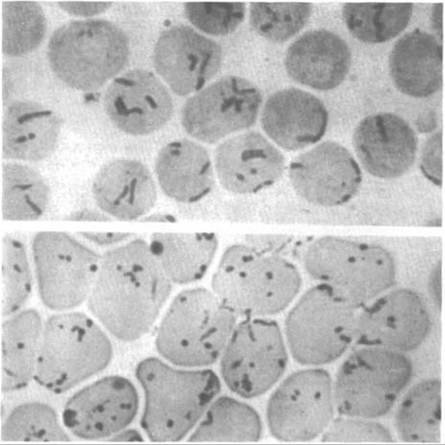
Figure VIII.22.1. Bartonella bacilliforτnis within red blood cells stained by Giemsa and Romanovsky stains. (From O. Urteaga-Balldn and J. Calderon. 1972. Dermatologta Clinica, by permission of the author.)