Frontier households of the Brzesc Kujawski Group
After 4700 bce, following an apparent hiatus in settlement of several centuries, Brzesscs Kujawski Group settlements belonging to the Lengyel culture appear across Kuyavia (Figure 23.4).[1326] These communities are clearly from the same Danubian tradition as the Linear Pottery culture, with their long- house architecture and contracted burials having clear antecedents in the Neolithic communities of upland central Europe.
Sites of the Brzesc Kujawski Group lie in the same landscape zones, and often at the same locations, as Linear Pottery settlements from several centuries earlier. They are far more numerous, larger, and of much longer duration.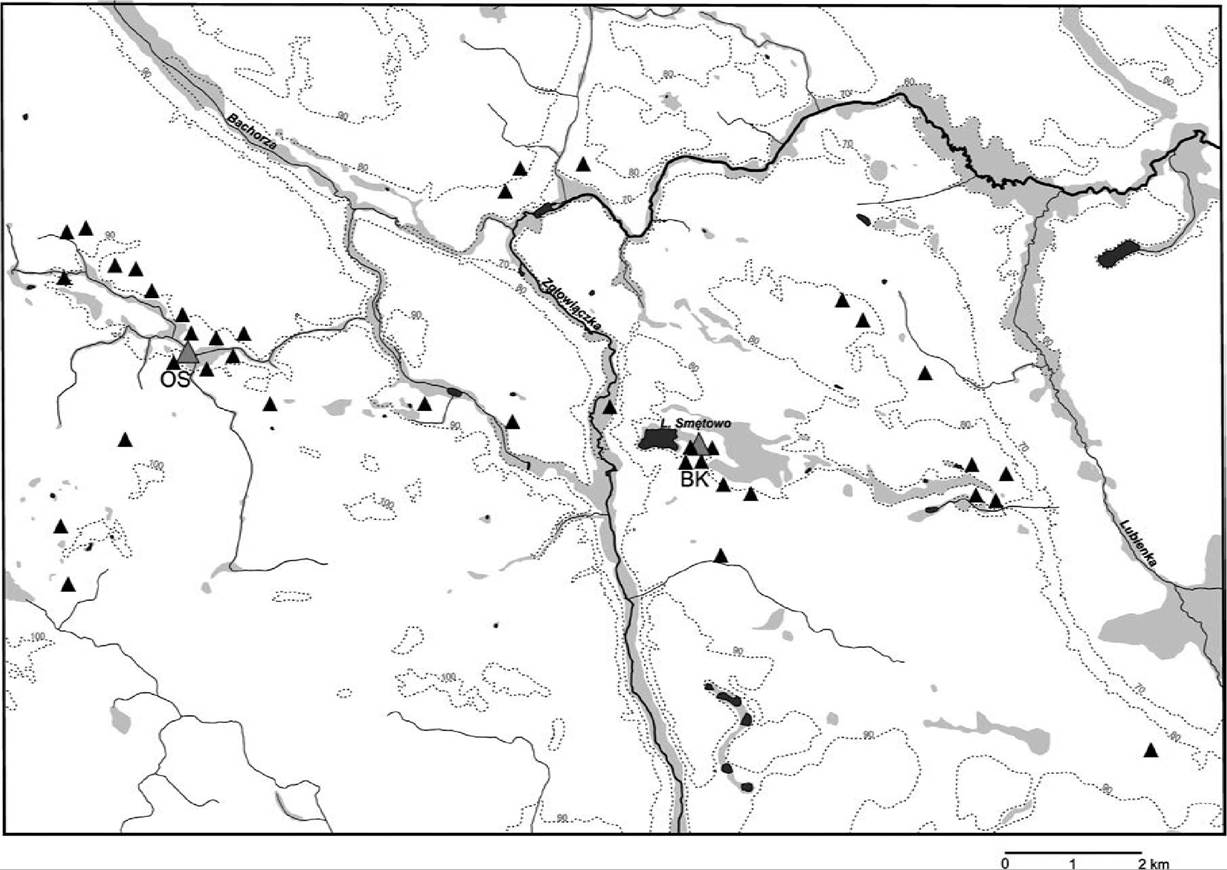
Figure 23.4 Map of sites of the Brzesc Kujawski Group near Brzesc Kujawski, with major settlements indicated by large triangles. BK - Brzesc Kujawski; OS - Osionki.
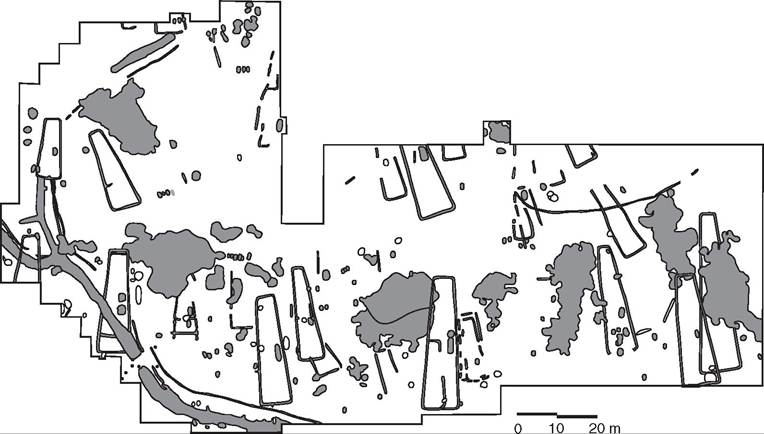
Figure 23.5 Excavation plan of the Brzesc Kujawski Group settlement at Osionki.
Two large settlements lying 8 km apart stand out in the area that we have studied: Brzesc Kujawski and Oslonki.[1327] Both settlements cover several hectares with dozens of longhouses and burials and are surrounded by multiple smaller settlements. Just northeast of Brzesc Kujawski lies a slightly smaller settlement at Pikutkowo, while further east settlements of the Brzesc Kujawski Group have been found at Smolsk and Kruszyn along the route of the A1 motorway. Near Oslonki, other settlements of the Brzesc Kujawski Group include Miechowice, Konary, and Zagajewice.
A large settlement of the Brzesc Kujawski Group contains several types of archaeological feature: longhouses with distinctive trapezoidal plans; large pits from which clay was dug to plaster the houses, and smaller pits dug for unknown reasons; unusual bathtub-shaped features in the interiors of many houses; burials; and, in the case of Oslonki, a ditch-and-palisade system (Figure 23.5).
Due to the fact that many houses and pits overlap, it is possible to define three major phases of settlement of the Brzesc Kujawski Group. The first, or ‘early', phase begins before 4500 bce. Small longhouses mark the establishment of farmsteads during this phase. It is followed by the ‘classic' phase between c. 4500 and 4300 bce, during which the settlements saw their most elaborate development, with large longhouses and rich burials. Finally,id="Picutre 151" class="lazyload" data-src="/files/uch_group31/uch_pgroup24/uch_uch7223/image/image150.jpg">
Figure 23.6 Houses and other features of the Brzesc Kujawski Group at Miechowice; note oval features within each house.
a late phase continues until about 4000 bce, whereafter the Brzesc Kujawski Group fades from the scene.
Perhaps the most striking features of the Brzesc Kujawski Group are its trapezoidal longhouses, of which dozens are now known from settlements across Kuyavia (Figure 23.6). They are usually between 20 and 40 m in length along an axis running roughly northwest-southeast, 5-8 m wide at the southeast end and 3-5 m wide at the northwest end. Rather than digging an individual hole for each upright structural post, Brzesc Kujawski house- wrights dug a continuous bedding trench around the perimeter of each structure. Posts were set closely together in this trench palisade-style. Impressions in the bottoms of trenches indicate that many posts were logs split lengthwise. Gaps between posts were filled with clay daub, taken from pits next to each house. We do not know how the roofs were constructed, although the assumption is that they were pitched along the main axis of the house. It is also difficult to determine where the entrances were.
Enigmatic bathtub-shaped pits are found in many, but not all, longhouses of the Brzesscs Kujawski Group, usually at the centre of the house near the eastern wall. After we first noticed them at Oslonki, subsequent examination of house plans from other sites indicated that they are ubiquitous.
Their shape and size are inappropriate for food storage (which was probably high in the rafters away from rodents and vermin), and they contain almost no artefacts, bones, or seeds. Yet they are so consistent a feature of many houses that they evidently had a culturally patterned significance for the Brzesc Kujawski Group.The large clay-pits served as the source of daub for plastering houses and making pottery. They were made haphazardly as people dug out the clay they needed, resulting in many nooks, crannies, and even burrows. These pits then functioned as both traps for artefacts and other debris as well as the locations of deliberate rubbish disposal, all the while silting up by erosion from surrounding surfaces. In some places, dense concentrations of broken pottery, chipped stone, animal bones, and seeds are found, while elsewhere the fill contains almost nothing.
Brzesscs Kujawski pottery comes in several basic forms, including carinated bowls and tall-necked amphorae. Surface decoration is much reduced from that seen in the Linear Pottery culture and commonly consists only of rows of fingernail impression around the rims and waists of vessels. Handles and appliqued knobs are also common ornaments. The ceramics of the Brzesc Kujawski Group are distinctive for their mica temper.
Flint-workers of the Brzesc Kujawski Group found that they could make most of their tools from the local Baltic erratic flint. Whenever possible, however, they were happy to use imported flint, including the ‘chocolate' flint from the Holy Cross mountains, Jurassic flint from the Krakow uplands, and even Volhynian flint from the southeastern corner of Poland. Blades made from ‘chocolate' flint were preferred for working hard materials such as bone and antler. Local erratic rocks were also used for making most ground stone tools. An assemblage of ground stone tools from a feature interpreted as a lumberjack's hut at Kuczyna, halfway between Brzesscs Kujawski and Oslonki, reflects various stages in the life of stone axes, from pre-form to exhausted tool.[1328] [1329]
At Oslonki, a massive ditch system delimits the western side of the settlement, which was otherwise surrounded by water.17 The surviving depth of the ditch often reaches 2 m or more.
It was presumably coupled with a bank made from the excavated soil which has since been eroded and ploughed away. The Oslonki ditch is not continuous, with gaps suggesting entrances through it, although passage would have been complicated by the palisade running behind it. The ditch was not part of the original settlement layout, but rather was cut through spots where earlier houses had stood, suggesting that something happened to require fortification of the settlement. Burials in the ditch-fill indicate that it had started to silt up already during the life of the settlement.Some of the richest information about the inhabitants of settlements like Brzesc Kujawski and Oslonki comes from dozens of burials. Burials of the Brzesc Kujawski Group were contemporaneous with their houses, so there is no possibility that the function of the sites alternated between settlement and cemetery. Instead, these two functions were integrated, so the dead were very much a part of the living settlement. Although at first glance the burials of the Brzesc Kujawski Group appear to be distributed throughout its settlements, closer examination reveals that many occur in small clusters of two to nine graves, often lined up side by side. These micro-cemeteries clearly reflect memories of ancestors and the digging of new graves alongside theirs, and we can assume they must have been marked somehow on the surface.
Most graves contain skeletons in a crouched position with arms drawn up to the chest (Figure 23.7). During the early and middle phases of the Brzesc Kujawski Group, males were always buried on their right side and the females on their left, with heads pointing towards the south or southeast. We do not know the reason for this practice, but clearly it reflected an important fundamental value that divided along gender lines. During the late phase of occupation, burials were more haphazard and did not conform to such strict rules. They are flexed, extended, or on their backs, oriented in almost every direction.
Most graves contain single skeletons, but double and triple burials have occasionally been noted.Accompanying many skeletons are artefacts. Many male graves have flint blades or axes made from red deer antlers, while female graves often contain copper ornaments, shell beads, stone beads, and bone arm-rings. More will be said about the antler axes below, but it is clear that they were a mark of masculinity. The shell beads are round, perforated disks cut from the valves of river mussels of the genus Unio which were then strung into hip belts. The number of beads in some belts runs into the thousands. Stone beads were less numerous and were made from marble-like calcite. Bone arm-rings were brassards worn on the upper arms, decorated with rows of small triangular incisions. A burial may contain multiple ornaments of different materials, or it may contain none at all.
The copper artefacts found at Brzesscs Kujawski and Oslonki represent the earliest known use of copper in this part of Europe, around 4500 bce.
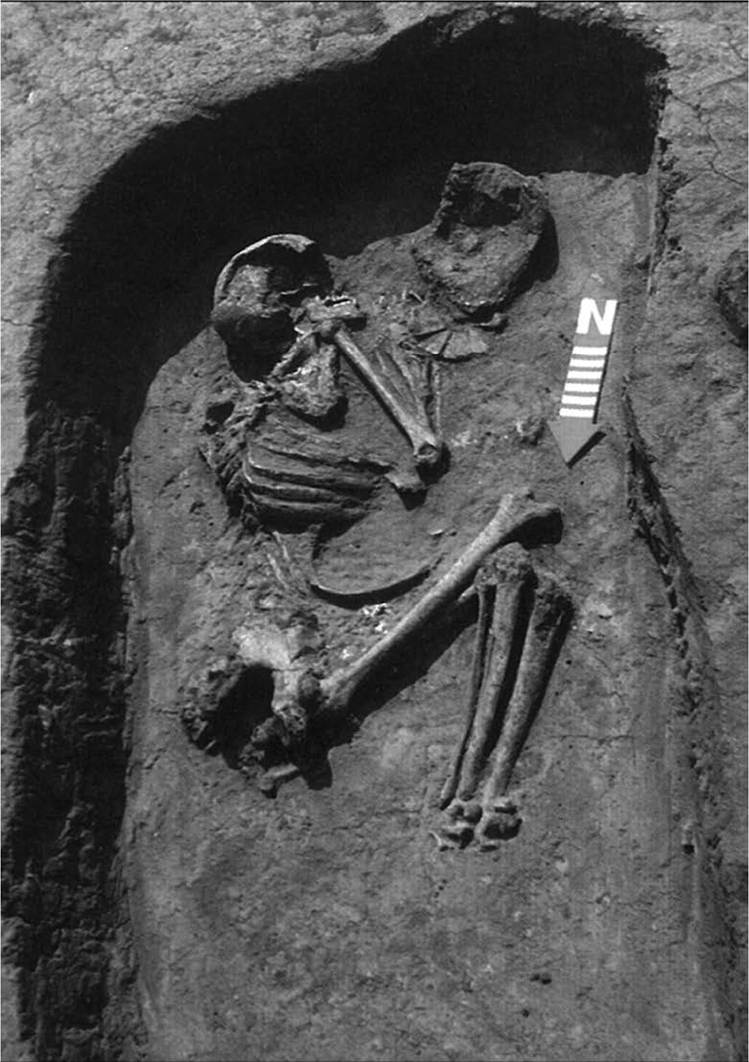
Figure 23.7 Burial of the BrzesC Kujawski Group with copper artefacts at Osionki.
Although the copper source has not yet been conclusively established, a trail of similar artefacts leads to the eastern Alps, hundreds of kilometres away. It was smelted, hammered into ribbons and sheets, and then shaped into beads, pendants, and head ornaments. Some burials had lavish displays of copper, while others had none. After a short period of availability around 4500 bce, the copper supply was cut off, and the later burials do not contain metal ornaments. Despite the settlements being only 8 km apart, the copper at Oslonki has a different trace element signature from that at Brzesc Kujawski.[1330] Graves at Oslonki have much more elaborate copper displays than those at Brzesc Kujawski, including complicated compositions of pendants and beads, and even a diadem of small copper strips.
Antler axes known as 'T-axes' found in Brzesc Kujawski graves deserve special mention. They are made from sturdy beams of red deer antler, either from hunted animals or from shed antlers. After removing the base and brow tine with a combination of cutting and snapping, the tines and crown were removed. A hole was drilled through the location where the bez tine had been cut off, presumably to accept a wooden handle, and the snapped end was ground to a sharp edge. We know that the axes were made at Brzesc Kujawski and Oslonki because we have found by-products of axe manufacture like severed bases and tines. In the male graves where they were found, they are often positioned such that if a handle had survived it would have been held by the corpse.
Skeletons from Brzesc Kujawski, Oslonki, and other sites have been studied by anthropologists Emilia Garlowska and Wieslaw Lorkiewicz.[1331] Poor diets and hard labour took a toll on the early farmers. Cribra orbitalia, lesions in eye sockets caused by anaemia, was found in 80 per cent of children at Oslonki and persisted in 20 per cent of adults. Enamel hypoplasia, caused by dietary stress while dental crowns are forming in childhood, is found in many individuals. Bone modifications caused by habitual squatting are found on lower limbs, while Schmorl's nodes on vertebrae also reflect biomechanical stress. Teeth were used for more than chewing food: transverse grooves on lower incisors resulted from drawing string or thread repeatedly across the front of the mouth.[1332] Grooves occur almost always on women's teeth, so this activity was gender-specific.
Many skeletons bore traces of violence (Figure 23.8).[1333] Among male skeletons, nearly a third had traces of traumatic injury ‘above the hat line' caused by blows to the skull. Sometimes the individual survived, but in many cases the blow was lethal, often penetrating the skull. Victims of violence were not only adult men. At Oslonki, one grave contained skeletons of an adult female 25-35 years old, a child about 10 years old, and a child 4-6 years old. The woman and the older child were killed by blows to the head with a pointed round object 45 mm across, matching antler axes used by Neolithic farmers in this region.
The animal economy of the Brzesc Kujawski Group is well known from relatively large collections of animal bones studied by Peter Bogucki and Daniel Makowiecki.[1334] In marked contrast to the cattle-heavy Linear Pottery animal economy, Brzesscs Kujawski faunal samples are characterized by many more sheep and goats, often accounting for between 30 and 40 per cent of the identified specimens, and generally between 10 and 30 per cent pigs. Cattle were still the most important domestic species, comprising 40 per cent or more of most collections, but the diversification of the animal economy represents a change from the previous millennium. Wild mammals are better represented in the economy of the Brzesc Kujawski Group than in the Linear Pottery diet, with a small but noticeable percentage of red deer and roe deer at every site. Other hunted mammals include wild horse, wild pig, beaver, otter, and bear. The people of the Brzesc Kujawski Group also made extensive use of fish, birds, and turtles.
Settlements of the Brzesc Kujawski Group also yielded a richer array of palaeobotanical data than their Linear Pottery precursors. Analysis of carbonized plant remains collected from Oslonki, Miechowice, and neighbouring sites by Aldona Bieniek shows heavy cultivation of wheat and some barley, with wheat chaff representing over 80 per cent of the botanical remains.[1335] An extensive list of wild plant species contains both field weeds harvested along with the cereals as well as some gathered plants. An unusual feature of the botanical assemblages at Oslonki, Konary, and Miechowice is the presence of an unusually large number of grains and awns of feathergrass, Stipa pennata. Feathergrass is a xerothermic species typical of dry grasslands rather than
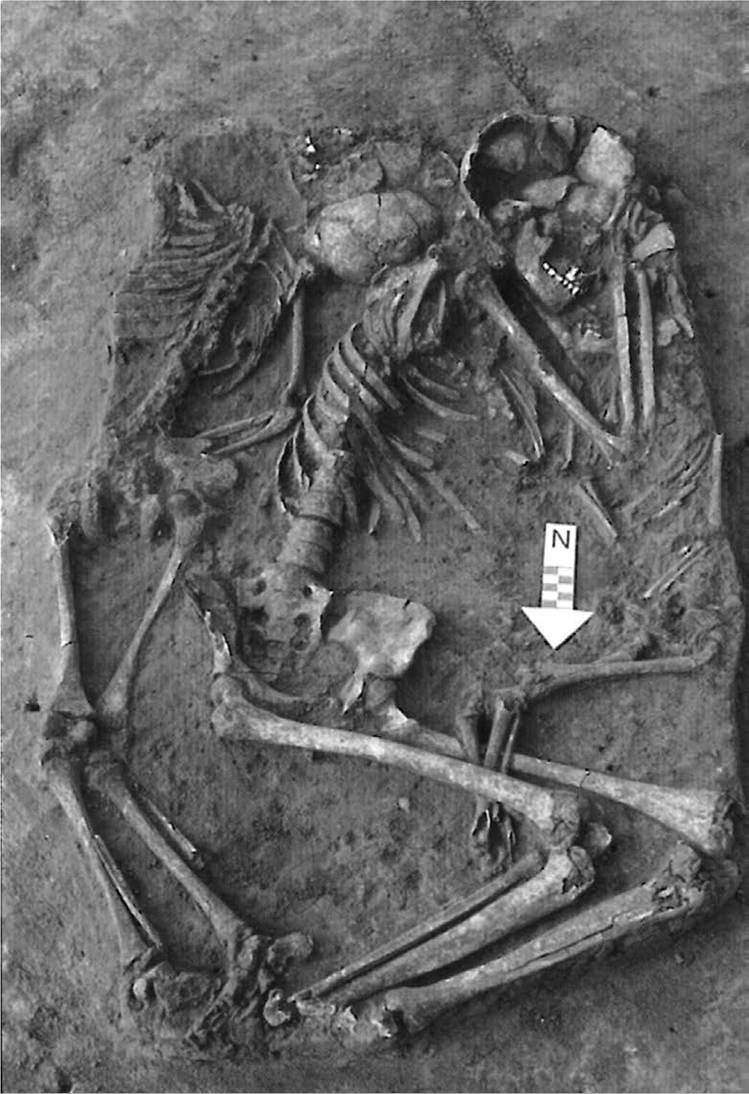
Figure 23.8 Multiple burial with victims of violence at Osionki; the adult female at the centre and the older child on the left were killed by blows to the head, while the cause of death of the younger child on the right cannot be determined with certainty.
closed deciduous forests. It is unlikely that the feathergrass, whose use is unknown, would have been brought from a great distance, so its abundance at the sites of the Brzesc Kujawski Group suggests the presence of open, dry habitats in the vicinity, either natural or anthropogenic.
Multiple lines of evidence studied by Dorota Nalepka, Boleslaw Nowaczyk, and others have enabled us to assess the environmental impact of the settlement of the Brzesc Kujawski Group at Oslonki and the neighbouring settlements of Miechowice and Konary, where three basins left by post-Glacial melting of stagnant ice filled with biogenic sediments.[1336] Sandy deltas and lenses in the sediments suggest that loose soil from nearby cleared land washed or was blown into the basins, which were shallow lakes during the fifth millennium bce. Additional mineral material and charcoal particles in the sediments reflect extensive activity around the shorelines of the lakes, while the presence of terrestrial snails among the mollusc samples also indicates delivery of soil from nearby land surfaces into the basins. At the same time, samples of Cladocera, or water fleas, shift from being dominated by species that flourish at low nutrient levels to those that require high nutrient levels, suggesting the dumping of human and animal wastes into the lakes. Such indicators of human activity, apparently lacking during the Linear Pottery occupation at Miechowice, indicate the pronounced and sustained effect of occupation by the Brzesscs Kujawski Group.
At the same time, this impact appears to have been localized in space and time. Although the pollen record during the period of the most pronounced disturbance is interrupted due to the corrosion of pollen grains by mineralization of the sediments, it resumes after a hiatus to reflect relatively unchanged composition of the surrounding forests. Eventually, the inflow of soil from surrounding land surfaces ended, and the Cladocera samples were again dominated by species that have lower nutrient requirements. During the middle of the fifth millennium bce, however, the people and animals living at Oslonki, Miechowice, and Konary modified the landscape in the immediate environs of their settlements to trigger distinct signals in the palaeoecological record.
On the basis of the rich archaeological finds at Brzesscs Kujawski, Oslonki, and other sites, we can begin to reconstruct the Neolithic frontier society that flourished in Kuyavia during the fifth millennium bce. Its basic unit of residence and decision-making was the household that occupied a longhouse, buried its dead in nearby graves, and left its rubbish in the adjacent pits.[1337] At any one time, several households could be found at large settlements like BrzesC Kujawski and Oslonki, while smaller settlements like Miechowice and Pikutkowo may have been home to one or two. While we do not know the exact composition of a household, we assume that members of several generations lived under the same roof. As households moved through their developmental cycle, some longhouses were enlarged or rebuilt.
Over time, new households formed, requiring construction of more long- houses and beginning the cycle anew, while others faded away and houses were abandoned. The many longhouses at Brzesc Kujawski and Oslonki indicate that these settlements persisted over multiple household developmental cycles, even if houses may have been intermittently demolished and rebuilt. Such duration of settlement is also reflected in the many burials found at Brzesscs Kujawski, Oslonki, and other sites. We have characterized such long-term commitments to particular settlements as reflecting a ‘strategic' choice of prime locations for pursuing an agricultural economy characterized by intensive cultivation of cereals and a mixture of livestock, supported by fishing and hunting.[1338]
Despite the abundance of grave goods in some burials, which suggests social differentiation, we do not see unequivocal signs of persistent hierarchy or institutionalized leadership in the Brzesc Kujawski Group. Rather, this society can be characterized as ‘transegalitarian', meaning that distinct but transient asymmetries in household status waxed and waned over time, depending on success (or lack of it) in achieving prestige. Households may have joined together into factions to advance common interests, perhaps allied against other such communities or outside groups.
Everyday life was difficult, as shown by the skeletal evidence for nutritional stress and hard work. Life was also violent, as is often the case in frontier communities. We have already mentioned the traces of lethal trauma on many skeletons, some of which appear to have been inflicted with antler T-axes. Furthermore, some houses of the classic phase at both Oslonki and Brzesc Kujawski show signs of having been destroyed by fire and then either rebuilt or abandoned. At Oslonki, the fortification ditch was constructed after one such episode around 4300 bce. The presence of antler axes and archery equipment in male graves suggests that they were recognized for their abilities in combat. Perhaps internal stresses and contentious asymmetries in status led to conflicts between factions that eventually contributed to the decline of the Brzesc Kujawski Group.
The people of the Brzesc Kujawski Group maintained long-distance contacts with other farming communities to the south and west. Their procurement of copper and calcite followed a chain of connections leading through Silesia and Bohemia, while their high-quality flint was obtained from sources in southern and southeastern Poland. Shared cultural practices such as long- houses and contracted burials, as well as common ceramic styles, situate the Brzesc Kujawski Group firmly within the Danubian world established by the Linear Pottery culture a millennium earlier.
At the same time, however, Kuyavia lies along the borderland that separated the Danubian world from the foragers of the Baltic basin.[1339] Antler T-axes like those made at Oslonki and Brzesc Kujawski and used in various activities, including homicide, before being placed in male burials, were popular throughout the Mesolithic world of the fifth millennium bce (Figure 23.9). Bone ornaments decorated with rows of incised triangles are also found in the Baltic basin. Kuyavia would have been only a few days by canoe on low-energy streams from the Baltic coast, so it is likely that foragers
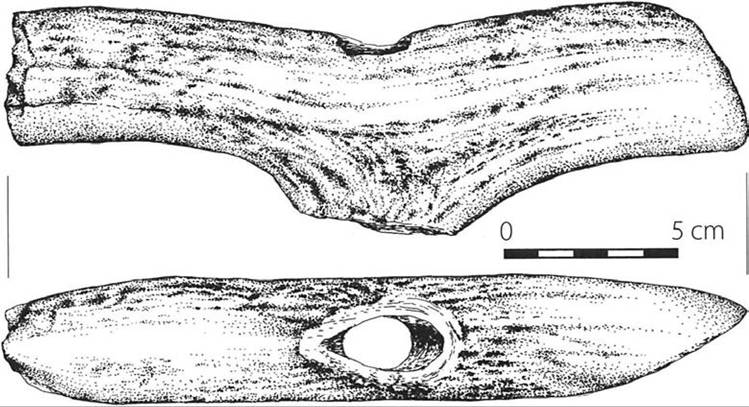
Figure 23.9 Antler ‘T-axe' of the Brzesc Kujawski Group from Oslonki.
and farmers were aware of each other. The appearance of domestic cattle at sites in the southwestern Baltic at the end of the fifth millennium bce shows that this borderland was porous rather than a barrier.
An enduring mystery, however, involves the end of the Brzesc Kujawski Group and the eventual transformation of Neolithic society in the Polish lowlands to that known as the Funnel Beaker culture, characterized by very different settlement and burial practices. The violent episode around 4300 bce marked the beginning of a decline in which burial practices were liberalized and some of the smaller settlements were abandoned, but it did not cause an immediate end to the Brzesc Kujawski Group. One possibility is that intensive local land use was not sustainable, although that does not provide an entirely satisfactory explanation due to the fact that the environment quickly rebounded. Perhaps the old Danubian model simply did not satisfy an increasingly heterogeneous population, and the Funnel Beaker model was more acceptable in the long run.
Nonetheless, the impact of the Brzesc Kujawski Group cannot be underestimated. Its settlements, which persisted across multiple generations, represent the first successful farming communities of the North European Plain, with an economy based on intensive cultivation and a mix of livestock species that took advantage of bountiful Kuyavian conditions. Its legacy lived on in the eventual transformation of indigenous forager societies of the North European Plain and perhaps in the oft-noted parallels between its longhouse architecture and earthen long barrows of the Funnel Beaker culture found nearby. Yet there is still much to be learned, and future generations of archaeologists will find that studying the Brzesscs Kujawski Group holds many challenges and rewards.