Linear Pottery pioneer farmers
Along the northern periphery of central Europe, Linear Pottery farmers established settlements on the North European Plain along the lower Oder and Vistula.[1316] Linear Pottery settlement areas of the North European Plain formed ‘exclaves' of the larger zone in upland central Europe occupied by these agriculturalists.
One such exclave is found in Kuyavia, where clusters of Linear Pottery sites lie on low fingers of land beside glacial landforms such as shallow lakes and valleys.One settlement cluster is found around Brzesc Kujawski (Figure 23.1), where a string of Linear Pottery sites follows a complex of shallow troughs left by subglacial channels running approximately 20 km east-west from the
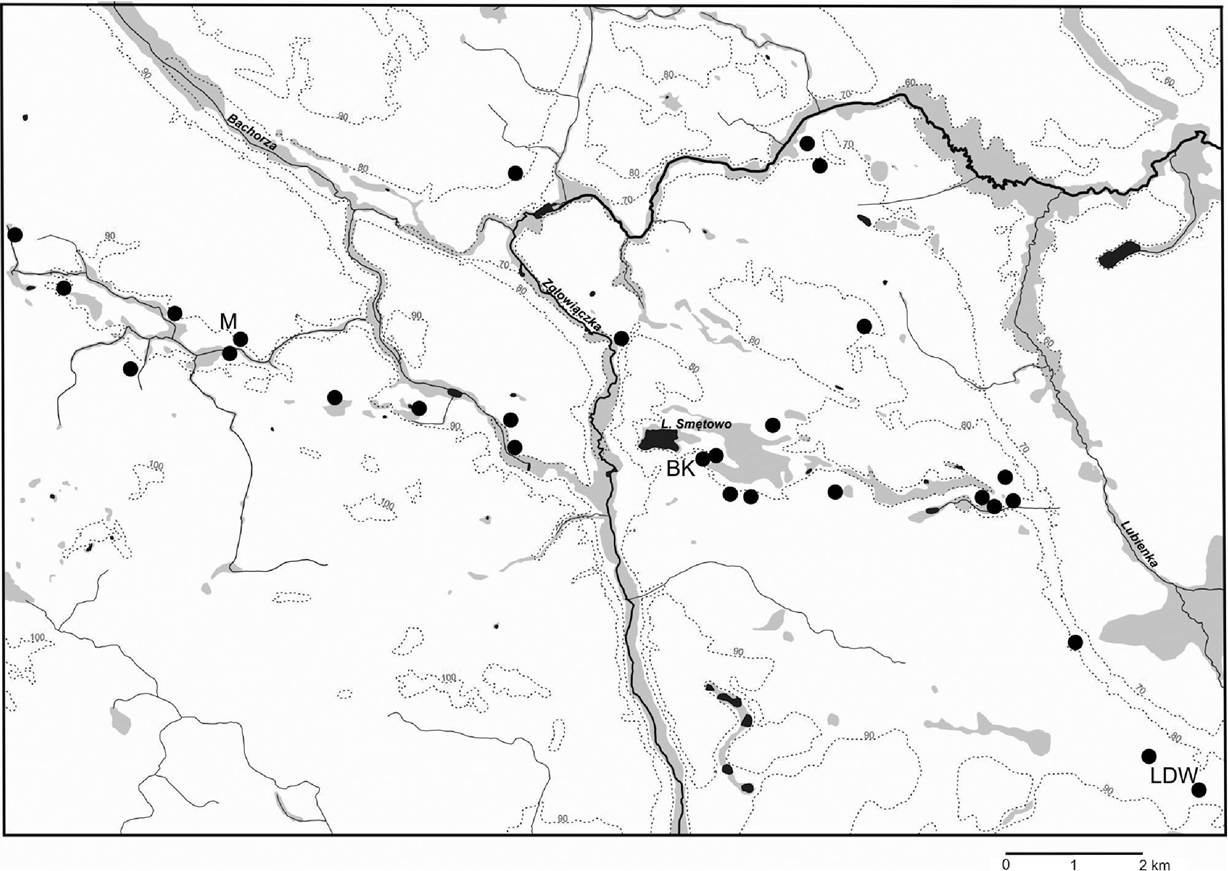
Figure 23.ι Map of Linear Pottery settlement near Brzesc Kujawski. M - Miechowice; BK - Brzesc Kujawski; LDW - Ludwinowo.
edge of the Vistula valley into the interior of the Kuyavian moraine plateau.[1317] The preference of Linear Pottery farmers for relic glacial landforms is typical of their settlement on the North European Plain. Not only were these the main elements in the lowland hydrological network but they also provided openings in the forest that could be enlarged for settlements and fields.
Among nearly thirty sites, several localities stand out. On the edge of the Vistula valley, a complex of sites near Kruszyn was found recently during rescue excavations for the Ai motorway. Nearby is Ludwinowo, where an extensive settlement excavated by Joanna Pyzel has yielded traces of many pits and thirteen houses.[1318] The row of sites at the eastern edge of the Kuyavian moraine continues through Smolsk and Nowa Wies. A multi-period Linear Pottery settlement with houses is found 8 km to the west, at Brzesc Kujawski, along with many smaller sites nearby.
About io km further west, across the Zglowiaiczka River, a large Linear Pottery settlement with two structures is found at Miechowice, and several kilometres beyond that lies a settlement with a house at Zagajewice.The Linear Pottery occupations around Brzesscs Kujawski exhibit several important characteristics. First, their principal archaeological features are large pits, often elongated, that are filled with rubbish. Second, post-hole patterns at several sites define rectangular structures. House 3 at Brzesc Kujawski measures 6 ? 3 m, with a bedding trench at the northern end (Figure 23.2), while the two structures at Miechowice and one at Zagajewice are approximately 8 ? 7 m. At Ludwinowo, aside from one anomalously large structure over 47 m long, the other twelve houses average 18 ? 6 m.[1319] Although it is possible that the elongated pits are features associated with additional houses whose post holes have eroded away, large concentrated settlements with dozens oflonghouses over 20 m long, on the scale of Bylany, Elsloo, or Koln-Lindenthal, have yet to be found. Finally, many - but not all - Linear Pottery sites were occupied later by people of the Brzesscs Kujawski Group.
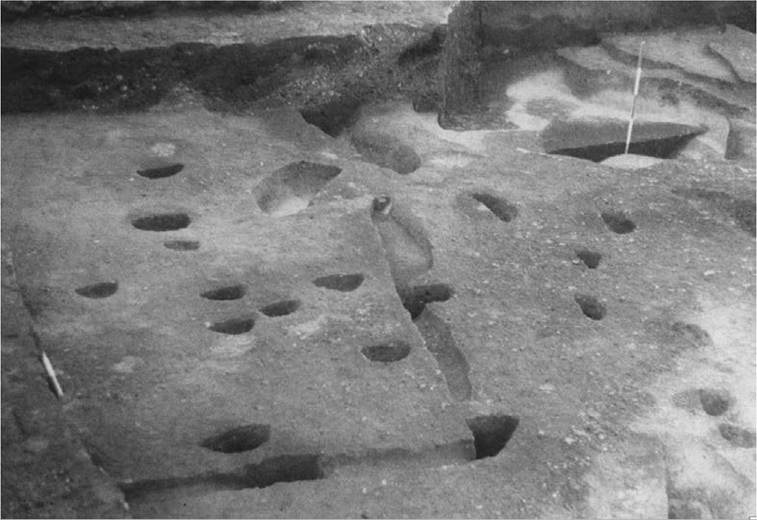
Figure 23.2 Linear Pottery structure at Brzesc Kujawski 3/4.
Calibrated radiocarbon dates place Linear Pottery settlement in the BrzesC Kujawski region and Kuyavia generally between 5400 and just after 5000 bce.[1320] Such dating is supported by the ceramic evidence, which corresponds to the detailed sequences available from the upland zone. At Smolsk, twenty-one unbroken or slightly damaged ceramic vessels were found at the bottom of a well 6 m deep. The forms and decoration of these vessels correspond to the oldest Linear Pottery style in Poland, the so-called ‘Zofipole' style, another indication of very little delay between Linear Pottery settlement in the upper Vistula drainage and its first appearance in Kuyavia.
Many Kuyavian settlements contain pottery with the classic ‘music-note' motif in which incised lines are interrupted with dots (Figure 23.3), c. 5300/5200 bce, while other features contain pottery dating to the end of the sixth millennium bce. Some sites were occupied multiple times. For example, at Brzesc Kujawski, there were at least two separate episodes of Linear Pottery occupation.We believe that Linear Pottery pioneer farmers reached Kuyavia from several directions, based on different types of ceramics found at their sites.8 Some came from the region of southern Poland known as Malopolska, around
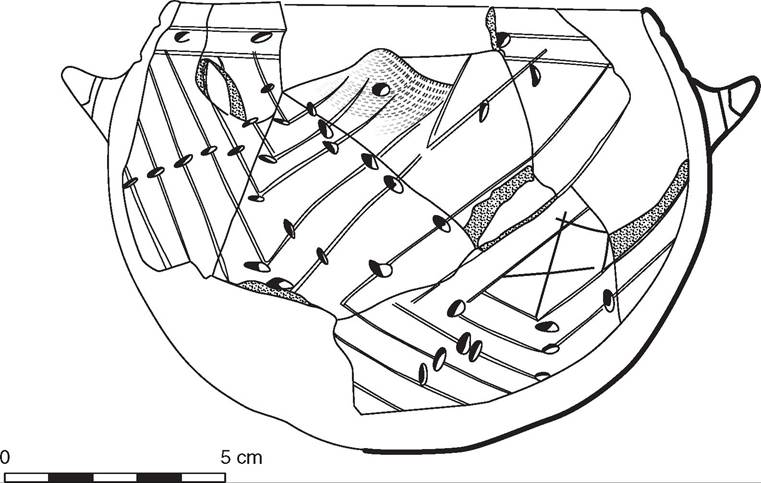
Figure 23.3 Linear Pottery vessel from Falborz.
the modern city of Krakow, probably travelling down the Vistula valley. Others seem to have come from Silesia, along the upper Oder River, presumably arriving across the plains and outwash valleys of central Poland. Still other pottery reflects connections with central Germany along the Elbe and Saale rivers. The Dutch archaeologist P.J.R. Modderman once characterized the Linear Pottery culture as having ‘diversity in uniformity', and the heterogeneity of its pottery in the small area around Brzesc Kujawski reflects this variety among pottery motifs which superficially appear to be very similar.
Flint tools used by the Linear Pottery culture in Kuyavia are made primarily from the ‘chocolate' flint found in the Holy Cross mountains of central Poland and flint from Jurassic deposits near Krakow. Sickle gloss on many blades attests to their use in cutting grain and reeds. Ground stone tools, ranging from flat axes to high ‘shoe-last' celts, were often made from amphibolite of Silesian origin. In order to get the most use from them, ground stone tools were frequently resharpened, leaving most of them considerably reduced from their original size.
Animal bones are superbly preserved in Kuyavian clay and gravel.[1321] Linear Pottery animal bone collections in Kuyavia consist almost entirely of domestic animals, and among domestic animals, cattle comprise the overwhelming majority, almost always over 70 per cent.
Sheep and goats make up under 20 per cent of most collections, while pig bones are very scarce. This pattern is consistent with most Linear Pottery faunal samples in central Europe, although it is somewhat extreme in its representation of cattle in relation to other species. Cattle clearly played a large part in the economy of the Linear Pottery settlements of Kuyavia.[1322] [1323]An unusual characteristic of Kuyavian Linear Pottery sites is that they have yielded an abundance of pottery fragments with small perforations. Such sieve sherds appear to be more common than in other regions, and one of us proposed many years ago that they were used for separating curds from whey in the manufacture of cheese. Recent analysis by Melanie Salque of sieve sherds from Brzesc Kujawski, Miechowice, and Ludwinowo has shown that many contain residues from milk fats, thus supporting the dairying hypothesis.11
Analysis of samples of carbonized plant remains by Aldona Bieniek has shown that the Linear Pottery farmers in the Brzesscs Kujawski area grew primarily emmer and einkorn wheat, probably as a mixed crop in small gardens that included typical field weeds found throughout Neolithic central Europe.[1324] Peas and flax seeds were found at several sites, while poppy was identified at Smolsk. Poppy seeds have hitherto been confined to Linear Pottery sites in western Europe, and their discovery in Kuyavia marks the easternmost find of poppy in central Europe during the sixth millennium bce. Smolsk is one of the sites whose pottery indicates western connections, so the presence of poppy is important corroboration of such affiliation.
Conspicuously absent from Linear Pottery sites in the Brzesscs Kujawski area are burials. At the moment, the only graves that can be attributed to a Linear Pottery occupation are a fragmentary skeleton of a child from Miechowice, two possible Linear Pottery burials at Brzesscs Kujawski, and two graves from Ludwinowo.
This situation stands in sharp contrast to the large Linear Pottery cemeteries found at sites like Aiterhofen in Bavaria, Nitra in Slovakia, and Elsloo in Holland, as well as numerous settlement burials at sites like Vaihingen an der Enz in southwestern Germany. Two possiblePioneer farmers at Brzesc Kujawski, Poland explanations arise. One is that we have yet to find the Linear Pottery cemeteries of Kuyavia, although with excellent preservation of bone in the glacial clay, they should be recognizable if they exist. The other is that Linear Pottery occupations were so transient that in any single generation the few individuals who died were not sufficient to constitute an archaeologically visible cemetery. Isolated graves can be easily missed in the countryside or disturbed beyond recognition by subsequent settlement on the same site.
Many years ago, we characterized the Linear Pottery settlement in Kuyavia as having a ‘tactical' nature, in that it represented relatively shortterm occupations by pioneer groups still in the process of identifying the best locations for farming settlement.[1325] We continue to hold this view. While it is clear from abundant evidence of cultivation and the amount of archaeological materials that Linear Pottery farmers established durable settlements along the Kuyavian lakes and valleys, the limited evidence for structures and the rarity of burials suggest that the habitations did not last more than a few years, certainly not longer than a generation or two. In only one case, at Brzesc Kujawski, is there possible evidence for the secondary enlargement of a Linear Pottery house. Palaeoenvironmental research also indicates that although cereal pollen and some indicators of disturbed habitats appear in the pollen record at this time, significant environmental changes attributable to Neolithic settlement did not occur until later. It seems that the forest recovered quickly from small-scale clearances for fields and settlement, and the grazing of livestock did not have a great effect on the regeneration of the forest cover.