Gender history and world history
Gender history developed, in part, as a revisionist interpretation of the past, arguing that the standard story needs to be made broader and much more complex. World history developed, in part, along the same lines.
Both have, as Judith Zinsser has commented, “had to write with the stories of men's lives in the United States and Europe paramount in their readers' memories.”[327] Because these shifts of focus called into question what had been understood for so long to be the “natural” focus of history, both fields have been viewed by those hostile or uninterested as “having an agenda.”Despite these parallels, however, until recently there has been relatively little intersection between the two fields, for which I see three primary reasons. First, each of these fields has concentrated on its own line of revision, so has not paid much attention to what is going on in the other. Second, the primary revisionary paths in world and global history and the history of gender and sexuality have been in opposite directions. World history has emphasized connections, links, and the crossing of boundaries. In contrast, after an initial flurry of “sisterhood is global,” gender history over the last decades has spent much more time on divergence, making categories of difference ever more complex. Gender historians have emphasized that every key aspect of gender relations - the relationship between the family and the state, the relationship between gender and sexuality - is historically, culturally, and class specific. Today historians of masculinity speak of their subject only in plurals, as “multiple masculinities” appear to have emerged everywhere, just as have multiple sexualities in the works by historians of sexuality. Third, there is a powerful materialist tradition in world and global history, which stands in sharp contrast to the largely cultural focus of the history of gender and sexuality as these have developed over the last several decades.
Most world history has focused on political and economic processes carried out by governments and commercial elites. Women's history also initially had a strong materialist wing, with many studies of labor systems and political movements, but since the linguistic/cultural turn of the 1980s more attention has been paid to representation, meaning, and discourse, which has also characterized the history of sexuality.Despite this lack of intersection in the past, however, a growing number of studies in certain research areas are beginning to incorporate insights from both gender history and world history. This will be evident in every volume of the Cambridge World History, so I would here like simply to highlight five areas in which I see especially interesting research emerging: early human societies; intermarriage; national identity and citizenship; migration; colonialism and imperialism.
Early human societies
World historians are increasingly dissolving the border between prehistory and history, so that human evolution has become part of history. Thus considerations of the role of gender in early human societies, most of which have been undertaken by anthropologists, archaeologists, and evolutionary scientists in other fields, have shaped world history. Until recently, most scholars have seen the origins of human society and of patriarchy in male-male cooperation in organized violence that started in the primate past. Among chimpanzees, such scholars argue, males form alliances, generally with the kin with whom they live, to gain status against other males and to gain greater access to females. Male-male alliances allow for cooperative attacks on females, which makes female resistance difficult. In the animal world, male-male alliances are often short-lived, as there is much fighting for status among the group. Among humans, sometime during the Paleolithic Era males developed the ability to control male-male competition within the group so that the group could be more successful in its hunt for prey and in its competition with other humans.
They did this by talking with one another, and they developed rules, norms, rituals, and eventually laws and political structures. Scholars also concluded that men gained authority because they supplied the bulk of the food through the hunting of large animals, and termed these early human groups “hunter-gatherers.” Pregnancy, lactation, and the extended care of infants kept women dependent on men for food and protection, and limited their ability to gain food for the group to the less important task of gathering. Women had difficulty resisting male violence because they left their initial kin groups to mate, joining the kin group of their male mate in what the anthropologist Claude Levi-Strauss long ago termed “the exchange of women.” (The blander term for this is “patrilocation.”)Beginning in the 1990s, however, some evolutionary scientists and anthropologists have challenged every aspect of this story about gender in human evolution. They note that evidence of animal killing and consumption - stones and bones - survives better than that of plant consumption, but the sophisticated chemical and physical analysis possible today indicates that the majority of hunter-gatherers' diet comes from plants. Much of the animal protein in their diet comes from foods gathered or scavenged rather than hunted directly, for it consists of insects, shellfish, small animals caught in traps, and animals killed by other predators. The flaked stones that had generally been viewed as club heads or spear points had actually been used for a wide variety of tasks such as chopping vegetables, peeling fruits, cracking open shells, grinding seeds, weighting digging sticks, and working leather. Thus instead of hunter-gatherers, early human societies might be more accurately termed gatherer-hunters or foragers. If gathering was a women's task, it was essential to survival, and the man the hunter/woman the gatherer dichotomy might not be accurate anyway; much hunting may have been net or communal in which women and children as well as men participated.
The most important element of early human success was flexibility and adaptability, with gathering and hunting probably varying in their importance from year to year depending on environmental factors and the decisions of the group.This more egalitarian evolutionary biology does not dispute that humans are born more helpless than practically any other animal, so the investment of time and energy in bearing, nursing, and caring for offspring is particularly great. But fathers assisted, and because patrilocation was not practiced everywhere, in many groups women relied on their female relatives, including their own mothers, in what the anthropologist Kristen Hawkes has termed the “grandmother hypothesis.” Hawkes and others note that communal care of offspring in humans far exceeds that of any other primates.[328] Cooperative child-rearing, and the development of social skills and adaptability it encouraged, may have been a more important source of the development of human culture than organized group violence. Humans share organized violence with other species, but are unique in the duration and complexity of their care for children, and in the fairly common involvement of males in this. Thus studies of other primates may not apply well to early humans. (And in fact, newer studies of one species of chimpanzee, the bonobo, indicate that peaceful relations, including sex, may be more important than violence in assuring group survival and cohesion among some primates as well.) The first tool, they conclude, may have been a sling of some sort for carrying an infant - found in all of the world's cultures - rather than a club. In this line of thinking, the origins of patriarchy are not to be sought in the primate or Paleolithic past, but in developments that are part of “civilization”: property ownership, plow agriculture, the bureaucratic state, writing, hereditary aristocracies, organized religion, and philosophy. Many anthropologists have also pointed out the problems in focusing on the “origins” of anything, which tends to overlook multiple causation and divergent lines of development.
Intermarriage
In both the male dominant and more egalitarian views of early human societies, pair bonding and heterosexual procreative sexual relations are at the center of the story, which is also the case with the second area in which gender history and world history are increasingly intersecting, research on intermarriage and other types of sexual relationships among individuals from different groups. These occurred especially in colonies or border regions that Kathleen Brown termed “gender frontiers,” and were interwoven with developing notions of racial and ethnic difference and national identity.[329] As with many topics in gender history, the role of intermarriage in the creation of racial categories has been particularly well studied in the Americas. Scholars have examined the ways that Spanish, Portuguese, English, and French policies toward intermarriage between indigenous peoples and European conquerors and settlers changed depending on the interests of the colonizing power. In seventeenth-century New France, for example, Saliha Belmessous and Guillame Aubert have noted that officials seeking to expand the fur trade initially promoted a process they termed Fransication, in which Native Americans would be “made French” through conversion to Christianity and intermarriage between French men and indigenous women.[330] When most mixed marriages instead had the opposite effect, and French men adopted “savage” customs, official opinion changed and intermarriage was prohibited. This did not stop sexual relations between European men and Native American women, of course, nor did it stop intermarriage, particularly in areas where this worked to the benefit of the local people. Similar examples of shifting policy toward intermarriage and great variation in levels of enforcement can be found throughout the colonial world.
Marriage created an economic unit as well as a sexual relationship, and historians have begun to examine the economic consequences of intermarriage and other encounters involving men and women from different groups in frontier and border areas.
George Brooks, for example, traces the ways in which European and local notions about acceptable marriage partners combined in the colonies of West Africa to create distinctive economic and social patterns.[331] In the patrilineal societies of West Africa, such as the Mandinka and Wolof, Portuguese men and their mixed-race children were not allowed to marry local people of free standing, as this could give them claims to land use; their children could not inherit or join the kin and age-grade associations that shaped political power structures. Brooks has found that this meant mixed-race children generally went into trade, and in some places women became the major traders, with large households, extensive networks of trade, and many servants and slaves. Because these wealthy female traders, nharas in Crioulo and signares in French, had connections with both the African and European worlds, they were valued as both trade and marriage partners by the French and English traders who moved into this area in the eighteenth century. When they married African women, European men paid bridewealth to their new in-laws (instead of receiving a dowry as was the custom in Europe), provided a large feast, and were expected to be sexually faithful. If the husband returned to Europe, the signare was free to marry again. Thus intermarriage facilitated and was a key part of a pattern of cultural exchange in which European men adopted local customs far more than their indigenous wives adopted European, just as did French men in western North America.“Gender frontiers” were not only found in the colonies, however. In early modern Europe, they could also be found along the borders of states and cities that had different official religions than their neighbors. Political leaders debated whether people should be allowed to marry someone of a different Christian denomination. Most thought no, and ordered sermons to be preached against religiously mixed marriage, warning of the dangers to the soul and body this might bring. But they also worried that unmarried women would be free to saunter about and spend their wages on frivolous things. So they generally decided that a religiously mixed marriage was acceptable if the man was of the approved denomination, but not if the woman was.[332] Thus a gender frontier became a gendered frontier, in which notions of male and female honor and sexuality shaped state policies about difference and intermarriage.
This did not end with the early modern era, of course. Marilyn Lake and Henry Reynolds trace restrictions on immigration and intermarriage in the transnational community of “white men's countries” in the early twentieth century. Similarly, Dagmar Herzog comments about contemporary Europe: “The entire complex of issues surrounding European identities and citizenships, with all the accompanying assumptions about appropriate inclusions and exclusions, now rests with remarkable frequency on sex-related concerns.”[333]
National identity and citizenship
Lake and Reynolds’ book and Herzog's comment point to a third area where there has been a significant amount of scholarship that brings together world history and gender history: studies of national identity and citizenship. Essays and books have noted the ways in which national symbols, rituals, and myths are gendered, and traced both women's contribution to nation building and their exclusion from it by the state and its institutions. Scholars have explored the ways in which gender shaped citizenship as a claims-making activity, and stressed the role of war in defining citizenship for women and men. For example, recruiting posters made use of images of helpless women to encourage men to enlist, but also portrayed competent women whose labor was essential to the war effort. They similarly portrayed heroic men fighting alongside their comrades, and men whose masculinity was somehow suspect because they had not fought.
Some of the studies of gender and nationalism focus on one country, but those that examine former colonial areas tend to put their subjects to some degree within a global perspective. Elizabeth Thompson, for example, looks at how French rulers and elite nationalists in Syria and Lebanon tacitly agreed to marginalize women in public life, despite - or perhaps because of - their participation in mass anti-colonial movements.11
Sexuality, as well as gender, has shaped the making of nations, especially in the twentieth century. Margot Canaday, for example, examines ways in which the United States excluded homosexuals from full citizenship through restrictions on immigration, military service, and access to public welfare.[334] [335] [336] Jasbir Puar analyzes ways in which race and religion have inflected the relationship between homosexuality and nationalism in the post-9 / 11 United States, noting that increasingly certain homosexuals, those who are white and middle-class, are incorporated into understandings of who is an “American,” while those who appear as if they are or could be Muslim are not.13 In Europe, debates about the immigration and citizenship of Muslims often revolve around gendered practices such as the veil, and include discussion of Muslim attitudes toward homosexuality.
Migration
Nations are built through policies of inclusion and exclusion, and entered and exited through migration, a topic that has been a central theme in world history and a fourth area in which there are growing numbers of studies that integrate gender or sexuality. Approximately half of all long-distance migrants today are female, with women's migration patterns sometimes similar to those of men but sometimes quite different. Recent studies examine the transnational character of migrants’ lives, in which women and men physically move back and forth and culturally and socially create and maintain links across borders. They also discuss ways in which gendered
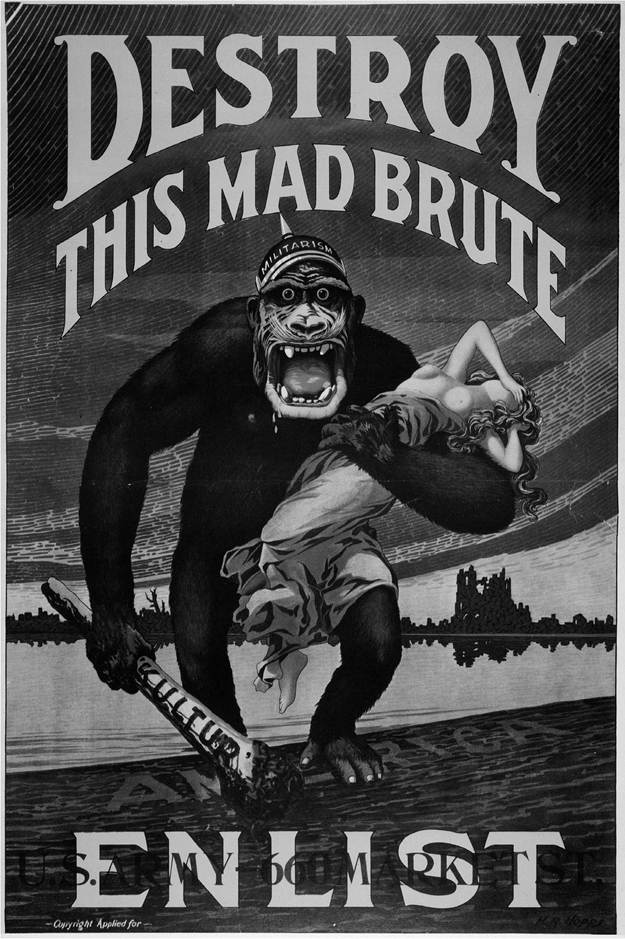
Figure 10.3 US Army enlistment poster by H. R. Hopps, 1917-18 (© Heritage Images/ Corbis).
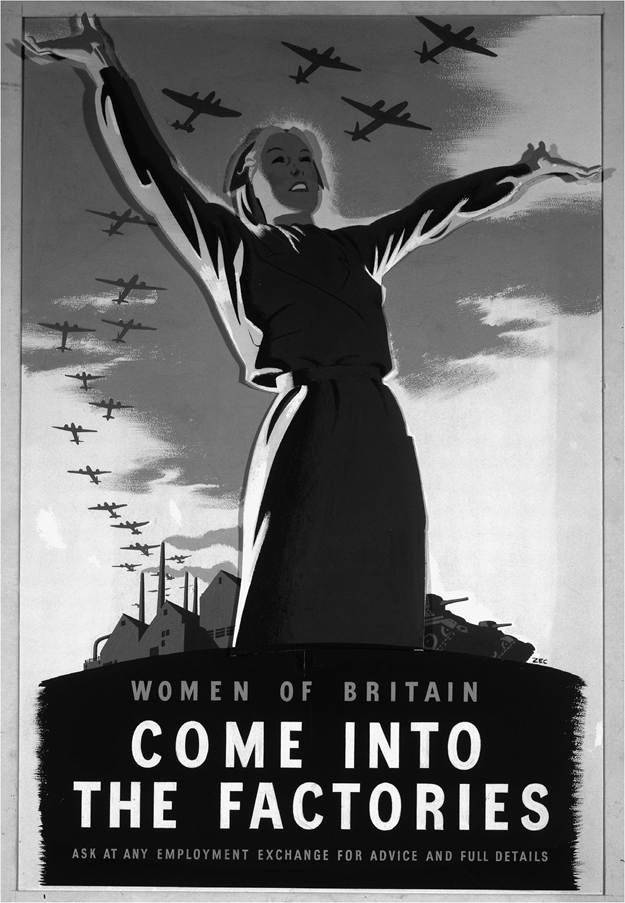
Figure 10.4 British Second World War poster recruiting female factory workers (© Heritage Images/Corbis).
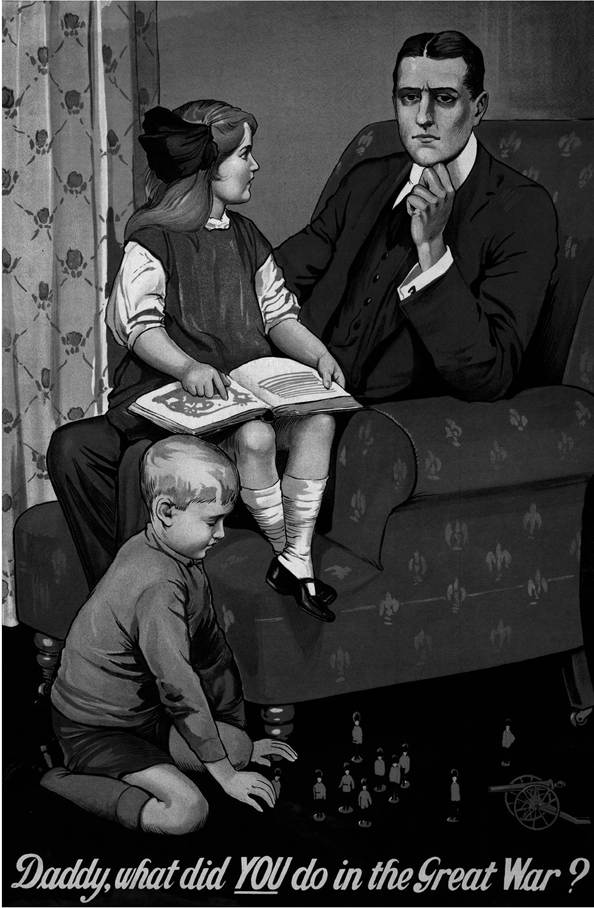
Figure 10.5 British First World War recruiting poster (© Corbis).
and sexualized migration shaped (and continue to shape) the economies, societies, and polities through and across which people moved. Tony Ballan- tyne and Antoinette Burton, for example, assess ways in which distance and movement shaped intimacy, and in which intimacy, or the prospect of intimacy, or the desire for intimacy, influenced the formation of imperial power. The intimate served “not merely as a domain of power but as one of the technologies available to colonizer and colonized alike in the struggle over colonial territory, imperial goods, and the meanings of global aspir- ations.”[337] Much of the work on gender and sexuality in migration, like much of the more general study of migration, focuses on the “globalization” of the very recent past. In their analyses of contemporary South and Southeast Asians, for example, Sonita Sarker and Esha Niyogi De examine the ways in which ideologies of gender and sexuality within the dominant colonial powers prefigured those of the contemporary postcolonial states. They define both migrants and individuals affected by globalization who do not themselves move as “trans-status subjects,” explicitly choosing that prefix for its double meaning of “across” and “beyond.”[338]
Research on sexuality and migration has emphasized that just as the state produced national identities, so it also produced (and continues to produce) sexual and gender identities, often at its borders when it lets in, or does not let in, individuals that it identifies as a certain type. To those policing geographic borders, “homosexual” was not simply a discursive category, but an actual, and threatening, type of person. As Eithne Luibheid has traced for the United States, many countries refused (and continue to refuse) to allow in those judged to be homosexual, to say nothing of those who challenge the “natural” gender order of male and female to present themselves as transsexual.[339] [340] Despite such restrictions, however, those whose sexual and/or gender identity and presentation were in some way “queer” have migrated extensively, so much so that scholars have been able to trace “queer diasporas” in many parts of the world, including Martin Manalansan for the Philippines and Gayatri Gopinath for South Asia.17 They examine ways in which people in different places challenged, adapted, appropriated, and reworked the conceptualization of sexual acts or identities, what is often termed “localization.”
Colonialism and imperialism
Gendered migration patterns were very much shaped by colonialism and imperialism, and are only one of the many threads in the broad array of recent studies of gender and sexuality in colonialism and imperialism, a fifth area of fruitful intersection. Both men and women were agents in imperial projects, and colonial powers shaped cultural constructions of masculinity and femininity. Many recent works demonstrate that imperial power is explicitly and implicitly linked with sexuality, and that images of colonial peoples were gendered and sexualized. As Giulia Calvi summarizes in her 20iι comparison of global gender history in Europe and the United States, “the gendered bodies of colonizers and colonized formed a contact zone where racialized notions of gender relations and difference were constructed through the exercise and representation of colonial power.”[341] Research on gender and sexuality in the context of imperialism has emphasized links between colonized areas and the metropole, arguing that the process of colonization shaped gender ideologies and practices everywhere. Kathleen Wilson, for example, examines the ways in which English men's and women's perceptions of their English identity were shaped by colonial expansion.[342] Zine Magubane traces colonial images of blackness from South Africa to England and back again, noting the ways these influenced representations of marginalized groups such as women, the poor, and the Irish.[343]
Among colonized areas, South Asia has seen the most research. Feminist historians of India, including Tanika Sarkar, Mrinalini Sinha, and Durba Ghosh, have developed insightful analyses of the construction of gender and national identity in India during the colonial era, and the continued, often horrific and violent, repercussions of these constructions today.[344] They
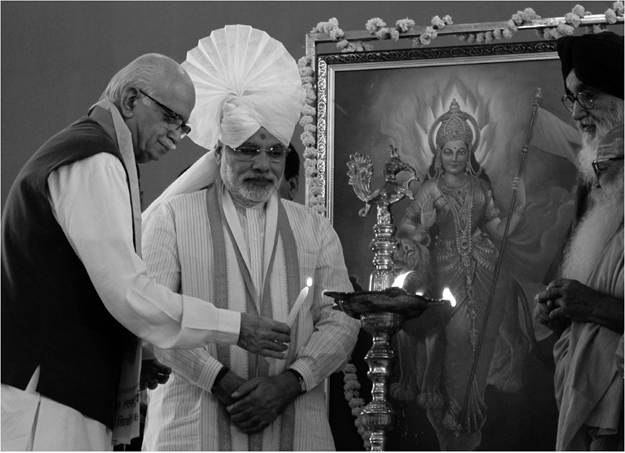
Figure 10.6 Indian nationalist BJP party officials, including Narendra Modi, who became Prime Minister in 2014, light a candle in front of an image of Mother India (© AMIT DAVE/Reuters/Corbis).
highlight the role of female figures - the expected devoted mother, sometimes conceptualized as Mother India, but also the loving and sacrificing wife - in nationalist iconography.
Though the theoretical framework in this scholarship is postcolonial, these scholars also take much of postcolonial scholarship to task for viewing actual women largely as a type of “eternal feminine,” victimized and abject, an essentialism that denies women agency and turns gender into a historical constant, not a dynamic category. The large number of works on India has led some scholars of colonialism to argue that Indian history has become the master subaltern narrative, and that Indian women have somehow become iconic of “gendered postcolonialism.” Clearly a subfield that has developed an iconic representation to be contested is healthy and growing.