Houses, burial, and settlement
The locality of Xinglonggou i is one of the few completely excavated settlements in early Neolithic China with well-preserved settlement plans. As with many sites in northeastern China of the period, Xinglonggou i comprises rectangular pit-based structures.
The settlement was divided into three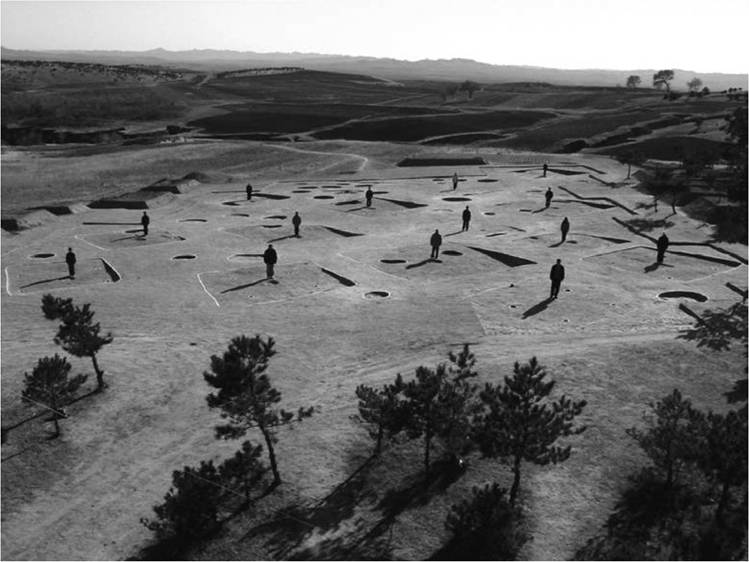
Figure 13.5 Rows of early Neolithic ‘pit structures' at Xinglonggou ι.
different sectors during its early phase of occupation, each with about fifty or fewer pit structures, all aligned in rows. Most Xinglongwa cultural sites are surrounded by a ditched enclosure, yet Xinglonggou itself has no such structure. The 2001-3 excavations exposed 145 of those pit structures over an area of 5,600 m2, aligned northeast-southwest in closely packed rows (Figure 13.5).
The ground plans of the pit structures range between 30 and 80 m2 in extent. Some studies interpret them as residential dwellings.[716] Others call for caution about intuitive assumptions that house-like structures are invariably habitations and suggest that such structures could have been used for nondomestic purposes such as preparing food, storage, or communal gathering.[717] Each pit structure contained an orderly arrangement of four to six post holes, often laid out symmetrically on the northeast and southwest sides of an
Xinglonggou, China
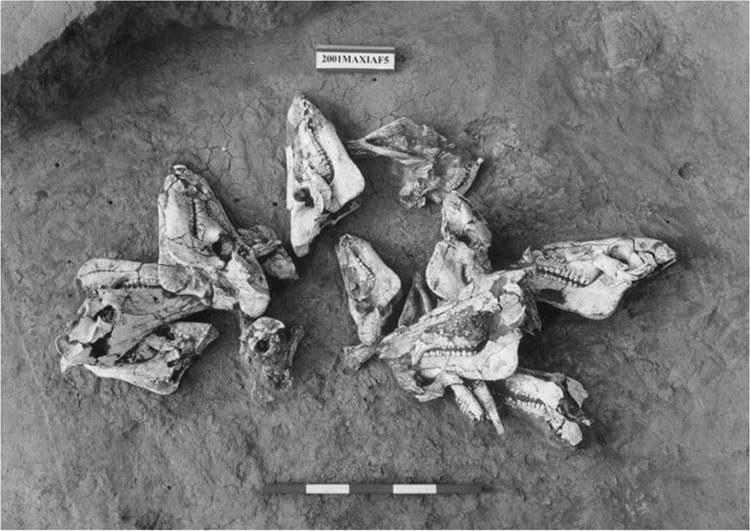
Figure 13.6 Animal skulls in the western part of ‘pit structure' F5 at Xinglonggou I.
intermediate hearth. Deer and pig skulls were found in some of the pit structures; some were perforated, arranged in clusters (Figure 13.6), and placed on the ‘floor'.[718] Excavation also produced artefacts of pottery, stone, jade, bone, tooth, and shell, and ornamental plaques made from human skulls, mostly also placed on the ‘floor' of the pit structures.
Many pit structures contained human burials, a feature known from other Xinglongwa cultural sites, such as Xinglongwa, Baiyinchanghan, and Chahai.[719]1 At Xinglonggou ι, 28 out of 145 pits yielded burials inside the pit structures.Although the focus of the excavation between 2001 and 2003 was the early phase of Xinglonggou occupation (Xinglonggou I), excavations were also carried out in 2003 at Xinglonggou ii and 111.[720] Xinglonggou ii is a late Neolithic settlement of the Hongshan period, and Xinglonggou III is a Bronze Age settlement of the lower Xiajiadian period. Archaeological investigations have primarily focused on the monumental architecture and large cemeteries of those two periods. Up until now we have had only limited
knowledge about the settlement patterns of ordinary villages in the Hongshan and lower Xiajiadian periods, and together with other recent studies, Xinglonggou ii and iii provide an attempt to understand ordinary lives in, respectively, the late Neolithic and Bronze Age.
At Xinglonggou ii, excavations exposed four rectangular pit structures and thirty-one storage pits over an area of 1,500 m2. The settlement was surrounded by a ditched enclosure. Although the pits are external to the pit structures, it maybe assumed that those ‘houses' owned storage facilities. For example, nine storage pits were found surrounding the ‘house' F7, and seven were found outside f8. Each ‘house' has a fireplace in the centre. Excavation produced artefacts of pottery, stone, and shell, mostly from the pits. In a subsequent excavation in 2012, a terracotta statue was recovered (Figure 13.7).
The area excavated at Xinglonggou iii is smaller than the other two localities. Three pit structures were recovered from 250 m2. The settlement was again surrounded by a ditched enclosure, which has been interpreted by the excavators as a genuinely defensive structure. Among the three pit structures, only F1 was well preserved. On the northeastern side of the ‘house', a ‘fire channel' was also recovered, which the excavators interpret as a heating system.
One of the key differences of settlement pattern between the three localities of Xinglonggou is in the relation between houses and storage. As demonstrated by Flannery and Plog, the way storage facilities are distributed within a site and among the domestic structures is a good indication of economic strategies and the type of access people had to economic resources.[721] In Xinglonggou ι, storage pits were normally located outside pit structures and evenly distributed in each sector, so their contents may well have been shared among members of the community. There is no evidence, however, for the exchange of goods between sectors. Various authors have suggested that the kinds of settlement seen in the Xinglongwa culture were units of landholding, economic production, redistribution, and ceremonial activity.[722] Contrasting with Xinglonggou ι, Xinglonggou ii
Xinglonggou, China
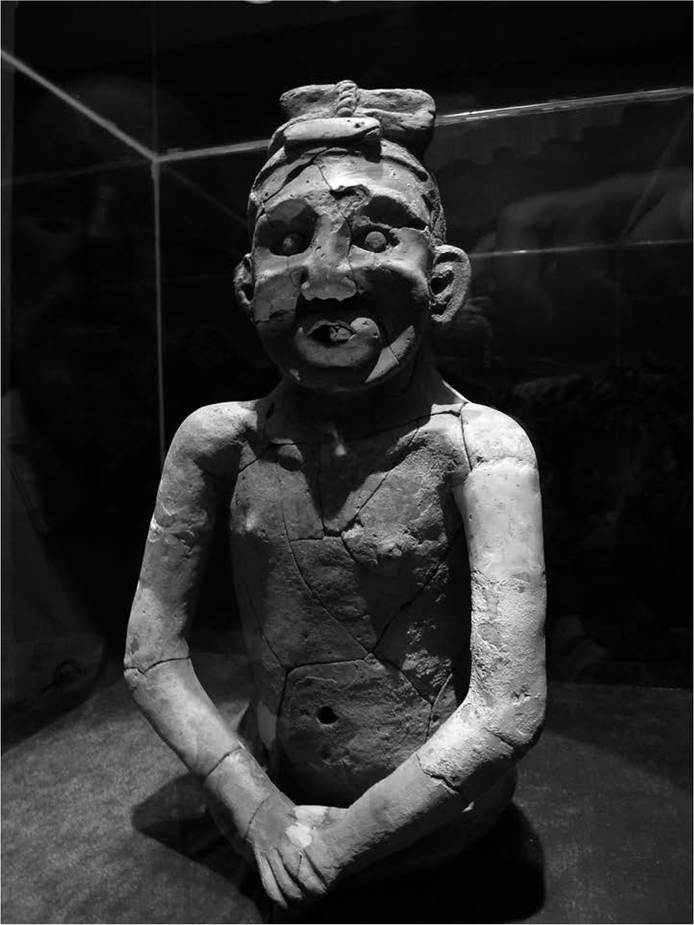
Figure 13.7 Terracotta statue recovered at Xinglonggou ii.
probably presents a situation in which households had their own storage facilities, and seems to be akin to what Plog calls ‘restricted sharing', where resources are shared among members of the household but much less between different households.[723] If so, ‘restricted sharing' seemingly intensified in the
Bronze Age. While the excavation of Xinglonggou iii was relatively small in scale, drawing from other recent excavations of lower Xiajiadian settlements it has been proposed that each lower Xiajiadian settlement may have been a sociopolitical unit within an overarching political structure.[724] However, each may have had the economic means to sustain itself, with each enclosure within the site representing a family household. Most of those enclosures also have one or two small circular installations built of stone and identified by the excavators as ‘granaries'.[725]
The change of settlement pattern in Xinglonggou during its three phases of occupation resonates with that of a number of other sites in northern China.
From the early to late Neolithic, villages across northern China experienced a development from shared storage facilities and relatively uniform dwelling size to the formation of large multi-family households. As Peterson and Shelach put it, from the early Neolithic onwards, decisions regarding economic activities were no longer made by the whole residential community, but rather at the household level.[726] Such an arrangement is typical of societies in which risk is assumed at the level of the family. By the Bronze Age, people were living in more compact settlements, the internal organization of which suggests an increase in the intensity of inter-household interaction.In summary, somewhere between the early and late Neolithic, villages in Chifeng appear to have been organized according to ‘restricted sharing' as defined by Plog, characterized by restricted land tenure and growing privatization of storage. In Flannery's terms, from Xinglonggou i to ii and continuing in Xinglonggou iii, there was a shift in risk from the village collective to individual nuclear families. In this context, we can imagine that there was widespread pooling and sharing of food at Xinglonggou ι, with an acceptance of risk and reward being shared by the group as a whole, and plant food storage and animal husbandry taking place communally, beyond the secure perimeter of each dwelling space. By contrast, in Xinglonggou ii and iii
Xinglonggou, China
societies display a more ‘closed' site plan, one which has either widely spaced household units or closed-in eating and storage areas.[727]