Middle Palaeolithic: the rise and fall of the Neanderthals
The Neanderthals (Homo neanderthalensis) appear to be the only true Europeans among the human family. This is because they evolved their characteristic features in Europe, reflecting both the effects of local environmental conditions, as well as the consequences of isolation and genetic drift.
The Neanderthals evolved from the people who had colonized Europe roughly 600,000 years ago, that is, Homo heidelbergensis.9 Although some of their characteristic traits are visible earlier, the evolved or ‘classic' Neanderthals do not emerge from the fossil record until roughly a quarter of a million10 years ago.
In terms of their physical appearance, the Neanderthals were stocky and barrel-chested with a powerful set of muscles. Their forearms and lower legs were shortened relative to humans of the tropical zone - an evolved form of cold-weather adaptation that mitigates heat loss in the extremities. Their
Clive Gamble and Martin Porr (eds.), The Hominid Individual in Context (London: Routledge, 2005), pp. 81-97.
8 Miram N. Haidle, ‘How to think a simple spear', in Sophie A. de Beaune, Frederick L. Coolidge, and Thomas Wynn (eds.), Cognitive Archaeology and Human Evolution (New York: Cambridge University Press, 2009), pp. 57-73.
9 It now appears that at least two northern species of Homo evolved from Homo heidelbergensis, and that some cousins of the Neanderthals (the ‘Denisovans') lived at roughly the same time in the Altai region and perhaps elsewhere in Northern Asia. Knowledge of the Denisovans is based on the analysis of ancient DNA extracted from a finger bone fragment from Denisova Cave. See David Reich, et al., ‘Genetic history of an archaic hominin group from Denisova Cave in Siberia', Nature 468 (2010), 1,053-60.
10 Neanderthal skeletal traits are evident among the fossils from the Sima de los Huesos at Atapuerca (Spain) that have been dated to more than 500,000 years, but there is increasing doubt that these dates are accurate.
See Chris Stringer, ‘The status of Homo heidelbergensis', Evolutionary Anthropology 21 (2012), 101-7.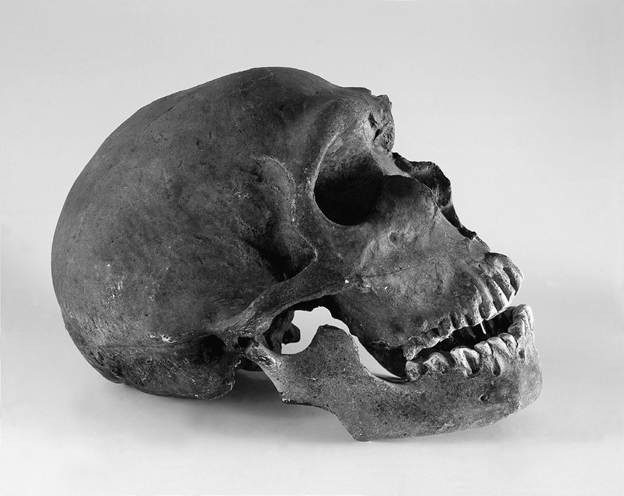
Figure 16.2 Neanderthal man skull (Homo sapiens neanderthalensis) (De Agostini Picture Library/A. Dagli Orti/Bridgeman Images).
heads were massive with a brain volume slightly larger than that of living humans, although the low, flat cranial vault and prominent brow ridge gave them a famously primitive appearance. The face protruded forward with a formidable nose and enlarged front teeth (see Figure 16.2). Despite some striking anatomical adaptations to cold climate, most of their characteristic features seem to have been a consequence of drift and isolation.11
Besides their peculiar physical appearance, how did the Neanderthals differ from their predecessors? The primary difference may lie in the improved ability of the Neanderthals to cope with glacial climates, and the distribution of their sites in both space and time is significant. While the earlier inhabitants of Europe are generally associated with the warm interglacial intervals, when climates in Europe were often as favourable as - or more than - those of today, traces of Neanderthal occupation are common during full glacial conditions. [509] Moreover, the Neanderthals appear to have been the first humans to inhabit the East European Plain, where the lowest winter temperatures are found today (in mid-latitude Europe). Although human skeletal remains are lacking, artefacts from Sukhaya Mechetka at Volgograd in southern Russia probably were made by Neanderthals. The occupation appears to date to the last interglacial period (about 125,000 years ago); today, the area experiences a meanJanuary temperature below — 6°C.[510] A comparison of ancient DNA from West and East European Neanderthal specimens suggests that the move east took place between 350,000 and 150,000 years ago.
A critical part of the adaptation to glacial climates must have been their special skill and success in hunting large mammals - including mammoth and woolly rhinoceros - which supplied them with a diet rich in protein and fat. Neanderthal sites often are filled with the bones and teeth of red deer, reindeer, bison, and other large mammals. The analysis of stable isotopes from Neanderthal bones indicates that most of their protein was obtained from meat. Newer techniques that permit identification of specific taxa from the stable isotope data reveal that mammoth and woolly rhinoceros were favoured prey.[511] [512] At the site of La Cotte de la Saint-Brelade, on what is now the island of Jersey, mammoths and rhinoceros were apparently driven over a small cliff.14 A harvest of mammoth and rhinoceros meat might have been essential to surviving the European winter.
Less critical, perhaps, to their ability to cope with the cold was Neanderthal technology, which seems to have lacked both sewn winter clothing and firemaking equipment. Eyed needles of bone and ivory are known only from the archaeological sites of modern humans, and, while the Neanderthals must have fashioned some sort of clothing and footwear, these presumably lacked the tight insulation of sewn clothing found among recent peoples of the Arctic. The only clues to Neanderthal clothing are characteristic traces of polish created by hide-working on some of their stone tools - and even here, the polish does not reflect the intense scraping often observed on the stone tools of modern humans used for hide preparation. As for the use of controlled fire, many sites occupied by Neanderthals contain hearths, but a recent study found their presence to be rather erratic, even during periods of extreme cold. The conclusion - the Neanderthals probably lacked the ability to make fire, and depended on capturing naturally generated fire in the landscape.[513] [514] [515]
The Neanderthals were, nevertheless, skilled technicians of stone.
For the most part, their stone-working seems to have been comparable to that of modern humans. The size and shape of stone tool blanks often was controlled through the careful preparation of the core from which the blanks were struck (Levallois prepared-core technique). It is the appearance of prepared-core techniques in Europe, roughly 300,000 years ago, that marks the beginning of the Middle Palaeolithic. In the 1950s, the French Palaeolithic archaeologist Franςois Bordes devised an intricate system of classification for stone artefacts to characterize the various forms into which the blanks were chipped (or ‘retouched'). The Middle Palaeolithic contains a wide array of retouched stone blank forms (for example, point, transverse scraper). Microscopic traces of wear on tools indicate that they were used on soft and hard materials, including - as noted above - hide and especially wood. A few simple wooden artefacts have been recovered from Abric Romani in northern Spain, where unusual conditions acted to preserve the wood - extremely rare for a Palaeolithic site.16The most impressive technical achievements of the Neanderthals have come to light only in recent years. These are the composite tools and weapons assembled from several parts, including various adhesives used to secure pointed or beveled-edge stone blanks into wooden shafts or handles. Indeed, the primary importance of the Levallois core technique may have been to ensure stone blanks of desired size and shape for these composite implements - an early version of interchangeable parts. Although not one example of a Neanderthal composite spear or scraping tool has been recovered, their presence is confirmed by traces of hafting wear on the stone blanks and of the adhesives, which include materials such as pine resin and bitumen. 17
A heavy emphasis on Neanderthal diet and technology reflects not only the nature of the archaeological record, but also the outlook of many archaeologists, who have stressed the importance of economic issues in their research.
A more interesting question is the Neanderthal mind and how it differed from our own. Did the Neanderthals have a language similar to ours? Did they differentiate themselves into local cultural or ethnic groups? Did they believe in an afterlife and worship some form of supernatural being? Did they have a sense of humour? The question of how similar or different the Neanderthals were to living humans is a controversial one in palaeoanthropology, and the range of answers and viewpoints is wide.Franςois Bordes was convinced that the Neanderthals who lived in France represented several ‘tribes' or local ethnic groups on the basis of recurring assemblages of similar stone artefacts. In the 1960s, this was disputed by archaeologists who argued that the variations simply reflected the effects of sampling and functional differences among the sites.[516] The issue has never really been resolved. The British prehistorian Paul Mellars suggested that the variations in Middle Palaeolithic artefact assemblages in Western Europe could be explained at least in part by changes over time. Improved dating of key sites in recent years has provided support for this thesis.
An aspect of the archaeological record that is especially difficult to explain in purely functional terms is the burial of the dead. There is little doubt that the Neanderthals dug graves in their sites and intentionally buried the deceased (although probably without grave goods). Because burial of the dead among modern humans is invariably linked to a belief in the afterlife, the Neanderthal graves have been widely interpreted as reliable evidence of a religion or belief system. Here again, however, some archaeologists have argued that burial of corpses might simply reflect disposal of waste without ritual or belief in an afterlife. This question also remains unresolved.
Arguments for and against a Neanderthal language have raged for many years. There have been efforts to reconstruct the vocal tract and look for possible contrasts with modern humans.
Thus far, these efforts have failed to demonstrate a significant difference between the two, and, in any case, it is not clear that major differences would preclude a Neanderthal language. More recently, the analysis of modern and ancient DNA has opened the possibility of identifying the presence or absence of genes implicated in speech or language in the Neanderthals. The identification of a gene among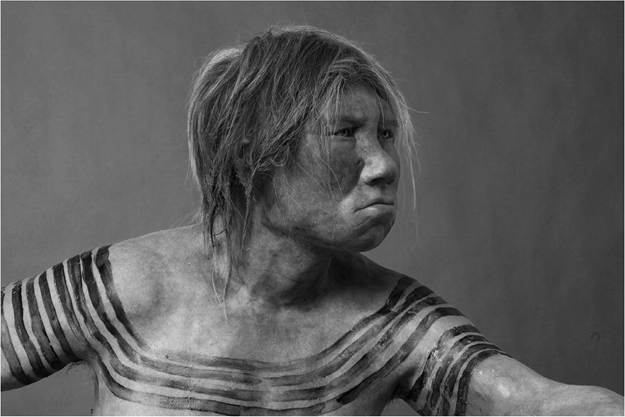
Figure 16.3 Head and shoulders of a sculpted model of a female Neanderthal, National Geographic Society, Washington, D.C. (© Mark Thiessen/National Geographic Society/ Corbis).
modern humans (FOXP2) linked to speech function led to speculation that it might not be found among the Neanderthals. Recent publication of the draft genome for Neanderthals, however, revealed that FOXP2 was present.[517] [518] And analysis of ancient DNA from a group of Neanderthals found in a Spanish cave (El Sidron) revealed something else of great interest. The twelve individuals (six adults, three adolescents, two juveniles, and one infant) apparently died at more or less the same time and represent a social group. The three adult females each derive from a different maternal lineage, but the adult males all belong to the same lineage, suggesting a patrilocal mating...... 20
pattern.
The archaeological record of the Neanderthals may still offer important clues to their mind and their cognitive faculties, including language. In one fundamental respect, the Neanderthal record is starkly different from that of modern humans in Europe. Despite the temporal changes in artefact assemblages observed by Mellars and the purported appearance of ornaments and bone tools in their youngest sites (see below), the Neanderthal archaeological record is essentially devoid of creativity and innovation. In their final millennia, they were still making the same sorts of artefacts that they had been producing 200,000 years earlier. Modern human language is inherently creative - living and recent humans generate novel sentences and narratives every day. Perhaps the lack of creativity in Neanderthal artefacts mirrors a similar lack of linguistic creativity.
Modern humans began to filter into Europe at some point after 50,000 years ago and the Neanderthals may have become extinct as early as 40,000 years ago (although later radiocarbon dates are reported from many Neanderthal sites, they may reflect contamination from younger carbon). Most palaeoanthropologists assume that the two events are related and that modern humans - through ecological competition or outright warfare, or perhaps some other factor such as disease - caused the extinction of the Neanderthals. Nevertheless, some argue that there is evidence for at least some degree of genetic or cultural mixture between the two taxa during the period that both were present in Europe.
Evidence for some genic exchange between Neanderthals and modern humans is reported in the recent publication of the draft genome of the former. The interbreeding is thought to have occurred before modern humans entered Europe - roughly 100,000 years ago in the Near East. At least one Neanderthal skeletal trait is said to be present in one of the oldest sets of modern human remains currently known in Europe - from a cave in Romania. But the primary source of evidence for interactions between the two taxa at the time that modern humans moved into Europe is the association of Neanderthal skeletal remains with archaeological remains otherwise associated with modern humans - ornaments and bone tools. These are known from several sites in southwest France in layers assigned to the 'Chatelperronian' industry. There is growing suspicion, however, that these layers represent a mixture of the remains of the youngest Neanderthals and earliest modern humans in the region.