The family in modern world history
PETER N. STEARNS
Changes and continuities in family structure and family life form an important element in world history over the past two and a half centuries. On the one hand, families have been subjected to intense pressures to shift and adapt, whether the focus is on gender roles within the family or the purpose of having children.
Alterations in economic structure, including urbanization, provide one impetus for change, but so do other developments such as imperialism or, more recently, globalization. On the other hand, families remain intensely personal, and traditions can be closely guarded as part of cultural identity. Important tensions result, as well as considerable regional diversity along with some common trends.Some broad patterns can be identified, ultimately affecting most societies though with important differences in timing. Whereas families in agricultural economies - the standard framework still in 1750 - emphasized the centrality of child labor to the family economy, increasingly attention shifted to the linkage between childhood and education. This in turn converted children from economic assets to the family, to economic liabilities, and was everywhere accompanied by a reduction in birth rates. This could in turn have still further implications for gender roles in families, by reducing some traditional demands on mothers. Still more broadly, though unevenly, the economic functions of families declined, as much production shifted to other units such as factories and as management structures moved beyond the capacity of family units. These processes could lead to some destabilization - divorce rates went up in many societies - but also to intense and often successful efforts to emphasize alternative functions for the family itself.
Another key development involved a tendency for nuclear family structures to gain precedence over the extended family, though this trend, too, needs careful handling.
Urbanization and migration unquestionably placed great strain on extended families, as some members - disproportionately young - moved away. Of course networks with uncles and cousins could re-form, and extended families continued to provide not only emotional but economic service, helping relatives find jobs or loaning money for an individual unit to handle hard times. By the twentieth century, new technologies, such as the telephone, also helped relatives maintain contact even across distances. And in many cultures - the Middle East is one example - families continued to place great emphasis on solidarity as they socialized their children. But there was a common trend toward a focus on connections among parents and children alone. As life expectancy went up - another widespread global trend by the twentieth century - this could force some hard decisions about how to handle older family members. In the West, the rise of the welfare state substituted for family support for the elderly to some extent, but in other cases, such as Japan, a wider assumption that more traditional family responsibilities would prevail created real strain. Here was another complex mix of newer trends and older values.1At some point in the past two centuries, then, families in many regions shifted away from some characteristics that had been standard in the long agricultural period of world history, to what might be called an industrial or modern family model. This shift has been complicated, however, by a number of factors. First, even ultimately standard changes have occurred at very different points in time. Families in Western Europe and the United States began altering the definition of childhood from work to schooling in the nineteenth century, with attendant impacts on birth rates, but Japan moved to a fuller emphasis on education only after 1872 and many African societies are just now experiencing the implications of schooling for average family size. At any given point, then, families have varied widely, from one region to the next or even within regions, in terms of the stage of their engagement with basic modern trends.
Specific sources of change have also varied. In the West, pressures on family traditions resulted particularly from economic shifts, beginning with the industrial revolution, supplemented by new directives from the state (through laws on child labor, for example, or school attendance). The pressures might be resented, but they were largely internal. In many other regions, change came in part from external sources, from imperialist regimes or, more recently, from global agencies, and this could generate different types of reaction and resistance. [51]
Finally, and obviously, common patterns of change have been strongly conditioned by prior differences in family structures and cultures. There was no single type of agricultural family in 1750, which meant that there would be no single reaction to pressures for change even aside from distinctions of timing and specific causation. While agricultural families generally promoted some respect for older family members, the emphasis was much stronger in Confucian cultures than in the Western tradition - and elements of this distinction still echo in the twenty-first century. Most agricultural families showed some preference for boys over girls - basic patriarchal assumptions were widespread. But the preference was stronger, or at least more resistant to change, in places like China and India - that is, in Confucian and Brahminical cultures - than in Western Europe or the United States, again with clear results in family practices today. Traditions of polygamy in Islam (for families with sufficient means) and in parts of sub-Saharan Africa, though hardly unaltered, continue to influence contemporary behaviors. Prior differences not only persist amid change. They can also be highlighted or even revived as part of a defense of cultural and family identity amid other, less governable, pressures.
Modern family history is, thus, complex. Separate regional treatments and comparisons remain essential. Yet common patterns must not be ignored.
A case in point: in 1926 the song Happy Birthday was first composed; it began to be a standard part of family birthday celebrations by the 1930s in the United States. By the early twenty-first century the song had been translated into virtually every major language. Birthday celebrations for children gained ground not only in the West, where they tended to become steadily more elaborate, but also in urban cultures in the Middle East, China, and elsewhere where, traditionally, the whole phenomenon had been ignored. Amid important variety and, sometimes, resistance, some aspects of family life were gaining global characteristics.The eighteenth century
The second half of the eighteenth century did not witness any systematic changes in family life, on a global basis. One historian has suggested that economic pressures during this period, thanks above all to higher rates of world trade, increased work requirements for various categories: slavery became more onerous and child labor more demanding, while older people had to labor more as well, with less possibility of partial, informal retirement as physical capacity began to wane.[52] These changes may have affected many societies, China for example as well as the Atlantic world, and they would certainly have conditioned family life. But the possibility is still somewhat speculative, and short of this a global proposition about family change would be misplaced.
There were, however, important regional developments, with a diverse set of directions involved. The spread of Confucianism in TokugawaJapan began to encourage wider interest in schooling, by the later eighteenth and particularly early nineteenth centuries. This did not undo a primary commitment to work for most children, but it modified it to some extent. In southern Arabia the movement ultimately called Wahhabi, founded by Muhammed ibn Abd al-Wahhab (1703-92) and calling for a return to the original stipulations of Islam, had important implications for family life.
Al-Wahhab was deeply concerned about loose morals, including what he saw as an increase in adultery; but he also wanted greater attention to the wellbeing of widows and orphans and stricter protection for the inheritance rights of women. Wahhabi Islam, which became the predominant version of Islam in what is now Saudi Arabia, was known for its strict enforcement of sexual morality and the subordination of women, but it had other features as well designed to shore up Islam's support for family life and family members, urging husbands, for example, to provide proper care for wives.The Atlantic slave trade and European colonialism had important results for family life, not new in 1750 but continuing to gain momentum for another several decades. In West Africa and Angola the depredations of the slave trade, in emphasizing the seizure of young men, created gender disparities that significantly expanded reliance on polygamy as a means of integrating excess women into a functioning family structure. Even aside from this larger pattern, the capture of young people for slavery was profoundly wrenching to individual families.
The impact of colonialism in Latin America was even more profound, in terms of alterations of family life; and some of these changes applied as well to North America. In the first place, Europeans tended to disapprove strongly of some of the family patterns they encountered among Native Americans. Women often seemed to have too much power and independence, and as Europeans gained the opportunity during the sixteenth and seventeenth centuries, through laws and Christian missionary conversions, they tended to promote greater male authority in the family, sometimes even to the point of countenancing violence against wives and daughters in order to keep them in line. Imported slaves, for their part, often worked hard to reestablish African family patterns, for example the practice of naming children for other relatives and providing protection for all members of an extended family, including the elderly; but the practice of separating some families in subsequent slave sales was a deeply disruptive element.
In Latin America, the colonial experience also created unusually high rates of illegitimacy. Spanish and Portuguese colonists were disproportionately male, and for this reason as well as to take advantage of political superiority they often formed sexual liaisons with native women, rarely acknowledging any offspring that resulted. The result was a growing mestizo, or mixed- blood population that picked up some similar patterns, with high rates of illegitimacy and mother-headed households. Thus in the 1740s in the Sao Paulo parish in Brazil, 23 percent of all children born were illegitimate, and the figure was even higher in other areas.[53] To compensate, many Latin American communities shared responsibility for child care, to relieve individual mothers, and children were sometimes passed around among families, depending on where there were labor needs. Many children were also sent to orphanages, where again they were allocated to families for labor once they reached the age of five or six. The result could be unsettling, sometimes quite cruel, but it could also lead to caring de facto families, even when the children involved were in essence adopted. Upper classes in Latin America, of European origin, often criticized the family practices of the lower classes, and in the later nineteenth century various reform movements would seek to impose more “civilized” family patterns. Here too, the legacy of colonialism would have durable impact.
Probably the most significant changes in family life in the later eighteenth century occurred in Western Europe. It is important to be careful here: Europe was only one place among many in eighteenth-century world history, and its family patterns initially had no global resonance. In the long run, however, some of the family developments in Europe would spill over into other societies.
Two or three major changes began to modify European families in the eighteenth century, with some impact as well on the British colonies of North America. First was a cultural shift. Protestantism had already placed a new level of importance on the family: in countering Catholic belief in the importance of clerical celibacy, Protestants began to emphasize the centrality and validity of the family more fully. Then, in the eighteenth century itself, new beliefs began to emerge about the importance of love as the basis for appropriate family life. Many readers, in an increasingly literate society, began to read romantic novels. Individuals themselves began to expect more affection in family life, most obviously seeking to base courtship and marriage on romantic attraction rather than economic arrangements. In some cases, as in one part of Switzerland, even laws changed: courts began to rule that young people could turn down parental matches on grounds that there was no possibility that they could ever love the partner who had been selected. New cultural emphasis was also placed on the emotional value of motherhood. It is not clear how widely these new ideas were held, or how much impact they had against the more practical side of family formation; but they were in the air. Historians have also debated the results, particularly for women: the changes could give women a new voice, for example in courtship, but they could also confirm women's largely domestic role.[54] More companionate family ideals also emerged in China, though obviously within a different cultural framework.
Accompanying the greater valuation of romance, family life began to be associated with new forms of consumerism. While many Europeans remained desperately poor, a growing number began to have a bit of money to spare. In addition to some changes in diet, toward more consumption of products like sugar and coffee, growing consumerism focused on two categories, both family-linked. First, stylish clothing gained esteem, and this was directly connected to the desire to win love and affection. Second, household items won popularity: better furnishings, better table settings, specific utensils to serve products like coffee or tea. Arguably, these products both reflected and encouraged a greater richness in family life, including new insistence on practices like family mealtimes where the products could
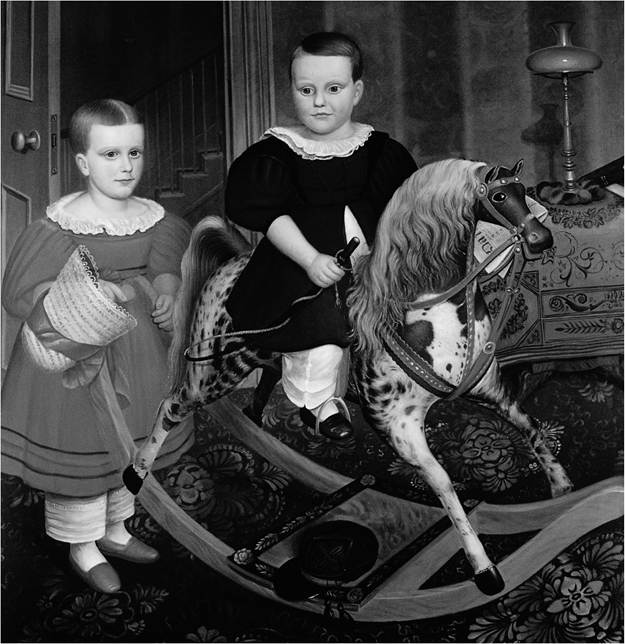
Figure 3.1 Children playing with hobby horse in American folk art painting from the 1840s (© Francis G. Mayer/Corbis)
be enjoyed but also greater family sociability developed. Almost certainly, many families were gaining a new significance in emotionality and social relationships, as the importance of wider communities and non-familial friendships began to recede.
At the same time, however, another pattern emerged that reflected a certain degree of destabilization, though it could be linked with the romantic theme to some extent. Rates of illegitimate births began to go up in Western society, particularly among the lower classes. More and more people were taking jobs partly outside the family economy, producing clothing or metal goods for sale on the market for example. This gave young people some earnings outside their parents' control, and it also generated wider social contacts, including urban contacts. The result was what some historians have termed the first modern sexual revolution.[55] Many young people began to have sex at a somewhat earlier age, and marriage did not always result. Historians continue to debate the gender implications of this shift: did women, as well as men, have new opportunities for sexual pleasure-seeking, or were they bullied or deceived into relationships that would often leave them burdened and stigmatized?
One point is clear, though it would not fully emerge until the early nineteenth century: respectable, propertied elements in Western society were deeply troubled by the new sexual behaviors and the unwanted children that could result. In response they constructed an elaborate extension of “traditional” sexual morality, in what became known as Victorian culture: sex became dangerous, capable not only of causing social and familial harm, but also generating ill health. In the extreme Victorian view, youthful sex, or too much sex at any age, could cause mental degeneration, sterility, stunted growth - this list was long. Proper parents had new responsibilities to supervise the sexual habits of their children, particularly working to prevent masturbation. Women had a special obligation - in the Victorian view, they were judged naturally more sexually reticent - to keep their virginity and, even in marriage, to discourage excess. In fact, many respectable Westerners took Victorianism with some grains of salt. Both husbands and wives might find pleasure in marital sex. Many men indulged in prostitutes or other opportunities to live up to standards within the family but enjoy pleasures without. But Victorianism undoubtedly influenced actual sexual standards, as well as rules about sexuality in culture and even legal codes. It would condition the way Europeans judged sexuality in other cultures, during the decades of imperialism. And while it did not in fact reverse the sexual revolution, it undoubtedly slowed it.
Overall, significant regional adjustments marked family history in the later eighteenth century, without much interconnection. Even within individual societies, like Latin America or Western Europe, trends were complex, to some degree contradictory. No full version of change had yet emerged.
The nineteenth and early twentieth centuries: the industrial revolution and imperialism
Two fundamental forces impacted family life in the nineteenth century. The industrial revolution generated a host of significant changes, some of them transient, some very durable. Initial industrialization centered in the West and was linked to some of the innovations that were emerging even before 1800. It was spreading beyond the West by 1900, most notably to Japan, with some similar results. But along with industrialization came an unprecedented surge of overseas imperialism, producing family disruption in its own right - particularly through the partial imposition of Western standards on regional family patterns. Many traditional family elements persisted: most of the world's population remained rural, often far removed from the major currents of change. And certainly there was no uniform pattern of change. There is no doubt, however, that the nineteenth century ushered in a number of new pressures and opportunities for the institution of the family.
Not all regions were deeply touched by either of the key developments, in terms of family life. The Ottoman Empire, for example, witnessed a variety of important changes, with the rise of nationalism, growing Russian and Western pressure, and the huge effort that went into the Tanzimat reforms until they were largely abandoned in the 1870s. The results did not, however, significantly alter family life, which continued to be affected more clearly by the religious traditions of the various communities within the multinational empire, the Islamic communities most important among them. Early factories drew in some women workers, which could affect family life, but these were still exceptions. Family issues did not define priorities in the Empire at this point. Western observers, to be sure, pointed to the Ottoman Empire as a hotbed of sexual excess, as they gossiped about, and greatly exaggerated, life in the Sultan's harem, with its many wives and concubines. This had little to do with the more standard conditions of family life in the region.[56]
The industrial revolution
The industrial revolution began to take shape in Britain in the later eighteenth century, and then spread to other parts of Western Europe and the United States from the 1820s onward. A powerful phenomenon, focused on the growth of steam-powered factory industry and the more general growth of cities, it did not affect entire populations immediately, but intensified steadily over time. Its impacts on families were extensive. Results were not identical for all the groups involved: gender differentiations increased for a time, but there were also significant divergences between middle and working classes, for example on the extent to which women could be removed from the labor force. Finally, family impacts were further complicated by a distinction between short-term dislocations and longer- term patterns.
Especially in the initial decades of industrialization, sheer disruption bore heavily on many families. Intense, unfamiliar work and movement to the cities help explain increased rates of family abandonment and (depending on legal codes) rising rates of divorce. Drinking went up, another stress on some families. Early industrial consumerism now provided entertainment opportunities outside the family, with bars as early example, as the impact of this development became more complex.
More important in the long run was the growing separation of work and business from home and family, affecting middle- as well as working-class families. Several compensations resulted. Married women were increasingly withdrawn from the labor force, except for work in the home, in order to care for household and children. Male contact with families lessened, increasingly framed in terms of providing material support - the “breadwinner” role. Even in the many working-class families that in fact depended on supplementary earnings by wives and older children, the breadwinner ideal gained ground, giving adult male workers special standing in the family but some special pressures as well.
Fairly quickly, children's work function was also reconsidered, for the new production systems proved unsafe for young children while reducing parental control. Middle-class families led the way in seeking more schooling. Various reform pressures soon led governments to restrict child labor more generally, with initial laws emerging in the 1830s and 1840s in most Western nations. Wider school requirements were not far behind, though some families resented the resulting reduction of parental control over children and their work. More generally, growing government attention to features of family life was an important innovation in its own right.
Less child labor and the need to cover school costs prompted reconsideration of traditional birth rates, aided in some cases by new, factory-made contraceptive devices. Middle-class families led the way, followed by workers and then some rural families. By the early twentieth century average birth rates in the West were dropping below four per family. There is real debate over some of the results for families themselves: did fewer children increase parental attention and affection for the individual child, or did smaller sibling groups actually heighten tensions between the child and its parents?
One further result is less contested: lower birth rates prompted industrial societies and many parents to seek lower death rates.[57] Between 1880 and 1920, throughout the Western world, infant mortality began to drop rapidly, from 20-30 percent of all children born to 5 percent or below, with further reductions still to come. For the first time in human history, by the early 20th century, families no longer had to expect the death of at least one child. The demographic transition, to low birth and child death rates alike, reflected a quiet revolution in key aspects of family life.
The industrial revolution also affected the position of older people in the family during the nineteenth century. Industrial conditions in the West encouraged more elderly parents, especially widows, to live with younger kin, to gain some support but also to provide assistance with grandchildren. These patterns would change, from the 1920s onward, with growing residential separation but also the creation of new institutions to care for dependent elderly. Widespread unemployment of older workers, another result of industrialization, increased pressure on families to provide assistance, though gradually the emergence of retirement pensions reduced this pressure to a degree. Family responsibility for the elderly became, if not a new at least a clearer issue with industrialization, and then in the twentieth century rising rates of adult longevity added to the mix.
Finally, family imagery and some key functions changed. Faced with urban conditions and disruptive pressures, middle-class spokespeople began to create new family ideals, emphasizing love among family members and a sense that, guided by affectionate wives and mothers, the family could become something of a haven amid a harsh, competitive economic environment.[58] New beliefs in the innocence of children supplemented this picture, along with accelerating emphasis on love as the basis for marriage. More than symbolism was involved: urban conditions steadily promoted a reduction in the use of dowries as part of contracting for marriage, in favor of less formal economic arrangements and, of course, more emphasis on emotion. Many families, of course, fell short of the new ideals, but they had wide currency and clearly shaped expectations to some degree. Some historians have indeed argued that higher emotional standards could actually produce new dissatisfaction, provoking divorce or parent-child dispute, when reality of family life fell short of the mark.
But the new imagery also promoted growing use of the family as a consumer unit, particularly when incomes rose above subsistence. In many middle-class homes, for example, the piano, a fairly expensive item, became a vital symbol of family solidarity. Other expenses for the home, many of them featured in the new consumer outlets called department stores, and purchases of a growing array of toys and books designed for children amplified this aspect of family life. Within marriage, though gradually, increasing interest in sexual pleasure - recreational rather than largely procreational sex - also gained ground. One study showed that American middle-class women born after 1870 reported markedly higher rates of orgasm, for example, than was true for the previous generation.[59] Overall, as production functions declined for the family, the emotional, consumer, and recreational roles expanded.
One other factor affected family life in the West during the industrialization period. Rising population rates, before birth rate control took full effect, prompted massive emigration. Germany and Ireland joined Britain in providing many migrants, and later other regions joined in. Midnineteenth-century migration affected gender balance, in both sending and receiving societies, with more young men leaving, and this obviously complicated family life again at both ends of the process. In receiving societies like the United States or Latin America, the presence of many single male immigrants was a source of great concern for family advocates for many decades.[60]
The emergence of the industrial family centered in Western Europe and North America through much of the nineteenth century. By the final quarter of the century, however, industrialization began to spread to other regions, especially to Russia and Japan. This expansion generated a number of parallel results in terms of family change, but also some key differences. The Japanese moved quickly to limit child labor and require education through legislation, while new public health measures pushed down child mortality rates. Parents, particularly mothers, took on growing responsibilities for their children's school success. One historian has argued that a new appreciation for childhood as a separate phase of life took hold in Japan, and certainly the state showed growing interest not only in schooling but other aspects of child care; as in the West, for example, the government began to push educational programs to teach parents “modern” methods of hygiene and discipline.11 But lower birth rates took hold more gradually in the Japanese case, and Japan would not complete this aspect of the demographic transition until after World War II. In Japan and even more in Russia, labor force needs also kept large numbers of married women in employment outside the home, juggling work and family responsibilities in ways that differed from Western patterns. Another distinction, in Japan, was the continued cultural emphasis on respect and family responsibility owed to older parents and grandparents.
Both Russia and Japan abundantly demonstrated the more general disruptive effects of the industrial revolution on family life. Divorce rates soared in Japan around 1900, though they would later stabilize. Rates of premarital sexual activity went up in Russia, recalling patterns in the Western “sexual revolution” a century before.
Nowhere did the industrial revolution destroy the family, though it obviously generated important challenges. Many families, however, faced dramatic redefinitions of roles and functions, creating new constraints and new opportunities alike.
Imperialism
Most of the world would not be involved in outright industrial revolutions until well into the twentieth century or beyond. As a result, more traditional family characteristics remained viable, from high birth rates to arranged marriage to continued use of the family as a production unit. Significant spillovers did occur however, as industrialization in some parts of the world affected economic and demographic patterns elsewhere.
New systems of immigration brought people from southern and eastern Europe and from Asia not only to the United States but also to regions such as Brazil or South Africa during the later nineteenth century, engaged in [61] growing export production for industrial markets. As before, immigration could disrupt extended families. It created novel opportunities for children, raised in a new region, to serve as brokers between their elders and the culture around them. Immigrants typically worked hard to maintain family cohesion - Italian Americans for example tried to prevent wives and daughters from working as domestics in other households, lest they be corrupted[62] - but some change and tension were inevitable. Correspondingly, studies of generational patterns among immigrants, such as Japanese Americans, become an important vehicle for grasping changes and continuities in family life. Some immigrant groups picked up new family habits, like lower birth rates, fairly quickly (Jewish Americans were a case in point), while others reacted more gradually.
New family ideals from the West did have some impact even aside from the immigrant experience. They certainly affected Western judgment of conditions in other societies - for example, the widespread use of child labor, now seen as a sign of backwardness - feeding a sense of superiority. Elites in some regions might also use elements of the new family ideals in their own judgments. Middle classes in Latin American cities, in countries such as Argentina, in the late nineteenth and early twentieth centuries, developed fierce critiques of lower-class family habits based in part on imported standards. In this view, radical reforms were essential to bring the lower classes up to a “civilized” approach to family life, in which less illegitimacy, less exploitation of child labor, more attention to domestic hygiene, more parental commitment to education for children would create more appropriate standards.
It was imperialism, however, that brought the clearest interaction between Western industrial nations and other world regions during the nineteenth century and often beyond. Imperialism generated some confrontations between Western family standards and conditions elsewhere, but also a wider set of economic and political changes that had somewhat different implications for family life.
Results were particularly dramatic in Africa, where imperialism gained ground from the 1860s onward. Several factors combined to impact many families, though by no means was every region or social group deeply affected. Religious conversions spread rapidly, as sub-Saharan Africans increasingly moved from polytheism to Christianity or Islam. Missionary efforts often challenged traditional patterns of family authority at least for a time, when male elders, for example, tried to hold out for older beliefs against the conversion of wives and children. The same efforts could generate criticisms of some customary habits. Christians, of course, sought to challenge polygamy directly, though sometimes with mixed results, while conversion to Islam could affect gender relations within the family. Economic change was at least as significant. European countries and governments sought to develop mining and commercial agriculture. In the process, they frequently drew males' labor away from rural villages, obviously disrupting traditional family patterns. Female authority in village families increased, though often amid economic hardship, while male family contacts became more sporadic. On another front, some children gained access to formal schooling, in colonial or mission settings. Exposure to new education and urban jobs created new tensions between personal goals and the traditions of African extended families. A later African novel described a situation in Lagos, in the 1920s, when the mother of a young urbanite died back in the village. Family traditions insisted that the young man quit his job to go back for an elaborate funeral and a prolonged stay, to reintegrate with his rural kin. Attached to urban life and some consumer pleasures, the young man simply stayed put to the dismay of his relatives.[63] More widely, Western laws and standards cut into African practices, tending to reinforce the authority of husbands and reducing the vitality of older customs that had provided protections and voice for women in the extended family. Colonial regulations sometimes sought to limit women's activities as merchants, for example, because they were not subject to adequate family authority; the result could increase women's economic dependence on their husbands. Again, many features of African families persisted, including polygamy in several regions, and patterns of change and disruption were varied. Colonial authorities themselves were not eager to stir up opposition by too many reforms; Christian missionaries were often more active in pressing for changes in family habits. Overall there was change, and some family patterns were unsettled as a result.
British imperialism in India had less impact on family patterns, compared to Africa, partly because economic changes were more varied and complex, partly because so many family patterns were enshrined in well-established religions, Hinduism at their head. The British did venture one reform effort, from the 1830s onward, joined by some key Indian reformers: the old practice of sati, in which widows had died on a husband's funeral pyre, was increasingly outlawed - but it had never been a universal practice in any event. Important resulting questions - how should widows be treated, and should they be allowed to remarry? - bedeviled Indian reformers for many decades. Later in the nineteenth century, Western missionaries and Indian reformers began to sponsor new educational opportunities, often particularly for girls, in ways that could affect the families involved. Reformers like Ishwar Chandra Vidyasogar worked to blend Western standards with a belief that older Hindu values, which had also protected women, could be revived, as he worked to promote marriage opportunities for widows and schooling for girls, while also opposing the widespread practice of committing girls to marriage at a young age (a stance that caused great controversy among nationalists). In the long run, new educational opportunities for women in India would encourage a reduction in traditional birth rates - the standard effect of such opportunities, in exposing women to new values and new knowledge of available alternatives - but larger changes of this sort developed very slowly.
Indeed, imperialist pressures could actually generate compensatory efforts to defend older patterns as part of traditional or nationalist identity, whether the subject was roles for children or conditions for women. A debate in Egypt, around 1900, over whether parents should allow girls to adopt more Western styles of dress, including abandoning the veil, generated great controversy, with many Egyptian women clearly opting for traditional styles against “foreign” standards and impositions. A generation later, nationalist leaders, such as Jomo Kenyatta in Kenya, might defend practices such as female circumcision on grounds that they were an integral part of distinctive traditions and should not be subjected to outside scrutiny - and in fact practices of this sort changed very slowly into the later twentieth century and beyond.
War and revolution: the twentieth century
Key world history developments in the middle decades of the twentieth century, headed by wars and the major communist revolutions, had important results for family life in many regions. World War I launched a century of recurrent violence that had huge impacts on family life. With industrial technology, war became increasingly deadly. Many families had death or injury to mourn in World War I, and the toll was great enough for some combatant nations, like Germany, that a “hollow generation” was created by the absence of a standard number of young men to launch families. The War's results also saw a wave of forced migrations, as Greeks and Turks realigned in the former Ottoman Empire, with additional family dislocation resulting. Further escalation and dislocation occurred in conflicts like the Spanish Civil War (1936-9) and Japanese attacks on China, and then World War II, where aerial bombardments on cities increasingly blurred the boundaries between civilian and military involvement. Nor did this pattern disappear after World War II, even though direct war between great powers has been very rare since 1945. It was estimated early in the twenty-first century that 15 million children had been killed in war and civil strife during the final three decades of the twentieth century alone, with many others orphaned or wounded.[64] The aftermath of World War II and then subsequent ethnic conflicts in many areas further magnified displacement of families, with refugee camps, often disproportionately filled with women and children, serving as surrogate centers for family life sometimes for several generations. Overall, as many as 4 percent of the global population has been forced to flee their homes because of violence at least once over the past century. During the 1990s ethnic conflict in Rwanda, 100,000 children were separated from their families, though some subsequent reunions did occur.
War as a disrupter of family was obviously not an invention of the twentieth century, but there seems little question that, thanks to new technology often combined with vicious hatreds, conflicts became unusually devastating.
The twentieth century also witnessed a spate of major revolutions, often with deliberate impacts on family life beyond temporary disruptions and violence. Communist revolutions in Russia, China, and elsewhere deliberately sought to redo key elements of family life, as part of exerting new state control and shaping new kinds of populations. The goals were both to undo elements of family tradition, including many that had been shaped by religion or (in China's case) Confucianism, but also to avoid aspects of the modern Western model, seen as inappropriately bourgeois as well as foreign.
Communist leaders worked to remove many traditional constraints on women in the family. Reformers in China had already made headway against the practice of foot binding, and twentieth-century revolutionaries (liberal as well as communist) completed the process. At the same time, Western patterns of withdrawing many women from the labor force were both impractical, in developing economies that needed a large workforce, and undesirable. Communist ideology saw no virtue in images of the family as a haven from the larger economy. As Russia industrialized further, most wives and mothers had to juggle family obligations with demanding work roles.
Communist states sought to enlist large numbers of young people in the revolutionary cause, not only through state-run schools but also through a variety of youth organizations. Families could not be fully trusted to indoctrinate the young appropriately, and indeed the new regimes often sought to use some young people to spy on their parents and report any secret political deviance. Allegiance to the state and the revolutionary cause should take precedence over family loyalty. In Russia and particularly China, efforts to organize collective farms sometimes included programs to share meals and other activities with the entire community, reducing family functions in this regard as well. Other family customs drew attention: the Russian regime for a time, for example, fought against Christmas trees as a wasteful, family-centered practice. Finally, while praising youth, the communist regimes struggled, though with mixed results, to prevent young people from gaining much contact with global youth consumer culture, seen by communists (as well as by conservatives in the West) as decadent and indulgent.
The new regimes also worked hard to change family life in some more familiar ways. Huge effort went into reducing child mortality. Despite economic constraints, the early revolutionary regime in Russia expanded clinical and pediatric services. China in the 1950s dispatched “barefoot doctors” to work on infant and maternal mortality. Strong results ensued: China's infant mortality rate, at 18 percent in the 1950s, had dropped to 3.7 percent by 2003. Medical services combined with government-sponsored advice to families, urging new measures of hygiene.
Communism also accelerated conversion of childhood from work to schooling. Some labor persisted: this was sometimes a function of the youth groups. But primary commitment to education emerged strongly, from nursery schools on up. Russia doubled the elementary school population between 1929 and 1939, while pushing secondary school attendance up eightfold. Correspondingly, within the family, both children and parents devoted increasing attention to school success, as a key feature of family life.
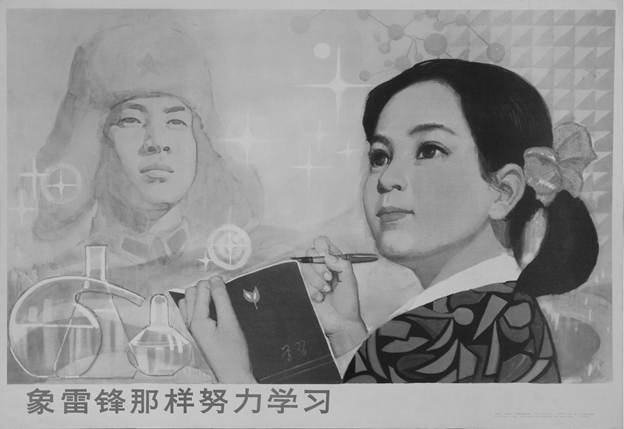
Figure 3.2 “Study hard follow Lei Feng,” Chinese Cultural Revolution propaganda poster (© David Pollack/Corbis)
Schooling, along with more general urbanization and industrialization, prompted many families to begin to reduce birth rates. Officially, the Russian regime sought to promote population growth, but this aspect of policy was increasingly contradicted by the facts on the ground. Parents needed smaller families to adjust to urban housing limitations and the conversion of childhood from labor resource to school support, and they moved to adapt fairly rapidly. Chinese policy under Mao Zedong notoriously touted a high birth rate as a Chinese communist asset, but here too, quietly, as early as the 1960s urban families began to cut back. Then by the 1970s, the regime reversed course, deciding that population growth was an unacceptable economic drain: most families were now officially limited to a single child, and the government imposed this policy with great vigor, even requiring abortion or sterilization in some cases.
Clearly, communist revolutions forged an interesting combination of what might be seen as standard modern family change - notably in the area of childhood and family life - with some distinctive elements. The relaxation of communism, or its rejection outright in Eastern Europe at the end of the twentieth century, allowed a growing number of urban families to add shared
consumerism to the list of family functions. Rapid industrialization in late- twentieth-century China had the familiar effect of disrupting extended families, as literally millions of migrants poured into the cities, returning however to villages once or twice a year to regain some contact. With smaller families and improvements in adult health, another familiar family theme began to emerge in China: the question of the family's role in caring for older members. Finally, distinctive policies had some ongoing distinctive results. China's population policy, combined with traditional preference for sons, led to a growing gender imbalance as many families used abortion or other means to avoid unwanted daughters. Several million more men than women began to reach the age of family formation by the early twentt-first century, a potentially destabilizing outcome.
Families in the age of globalization
A variety of forces affected families in many regions in the decades after World War II. More and more areas were drawn into some standard patterns of change: child labor declined now on a global basis, though with interesting regional variations, and schooling accelerated. In most areas, save in periods of war or severe economic hardship, child mortality declined. Many additional regions - for example, most parts of Latin America by the 1960s - began to experience a full demographic transition, as more and more families turned to lower birth rates as well. Often, women played a key role in these changes, seeking to avoid the burden of numerous children and informed as well by their growing access to some education. Yet common patterns were not the whole story. A number of regions and groups proudly asserted their commitment to particular versions of the family. The rise of religious fundamentalism in many areas in the 1970s was only one aspect of an ongoing effort to combine tradition with change in the definition of family life, or even to try to hold off change altogether.
The continuing spread of industrialization - to the Pacific Rim by the 1960s, to a wider swath of societies by the 1990s including India, China, and Brazil - obviously had impacts on family life, particularly in the growing cities. Not only smaller family size but also new stresses on links within extended families were key results. International migration patterns now featured movement, often over long distances and substantial cultural divides, between less industrial and industrial societies. Muslim immigrants poured into Europe, with substantial resulting tensions over family standards. Global communication devices, plus new opportunities to return “home” for visits, added some new complexity. Some immigrant groups maintained close contacts with kin in their societies of origin. This could help maintain family traditions - such as arranged marriage, in the case of South Asian immigrants - even in novel settings. But it also could bring examples of change, for example greater family consumerism, to the family members who stayed behind.
New international institutions contributed to change. The World Health Organization, for example, pressed for improvements in child and maternal mortality, throughout the less-developed world. Unprecedented global declarations of human rights had important implications, particularly for the position of women and children in the family, and they were supported not only by United Nations agencies but also the host of international Non-Governmental Organizations (NGOs) that began to proliferate from the foundation of Amnesty International, in 1961, onward.
Beginning with the Universal Declaration of Human Rights (1948), postwar definitions of human rights included strong assertions of women's equality, including their right to equal jobs and pay and to educational access. From 1965 onward, the United Nations pressed this point further through a recurrent series of “Year of the Woman” conferences, which often generated increasing human rights activity in particular regions, such as Latin America and Africa. Many national governments subscribed to relevant human rights commitments, which might then, when taken seriously, force alterations of traditional family law. In Africa, for example, many courts ruled in favor of property rights for wives and widows, against customary assumptions of male ownership, on the basis of the international engagements. Attention to women's access to education could, as we have seen, have implications for knowledge of birth control goals as well as other adjustments in family relationships. In the 1990s, against objections from several Muslim countries and the Catholic Church, a United Nations conference came out in favor of further efforts at birth control, mainly through the means of better education for women.
Discussion of rights for children was more complicated, but increasingly this category, also, was inserted into international human rights discussions. Children's rights to education, and to protection from exploitative work, loomed large in this connection, though a number of societies, including the United States and India, shied away from full renunciation of child labor. Finally a 1989 compromise targeted abusive labor, rather than work in general. In fact, however, regional efforts to promote education plus ongoing economic change led to fairly steady reductions of child labor on a
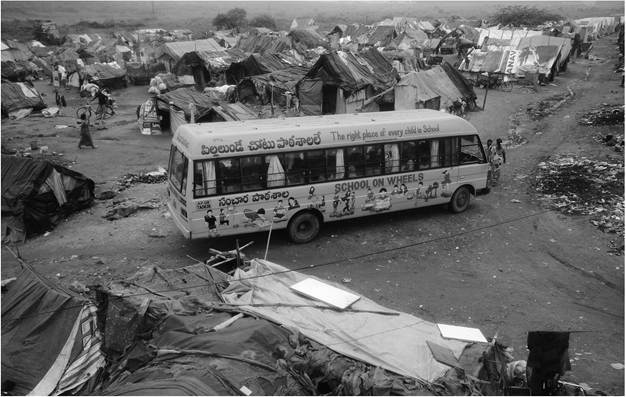
Figure 3.3 A bus which has been converted into a school called School on Wheels, is seen parked at a slum area in the southern Indian city of Hyderabad. The mobile school, run by CLAP Foundation, a non-governmental organisation, brings education to the doorstep of disadvantaged children every day, halting for several hours at a time in different parts of the sprawling city.
(© KRISHNENDU HALDER/Reuters/Corbis)
global basis. Children dropped from 6 percent of the global workforce in 1950, to 3 percent in 1990, or from 28 percent of all children under 14 to 15 percent.[65] There were some countercurrents. Global economic competition pressed some small businesses to rely more heavily on low-wage children, even as overall levels dropped. In South Asia, through similar mechanisms, use of child labor actually rose in the 1990s, only to begin to fall back in the twenty- first century. The overall pattern, including some global agreement on what families should be doing for and with children, was reasonably clear.
Global consumerism also had some bearing on family life in diverse regions. Many young people could define some independence from traditional family habits by patronizing Western or Japanese music and electronic games, or taking meals in Western-style restaurant chains. Families themselves often developed new routines. Urban Chinese families sometimes began to celebrate children's birthdays, often taking them to a McDonalds as a special treat. Businesses catering to children's birthdays flourished in the United Arab Emirates and Egypt, drawing particularly on a wealthy middle class.
The currents of change did not, however, produce global uniformities. Economic conditions varied greatly, even as industrialization and urbanization spread. While Brazil participated strongly in economic growth, an urban lower class continued to struggle with continued high rates of illegitimacy and heavy dependence on children's efforts. Some African societies continued to reflect divisions between village men gaining jobs in cities, and women and children left behind in a limited rural economy.
More than economic variety was involved. Many families in India remained strongly attached to traditions such as arranged marriage, against foreign standards that seemed to urge love as a precondition. Some Indian spokeswomen explicitly argued that arranged marriages provided greater family stability and less pressure on women - pressure to remain constantly attractive, for example - than Western patterns generated. Many families in the Middle East, though aware of promptings to think of children in terms of individual rights, consciously worked to instill more collective, and traditional, family loyalties. Religious revivals, not only in Islam but among fundamentalist Christians, some Catholics, Hindus andJews, reflected strong pressures to maintain more customary roles for women in the family including, often, higher-than-average contemporary birthrates. Some religious communities sought to reemphasize aspects of their family law, as with punishments against adulterers in some Islamic regions. Change was not excluded even here: in revolutionary Iran, educational gains for women continued, with 55 percent of university students female by the early twenty-first century,[66] despite overall emphasis on women's subordination within the family. Clearly, however, there was widespread reluctance around many aspects of change.
On occasion resistance could even take violent forms. Physical abuse of women may have increased in some settings, in protest against some of the wider currents promoting redefinitions of gender roles. A number of dowry murders - cases where husbands murdered their brides because they judged the dowry to be inadequate - occurred in the South Asian subcontinent early in the twenty-first century, arguably reflecting new levels of hostility to women as well as specific expectations about the economic arrangements accompanying marriage.
Still more widespread was a simple reluctance to change in the first place. An Indian reformer confronts a cobbler, who keeps his son at work rather than sending him to school. The response? “Young man, my father was a cobbler and my grandfather before him, and no one before you has ever asked me that question. We were born to work, and so was my son.”[67] Many African mothers, confronted with sales pitches to buy strollers for their children, reject them outright: far more pleasant for all concerned to carry them in the customary fashion. Some modern family opportunities, in other words, make no sense for many still.
Other issues unquestionably complicated family patterns in many contemporary societies. Many African families still had to deal with tensions between extended family customs and the goals of urban, nuclear families. Assumptions that members of extended families could expect to visit for long periods, receiving hospitality as a matter of course, struggled against an interest in consumer standards and other issues in urban life. Treatment of the elderly was a growing concern, particularly in societies that had gone through the earlier demographic transition. Urban conditions continued to encourage older parents to live separately. But increasing longevity and, sometimes, health issues of later age placed new burdens on younger kin that were difficult to cope with. Retirement communities and assisted living provided some support, yet many families found themselves seriously burdened with decisions about older parents. Many older people, correspondingly, found their younger kin insufficiently attentive and respectful - an issue frequently voiced in countries like Japan. Here, as in so many respects, the most recent phase of world history produced complexities as well as a variety of differentiations in core features of family life.
Conclusion
Many traditional institutions have virtually disappeared amid the currents of change in modern world history. Guilds, monarchies, aristocracies, slave plantations - seemingly secure in 1750 - have declined or vanished, leaving only vestiges in the contemporary world. Families, in contrast, have fared surprisingly well. They survive as institutions and, according to most international polls, they continue to be seen as a leading source of satisfaction as well. The core functions families serve have been amplified by a variety of newer roles and structural adjustments, an intriguing combination of change and continuity. At the same time, for many groups, families have also been supported through their linkage to other aspects of cultural identity - a common function which however maintains a variety of diverse regional family features. In all respects - in continuity, in flexibility, and in service to group identity - families help translate global trends and tensions into some of the most personal aspects of modern life.
Further reading
Chatterjee, Indrani. Unfamiliar Relations: Family and History in South Asia. New Brunswick, nj: Rutgers University Press, 2004.
Cornell, V. J. Voices of Islam: Voices of Life: Family, Home and Society. Santa Barbara, ca: Praeger, 2007.
Dabhoiwala, Faramerz. The Origins of Sex: A History of the First Sexual Revolution. London: Pengion, 2012.
Doumani, Beshara, ed. Family History in the Middle East: Household, Property, and Gender. Albany, ny: State University of New York Press, 2003.
Ebrey, Patricia. Women and the Family in Chinese History. London: Routledge, 2003.
Fass, Paula S. Children of a New World: Society, Culture, and Globalization. New York University Press, 2006.
French, William E. and Katherine E. Bliss. Gender, Sexuality and Power in Latin America since Independence. Lanham, md: Rowman and Littlefield, 2007.
Gillis, John R. A World of Their Own Making: A History of Myth and Ritual in Family Life. New York: HarperCollins, 1997.
Godelier, Maurice, et al. The Metamorphoses of Kinship. London and New York: Verso, 2011.
Goody, Jack. The Oriental, the Ancient and the Primitive: Systems of Marriage and the Family in the Pre-Industrial Societies of Eurasia. Cambridge University Press, 1990.
Hartman, Mary S. The Household and the Making of History: A Subversive View of the Western Past. Cambridge University Press, 2004.
Hecht, Tobias. At Home in the Street: Street Children of Northeast Brazil. Cambridge University Press, 1998.
Minor Omissions: Children in Latin American History and Society. Madison, wι: University of Wisconsin Press, 2002.
Jeppie, Shamil, Ebrahim Moosa, and Richard Roberts. Muslim Family Law in Sub-Saharan Africa: Colonial Legacies and Post-colonial Challenges. Amsterdam University Press, 2010.
Jolivet, Muirel. Japan: The Childless Society? The Crisis of Motherhood. London: Routledge, 1997.
Kirschenbawm, Lisa A. Small Comrades: Revolutionizing Childhood in Soviet Russia, 1917 -1932. London: Routledge, 2000.
Lynch, Katherine. Individuals, Families and Communities in Europe, 1200 - 1800: The Urban Foundations of Western Society. Cambridge University Press, 2003.
Mintz, Steven and Susan Kellogg. Domestic Revolutions: A Social History of American Family Life. New York: The Free Press, 1989.
Stearns, Peter N. Childhood in World History. London: Routledge, 2006.
Therborn, Goran. Between Sex and Power: Family in the World 1900 - 2000. London: Routledge, 2004.