Tichitt: agricultural origins
The highlands of southeastern Mauritania form a broad semicircle around the Hodh depression, with an array of escarpments from west to east: Dhar
1 P.J. Munson, ‘The Tichitt tradition: a late prehistoric occupation of the southwestern Sahara', unpublished PhD thesis (University of Illinois at Urbana-Champaign, 1971), and ‘Archaeological data on the origins of cultivation in the southwestern Sahara and their implications for West Africa', in J.R.
Harlan et al. (eds.), Origins of African Plant Domestication (The Hague: Mouton, 1976), 187-209.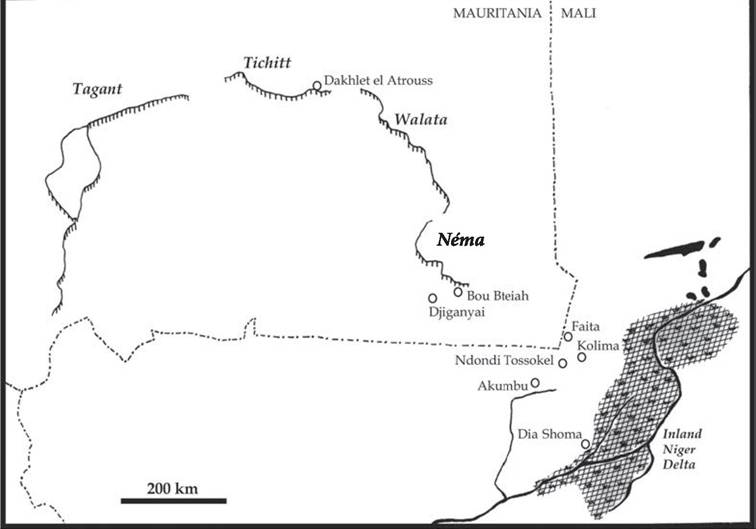
Figure 19.ι The Tichitt tradition: a regional map.
Tagant, Dhar Tichitt, Dhar Walata, and Dhar Nema. The Hodh was filled with lakes during the Holocene optimum, but after 4000 bce there was a gradual regression, with permanent surface waters fading around 1000 bce.[1091] It was during this time of climatic degradation that the Tichitt tradition (as it was dubbed by Patrick Munson) arose. Munson's initial arguments for the origins of sedentism, agriculture, and complexity in the region turned upon a local version of the classic ‘oasis hypothesis', whereby decreasing availability of water and stands of wild grain led to the establishment of millet domestication, villages, and territoriality.[1092] However, ongoing research at Tichitt tradition sites has shown that this equation is not as straightforward as was originally supposed.
Prior to the time of Tichitt, the region was populated by diffuse groups of mobile herders and hunter-gatherers. This period has alternatively been referred to as pre-Tichitt, Tichitt phase 1, or the Akreijit phase. Pre-Tichitt sites are small, relatively superficial localities, essentially temporary campsites (Figure 19.2).
Once thought to represent dispersed hunter-gatherer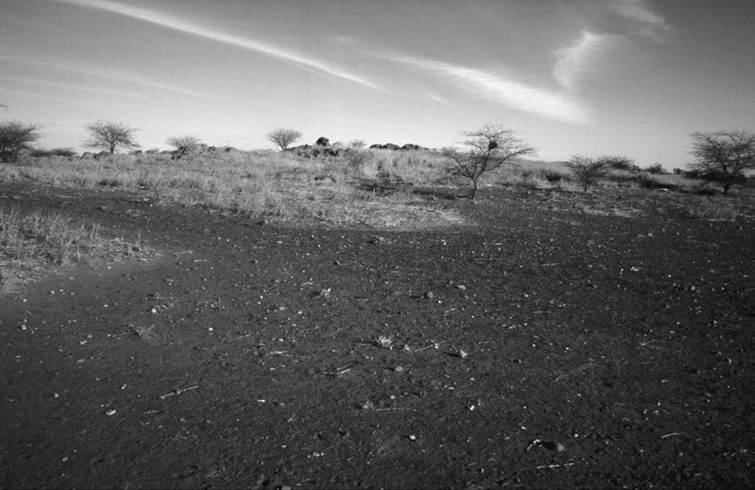
Figure 19.2 The pre-Tichitt site of Bou Bteiah, situated on a rocky outcrop within a vast plain - ideal for monitoring herds or wild game movements.
populations separated from Tichitt by a brief hiatus,[1093] they are now understood to have been both pastoral and continuous with Tichitt itself. On the basis of new faunal data from excavations in the Dhar Nema region, there is evidence that the pre-Tichitt economy was a generalized one, combining pastoralism with hunting and fishing.[1094] While no evidence of domestic cereals has yet been recovered, the notion of a hiatus between pre-Tichitt and Tichitt is contradicted by a continuous occupational sequence from Djiganyai, a settlement mound in the Dhar Nema region, linking pre-Tichitt and Tichitt elements (Figure 19.3).[1095] In Munson's original study, the pre-Tichitt phase was left undated and a single determination on bivalve shells from a ‘beach' associated with pre-Tichitt ceramics was dismissed, at 3,700 ± 130 bp (2290 to 1920 bce), as being too recent.7 However, it is now becoming apparent that pre-Tichitt does in fact immediately precede Tichitt at c. 1900 bce. From Bou Khzama ii, Person et al. have dated a pre-Tichitt midden context to
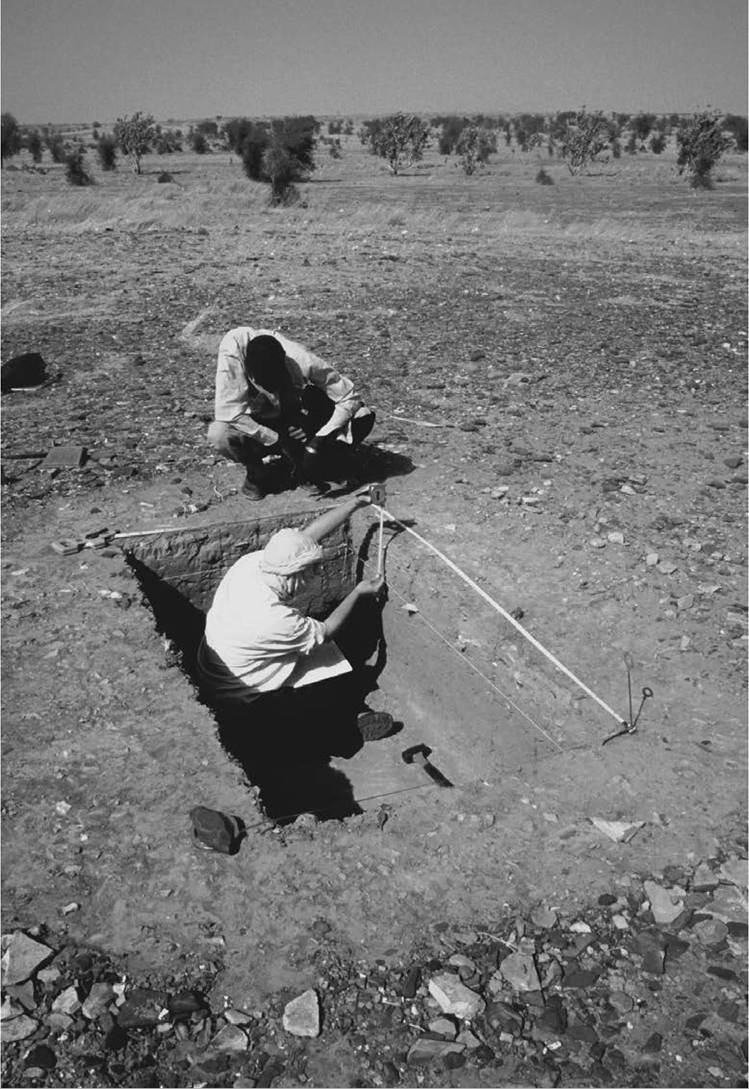
Figure 19.3 Excavations at Djiganyai in 2000.
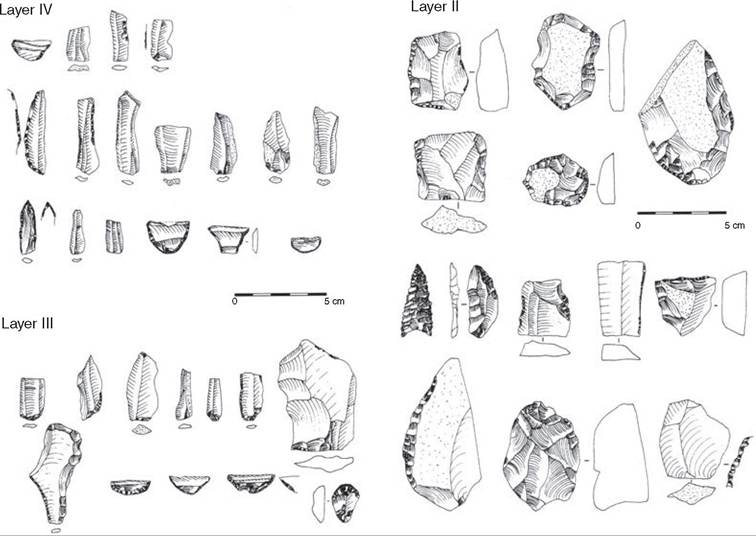
Figure 19.4 Pre-Tichitt to Tichitt lithics from the sequence at Djiganyai.
3,765 ± 35 bp (2280-2130 bce),[1096] and at Djiganyai pre-Tichitt materials occur in stratigraphy directly below early Tichitt materials and have been dated to 3,550 ± 40 bp (1950-1770 bce).[1097]
It is important to note that, although a change in fabric occurs in pre- Tichitt to Tichitt ceramics (sand to chaff temper), the forms and thicknesses of pre-Tichitt ceramics closely resemble those of early Tichitt and they share a number of other decorative motifs (including cord-wrapped roulettes and stylus incisions). Regarding lithic sequences, geometric microliths gradually decrease and projectile points increase, suggesting a gradual transformation rather than a rupture or hiatus between pre-Tichitt and early Tichitt (Figure 19.4).10 In terms of economy, to understand the origins of Tichitt subsistence systems one must first better understand pre-Tichitt, which up until now has been almost unstudied.
Unfortunately at this point, as pre- Tichitt ceramics do not feature external grain impressions and as suitable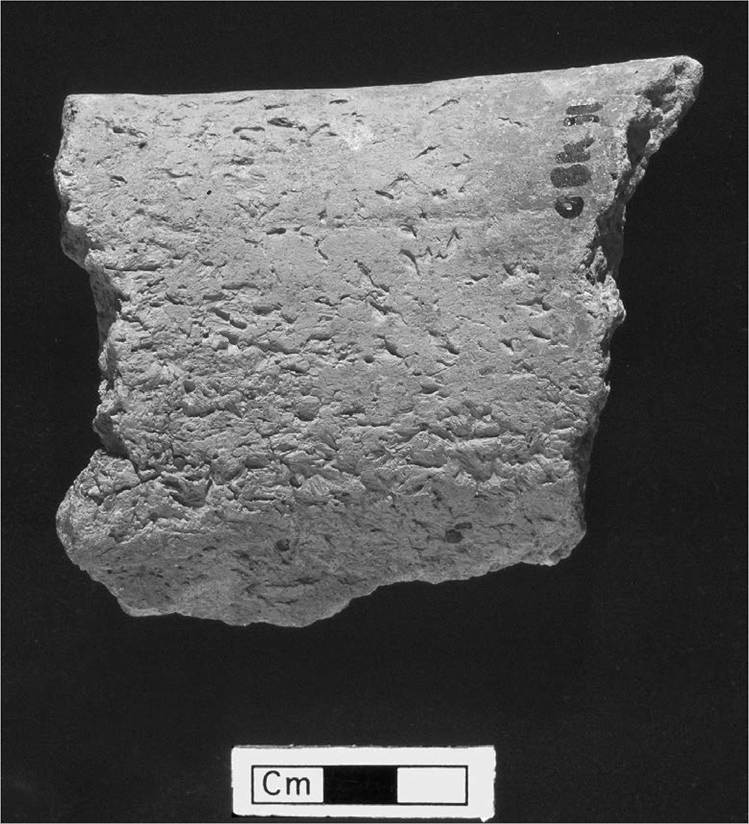
Figure 19.5 Domestic millet impressions in a Tichitt tradition potsherd.
deposits have not been sampled, we can only speculate about its cultivation activities.
For the Tichitt tradition itself, research on grain impressions embedded in its potsherds has intensified since the 1990s (Figure 19.5). The direct AMS dating of organics in these sherds has pushed back the advent of domestic millet at Dhars Tichitt, Walata, and Nema to around 3,500 bp (c. 1900-1700 bce)π
11 S. Amblard, Tichitt-Walata, Republique Islamique de Mauritanie: civilisation et industrie Iithique (Paris: ADPF, 1984); D.Q. Fuller et al., ‘Early domesticated pearl millet in Dhar Nema (Mauritania): evidence of crop-processing waste as ceramic temper', in R.TJ. Cappers (ed.), Fields of Change: Progress in African Archaeobotany (Groningen: Barkhuis, 2007), 71-6; MacDonald et al., ‘Dhar Nema'.
In other words, the cultivation of domestic millet was taking place from the very beginning of the Tichitt sequence. The questions must then be posed: when and where did the western Sahel's ‘agricultural revolution' occur?
Regardless of whether African millet domestication was multicentric or from a common source, new finds from the Tilemsi valley suggest that Tichitt's was not the pristine domestication that it was once supposed to be. Domestic millet remains from Karkarichinkat Nord in Mali's Tilemsi valley have been dated to between 2500 and 2000 bce, and Manning speculates that the presence of non-shattering rachises on her specimens pushes initial domestication dates back still further.[1098] Based upon Fuller's findings that non-shattering rachises evolved gradually - over a millennium or more1[1099] - we may still be looking for the cereal domestication process in what is now the Sahara around 3000 bce or earlier. Certainly by around 1900 bce domestic millets in West Africa were widespread, with specimens from northern Ghana[1100] [1101] and the Gourma/Bandiagara region of Mali.15 Tichitt cultivation was thus either part of a much wider process which was sweeping the Sahel at the time, or we may yet find roots of a longer, contiguous process of agricultural innovation in Mauritania. Still, it remains tempting to hypothesize that the material transition from pre-Tichitt to Tichitt (c. 1900 bce) corresponds with increasing sedentism and the addition or introduction of intensive millet farming to what had previously been a mobile pastoral economy.