Tichitt complexity: settlement sequence and expansion
Africa's mid-Holocene pastoral societies were no strangers to flares of social complexity. Monumental tumuli and long-distance trade in prestigious polished stone objects (beads, axes, and stone arm-rings) are amply demonstrated across the Sahara from 4000 bce.[1102] Tichitt forms a more durable and sedentary expression of such social disequilibria.
Its socioeconomic trajectory has been researched and debated for decades, with Munson's work at Dhar Tichitt during the late 1960s followed by that of new researchers there and in nearby regions.[1103] Chronology has, however, been a perennial problem, partly because the deflated nature of many key sites yields only occasional ‘cuts' or sediment traps with datable organics, though chafftempering of the majority of Tichitt ceramics facilitates the AMS dating of pottery. Munson's initial eight-phase sequence has now been reduced to three or four developmental phases, although Amblard-Pison prefers to opt out of chronological ordering given the current state of the evidence.[1104] Here, it is argued that the Tichitt ceramic and architectural chronology supports a four-phase developmental sequence.Pre-Tichitt: phase 1 (Akreijit phase), c. 2600-1900 bce
See the section above (‘Tichitt: agricultural origins') for a discussion of this phase.
Early Tichitt: phases 2 and 3 (Khimiya/Goungou
phases), c. 1900-1600 bce
Originally viewed as a mobile, pre-agricultural period for Tichitt pastoral- ists,1[1105] we now know that domesticated pearl millet (Pennisetum glaucum) was farmed during this period.[1106] However, a degree of continued mobility is implied by the fact that most well-stratified dates for Tichitt's distinctive dry-stone architecture fall in subsequent periods. This was thus very much a formative stage in the advent of Tichitt territoriality and social hierarchy.
Classic Tichitt: phases 4 to 6 (Nkahl/Naghez/Chebka phases), c. 1600-1000 bce
Classic Tichitt represents a major socioeconomic transformation during which most of Tichitt's main population centres developed. As well as the expansion of vast settlements of conjoined clusters of stone-walled compounds across Dhars Tichitt and Walata, and as far afield as Dhar Tagant,[1107] this period also saw the Tichitt tradition enter the Mema region of the middle Niger, initially perhaps only as dry season pastoral visitors, but ultimately as permanent settlers.[1108] For Dhar Tichitt itself a four-tier settlement hierarchy is proposed,[1109] ranging from hamlets (about 2 ha) through villages (≤10 ha) and district centres (about 15 ha) to regional centres (about 80 ha). Each district centre may have ‘administered' between 3 and 20 villages and hamlets, while the regional centre of Dakhlet el Atrouss-I features 540 stone-walled compounds, most of them containing stone pillar granary foundations and several dwellings made of perishable materials (straw, mats, wattle-and-daub, etc.) (Figure 19.6). Dakhlet el Atrouss-I is arranged in 26 compound clusters, perhaps relating to lineage quarters, with some large outlying walled areas, either for keeping livestock or protecting the soil of garden areas. Surrounding and within the site are well over 100 unexcavated tumuli.
Late Tichitt: phases 7 and 8 (Arriane/Akjinjeir
phases), c. 1000-400 bce
Tichitt's final centuries were ones of dispersal and decline. Tichitt tradition settlements now expand beyond the core Tichitt-Walata-Nema region as the Dhars and the Hodh basin empty out.[1110] Remaining settlements are smaller
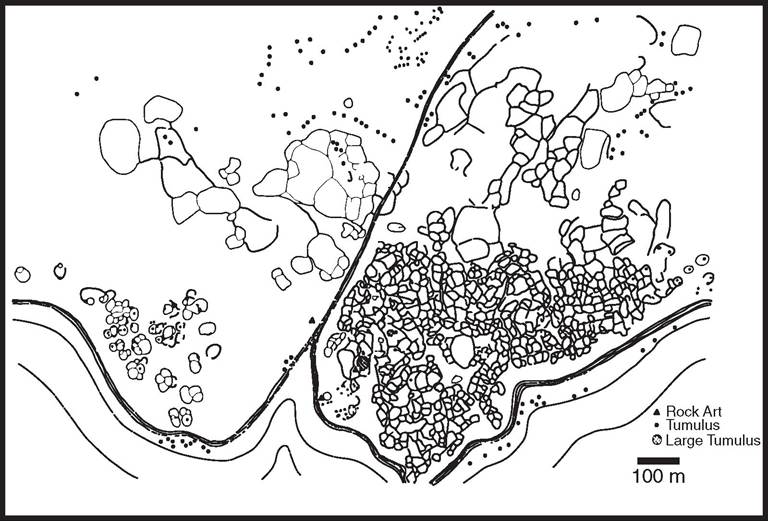
Figure 19.6 Plan of Dakhlet el Atrouss-I.
and situated in more defensible positions. Munson viewed these changes as a result of environmental collapse and Berber incursions aided by iron weaponry.[1111] These ideas receive some support from recent studies of early North African trade which reveal an increasing number of central Saharan Berber agricultural and entrepot sites from the fifth century bce onwards and mounting evidence for a limited slave trade.[1112] Stylistic affinities in late Tichitt pottery assemblages and the local advent of iron metallurgy may also indicate syncretism with incoming Berber groups during this period.[1113]