Transportation and communication, 1750 to the present
DANIEL R. HEADRICK
The age of revolutions in transportation and communication that we live in began two and a half centuries ago. Before then, transportation relied on muscle power or the wind and communication (beyond shouting distance) meant transporting an object containing a message.
Our revolutions have two causes: the application of new machines and energy sources to transportation, and the liberation of communication from the need to transport objects. The first of these revolutions has almost run its course, while the second is just beginning.Pre-industrial forms and new organizations
In the mid eighteenth century, transportation and communication systems were still bound by traditions harking back to ancient times. On land, goods were carried on the backs of animals or humans or in carts pulled by horses, mules, or oxen. The fastest means of communication was the courier on a galloping horse, as it had been since the Persian Royal Road that Herodotus admired over two thousand years earlier. At sea, goods, persons, and letters all traveled on the same slow ships; passengers and mail traveling between London and Calcutta, for example, took five to eight months to reach their destination. If someone wrote a letter, he or she could expect an answer two years later.
Yet changes, in organization rather than in hardware, were already beginning to have an effect. During the sixteenth and seventeenth centuries, European governments eager to communicate with their distant outposts created postal systems inspired by the Roman cursus publicus. A private firm operated by the Thurn und Taxis family organized regular courier services throughout the Habsburg Empire and other parts of Western and Central Europe. Following its example, the governments of France and England also set up royal courier services. Such organizations were nothing new, for the Chinese, Mongol,
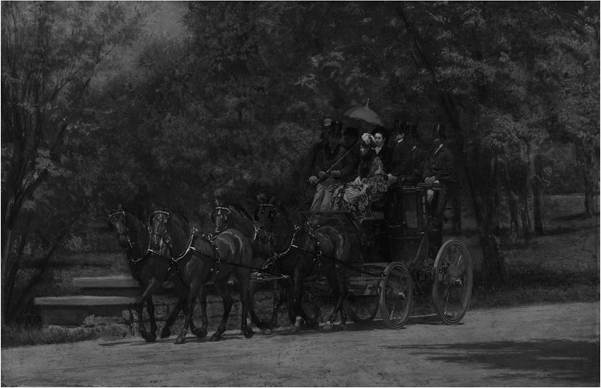
Figure 17.1 A May Morning in the Park (The Fairman Rogers Four-in-Hand) by Thomas Cowperthwait Eakins, 1879-80
(Philadelphia Museum of Art, Pennsylvania, USA / Gift of William Alexander Dick, 1930 / Bridgeman Images)
Ottoman, and Mughal empires had long had official couriers and relay stations with fresh horses placed every few miles along strategic roads.
No kingdom or empire could have functioned for long without such couriers.These systems were reserved for official messages, however. Private individuals wishing to send a letter had to find a traveler going in the right direction or bribe an official courier. When merchants established their own networks, governments, worried about subversion, often tried to forbid them. By the mid-seventeenth century, most Western European governments finally allowed private individuals to use the official courier systems, but at a cost so high it deterred all but the wealthiest patrons. Until well into the eighteenth century, mail delivery in Europe and in the great empires of Asia was slowed by obsolete rules and inefficient organizations.
By the eighteenth century, the quickening of business and political affairs in Western European nations was reflected in improvements in transportation and communication. Paper having monetary value - e.g., bills of exchange, promissory notes, and banknotes - blurred the boundary between transportation and information. Paper money, first introduced in eleventhcentury China under the Song dynasty, spread to Europe in the early eighteenth century.
The eighteenth century saw governments investing in all-weather roads made of crushed stone. France, the pioneer in this field, boasted 40,000 kilometers of good roads by 1776. In England, private turnpike trusts, rather than governments, built the new roads. On them, coaches pulled by teams of horses carried mail at increasing speeds, from 6 kilometers per hour in the early eighteenth century to 10 km/h in the 1780s and to 16 km/h in the 1830s. However, the rates were still very high; both public and private mail services charged as much to carry a letter as a working man earned in a day, limiting mail service to businesses and the wealthy. This era also saw a proliferation of pamphlets, broadsheets, and newspapers, as well as books and encyclopedias. The costs of rag paper, manual typesetting, and single-sheet printing limited editions, and the high cost of transportation ensured that most printed matter remained local.
In North America, the Post Office Act of 1792 inaugurated a new era in communication. Determined to distribute knowledge of every kind to all its citizens, the US Congress had post offices built in every town. The number of post offices grew from 75 in 1790 to 13,485 in 1840, twice as many as in Great Britain and five times as many as in France. Local, state, and federal governments built roads to accommodate the stagecoaches that carried both mail and passengers. The network was designed to carry newspapers very cheaply, broadening the information available to Americans and encouraging their participation in the politics of the new democracy. Private mail continued to be very costly, however.
In Europe, the exigencies of revolution and war led to the creation of the first telegraph network. Half a century before the electric telegraph, the Frenchman Claude Chappe invented a system of horizontal and vertical boards that could be arranged in different positions corresponding to numbers in a codebook. Lines of stations installed on towers, steeples, and other high places allowed any message to be transmitted in either direction, but only on clear days. For the first time in history, a message could be sent faster than a horse could gallop. Beginning in 1794, the French government built a network that covered all French cities and even extended as far as Venice and Amsterdam. In Britain, the Admiralty built similar lines from London to a few naval bases.
After the Napoleonic Wars ended in 1815, other European governments built optical telegraph lines for official purposes. Egypt under Mehmet Ali did likewise, as did the French colonial government of Algeria. All these governments forbade the use of optical networks by businesses or private citizens, partly because such systems could carry very few signals, and partly for fear of political conspiracies. Only the United States and Great Britain allowed the construction of private lines, usually short ones between ports and nearby headlands to announce the arrival of ships.
Meanwhile, naval captains also felt the need to communicate between ships beyond shouting distance. European fleets had long used flags to convey distress signals or enemy sightings; for everything else, there was one message that commanded all captains to come to the admiral's flagship for a conference, something clearly impossible in the heat of battle. During the wars of the American and French revolutions, British naval officers devised codebooks and systems of flags that allowed any message to be transmitted in any direction, even during a battle. This gave admirals greater control over their fleets than their predecessors had ever enjoyed in earlier conflicts. Such a system was instrumental in Admiral Nelson's victory at Trafalgar over the French and Spanish fleets. When peace returned in 1815, attention turned to the needs of the merchant marine. To satisfy the demand for better communication, Captain Frederick Marryat devised a codebook for British merchant ships that was later adopted by other nations' fleets and that remained in use until the end of the nineteenth century.
Both the optical telegraphs and the naval flag signaling systems used materials available to people in ancient civilizations and ideas that had been around for centuries. Yet they did not appear until the late eighteenth and early nineteenth century because they satisfied a need that had not been felt before, namely the demand for faster communications brought on by the social and political revolutions of that era.
The industrialization of transportation and communication
The nineteenth century saw the most radical advances in transportation and communication since the domestication of the horse. They were the result of two technological innovations: the steam engine and electricity.
The steam engine that James Watt patented in 1776 was “atmospheric,” meaning that the motive power that pushed the piston came from the difference between the pressure of the atmosphere and a partial vacuum created by injecting steam into a separate condenser cooled by running water.
Thus it could be used only near a source of cold water. Several inventors attempted to employ one of Watt's reliable but heavy engines to propel a boat. The first successful steamboat, the North River that Robert Fulton launched on the Hudson River in 1807, was soon followed by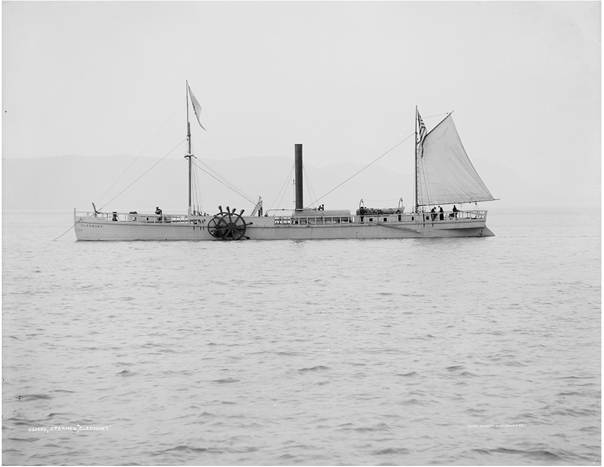
Figure 17.2 1909 replica of the North River Steamboat (Detroit Publishing Company / Library of Congress)
hundreds of other steamers in North America and later in Europe. Once Watt's patents expired, inventors built high-pressure engines that were more powerful and fuel-efficient than Watt's, but were prone to bursting. European-Americans used steamboats to open up the interior of their continent. On the Mississippi River where competition between steamboats was intense, several such boats exploded, claiming many lives. Meanwhile the British, who had pioneered steamboat use on their rivers and across the Irish Sea, introduced steamboats on the rivers of India and Egypt and during their expeditions against Burma and China.
Steam power also revolutionized ocean transportation. After the transatlantic race between the steamers Sirius and Great Western in 1838, people began to consider steam power a viable alternative to sail. Beginning in the 1830s, steam-powered ships connected India with Egypt via the Red Sea, and Egypt with Europe via the Mediterranean. In the 1840s, British steamers appeared off the coast of China. The combination of iron hulls - another innovation - and ever more powerful steam engines allowed shipbuilders to build larger, faster, and more efficient ships for long oceanic voyages. In this field, Great Britain led the way and remained dominant for a hundred years.
Steamships were so complex and costly that only large companies or government agencies could finance and manage them. Shipping lines were among the largest and most complex non-governmental organizations ever created, on a par with armies and navies.
Their economic impact was equally huge. For the first time, it became worthwhile to ship heavy but low-cost products over long distances, such as wheat from the Midwest of North America to Europe, coal from Britain to Australia, and wool from Australia to Britain. By the late nineteenth century, British, French, American, and German passenger and cargo lines connected all major ports of the world.Shipbuilders built specialized ships for different purposes. Tramp steamers carried non-perishable cargo from port to port. Grain carriers carried wheat to Europe from North America. Refrigerated ships carried beef from Argentina and fruit from South Africa to Europe. Passengers, mail, and perishable freight traveled on fast ocean liners. By the early twentieth century, a voyage between England and India that once would have taken five to eight months could be accomplished in eleven days by a combination of railways and steamships. Not only was maritime travel much faster than ever before but, for the wealthy, ocean liners were safe, comfortable, and luxurious. The low cost of travel in steerage also allowed millions of poorer Europeans and Asians to emigrate to the Americas, South Africa, and Australia.
Though steamboats aroused much excitement, they were eclipsed by an even more radical technology: the railroad. Despite the dangers of derailing, collisions, and bursting boilers, public enthusiasm for fast land transportation caused a boom in railroad building, first in Britain and the United States, followed, at a more sedate pace, by the European nations. In the late nineteenth century the Latin American republics also experienced railroadbuilding booms and busts.
The British introduced railways to India in the 1850s. In a country where for millennia transportation had been by oxcart or by slow boats on the few navigable rivers, railways proved revolutionary. By the end of the century, India had one of the longest rail networks in the world, comparable to those of France, Germany, Russia, and Britain itself. However, these railroads were built entirely by British engineers using British equipment; while they greatly improved transportation on the sub-continent, they did little to further the technical education of Indians. In contrast, when the Japanese government decided to build a rail network in the 1870s, it employed Japanese engineers and created a Japanese industry to provide most of the equipment. In China, an impoverished state dominated by a reactionary court suspicious of all
Transportation and communication, 1750 to the present things foreign delayed the construction of a rail network until the twentieth century. The Ottoman Empire acquired its first railroad lines in the late nineteenth century; by 1914, with German help, it began construction of a line from Istanbul to Baghdad.
The revolution in transportation had an immediate impact on communications. Even the very first trains in the 1830s traveled faster than the fastest stagecoach. The year 1838 saw the first railway car devoted to carrying the mail, in which postal employees sorted the letters en route. By the 1850s, wherever there were railway tracks, stagecoaches disappeared, as passengers and mail traveled more rapidly, comfortably, and safely by train. Government postal services signed contracts with shipping lines to subsidize the carriage of mail across seas and oceans on the fastest ships available. In India, where non-governmental mail had traditionally been handled by travelers or private couriers, the British established a uniform postal system in 1837 and introduced railway mail service in the 1850s. In China and the Ottoman Empire, where mail service remained slow and unreliable, foreigners opened branches of their national postal services to serve their needs. China did not establish an Imperial Postal Service until 1897.
That left the problem of cost. Until the 1840s, governments saw private letters as a source of revenue, and charged the recipient by the number of pages and the distance covered, introducing delays and inefficiencies. In 1837 the Englishman Rowland Hill proposed charging the sender - not the recipient - one penny for any letter weighing half an ounce or less to anywhere in the British Isles. This reform, introduced in 1840, caused an upsurge in mail and was soon imitated in the United States, France, and other countries. Correspondence, once a privilege of the wealthy, was now within the means of the poor, an incentive to mass literacy.
The other revolution in communication was the electric telegraph. During the early nineteenth century, several inventors tried to use electricity to convey messages. Two practical systems emerged in 1837: that of Charles Wheatstone and William Cooke in Britain, which used five wires to move a pointer to letters of the alphabet on a dial, and that of the American Samuel Morse, which used a code of dots and dashes transmitted by a single wire with an earth return. Though the Wheatstone-Cooke system was fast and reliable, the Morse system was cheaper, and eventually prevailed worldwide.
The electric telegraph was at least ten times faster than the Chappe system and could work at night and in bad weather as well as on sunny days. Excess capacity persuaded governments to open telegraph service to the public, even in France where the government had long forbidden public access to the
Chappe network. In the United States and (until the 1870s) in Britain, the telegraphs were operated by private companies; elsewhere, they were government-run. Telegraph lines soon crisscrossed nations and continents. In Western nations, governments, newspapers, businesses, and private citizens eagerly took to the telegraph, stimulating the flow of commerce and the transmission of news. In exchange for free access to the telegraph, railways encouraged telegraph companies and administrations to erect lines along their tracks to coordinate trains and prevent accidents. Banks began to transfer funds instantaneously by telegraph, speeding up commerce.
Outside of Europe and North America, telegraph lines also spread along with the expanding European colonial empires. In India, the largest and most important of all colonial territories, the British started a telegraph network in the 1850s. Independent countries attempting to modernize, such as the Ottoman Empire, Japan, and the Latin American republics, began building telegraph lines from the 1870s on. Even China, where telegraphy at first encountered popular resistance, had the beginning of a network by the end of the nineteenth century.
Building an overland telegraph network was fairly inexpensive and could be done in stages; communicating across the sea was far more challenging. The first submarine telegraph cable was laid from England to France in 1851, setting off a scramble to lay longer cables to faraway lands. The first transatlantic cable, laid in 1858, failed almost immediately, as did several cables across the Mediterranean Sea and down the Red Sea. Finally in 1866-67, two new cables successfully linked Great Britain and the United States. In 1872, India was connected to Britain by a direct cable. These successes triggered a boom in oceanic telegraph cables that connected every continent and most islands by the beginning of the twentieth century.
Great Britain, which had pioneered the industry, dominated the intercontinental telegraph business until World War I. Only across the North Atlantic did British firms encounter competition from French, German, and American cable companies. However, the cost of intercontinental telegrams remained so high that even governments and businesses sent messages sparingly and almost always in codes that reduced the number of words. Few private individuals could afford the astronomical cost of an overseas telegram.
The mass media also changed dramatically in the nineteenth century. Two innovations - cheap wood-pulp paper and the rotary press - transformed newspapers from irregular, short, and expensive publications to the masscirculation dailies we know today. The telegraph allowed newspapers to station correspondents in faraway places. Reuters, the Associated Press, and
Transportation and communication, 1750 to the present other news agencies provided news to papers that could not afford their own correspondents. In the late nineteenth century, photography and rotogravure allowed wide-circulation magazines and newspapers to print pictures to illustrate stories and advertisements aimed at a newly literate mass audience educated in the expanding public schools of that era. Cheap newspapers in turn contributed to mass participation in politics.
The second industrial revolution, 1876-1945
In the late nineteenth century, a series of technological and organizational innovations once again revolutionized transportation and communication. The first of these was electricity.
Decades after the telegraph had proved successful around the world, several inventors tried using an electric current to transmit the human voice. The winner in this race was the American Alexander Graham Bell, whose telephone was patented in 1876. The development of a network that allowed subscribers to communicate with one another, first in cities and later over inter-city distances, was as important as the device itself. At first, telephone companies hired young women to connect subscribers; by the 1920s, as the number of employees could not keep up with the fast-growing traffic, companies introduced the automatic switching or direct-dialing system. Meanwhile, scientists were working on relays to permit long-distance telephony. In 1915 the American Telegraph and Telephone Company inaugurated the first transcontinental line between New York and San Francisco, using vacuum tubes.
Throughout the nineteenth century, engineers and inventors had sought to apply electricity to uses other than the telegraph. The most famous breakthrough was the invention of the electric lightbulb by Thomas Edison. But Edison's more important (though less celebrated) contribution was the central power station that could supply electricity to a whole neighborhood, and later to an entire city. This allowed the development of electric vehicles that got their energy from the grid. The first practical streetcar began service in Richmond, Virginia, in 1888. After some early teething troubles, streetcars became ubiquitous in American and European cities during the 1890s and early 1900s, and were later adopted in Japan and Latin America as well. Electric traction also opened up the possibility of placing trains underground. Since the first London Underground line opened in 1890, subways and elevated urban lines have proliferated around the world. Likewise, electric power has increasingly replaced other sources of energy for
railroad locomotives, especially for high-speed trains and in regions with ample hydroelectric power like Switzerland.
At the turn of the century, electromagnetic radiation or radio waves began to impact communications. In 1895 the young Italian Guglielmo Marconi succeeded in sending a message in code over a short distance. In 1899 he was able to communicate across the English Channel and, two years later, across the Atlantic Ocean. Wireless telegraphy, as it was called, interested navies and shipping companies above all, for until then a ship out of sight of land or of other ships had been incommunicado.
While Marconi's and other early systems used electric sparks to emit coded messages by electromagnetic waves, other inventors sought ways to transmit voice and music, as the telephone had done for land lines. Success came in 1906, when the Canadian Reginald Fessenden transmitted sounds accurately. In 1915, the first transatlantic telephone circuit was inaugurated, using the same vacuum tubes that had made transcontinental telephony possible. Until the 1930s, long-distance radio communication used powerful transmitters that consumed as much electricity as small towns and required antennas as large as tall buildings. The huge cost of transmission limited the spread of long-distance radio to a few dozen stations in wealthy countries and in their colonies.
This obstacle was removed in the 1930s by the introduction of shortwave radio invented by Marconi himself. Short or high-frequency radio waves did not follow the curvature of the Earth as did the long waves emitted by powerful transmitters, but bounced off the ionosphere and could thereby reach huge distances with very little power. As a result, shortwave radio allowed every town and organization, even “ham” radio operators using inexpensive equipment, to communicate with the rest of the world. During World War II, ships, tanks, airplanes, and spies were equipped with shortwave sets.
Meanwhile, radio waves had found an entirely new use in 1923 when a station in Pittsburgh, Pennsylvania, began broadcasting to the public. So successful was broadcasting that radio stations sprang up around the United States to transmit news, music, entertainment, and advertisements to owners of home radio receivers. While American radio broadcasting was purely commercial, in most other countries radio stations were owned and operated by governments that used them to influence public opinion.
Electricity had the most diverse applications to transportation and communication in this period, but in the popular mind the internal-combustion engine created even more excitement. The four-cycle gasoline engine that now powers almost all cars was invented by the German Nikolaus Otto in 1876. Ten years later, two other Germans, Karl Benz and Gottlieb Daimler, began manufacturing “horseless carriages” using these new gasoline engines. During the next twenty years, dozens of entrepreneurs in Europe and the United States used traditional handicraft techniques to build luxury automobiles for wealthy customers. In 1908, one of these craftsmen, the American Henry Ford, began building simple machines that he called the Model T. Over the next several years, he introduced the assembly line and other cost-saving methods in his factory in Detroit that lowered the price of his car. By 1927 he was producing a new car every twenty-four seconds and selling them for 300 dollars, or three months' wages for his workers. As a result, the United States became the first country in which most families could afford a car.
While mass automobility did not reach Europe until the 1950s and Asia several decades later, the internal combustion engine affected transportation in other ways. Trucks could deliver goods more rapidly and efficiently than
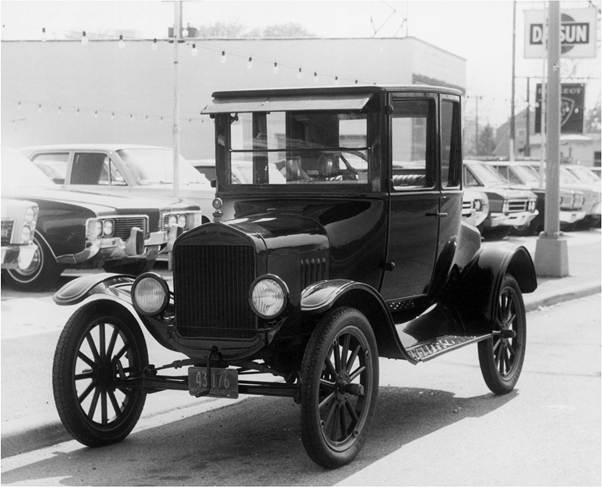
Figure 17.3 Model T Ford (© Ewing Galloway / Alamy)
horse-drawn carts and reach places without access to railroads. Similarly, buses transported people in and between cities without the need for costly and complicated rails.
Roads lagged behind the rise of the automobile. For a long time, cars had to drive on cobblestone streets in cities and on dirt or gravel roads out in the country. Even before the automobile, another new machine, the bicycle, helped satisfy a demand for personal transportation. In the course of the nineteenth century, various inventors had come up with two-wheeled pedal- powered vehicles, culminating in the “penny-farthing” bicycle, a machine with a huge front and a tiny back wheel suitable only for daredevils. Two inventions in the 1880s put the bicycle within reach of ordinary people: the chain drive that allowed both wheels to be of the same size and the pneumatic tire that made riding smoother and safer. Once cycling became popular in the 1890s, cyclists demanded smooth streets and roads paved with asphalt. In the 1920s, as automobiles, buses, and trucks proliferated, such roads became standard between cities.
The most spectacular application of the internal combustion engine was aviation. Humans dreamed of flying since time of the ancient Greeks, if not before. In the 1790s the Montgolfier brothers had created the first hot-air balloon, to great acclaim. Balloons, however, drifted with the wind. In order to achieve controlled flight, inventors tried two different methods. One was the dirigible, a lighter-than-air balloon with an engine and a steering mechanism. The best of these machines, built by the German count Ferdinand von Zeppelin, were giant airships that carried a few dozen passengers in comfort across continents and oceans. Zeppelins fell out of favor in 1937 when the Hindenburg burst into flames after crossing the Atlantic Ocean, killing 35 of the 97 people on board.
The other attempt to fly was in an airplane, a heavier-than-air machine that relied on wings to hold it up. Around the turn of the nineteenth century, many inventors tried to build such a machine. Two American bicycle manufacturers, the brothers Orville and Wilbur Wright, succeeded in 1903 with their craft called Flyer I. Once they had shown it could be done, many others followed suit. The nations that went to war in 1914 sent airplanes into combat. After the war ended, daredevil pilots flying leftover fighter planes performed dangerous aerial maneuvers before huge crowds. In 1927, Charles Lindbergh demonstrated the potential of aircraft by flying across the Atlantic non-stop. By the 1930s, airlines regularly began carrying paying passengers. The Douglas DC-3, an all-metal twin-engine plane with retractible landing gear introduced in 1936, made long-distance air travel safe and popular. By the
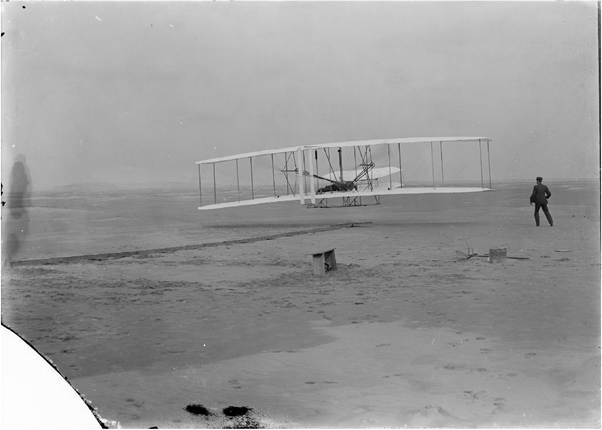
Figure 17.4 First flight of the Wright Flyer I, December 17, 1903 (Library of Congress)
outbreak of World War II, hundreds of passenger planes were flying throughout the world. Since airfields or landing strips could be built very cheaply almost anywhere, aviation quickly reached remote areas not served by rail or ship, such as the interior of Africa. During the war, airplane factories poured out thousands more, many of which served to transport passengers and cargo.
Airplanes also had an impact on communication, as many former military pilots turned to carrying mail after 1918. Although airmail was expensive, it was often as fast as night-letters, the cheapest kind of telegram, and so much faster than land- and sea-mail that people and businesses gladly paid a surcharge for urgent letters.
Two other innovations in communication in this era merit mentioning. One was the phonograph, invented by Thomas Edison in 1877 as a means of recording voices on wax cylinders. By the turn of the century, cylinders were made obsolete by wax (later vinyl) disks in which a stylus followed a spiral groove, and a flourishing industry arose to produce music for home entertainment. The other innovation was the cinema or motion picture, using celluloid film originally produced for still cameras. The first halting steps toward cinematography began in the 1890s. By the early 1900s, studios were producing short movies for popular audiences. Films with synchronized sound tracks followed in the mid 1920s. Producing a realistic-looking color film was a complex challenge that occupied inventors and corporate laboratories for decades. Though a few color movies were produced in the 1920s and 1930s, most films were in black-and-white until after World War Two.
The age of globalization, 1945-2000
Before the Second World War, most innovations originated among craftsmen, businessmen, and scientists. In that war, however, the governments of the major belligerent powers invested heavily in research and development of militarily useful technologies, many of which had important applications to civilian transportation and communication after the war. Among them were radar, jet engines, computers, and guided missiles.
Radar, developed in Britain, Germany, and the United States to spot approaching enemy aircraft, made aviation and navigation safer by “seeing” through fog and darkness. With radar, ships could avoid icebergs, rocks, and other ships, and airplanes could fly at night and in bad weather.
Aviation was also greatly advanced by the development of jet engines that were more efficient and allowed greater speeds than piston engines and propellers. The British De Havilland “Comet,” introduced in 1949, was the first jet-powered passenger airplane, but it suffered several accidents and ended its commercial career after a few years. The American Boeing 707 began service in 1958 and was an outstanding success, leading the way to many similar aircraft. Today, thousands of jet planes carry millions of passengers and millions of tons of freight to all parts of the world at much higher speeds and lower cost than the piston-engined planes they have replaced. So fast, comfortable, and inexpensive has air travel become that it brought mass tourism to distant destinations. In response, passenger ships have abandoned transoceanic routes and become cruise ships or floating resorts.
Despite improvements in safety, performance, comfort, and efficiency, aviation reached a plateau in the 1980s. An Anglo-French consortium tried to change commercial aviation by introducing the “Concorde” in 1976. This plane, which carried passengers at supersonic speeds and at outrageous prices, served a small but wealthy clientele until it was retired in 2003. All other attempts to carry passengers faster than the speed of sound have failed. At this time, supersonic travel is a dream that recedes further into the future every year.
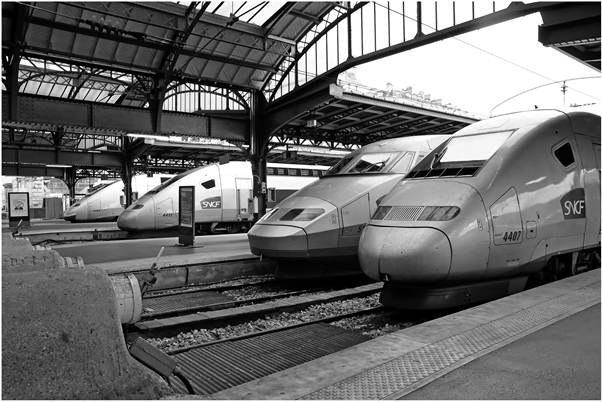
Figure 17.5 Four TGV trains at Gare de l'Est station, Paris (© imageBROKER / Alamy)
Railways also advanced dramatically when the Japanese introduced the Shinkansen or “bullet train” between Tokyo and Osaka in 1964. Such trains, which can reach a maximum speed of 300 kilometers per hour, now carry over 100 million passengers a year between all the major Japanese cities, greatly alleviating the pressure on highways and air traffic in a densely populated nation. The Japanese example was followed by the French TGV (Train a Grande Vitesse, or high-speed train) in 1981. In 2003, the TGV set a land-speed record of 575 kilometers per hour. Since then, a network of highspeed trains has spread to all major French cities and many neighboring countries as well. In the United States, however, the love of (and dependence upon) automobiles is so powerful that all proposals to improve passenger rail service have run into political roadblocks.
While American passenger rail service is now a pale shadow of its former glory, its freight service has become the most efficient in the world. Part of the reason is containerization, introduced in the 1950s and adopted by the US armed forces in the Vietnam War. While non-bulk freight was once loaded and unloaded by men, 90 percent of such freight is now shipped in sealed intermodal containers that can be transferred among trains, ships, and trucks by powerful cranes and then tracked by computers. This system not only saves a great deal of labor, it also prevents pilfering and protects the cargo from the weather.
For the same reasons, containerization has also made ocean shipping much more efficient. By the end of the twentieth century, almost all long-distance non-bulk cargo was carried in containers stacked up in the hold of specialized container ships. Bulk freight was also greatly improved in the postwar period, largely by replacing generic cargo ships with specialized vessels. The most impressive of these are the gigantic crude-oil tankers capable of carrying up to 550,000 metric tons of crude at a cost of two or three US cents per gallon. The falling cost of shipping freight by sea, air, and train and the lowering of tariffs and other trade barriers since World War II have fueled the increase in world trade, a major aspect of globalization.
Like aviation, automobile transportation improved greatly for several decades, then stalled. The improvements came at two levels. Cars themselves became more powerful, comfortable, and reliable and, especially, more affordable to masses of working people, first in North America, then in Western Europe, and more recently in Latin America and East Asia. By the early twenty-first century, there were some 800 million cars worldwide, with 250 million in the United States alone. Recently, China has surpassed the United States in the number of new automobiles purchased each year.
Governments have tried, with greater or lesser success, to cope with the flood of new vehicles. For long-distance travel, many countries, starting with Germany in the 1930s, built superhighways. The American network of limited-access interstate highways reached over 40,000 miles by the end of the century, by far the longest of any nation. Though originally designed for interstate travel, most of the traffic consists of short-distance commuting, encouraged by the construction of limited-access highways into and through cities. European nations with high automobile densities by and large have resisted the idea of destroying urban neighborhoods for the benefit of suburban commuters. Yet the result in Europe and Japan, as in the United States, has been increasingly long and frustrating rush hours, occasional gridlock (total traffic stoppage), and serious air pollution. NonWestern countries with a similar proliferation of cars but less money to spend on highway construction and pollution abatement have encountered even more serious problems; the worst traffic congestion and air pollution are now found in Mexico City, Bangkok, Cairo, and other Third-World megalopolises.
While improvements in transportation have leveled off, changes in communication have not only continued unabated, they have come at an accelerated pace. Some were improvements in pre-existing communications. Thus radios that used large, power-hungry tubes until the 1950s were replaced by small transistor radios that people could carry in their pockets. Television, invented before the war, became an item of mass consumption. In some countries, programming is subsidized by advertisers that heavily influence popular culture toward consumerism. Most nations created government-operated television networks, as they had for radio. As with so many other innovations, radio and television found their first mass markets in the United States, then spread to Europe and Japan, and from there to the rest of the world. Today there are several hundred million television sets in the world, and countless millions of radios.
Other postwar innovations were radically different from any previous technologies. One such was satellites launched into orbit by powerful missiles, themselves the result of military research in World War II. The first satellite, called “Sputnik,” was launched by the Soviet Union in 1957 for propaganda purposes. Eight years later, the United States launched Intelsat I (or “Early Bird”) to retransmit telephone messages from one Earth station to another. By 1971, when Intelsat IV was launched, rapid advances in electronics increased the capacity of satellites to 2,000 simultaneous telephone conversations. While satellite transmission introduced a disconcerting delay in telephone conversations, they were perfectly suited for transmitting television programmes around the world, making global news and sports events instantaneous for the first time.
Microwave towers on land and fiber-optic cables across seas brought about an even more radical advance in communication. First manufactured into cables in 1983, glass fibers could carry light pulses produced by lasers over long distances. TAT-8, the first transatlantic fiber-optic cable laid in 1988, carried 40,000 simultaneous telephone conversations, compared to 36 for TAT-ι, a copper cable laid in 1955. By the end of the century, fiber-optic cables laid across all the world's oceans could carry all telephone calls, data transmissions, and television programmes at almost zero marginal cost, with bandwidth to spare.
Microwaves, transmitted from tower to tower, began replacing copper telephone cables on land around the same time that fiber-optic cables were laid under the seas. When combined with computers, they allowed an even more astonishing new technology: mobile, or cellular, telephones. Electronic computers were invented in World War II and developed after the war for military and scientific purposes. The introduction of the transistor and, after 1958, the integrated circuit or “chip” permitted computer manufacturers to design computers that were ever more powerful even as they shrank from the size of a small house to that of a cigarette pack or less. In 1983, software engineers devised protocols that allowed computers to communicate with one another. Among the applications was a system that could switch telephone communications from one “cell” or transmitter to another as the user moved. That and advances in batteries and miniaturization led to the proliferation of pocket telephones. Japan led the way in this technology with the first urban coverage of Tokyo in 1979 and the first nationwide network in the mid 1980s. Compared to landline installations, mobile phone systems were inexpensive to install, even in poor countries with primitive infrastructures. So popular were mobile phones that they were quickly adopted around the world.
Once computers were able to talk to one another, it opened up an entirely new field of communication. Email (for “electronic mail”) was introduced in the early 1970s on the first American military and scientific computer network, called ARPANET. Soon various companies introduced their own proprietary computer networks, with the digital data being transmitted via microwave towers or fiber-optic cables. In the late 1980s, new protocols were developed that allowed all these networks to interconnect, creating the Internet. In 1990, British computer scientist Tim Berners-Lee devised a method of transmitting and displaying any sort of digital data (pictures, words, music) called the World Wide Web. By the end of the century, the falling price of personal computers and easy inexpensive access to the Web turned the Internet into the most versatile and most rapidly growing communication medium in history.
Divergence, convergence, and the future
Technological revolutions do not all follow the same trajectory. At the turn of the twentieth century, the two technologies discussed in this essay clearly diverged. Transportation has stalled, while communication technologies are advancing more rapidly than ever.
Throughout the nineteenth and twentieth centuries, the revolution in transportation captured the imagination of people around the world. From sailing ship to ocean liner, from stagecoach to railroad train, from train to motorcar, from earthbound vehicles to airplanes, and from wood-and- cloth biplanes to jet airliners: these were means of travel more revolutionary than even the most inspired visionary of the eighteenth century could have dreamed of. All of these have entered the fabric of everyday life in the more developed countries, and are rapidly spreading to the less
Transportation and communication, 1750 to the present developed ones. Then, in the late twentieth century, improvements slowed down or ceased entirely. Automobiles cannot get people to their destinations any faster than forty years ago; in many cities, commuting times have even become longer. Passenger airplanes are no faster, and often less comfortable, than the jetliners of forty years ago. In some countries, high-speed trains introduced to great fanfare decades ago are now commonplace, while in other countries, such as the United States, they are still a fantasy. Only China is actively building new lines as part of its hypermodernization effort. Freight transport is now extremely efficient in the developed world, but its gains were achieved in the first decades after World War II, and have not improved much since.
Why the stagnation? One major cause is energy. Transporting physical objects, whether people or cargo, takes a great deal of energy. And increases in speed require disproportionate increases in energy consumption; this is what doomed the Concorde and other supersonic airplanes. Meanwhile the cost of energy, which declined sharply until 1973, has fluctuated since then, with a long-term upward trend.
Another cause is automobiles. Cars are not just means of transportation. They are treasured personal possessions that express their owners' taste, wealth, and status, and give drivers a sense of freedom that no train or bus or subway can approach. Unless restrained by traffic regulations, most people prefer to travel by car, almost regardless of cost or delays or inconveniences. As for improving the driving experience by building more and better roads, that hope has proved illusory, for better roads only encourage more people to drive more cars, and the result is more traffic, hence slower travel. In short, if transportation technology has reached a plateau, it is not because engineers cannot devise better systems, but because existing technologies have reached a balance between efficiency, cost, and culture.
The opposite is true of communication. Here the revolution is in full force, and innovations, driven by culture as much as by technology, are appearing faster than ever. As all kinds of information - words, data, music, pictures, motion pictures - can now be digitized and transmitted through the same computers, cables, and microwaves, the result is a convergence of media and a proliferation of new devices and organizations.
Consider the Internet. What was once conceived of as a means of transmitting data safely and rapidly from point to point has spawned several industries. Online commerce competes heavily with retail stores. Newspaper readership is declining as people turn to the Internet for their
news. Movie theaters feel the competition from films streamed directly to one's home. Search engines such as Google can sort through billions of web sites in nanoseconds to find information that would once have been almost inaccessible. Wikipedia threatens to doom paper encyclopedias. Social networking sites such as Facebook and Twitter entice millions of people to display their personal information and to form instant groups of all kinds. On the Web, personal information is vulnerable to identity theft, while secret corporate and government information is subject to digital espionage, spawning an entire industry devoted to encryption and data security.
Meanwhile, mobile telephones, considered a radical breakthrough just a few years ago, have proliferated beyond all predictions. Smart phones allow users to hold a conversation, take a picture or a video, listen to music, get information from the Internet, and find a location by GPS (Global Positioning System), all in a device small enough to fit into one's pocket. Old-fashioned computers, with a keyboard, a monitor, and a mouse, are giving way to tablets the size of a magazine or paperback book that can do what computers and telephones used to do, and much more. E-books are fast replacing paper books. Long-distance telephone calls that went from outrageously expensive to very cheap are now free via the Internet.
The evolution of motorcars illustrates the divergence between communication and transportation. Although recent-model cars are no faster or more comfortable than the cars of the 1970s, they excel in information: GPS navigation systems, telephone and Internet access, satellite radio, MP3 music, and more. Drivers may not get to their destinations any faster, but while they sit in traffic, they can get work done or enjoy their choice of entertainment.
The other aspect of the revolution in communication is the worldwide diffusion of the new devices and networks. The International Telecommunication Union reported that by the end of 2011, there were 6 billion mobile phone subscribers in the world, almost as many as human beings. In 2012, China alone had ι billion mobile phones. And the numbers are growing. Even in remote areas of less-developed countries without electricity or running water, people now have mobile phones; and these phones are used not only to converse and to send and obtain information, but also to transfer money in places without financial institutions. While translation software is still in its infancy, knowledge of English is becoming almost universal among educated youth worldwide, and international business people increasingly communicate in “global English.”
The diffusion of technology is nothing new; almost all new technologies are first adopted by the well-to-do in rich countries, then by middle and working-class people, then spread to poorer countries. What is new is the speed at which the new communication technologies have spread, especially mobile phones. And that is just the beginning. Within sight are pocket-size devices that will allow anyone to view any film or television programme, talk to anyone else, access the Internet, listen to any piece of music, read any book, newspaper, or magazine, take a picture or a video, and do anything a home computer can do, from anywhere in the world, and all without being tethered to a wire. As I write this, it is still a prediction, but no doubt, by the time you read this, it will have come to pass or perhaps even seem old hat.
Further reading
Aitken, Hugh. Syntony and Spark: The Origins of Radio. New York: John Wiley, 1976.
The Continuous Wave: Technology and American Radio, 1900-1932. Princeton University Press, 1985.
Butrica, AndrewJ. Beyond the Ionosphere: Fifty Years of Satellite Communication. Washington: NASA, 1997.
Castells, Manuel. The Internet Galaxy: Reflections on the Internet, Business, and Society. Oxford University Press, 2001.
Chandler, Alfred D. Inventing the Electronic Century: the Epic Story of the Consumer Electronics and Computer Industries. New York: Free Press, 2008.
Fischer, Claude. America Calling: A Social History of the Telephone to 1940. Berkeley, ca: University of California Press, 1992.
Flink, James J. The Automobile Age. Cambridge, ma: MIT Press, 1988. Haws, Duncan. Ships and the Sea. New York: Thomas Y. Crowell, 1975. Headrick, Daniel R. Tentacles of Progress: Technology Transfer in the Age of Imperialism, 1850-1940. Oxford University Press, 1988.
The Invisible Weapon: Telecommunications and International Politics, 1851-1945. Oxford University Press, 1991.
When Information Came of Age: Technologies of Knowledge in the Age of Reason and Revolution, 1700-1850. Oxford University Press, 2000.
Holzmann, Gerald R. and Bjorn Pehrson. The Early History of Data Networks. Los Alamitos, ca: IEEE Computer Society Press, 1995.
John, Richard R. Network Nation: Inventing American Telecommunications. Cambridge, ma: Harvard University Press, 2010.
Spreading the News: The American Postal System from Franklin to Morse. Cambridge, ma: Harvard University Press, 1996.
Levinson, Mark. The Box: How the Shipping Container Made the World Smaller and the World Economy Bigger. Princeton University Press, 2006.
Lubar, Steven. InfoCulture: The Smithsonian Book of Information Age Invention. Boston: Houghton Mifflin, 1993.
Robinson, Howard. The British Post Office: A History. Princeton University Press, 1948.
Sachs, Wolfgang. For Love of the Automobile: Looking Back at the History of Our Desires, translated by Don Reneau. Berkeley, ca: University of California Press, 1992.
Thompson, Robert L. Wiring a Continent: The History of the Telegraph Industry in the United States, 1832-1866. Princeton University Press, 1947.
White, Richard. Railroaded: The Transcontinentals and the Making of Modern America. New York: Norton, 2011.