Developments in science and technology c. 800 BCE - c. 800 CE
HELMUTH SCHNEIDER
Knowledge of and mastery over nature are crucial factors in human history. What resources a society can command to realize its goals depends in large measure on how it can use the natural environment to produce and distribute food and goods.
The Neolithic Revolution set in motion a development whereby humans influenced their environment on an ever larger scale in order to meet their need for nutrition and material goods. In Egypt and Mesopotamia in the third and second millennia bce, the natural conditions of the large river valleys contributed to the rise of civilizations with the economic and cultural capacity to provide humans with goods far beyond the necessities of life, and, moreover, to give expression to religious beliefs and notions of power and distinction in the furnishings of their tomb complexes and in the building of monumental temples and palaces. This presupposed a mastery of fundamental cultural technologies: beginning in the third millennium bce, both Egypt and Mesopotamia possessed writing, numbers and mathematical knowledge, the calendar, and an astronomy capable of recording the movement of the heavenly bodies. Agricultural technology, in turn, had advanced to the point where a sizeable group of humans was freed from the necessity of producing food and could thus devote itself to other community tasks.The history of human knowledge about nature can in no way be understood merely as an expanding collection of discrete facts. At all times it is important to clarify how and with what intentions knowledge about nature was acquired, how this knowledge was embedded in the ensemble of religion, culture, and power, and how it was used to gain advantages in the struggle for power and distinction. Knowledge - and this applies also to knowledge of nature - can be expanded and increased in a variety of ways: it may find wider dissemination within a society or beyond the boundaries of a civilization when other societies adopt it and develop it further; it can become reflected in methodology and thereby secured for the future; and it can open up, describe, and explain previously unknown facts.
Knowledge can be handed down to subsequent generations through the oral transmission of experiences and information; and the use of writing creates the precondition for storing knowledge as text and transmitting it independent of personal contacts.The long centuries between c. 800 bce and c. 800 ce do not constitute a uniform era in human history. Greece in the Archaic Period (800-500 bce) saw the emergence of the system of free and autonomous cities, the poleis. Eventually, as a result of the Greek settlements abroad, it extended geographically to southern Italy, Sicily, and southern France in the West, to North Africa, and to the coasts of the Black Sea in the northeast. In the Western Mediterranean, the role of the Phoenicians was taken over by the Carthaginians, who controlled large areas in North Africa and Spain, as well as in Sardinia and western Sicily. Alexander's victory over the Persian Empire and the establishment of a realm stretching from Macedonia and Egypt to modern-day Afghanistan and Pakistan led to the Hellenization of much of Western and Central Eurasia, including the emergence of a Greek culture in Bactria that subsequently influenced the cultural development of India. Following their defeat of Carthage, the Romans gradually created an imperium that encompassed the entire Mediterranean and parts of northwestern Europe. During the age of migrations, this empire was destroyed by the invasion of German tribes, with Germanic kingdoms arising in the West (fifth century ce), while Byzantium was able to hold its own in the East.
After Alexander, the history of much of Western Eurasia was shaped first by the rise of the Parthians, who expelled the Macedonian Seleucid Kingdom from Mesopotamia and Iran during the second century bce. The Parthians were followed in the third century ce by the Sassanians who, in turn, revived the traditions of the Persian Empire. The Arab-Muslim expansion and the establishment of the Caliphate in Mesopotamia constituted a deep rupture in the political and cultural development of North Africa, the East, and Central Asia.
In the period after 800 bce, India and China were by no means a uniform realm with a homogeneous culture. In the centuries that followed, there were repeated attempts to create large empires in the areas of India and China, but regional opposition and the formation of local dominions resulted in the collapse of these realms and centuries of internal warfare. In India, the Mauryan Empire (third century bce) and the Gupta Empire (fourth/sixth centuries ce) did not last and were replaced by regional powers. In China during the third century bce, by contrast, the Han Dynasty was able to establish an empire that encompassed the entire Chinese realm and created a uniform Chinese culture. Trade gave rise to close ties between India and China, and they were deepened by the reception of Buddhism in China. In this way, the Chinese appropriated many elements of Indian culture and integrated them into their own mental world. Trade also created links between the ancient Mediterranean and both India and China: the Silk Roads led through Central Asia, and a sea route from the Red Sea to India.
Given such diverse trajectories of historical development, the history of knowledge about nature in Europe, Asia, and Africa was not a continuous and linear process of accumulating information, but one that was characterized by continuity and discontinuity, by ruptures as well as losses of knowledge. Alongside the growth of knowledge within a society through the systematic recording of empirical knowledge and deliberate investigation stood transfer processes conditioned by the direct encounter with foreign cultures, primarily in trading centers. In addition, the adoption and reception of the knowledge of foreign societies through the translation of texts was consciously promoted. Something similar also applies to technological achievements and technical knowledge.
In the period between 800 bce and 800 ce, the civilizations in Europe, North Africa, and Asia underwent a profound transformation.
In 800 C e the development of knowledge of nature and technology had not been completed in many areas and regions, but the foundations had been laid for the developments that would fundamentally shape the European Middle Ages, the Arab world to the conquest of Byzantium, but also the cultures of East Asia until the age of imperialism.Developments in science in the Mediterranean region
Ancient Greece
A process of eminent historical importance - especially to the history of the knowledge about nature and technology - was the cultural, political, and economic development of Greece during the Archaic Period (800-500 bce). This period witnessed intensive contact between the Greeks and Asia Minor, Syria, and Egypt. The Greeks, who had admired especially the ancient culture of Egypt, were fully aware that they had adopted fundamental cultural technologies from Egypt and Mesopotamia, as well as the Phoenicians. It is in this context that one should mention the appropriation of Phoenician writing in the eighth century bce. The Greeks developed an alphabet that also had vowels and was thus suitable for recording the spoken word. Since the Greek alphabet was composed of a small number of letters, it was easy to learn, with the result that literacy was widespread in the urban centers of Greece. At the same time, papyrus (which came from the Nile delta) provided the Greeks with a writing material that made it possible to record longer texts that could be kept as scrolls. The first libraries arose during the Classic Period (500-338 bce), which allowed for knowledge to be stored and made accessible to the educated class. Greek society had thus acquired the capacity to access a growing stock of existing knowledge and to generate new knowledge.
The Greek city had no monarchy with religious legitimation, and there were no priesthoods that could have laid claim to possessing the only true knowledge about the gods and the world. Politics was rationally discussed in the popular assemblies or councils of the poleis, and it was part of the daily life of the cities that arguments were presented and justified.
Under these conditions it was possible for individual sages in the Ionian cities of Asia Minor to begin pondering also the earth and the world. These thinkers could speak about heavenly bodies like the sun and the moon without equating them with divinities or endowing them with divine characteristics. No priesthood and no ruler put a stop to such speculations.In pre-Socratic philosophy the contemplation of nature was focused especially on the heavens and the movement of the heavenly bodies. In addition there were questions about the origin of the world and the fundamental principles governing genesis and passing away, and about the basic matter to which one could trace back the variety of things. The observation of the heavens did not serve to record the movements of the sun, the moon, the planets, and the fixed stars for the purpose of a reliable measurement of time. Instead, the early philosophers were intent on fathoming the true form of the earth and the world.
Greek natural philosophy begins with Thales of Miletus (middle of the sixth century bce), who spent some time in Egypt and is said to have brought knowledge of geometry to Greece from there. It is reported that Thales observed the heavenly bodies and was able to predict a solar eclipse. Thales assumed, probably under the influence of Mesopotamian mythology, that the earth rested on water, and he referred to water as the fundamental principle (arche) of all things, which alone remained unchanged. Anaximander, a student of Thales, likewise posed the question about the arche, but he identified the “indefinite” (apeiron) as the principle of all being. A path-breaking achievement was Anaximander's attempt to describe the true shape of the earth and the world and in this way also explain the movements of the heavenly bodies. In his view the earth had a cylindrical form similar to a column drum; the height of this cylinder was one-third of its diameter. One of the two surfaces was inhabited by humans. The earth was at the center of the world and remained there unmoved.
Sun and moon were conceived as two rings, similar to wagon wheels, and contained fire within. The fire became visible through openings in these rings. Anaximander already indicated the relative sizes for the heavens: the circle of the sun is twenty-seven times the size of the earth, and eighteen times that of the moon. This statement is the beginning of the measurement of the heavens and the earth.1Subsequent generations of Greek philosophers considered Anaximander's statements inadequate as an explanation for the unmoving nature of the earth and the heavenly movements. Anaximenes, for example, assumed that the earth was flat and rested on air, which it did not cut through because of its breadth. The heavenly bodies had a fiery nature, the sun was flat like a leaf and did not move below the earth, but circled it the way a hat sits on the head. The sun became invisible because it was obscured by higher parts of the earth in the north, and this created night.
Empedocles's view that all things were made up of four elements - fire, air, earth, and water - was important to later classical philosophy. He initially identified these elements with divinities like Zeus and Hera, though they also appeared in connection with the heavens and the heavenly bodies.
Fundamentally distinct from these views was the idea formulated by Pythagoras and the Pythagoreans: the first principles were numbers and numerical ratios. The latter were highly significant especially for harmony, since the intervals between the tones correspond to certain numerical ratios, which Pythagoras, according to Iamblichus, verified experimentally. This was the first time in the study of nature that a connection had been established between natural phenomena and mathematics.[190] [191] The Pythagoreans also developed an unconventional conception of the universe: they claimed that a fire was at the center of the universe, but that the earth was a heavenly
Developments in science and technology body that moved around this center in a circle; there was also a second earth, which they called the counter-earth. An important contribution to Greek cosmology was also made by Anaxagoras of Clazomenae (c. 500-428 bce), who assumed that the sun was a fiery mass which he believed to be larger than the Peloponnese. The flat earth rested at the center of the universe, the moon was closer to the earth than the sun, from which it derived its light.[192] According to the testimony of Plato, Anaxagoras believed that reason (nous) had ordered the world. With that, it was fundamentally possible for human reason to fathom the rationally ordered world.[193]
The formulation of such views about the cosmos encountered stern resistance even in democratic Athens. On the eve of the outbreak of the Peloponnesian War (431 bce), Diopeithes submitted a proposal to the Athenian popular assembly that anyone who did not believe in the gods and examined matters above the earth in speeches should be brought to trial. Anaxagoras left Athens for Lampsacus to escape a charge of impiety.[194] Socrates was eventually put on trial in 399 bce for examining things below the earth and in the heavens, corrupting the youth, and failing to acknowledge the gods of the city.[195] The death sentence against Socrates clearly reveals the limits of Athenian tolerance toward efforts at understanding nature and explaining it rationally, without recourse to the gods. But thinking about nature could not be suppressed in Athens, and Plato and Aristotle continued the studies of the early philosophers in fourth-century Athens.
The writings of the pre-Socratic philosophers have survived at most in fragments. Their views and theses are reported by ancient philosophers like Plato and Aristotle, and authors who - like Diogenes Laertius, for example - wrote about the history of philosophy or composed commentaries on older texts. By contrast, the writings of Plato and Aristotle have survived, allowing for good analyses of the positions of classical Greek philosophy. Plato (428348 bce ) laid out his theory on the nature of the universe and the creation of the world in Timaeus. Here we can touch only on a few aspects of this
complex text, in which Plato picked up numerous ideas of the older philosophy but integrated them into his own cosmological theory.
The world is the work of a beneficent god, who created order out of chaos. The substance of the creation was formed out of fire and earth with the addition of air and water; the cosmos had the shape of a globe, which was regarded as a perfect form. The heavens of fixed stars described a circular orbit around the center, just as the planets each moved along a circular track. The moon and the sun revolved around the earth, with the moon being closer to the earth than the sun. The calculation of time was based on the movement of the heavenly bodies: the month on the orbit of the moon, the year on that of the sun. The earth, which was connected to the world axis, created day and night with its rotation. As with Empedocles, matter was made up of the four elements of fire, earth, water, and air. According to Plato, these elements were in turn identical with shapes that were each made up of triangles. The triangle thus constituted the mathematical foundation for the study of nature. Earth was equated with the cube, fire with the tetrahedron, air with the octahedron, and water with the icosahedron. Plato assumed that the four elements were not invariable but could change and merge one into the other.[196]
While Plato still accorded great importance to the creator-god and imagined the cosmos as animated by a soul, Aristotle (384-322 bce) largely eliminated such ideas from his natural philosophy. He devoted a separate treatise to the heavenly bodies and the cosmos (De Caelo, On the Heavens), in which he critically examined the positions of earlier natural philosophers and gave an authoritative expression to the worldview of antiquity.[197] In Aristotle's view, the heavens were subject to neither creation nor corruption but were eternal. Moreover, there was only one heaven, which possessed the shape of a sphere and moved evenly in a circle. The heavenly bodies were likewise spherical. From the observation that the fixed stars, unlike the planets, glittered, Aristotle deduced that the latter were closer to the earth than the fixed stars. The earth was conceived as a sphere that rested unmoving at the center of the cosmos. The spherical shape of the earth was also evident from the fact that the stars were not equally visible in all regions. Aristotle also regarded this as evidence that the earth was not especially large. That is why he could surmise that the regions in the far west, at the Pillars of Hercules,
Developments in science and technology were not far from India, as indicated also by the fauna, for example the presence of elephants in Africa and India. Finally, Aristotle cited the calculation of mathematicians who put the circumference of the earth at around 400,000 stadia (about 74,000 km).[198]
In the archaic and classical period of Greece, astronomy and cosmology had largely uncoupled themselves from religious ideas and doctrines. The early philosophers, Plato, and Aristotle attempted to describe the earth and the heavens in accordance with their observations and to measure the earth and the heavenly realm.
The description and explanation of natural phenomena was not limited to the heavens and astronomy. Already the pre-Socratic philosophers examined questions of human anatomy and physiology with great intensity. Alcmaeon of Croton in southern Italy and Empedocles of Acragas in Sicily attempted to grasp and explain sensory perception precisely. Alcmaeon is said to have discovered the optic nerves and their connection to the brain, and Empedocles explained the anatomy of the eye through a comparison with the light from a lantern.
A comprehensive theory of nature was articulated by Democritus (late fifth century bce), who hailed from northern Greece (Abdera). He reduced all natural phenomena to the movement of invisible, tiny, indivisible elements of matter (atoms). The precondition for the movements of the atoms was the assumption of the existence of empty space. According to Democritus, the differing characteristics of matter rested on the differing forms of the atoms and on the combinations that atoms formed with one another. Democritus maintained that the atoms moved out of necessity and thus without a plan. The ideas of atomism also had consequences for cosmology: Democritus posited the existence of countless worlds, which were also subject to birth and decay and thus not eternal.[199] [200] This atomic theory was vigorously rejected by Plato and Aristotle; Plato is even said to have considered burning all of the writings of Democritus he could get his hands on but was eventually dissuaded from doing so by two Pythagoreans.
For Plato, natural science (peri physeos istoria) was already an established discipline within philosophy.11 Notable are the themes that Plato mentioned in this context in Phaido: natural science studied the causes of genesis and decay, the generation of animals, and the question of whether thinking could be traced back to blood, fire, or air, and whether the brain brought forth all
perceptions. Plato picked up these themes in Timaeus: he described the function of the individual organs and of blood, explained respiration, and expounded on the aging process.[201] Even though Plato's views are factually wrong and the methodology of his statements is based on vague associations, he deserves credit for having discussed the question about the human being and his nature within the framework of cosmology.
Aristotle's writings on zoology and those of Theophrastus on botany represented a fundamental scientific advance.[202] [203] Aristotle did not provide a systematic survey of the animal world, but he examined above all specific problems like the procreation of animals or the forms of their locomotion. Characteristic for Theophrastus is the visible interest in the utilization of plants for human purposes; thus, in his discussion on wood he elaborated on the suitability of certain kinds of wood for the building of houses or ships, and he examined the question of which wood could be used in crafts as fuel for various purposes.
As an important scientific achievement on the part of Aristotle, one should mention the writings referred to as Physica. These are not a description of physics in the modern sense, but a theoretical text in which the author reflects upon the foundations of all scientific study of nature (physis). Aristotle distinguished between natural things and artifacts and then devoted himself to the question of what kinds of causes there are and how many. This is a followed by a theory of movement and change. Here Aristotle listed three kinds of change: quantity, quality, and place. In the case of a change of place, Aristotle assumed that light bodies by nature moved upward, while heavy bodies fell downward. Likewise, the circular motion that could be observed in the sky was a natural movement, though it was unique to the heavenly bodies. Aristotle explained propulsive motion with the movement of the medium that surrounded the propelled object. The air that was agitated by the propulsive movement in turn drove the object forward until the force of the moving air was used up.14
Another innovation in the area of philosophical investigation was the establishment of the academy and of the peripatos in Athens. These philosophers' schools had libraries that made the older philosophical texts available to teachers and students and also collected the writings of Plato and Aristotle. With these schools, an institutionalization of philosophy and thus also of natural science had been achieved.
Developments similar to what occurred in natural science can be observed in Greek medicine. The physicians of the fifth century bce traced illnesses back to their natural causes and in so doing redefined the tasks of the doctor. The point was to analyze the natural preconditions of illnesses and administer the appropriate treatment. This change in the understanding of illness and health found expression in the older texts of the Corpus Hippocraticum, a collection of medical writings attributed in antiquity to the physician Hippocrates. The treatise “On the Sacred Disease” emphatically rejected the notion that epilepsy was divine in origin; it pointed out that this illness was hereditary and often tied to certain bodily constitutions. Crucial was the realization that epilepsy was an illness of the brain, which meant that the seizures suffered by epileptics had a natural cause. This insight was justified with reference to goats: if the head of stricken animals was dissected, one found that the brain was “humid, full of sweat, and having a bad smell.” From this the writer of the treatise concluded “that it is not a god that injures the body, but disease.” And he went on to declare emphatically: “And so it is with man.” The text is polemically directed against miracle healers and charlatans, who pretended to cure the malady by purifications and incantations. Even if the text contains a number of erroneous assertions about human anatomy, it stands at the beginning of a rational medicine, one that attempts to expand the knowledge of diseases and treatments by observing the course of illnesses and describing medical interventions.[204]
Alexandria
A new era of natural science in ancient Greece began in Alexandria. Following the early death of Alexander, who had conquered the Persian Empire, Ptolemy, one of his generals, was able to gain control of Egypt and establish the dynasty of the Macedonian kings of Egypt. Alexandria, a city founded by Alexander in the western Nile delta, became the residence of the Ptolemies, who established the Mouseion there, a library and research institution. Leading Greek scholars of the third century bce were called to Alexandria to the Mouseion, which replaced Athens as the most important
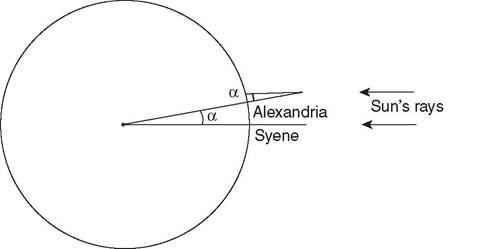
Figure 6.ι Eratosthenes' method of calculating the circumference of the earth (G. E. R.
Lloyd, Greek Science after Aristotle, London 1973, p. 50, fig. 3)
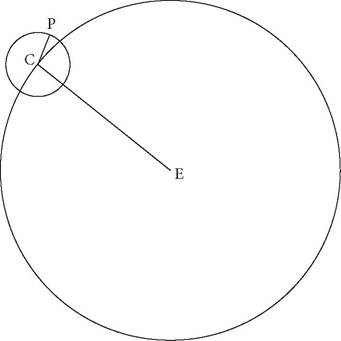
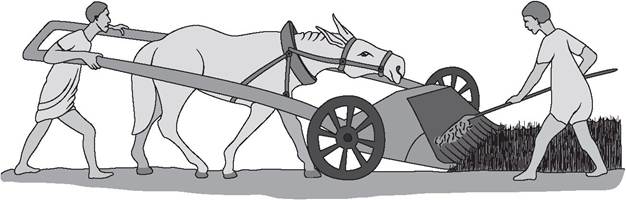
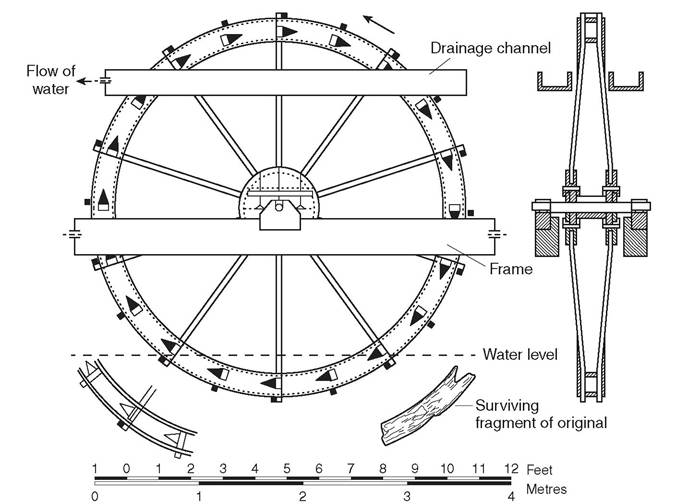
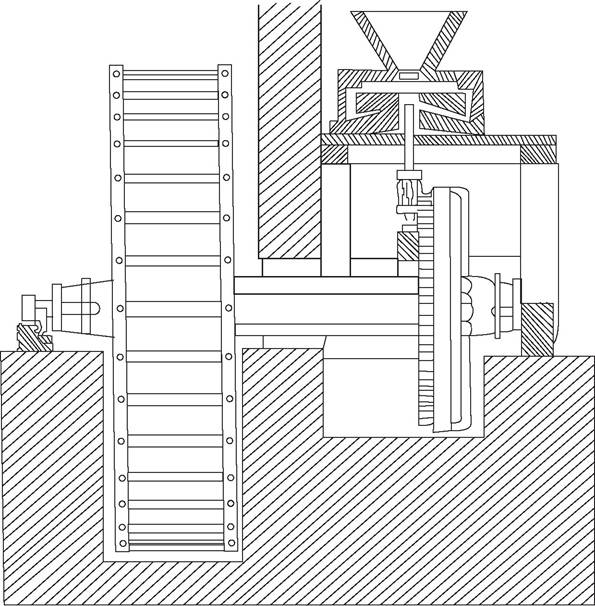
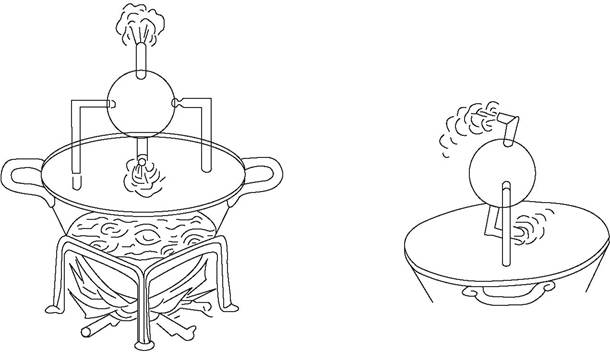
center of study and research in the ancient world.[205] [206] 17 Under these favorable conditions, Alexandrine scholars were able to arrive at pathbreaking new insights. For example, in the second half of the third century bce, Eratosthenes was able to determine the circumference of the earth much more precisely than the mathematicians cited by Aristotle. He did this by first measuring the angles of the sunbeams in Alexandria and in Syene (today Aswan) at the summer solstice. Based on the difference in the angles, which corresponded to 1/50th of the circle, and given a distance between the two locations of 5,000 stadia, Eratosthenes was able to fix the circumference of the earth at 250,000 stadia, a number that cannot be precisely converted, since various stadia of differing lengths (between 162 and 210 meters) existed in antiquity. Yet it is at least clear that Eratosthenes's calculation came very close to the actual circumference (40,074 km) (see Fig. 6.ι).17 A new insight also occurred in the measurement of the heavens: Aristarchus of Samos had realized that at half-moon, the line between the earth, moon, and sun formed a right-angled triangle, and that one could determine the relative distances between earth and moon and earth and sun from the angle between the lines connecting earth and moon and earth and sun. Aristarchos assumed that the sun was nineteen times further from the earth than was the moon. In spite of the imprecision of this calculation, the attempt to grasp the relationship between the distances in the heavenly sphere was pathbreaking for later astronomy.[207] In the third century bce, the size ratios of the heavenly bodies were also clarified: according to the testimony of Archimedes, there was agreement among astronomers that “the diameter of the earth is greater than the diameter of the moon, and the diameter of the sun is greater than the diameter of the earth.”[208] However, Aristarchus' idea that the sun, not the earth, formed the center of the universe had no effect on ancient astronomy. Archimedes described the heliocentric worldview of Aristarchus as follows: “His hypotheses are that the fixed stars and the Sun remain unmoved, that the Earth revolves about the Sun on the circumference of a circle, the Sun lying in the middle of the Floor, and that the sphere of the fixed stars, situated about the same center as the Sun, is so great that the circle in which he supposes the Earth to revolve bears such a proportion to the distance of the fixed stars as the center of the sphere bears to its surface.”[209] The work of Claudius Ptolemy, who was active in Alexandria in the second century ce, formed the high point and conclusion of ancient astronomy. In Ptolemy, the earth had the shape of a sphere and rested at the center of the universe, which was composed of orbicular spheres, the furthest of which was that of the fixed stars. Of the planets, Mercury and Venus were closer to the earth, all others were at a greater distance than the sun. Drawing on the works of Hipparchus (second century bce), Ptolemy ascribed two movements to each planet: a circular movement around the earth, and a circular movement around a point lying on the circular orbit around the earth. With the help of this epicycle theory, it was possible to adequately explain the seemingly varying speed and the retrograde motion of the planets that could be observed from earth, and to precisely calculate and predict the planetary movements (see Fig. 6.2). This heliocentric theory of the heavens held sway in Christian Europe until the fifteenth century ce and was also widely adopted in the Arab world through translations.[210] Ancient astronomy was not conceivable without the advances in mathematics. By their own admission, the Greeks had adopted geometry from the Figure 6.2 Ptolemy, the epicyclic motion of the planets (G. E. R. Lloyd, Greek Science after Aristotle, London 1973, p. 62, fig. 5). E = earth; P = planet; C = center of epicycle Egyptians. Numbers played a significant role already in the philosophy of the Pythagoreans: individual numbers were equated with certain terms and natural phenomena were traced back to numbers and their relationships. Aristotle summed up this view of the Pythagoreans by stating that “they supposed the elements of numbers to be the elements of all things, and the whole heaven to be a musical scale and a number.”[211] In geometry, the Pythagoreans formulated general theorems and proved their validity. Plato distinguished clearly between applied and theoretical mathematics, with the latter taking precedence for him. This attitude favored research into pure mathematics beyond practical application.[212] In the early third century in Alexandria, Euclid composed a systematic treatise on mathematics, entitled Elements (stoicheia). It offered definitions of all important mathematical concepts, axioms, and propositions, taking into account both geometry and arithmetics. Number theory analyzed the properties of even and odd numbers. Classic proofs in mathematics began with Euclid, and the Stoicheia remained the fundamental treatise on mathematics into the modern period. In the generation after Euclid, Archimedes devoted himself to individual problems in mathematics, such as determining the location of the center of gravity of plains or calculating the surface of a cylinder, a cone, and a sphere. His treatise on the methodology of mathematical research is of fundamental importance. In the area of physics, Archimedes was able to explain the fact that objects float with the specific density of the liquid and the objects.[213] Ancient Rome and late antiquity Europe Few advances in natural science occurred during the Roman period. Ptolemy's theory about the movement of heavenly bodies was based essentially on the research of Hellenistic astronomy and the measurements of Babylonian observation. Roman authors attempted to summarize Greek knowledge about nature. For example, in the mid-first century bce Lucretius devoted a large didactic poem spanning all areas of natural science to the views of Democritus and Epicurus; before 79 ce, C. Plinius Secundus created a large, multi-volume encyclopedia of natural science, the Historia Naturalis, which provided an overview of the ancient knowledge of cosmology, geography, anthropology, zoology, botany, and mineralogy. In late antiquity, John Philoponus (c. 490-575 c e) formulated a fundamental critique of Aristotle's views on natural philosophy and in this way arrived at new physical insights. His theory on the throwing motion exerted a special influence on medieval and early modern thinking: rejecting the position of Aristotle, who had sought to explain the movement of a thrown object with the capacity of the surrounding medium to produce movement, he formulated the impetus theory, which stated that the thrower transferred a force to the object during a throw.[214] In Western Europe and the Western Mediterranean, the invasions of Germanic tribes and the collapse of the West Roman Empire led to a decay of cities and with that also of the urban-based culture of antiquity. Literacy, rhetoric, literature, and philosophy were in decline, and the libraries of the urban elites vanished. Monasteries now replaced cities as cultural centers, as the rules of the monastic orders promoted reading and the copying of texts. It was thanks to the initiative of a few clerics that the pagan Latin literature was also collected in monastic libraries and thus preserved. Toward the end of the eighth century, the Carolingian Renaissance finally initiated a return to language and style; classical Latin texts were now seen especially as models for the use of the Latin language. Because Christianity drew upon Holy Scripture as the word of God, a philosophical investigation of nature that was independent of faith was possible only within narrow boundaries; biblical views about the cosmos were no longer questioned and were regarded as dogma. The library in Alexandria lost its status as a research institution in late antiquity, a philosopher like Hypatia was murdered by a Christian mob in 415, and a law of Justinian in 529 prohibited any instruction in philosophy and astronomy. At that time, the Academy in Athens founded by Plato was closed as an institution of pagan philosophy. Developments in technology in the Mediterranean region The development of technology in antiquity was shaped in equal measure by inventions and innovations, by technology transfer and the adoption of technical artefacts and processes from foreign cultures, by the preservation of traditional technology, and also by stagnation. There are areas in which the civilization of the Mediterranean saw hardly any technological change well beyond antiquity into the early modern period. In agriculture, oxen hitched to a yoke pulled a primitive wooden plow, and threshing, winnowing, and the grinding of grain with a simple stone grinder were important operations in agriculture and the household. Grain, olive oil, and wine were the chief components of the diet. Smiths heated iron until it was red-hot and worked it with the hammer on an anvil, or they shaped metals like silver and copper through hammering. Storage containers for grain as well as for oil and wine were made of clay, as were the dishes and crockery of daily use. Ceramic vessels were pulled up on the rapidly rotating pottery wheel. Women spun wool with a spindle and wove cloth on a vertical loom. But the impression that no significant technological advances occurred in ancient civilization is misleading. In fact, between the eighth century bce and the fifth century ce, the Mediterranean world witnessed a series of innovations that would influence the development of civilization. The preindustrial agrarian societies certainly possessed a dynamism in the technological and economic sphere. In the process, there were various epochs in ancient history during which a notable cumulation of technological changes occurred.[215] In the Archaic Period, the Greeks had close trading contacts with Egypt and the east, and they came face to face with older cultures that were in many respects far superior to their own. The influence of the eastern cultures on Greece is clearly visible in two areas: monumental architecture and sculpture. The early sixth century bce saw the beginning, in Greece and in the Greek cities of Sicily and southern Italy, of the construction of monumental temples of stone, and at the same time larger-than-life statues of deceased young men were erected within the homes of aristocratic families. The material for the buildings and statues was transported across great distances: marble, for example, came from Paros, later, in the fifth century, also from Pentelikon in Attica. Temple building developed not only architectural planning and stonemasonry, but also hoisting technology.[216] In the late sixth century bce, the Greeks achieved an important innovation for classical culture with the discovery of hollow casting of bronze. While in Archaic times small statuettes of bronze could be cast with the lost mold method or larger statues produced through hammering (sphyrelata), it was now possible to cast large statues. Greek craftsmen first modeled the statue in clay, and then negative moulds were taken from this model. Parts of the statue were cast individually and then joined together, with careful finishing of the surface removing the traces of this method. This technique allowed for the creation of statues that extended widely into space through the position of arms and legs, and it became increasingly possible to depict the bodies of humans and animals in motion. The large bronze horse that was found in the Roman neighborhood of Trastevere provides a fascinating example. The fourth century bce saw innovations in military technology that led to fundamental changes in military strategy. One should mention, first, the use of catapults and mobile siege towers in laying siege to fortified cities. Under these conditions, the battle over cities turned into a battle of engineers, an excellent illustration of which is the siege of Syracuse. The war machines devised by Archimedes to defend the city against the Romans were so effective that the Romans refrained from a direct attack and eventually took the city through betrayal. During the Hellenistic Age, the transfer of technology had great significance for the development of the regions conquered by Alexander. This is especially true for Egypt, where the Ptolemies introduced new strains of grain, greatly expanded the cultivated land through irrigation, and embarked on new paths even in building technology. For example, the construction of a causeway over three-quarters of a mile long connecting Alexandria to the island of Pharos created large harbor basins, and the construction of a large lighthouse guided sailors in their entry into the harbor. Two inventions during Roman times virtually revolutionized architecture: concrete (opus caementicium) made it possible to pour formworks and thus create not only walls, but also vaults and domes. Since the opus caementicium was very strong after drying, it could be used to cover large interior spaces without supports. One example is the Pantheon (early second century bce), whose dome, with a diameter of 43.30 meters, is larger than the domes of the Duomo in Florence, St. Peter's in Rome, or St. Paul's Cathedral in London. The high point of this architecture is Hagia Sophia in Constantinople, whose dome rests on four mighty pillars connected by arches. The opus caementicium was also important for the construction of harbors, since the material set under water. The second important innovation was mastery of arched construction: the faςade of the Colosseum provides an impressive demonstration of the ability to utilize the arch as an architectural element. The arch was of the utmost importance to infrastructure, since it allowed the Romans to build bridges with vast spans and thus trace out their road network with no regard for the course of rivers. And the long arched spans of the water conduits outside of Rome and of the aqueduct bridges - like Pont du Gard in southern France - presupposed the mastery of arched construction.[217] Advances were also evident in agrarian technology. Beginning in the first century ce, greatly improved presses were used in the production of wine and olive oil. Pressure on the press material was created by pulling down the large pressing beam through the turning of a screw; another type of press consisted of a screw that exerted pressure directly on the press material. The latter type was used in textile manufacturing for the pressing of fabric. The plow was improved; for the northwestern provinces we have mention of plows that were equipped with wheels and were pulled by several teams of oxen. That made it possible to turn the heavy soils found in these regions. The Gallic reaper is also attested in the northwest of the Imperium Romanum: a two-wheeled wagon equipped at the front with teeth was pushed across the field by an animal (donkey or horse), causing the ears of grain to be picked up and dropped into a container (see Fig. 6.3). From northern Africa the Romans adopted the animal-drawn threshing sled that separated the grain Figure 6.3 Gallic reaper (harvesting machine) (White, Greek and Roman Technology, London 1984, p. 61, fig. 47) from the ears. Iron tools were widespread in agriculture: sickles and scythes had blades of iron, and plows were equipped with an iron plowshare. The innovations in mining were of considerable economic importance. A crucial condition for the minting of coins, and thus for the money economy as a whole, was the extraction of precious metals such as silver and gold. Through the use of efficient water-scooping machines, it was also possible in Roman times to mine silver deposits below the groundwater level. For drainage a pump known as the Archimedean Screw was utilized, a device developed in the third century bce by Archimedes to irrigate fields in Egypt. In addition, large waterwheels that were turned by humans were deployed. Installing several pairs of such waterwheels allowed water to be pumped over a considerable height differential to the entrances of the mining galleries (see Fig. 6.4).[218] Gold was also extracted in open-pit mines. Here, in the mountainous regions of northwest Spain, the Romans made use of the power of running water: above the gold deposits they constructed large water tanks that were supplied and filled with water via aqueducts, which were some 20 kilometers long. If the water tanks were opened, the water washed away the gold-bearing soil, allowing the gold to be eventually separated from the waste rock. Roman trades witnessed technological changes that do not seem very significant at first glance, but which were in various respects economically and technically consequential. Ceramic craftsmen adopted the use of molds Figure 6.4 Waterwheel for mine drainage (J. F. Healy, Mining and Metallurgy in the Greek and Roman World, London 1978, p. 98, fig. 19) in the production of terra sigillata: a single mold could be used to produce numerous identical vessels or bowls that displayed the relief decoration of the mold and thus no longer needed to be painted or ornamented. This technique significantly boosted the productivity in ceramic manufacturing. This was also reflected in the development of the kilns, which could accommodate thousands of pieces.[219] Thanks to a number of innovations, glass acquired a growing importance as a material. While in pre-Roman times it was chiefly glass beads or small vessels of colored glass that were produced, thanks to the technique of glass blowing it was possible, from the middle of the first century bce, to manufacture bottles, containers, cups, and bowls out of translucent, colorless glass. Glass held a tremendous fascination for people, as attested by wall paintings of glass bowls from Pompeii. The possibility of producing window panes out Figure 6.5 Roman water mill according to Vitruvius (G. E. R. Lloyd, Greek Science after Aristotle, London 1973, p. 107, fig. 22). The mill is powered by an undershot wheel, and power is transmitted, for varying purposes, by means of a gearing mechanism of glass contributed substantially to a change in architecture. Buildings were now given faςades with large windows through which daylight could penetrate into the interior rooms without affecting the interior climate from cold air flowing in from the outside.[220] An important innovation for the history of European technology was the utilization of water power. Around 30 bce, Vitruvius gave a precise description of the water mill constructed to grind grain: the rotational movement of the waterwheel was transferred to the millstone via a gearing mechanism (see Fig. 6.5). In late antiquity, engineers succeeded in converting the rotational movement of the waterwheel into a back-and-forth movement and thus were able to use water power to saw marble.[221] In addition, one must not overlook that fact that the emergence of a specialized literature on mechanics constituted significant progress in the mastery of nature and in the understanding of the effect of technical devices. The oldest extant writing on mechanics is found in the corpus of Aristotelian texts and dates to the fourth century bce; in this work, Aristotle tried to explain why relatively little power could be used to move large weights. This phenomenon can be readily observed from the effect of the lever; Aristotle formulated the law of the lever and derived it from the characteristics of the circular movement. In the subsequent sections of the treatise, he attributed the effect of many instruments to the law of the lever.[222] In the first century c e, Hero of Alexandria then gave a systematic account of mechanics, in the process describing five fundamental instruments of mechanics and their workings: the roll, the lever, the pulley, the wedge, and the screw. Mechanics was certainly oriented toward praxis, as demonstrated by the use of the screw in machines to press wine, olives, or cloth.[223] In Hellenistic Alexandria there were two other fields in which important technological insights were achieved: the construction of automata and pneumatics. The goal of automata was to create surprise effects with machines that moved on their own, without any human intervention. Inscribed into the automata was a program that dictated the sequence of the movements of the apparatus. The creators of automata were able to develop new ways of translating movements. For example, one automaton in Philo's theater of automata called for converting a rotational into a back-and-forth movement. Pneumatics (derived from pneuma: puff of air, breath) studied the properties of air. It was recognized that flowing air was able to produce sounds, and that the heating of air created pressure. Contemporaries already understood that the steam created by heating water could in turn generate movement (see Fig. 6.6). The reception of Alexandrine pneumatics formed the basis for the experiments that were conducted in the sixteenth and seventeenth centuries and eventually led to the construction of the steam engine.[224] The invasions of the German tribes into the Imperium Romanum and the emergence of the Germanic kingdoms in the West entailed a decline of the Figure 6.6 Hero's ball rotated by steam (G. E. R. Lloyd, Greek Science after Aristotle, London 1973, p. 105, fig. 21) city-based Roman civilization. The technological change was especially evident in architecture: only a few larger stone buildings were created on the territory of the former western provinces, and the water conduits and the urban infrastructure decayed. The products of tradesmen and artisans lost their quality, while sculptures of stone or bronze statutes are largely or entirely absent. Barely any iron tools were still used in agriculture. It was only around 800 that Europe witnessed the new beginning of a civilizational development. The building of monumental churches and larger buildings of stone began in the age of the Carolingians: the palace chapel in Aachen or the church of the Abbey of St. Denis (consecrated in 775) are the architectural witnesses to a profound civilizational transformation. Manuscript illumination or the design of ivory book covers likewise showed a clear advance in craftsmanship in the late eighth century. The development of crafts and architecture continued in the ninth and tenth centuries and gave rise to church building and Romanesque art. Scientific and technological developments in South and East Asia The civilizations in Europe, North Africa, and in the Near East and Asia were by no means isolated. In the wake of the campaigns of Alexander, there emerged in Bactria - roughly modern Afghanistan and Pakistan - a Hellenistic Greek culture that radiated far into India. Roman trade with India led to close economic ties with the western coast of India, but goods from China, chiefly silk, also reached the Mediterranean via the Silk Roads or the sea route. In addition, close cultural and religious ties existed between India and China: for example, Chinese culture was profoundly shaped by Buddhism, an import from India. Between 800 bce and 800 ce, India and China witnessed a repeated trend toward the formation of empires. At the same time, the various regions of these large territories were able to assert themselves, with the result that the ages of great empires alternated with regional fragmentation. China, much like the Mediterranean region, was continually exposed to attacks by steppe peoples from the north. Unlike in the Mediterranean, where the sea and the maritime routes were of great importance to communication between the regions, for India and China the comparatively vast interior spaces posed a challenge to the enforcement of political power, to the economy, and to technology. China Various preconditions were important for the scientific and technological development in China. At the top one should mention the formation of a large empire that united central areas of modern-day China, along with the attendant need for a bureaucratic apparatus, the emergence of writing, urbanization, and the growth of population. What is striking in the process is the concurrence of the developments in the Mediterranean region and in East Asia. The first characters, incisions on animal bones, date from the thirteenth century bce. These gave rise to written Chinese, whose characters consisted initially of pictorial depictions that also indicated a sound.[225] A lexicon in the early second century ce comprised 9,353 characters. This was a profound difference to the Mediterranean writing systems based on the Phoenician alphabet: Greek, for example, had an alphabet of only twenty- four letters and was thus easy to learn. As a result, literacy was relatively widespread in the societies of classical antiquity. In China, by contrast, an intellectual culture emerged in which literacy was largely reserved to an educated elite. In this connection one should mention the writing material as another factor: writing was done on bamboo or wooden tablets or silk. This material was heavy and difficult to handle. It was therefore a crucial advance when paper made of plant fibres established itself as writing material in the Later Han period (first and second centuries ce).[226] Printing was a later invention and was hardly able to displace manuscript writing before 800 ce. What is clear, though, is that as early as the seventh century ce, members of Buddhist circles began to reproduce and disseminate texts with the help of printing. Different from Europe in the fifteenth century, printing was not done with movable letters, but with the block technique, where the text of an entire page was carved into a printing plate. Early Chinese literature encompassed religious and philosophical texts as well as poems and songs. One emphasis in the writings of Confucius (551-479 bce) was on the doctrine of ethical behavior. In addition, however, there were also texts on astronomy, cartography, mathematics, mechanics, and agriculture.[227] Interest in these disciplines seems to have been especially high during the Han period (202 bce to 220 ce), and the investigations certainly yielded notable results. Chinese cosmology saw heaven and earth as two domes resting on top of each other, a notion that was subsequently replaced by the doctrine of the heavenly spheres. The shape of the world was illustrated through a comparison with the egg: just as the yolk was in the middle of the egg, the spherical earth rested at the center of the heavenly sphere. This theoretical view of the world was supplemented by the observation of the stars and the planets. Celestial charts during the Han period recorded 282 constellations with 1,465 stars.[228] A major achievement in mathematics was the work “The Nine Chapters on the Mathematical Art” (Jiuzhang suanshu; first century ce). One problem was determining the size of π, which was calculated with ever greater accuracy between the beginning of the first century and the fifth century ce. Using a geometrical method, Liu Hui in the third century determined the value for π to be between 3.1415927 and 3.1415926, which is very close to the modern value.[229] As in all pre-industrial agrarian societies, the economic foundation of Chinese civilization was agriculture, which had to feed - in addition to the families of small farmers - the urban population. Rice cultivation was widespread in southern China. Rice, which was planted in wet paddies, yields substantially more calories per hectare than wheat and, like all cereals, is an excellent food that covers the need for nutrients on a large scale. The farmland was worked with a plow pulled by two oxen. A significant advance in agriculture was the use of iron tools beginning in the sixth century bce, which greatly increased productivity. Between the sixth and second centuries bce, the area under cultivation was considerably expanded through the construction of dams and canals, which made it possible to feed a growing population.[230] Without a doubt, the technological advances in crafts, urban planning, and the development of infrastructure were among the great achievements of Chinese culture. Bronze working in China had a long tradition extending back into the second millennium bce. Large, artfully decorated vessels were produced by the casting method. From the second century c e come stunningly beautiful animal figurines of bronze, which often served as grave goods.[231] Unlike the Greeks and Romans, the Chinese were able to cast iron in the first half of the first millennium bce. To do so, the metal had to be heated in the foundries to over 1100°C with the help of bellows. By reducing the carbon content of cast iron, the Chinese were already producing iron with the qualities of steel. Numerous tools and implements were made of cast iron, including plowshares and axes, which made it possible to transform entire forests into arable land.[232] Ceramic production reached a high level already in the late second millennium bce; the vessels of clay or stoneware sported a colored glaze. Advances in firing technology allowed for the firing of a large number of pieces and thus the production of ceramics in great volumes for export. The manufacturing of porcelain is documented for the Tang period (seventh and eighth centuries c e), for which the Chinese used white clay (kaolin). Firing at high temperatures made the white vessels slightly transparent and created a glass-like surface. While porcelain was among the chief export goods only from the fourteenth century on, that was true for silk already since antiquity. In Roman times, silk fabric was highly sought-after in the Mediterranean region and was a high-status object. Silk made its way to the West over the land route (the Silk Roads) or by sea via India. Silk production is extremely labor-intensive. Silkworm breeding had to be set up and the young worms had to be fed with mulberry leaves. The material for the silk threads was extracted from the cocoons of the silkworms. Processing of the raw silk was done with the spindle wheel driven by a pedal, and with the foot loom, where the path for the weft is opened by means of a foot-operated mechanism.[233] The achievements of the Chinese in the areas of infrastructure and large- scale construction were particularly impressive. Pride of place goes to the Great Wall, which arose in northern China out of various fortifications. In the third century bce, the Qin emperors connected and expanded these fortifications, which served as a defensive barrier against attacking steppe peoples. Unlike the Great Wall that exists today, it was not yet made of stone, but consisted of ramparts of packed earth. Alongside the Great Wall one must place the large canals. As early as the third century, a canal was built on the Yellow River that allowed for the irrigation of an area of over 25,000 hectares. Around 600, Emperor Wen, who united the Chinese empire in the late sixth century, constructed a canal which, as a shipping route, connected the region at the lower reaches of the Yangtze River with northern China and secured the provisioning of the population in the north with rice. The kinds of resources and labor force the rulers could mobilize is illustrated by the scope of this project: the canal was 1,800 kilometers long and 40 meters wide.[234] The technological achievements of China also included inventions in the field of mechanics, especially the use of water power. There is evidence from the Han period (first and second centuries ce) for the utilization of water to grind grain. Thus began the development of the water mill, which is depicted in pictures from the Song period (tenth century) with a horizontal water wheel. To crush grain or operate the bellows used in the smelting of iron, it was necessary to convert the rotational movement of the water wheel into a back-and-forth movement. A complicated mechanism was also devised for the “carriage with distance measure”: this was a horse-drawn two-wheeled wagon that indicated the distance covered through drum beats. Incidentally, a similar device for measuring the length of a journey is already attested in Vitruvius.[235] Of note is the mention of the invention of water-powered bellows in the Annals of the Later Han Dynasty. The Prefect Du Shi is credited with wanting to spare the people “labour and toil,” and indeed, “the people got great benefit for little labour” from using his bellows. Modern research has pointed out that water power made it possible to achieve above all a “continuous and more easily controllable air supply.”[236] In the period between 200 bce and 800 ce, the foundations were laid in China for the development that led to further technological advances between the ninth and eleventh centuries and thus to an increase in productivity, especially also in agriculture, and which profoundly shaped Chinese culture of the modern period. South Asia In many respects, the development in India was similar to that in China: the emergence and collapse of empires, immigration, urbanization, internal wars, and local powers shaped Indian civilization in crucial ways. A turning point in the early history of India was the transition from an economy determined by animal husbandry and a semi-nomadic life to sedentariness and cultivation. In the fifth century bce, larger cities arose in the valley of the Ganges, most of which were the residences of local rulers. Urbanization led to a change in material culture: as evidenced by the fortification of the cities with several kilometers of long ramparts and moats, Indian society at this time already possessed the technological and organizational competence needed for such large building projects, as well as the requisite resources of labor power and material. The necessity of providing the urban population with agricultural products led to an intensification of trading relations and to the diffusion of coins. Of great importance to India's cultural development was the adoption in the northwest of Aramaic writing widely used in Persia, and the emergence of an Indian script in the eastern valley of the Ganges. The numerous large inscriptions of Ashoka (about 268-233 bce ) attest to a widespread literacy in the third century.[237] The primary writing material was birch bark.[238] Following the conquest of the Persian Empire by Alexander and the Hellenization of the regions in Bactria, a strong Hellenistic influence is undeniable, especially in northwest India. Just as in China Confucius raised the question about the right way to live, in India the Buddha made human suffering and the possibility of overcoming it the core of his teachings.[239] However, asceticism and a life detached from the world, notwithstanding their importance for the spiritual life, by no means shaped all of Indian civilization. The literature includes, alongside the large and often voluminous epics, texts that described individual fields of knowledge. Famous are Panini's Grammar (probably fifth century bce) or Kautilya's Arthashastra, a treatise on statecraft. Already Megasthenes, who journeyed to India around 300 bce as an envoy of Seleucus I and wrote an ethnographic work about India, reported that natural philosophy (physiologia) and astronomy existed in India.[240] The natural doctrine put forth in Vaisheshika (about 500 ce) advanced views that resembled Greek atomism: there were four elements (earth, water, fire, air), each of which was composed of aggregates of imperceptibly small elements. Reality is grasped by means of six categories: substance, quality, activity, generality, particularity, inherence.[241] Fundamental insights were achieved in various fields of knowledge. That is true, for example, of astronomy, which was influenced by the Greeks, as is evident from the adoptions of Greek terminology in Indian texts. Around 500 ce, the heavenly movements were explained by the rotation of the earth around its own axis. Concern about health led to the development of a system of medicine that still knew magical incantations, but was based on the use of medicinal herbs and remedies.[242] With the beginning of urbanization, a differentiated trade sector took shape. As we learn from the account of Megasthenes, a strict separation into social strata existed early on in India. Like peasants and herders, craftsmen formed a caste; according to Megasthenes, weapons' smiths and ship carpenters were paid by the king. Carpenters, potters, and smiths are attested in Indian texts; craftsmen worked in copper, bronze, as well as gold and silver. For the development of Indian civilization, the ability of craftsmen to forge iron and make iron tools was of great importance, as the use of iron axes attested since the eighth century was a precondition for clearing the previously impenetrable jungle and creating new areas under cultivation. Iron working was at an extraordinarily high level: probably in the fourth century ce, smiths were able to produce a high pillar of non-corroding iron that still stands today.[243] Potters were familiar with the potter's wheel, and the fortification of cities with brick walls more than 10 meters high demonstrates the advances in building technology. House construction used chiefly wood as building material, which is why India's early buildings for the most part no longer exist. Buddhist cult sites (stupa), however, attest to the skill in stone working; monumental cave temples were chiseled into the rock in pilgrimage centers and decorated with rich sculptural ornamentation. Agriculture made use of the ox-drawn plow and the iron plowshare; rice cultivation played an important role especially in the river valleys of southern India. One distinctive feature of India was the capacity of Indians to catch Asia's largest land mammal, the elephant, tame it, and use it for various tasks, including in agriculture. Large numbers of elephants were also utilized in war: according to Pliny, one Indian king had 700 war elephants.[244] During Alexander's campaigns, Greeks and Macedonians were confronted with war elephants first in the battle of Gaugamela in 331 against the Persian king, and then in the battle against the Indian king Poros, who controlled a kingdom on the Indus. Thanks to a surprise attack, Alexander's army was able to prevail against the Indian muster of horsemen and elephants, but a permanent conquest of northwest India proved impossible.[245] Later, the Hellenistic kings adopted the elephants from India and deployed them in their battles over hegemony in the Eastern Mediterranean and the East. In the third century, King Pyrrhus of Epirus used elephants in his war against Rome, but military success eluded him. Elephants were an element of Indian culture, and the taming of these mighty animals shows what kind of potential of the mastery of nature Indian civilization possessed. India made a fundamental contribution to modern science in mathematics. Indian numerals could be used to represent numbers in such a way that the Developments in science and technology position of the individual numerals indicated the number in question. This positional system required a symbol 0. The decimal system with the numeral o was described by Varahamihira and Brahmagupta in the sixth and seventh centuries; it was far more efficient than the use of the Greek letter numbers, was adopted by the Arabs and eventually, through the mediation of the Arab world, introduced into Europe.[246] Conclusion The rapid expansion of the Arabs into widespread regions of Afro-Eurasia during the seventh and eighth centuries brought about a fundamental change in the political and cultural conditions from the Iberian Peninsula and North Africa all the way to Syria, Mesopotamia, Persia, and India. This created the preconditions for the reception of the ancient philosophical, medical, and technical literature in the Arab-speaking world that began in the ninth century, and for the transfer of classical knowledge and philosophy to Christian Europe via Spain. If one surveys the civilizations from Western Europe to northeast China, a number of structural convergences stand out. Greco-Roman, Indian, and Chinese civilization possessed the fundamental cultural technologies such as writing and a calendar. Urbanization gave rise to differentiated crafts, which attained a high level of sophistication especially in the area of metallurgy and ceramic production. The societies of the West, India, and China had the technical and organizational competence to erect monumental buildings, especially also in the area of infrastructure. Agriculture had enough productivity to provide the urban population centers with food and raw materials, for example for textile manufacturing (wool, cotton), and the economy as a whole with work animals. Workwas substantially performed by human and animal muscle power. The labor power of oxen, which pulled the plow, was the indispensable foundation of all civilizations in the West, the Near East, and Asia. The first steps toward the utilization of water power existed in the Imperium Romanum and in China, but there were few areas of use: in the Mediterranean, for example, water power was used before late antiquity chiefly to grind grain. Technological treatises existed for individual areas, and various individuals made the attempt to improve the existing tools, implements, or processes. For ancient Greece one should mention in this context chiefly mechanics, which, as a markedly application-oriented discipline, led to new insights in the field of technology. Especially the formulation and derivation of the law of the lever and the systematics of mechanical instruments contributed to an expansion of technological knowledge and were not without importance for the development of mechanics in the early modern period. The attempts at grasping the world in a rational way were often closely related to the system of reckoning time and the calendar. At all times the observation of the heavenly bodies, of the sun, the moon, the planets, and the stars, also had the function of interpreting constellations as omens and of accurately predicting lunar or solar eclipses. A real cosmological model was created by the Greeks, but the Chinese also achieved great successes in this area. Other relevant fields of knowledge in the Greek world as well as in China and India were medicine and mathematics. Many cultural and technological developments in the Mediterranean, East Asia, and South Asia took place independently. But it is clear that the relationships between the cultures were crucially deepened by the expansion of the Persians and later of the Macedonians under Alexander toward the east. This created a zone of reciprocal influence especially in the regions of Bactria and northwest India. An important role was also played by the trade with prestige goods like silk and ivory or spices, and the resulting contacts in port cities or the trading centers of the Silk Roads between merchants from different cultures. Such contacts and connections created in North Africa, Europe, the East, and East Asia the rudiments of a world in which the cultures influenced one another through reception, the transfer of knowledge, and the adoption of individual technologies. All the differences and contrasts notwithstanding, a uniform culture of knowledge emerged, one that critically deepened further still in the centuries that followed. Further Reading Adam, Jean-Paul, Roman Building: Materials and Techniques, London: Routledge, 1994. Balasubramanian, A. V., “Metallurgy in India,” in Helaine Selin (ed.), Encyclopaedia of the History of Science, Technology, and Medicine in Non-Western Cultures, London: Springer, 1997, pp. 728-30. Boardman, John, The Greek Sculpture: The Archaic Period, London: Oxford University Press, 1978. Bray, Francesca, “Agriculture in China,” in Helaine Selin (ed.), Encyclopaedia of the History of Science, Technology, and Medicine in Non-Western Cultures, London: Springer, 1997, pp. 17-19. Burkert, Walter, Die Griechen und der Orient, Munich: Beck, 2003. Weisheit und Wissenschaft: Studien zu Pythagoras, Philolaos und Platon, Nuremberg: Hans Carl, 1962. Clagett, Marshall, Greek Science in Antiquity, London: Abelard-Schuman, 1957. Demandt, Alexander (ed.), Statten des Geistes: Groβe Universitaten Europas von der Antike bis zur Gegenwart, Cologne: Bohlau, 1999. Diels, Hermann, and Walther Kranz (eds.), Die Fragmente der Vorsokratiker Griechisch und Deutsch, Hildesheim: Weidmann, 1951. Domergue, Claude, Les mines antiques: La production des metaux aux epoques grecque et romaine, Paris: A&J Picard, 2008. Edelstein, Ludwig, Ancient Medicine: Selected Papers of Ludwig Edelstein, Baltimore, md : Johns Hopkins University Press, 1987. Embree, Ainslie Thomas, and Friedrich Wilhelm, Indien: Geschichte des Subkontinents von der Induskultur bis zum Beginn der englischen Herrschaft, Frankfurt am Main: Fischer-Bucherei, 1967. Flashar, Hellmut, Aristoteles: Lehrer des Abendlandes, Munich: Beck, 2013. “Athen: Die institutionelle Begrundung von Forschung und Lehre,” in Alexander Demandt (ed.), Statten des Geistes: Groβe Universitaten Europas von der Antike bis zur Gegenwart, Cologne: Bohlau, 1999, pp. 1-14. Folkerts, Menso, “Archimedes [1, aus Syrakus],” Der Neue Pauly ι (1996): 997-1001. “Eukleides 3 (Euklid),” Der Neue Pauly 4 (1998): 238-42. “Klaudios Ptolemaios,” Der Neue Pauly 10 (2001): 559-70. Franz, Heinrich G. (ed.), Das Alte Indien: Geschichte und Kultur des indischen Subkontinents, Munich: Bertelsmann, 1990. Furley, David, Cosmic Problems: Essays on Greek and Roman Philosophy of Nature, Cambridge University Press, 1989. Gernet, Jacques, Die chinesische Welt, Frankfurt am Main: Insel-Ver, 1979. Le monde chinois, Paris: A. Colin, 1972. Gille, Bertrand, Les mecaniciens grecs: La naissance de la technologie, Paris: Seuil, 1980. Goepper, Roger (ed.), Das Alte China: Geschichte und Kultur des Reiches der Mitte, Munich: C. Bertelsmann, 1988. Gotthelf, Allan, and James G. Lennox (eds.), Philosophical Issues in Aristotle’s Biology, Cambridge University Press, 1987. Guthrie, William Keith Chambers, A History of Greek Philosophy, Cambridge University Press, 1962-81, vols. I-vi. Hayashi, Takao, “Number Theory in India,” in Helaine Selin (ed.), Encyclopaedia of the History of Science, Technology, and Medicine in Non-Western Cultures, London: Springer, 1997, pp. 784-86. Healy, John F., Mining and Metallurgy in the Greek and Roman World, London: Thames and Hudson, 1978. Pliny the Elder on Science and Technology, Oxford University Press, 1999. Ho Peng Yoke, “Astronomy in China,” in Helaine Selin (ed.), Encyclopaedia of the History of Science, Technology, and Medicine in Non-Western Cultures, London: Springer, 1997, pp. 108-11. HuaJueming, “Metallurgy in China,” in Helaine Selin (ed.), Encyclopaedia of the History of Science, Technology, and Medicine in Non-Western Cultures, London: Springer, 1997, pp. 725-26. HBLMUTH SCHNEIDER Humphrey1John W., John P. Oleson, and Andrew N. Sherwood (eds.), Greek and Roman Technology: A Sourcebook: Annotated translations of Greek and Latin texts and documents, New York: Routledge, 1998. Joseph, G. G., “Mathematics in India,” in Helaine Selin (ed.), Encyclopaedia of the History of Science, Technology, and Medicine in Non-Western Cultures, London: Springer, 1997, pp. 634-37. Judson, Lindsay (ed.), Aristotle’s Physics: A Collection of Essays, Oxford University Press, 1991. Kirk, G. S.,J. E. Raven, and M. Schofield, The Presocratic Philosophers: A Critical History with a Selection of Texts, Cambridge University Press, 1983. Koelbing, Huldyrch M., Arzt und Patient in der antiken Welt, Zurich: Artemis Verlag, 1977. Kuhn, Dorothea, “Wissenschaften und Technik,” in Roger Goepper (ed.), Das Alte China: Geschichte und Kultur des Reiches der Mitte, Munich: C. Bertelsmann, 1988, pp. 247-79. Kulke, Hermann, and Dietmar Rothermund, Geschichte Indiens: Von der Induskultur bis heute, Munich: Beck, 2006. Lam Lay Yong, “Pi in Chinese Mathematics,” in Helaine Selin (ed.), Encyclopaedia of the History of Science, Technology, and Medicine in Non-Western Cultures, London: Springer, 1997, pp. 822-23. Landels, John G., Engineeringin the Ancient World, Berkeley: University of California Press, 1978. Libbrecht, Ulrich, “Mathematics in China,” in Helaine Selin (ed.), Encyclopaedia of the History of Science, Technology, and Medicine in Non-Western Cultures, London: Springer, 1997, pp. 626-29. Lloyd, Geoffrey E. R., Aristotle: The Growth and Structure of His Thought, Cambridge University Press, 1968. Early Greek Science: Thales to Aristotle, London: W. W. Norton & Company, 1970. Greek Science after Aristotle, London: W. W. Norton & Company, 1973. Magic, Reason and Experience: Studies in the Origin and Development of Greek Science, Cambridge University Press, 1979. Methods and Problems in Greek Science: Selected Papers, Cambridge University Press, 1991. The Revolutions of Wisdom: Studies in the Claims and Practice of Ancient Greek Science, Berkeley: University of California Press, 1987. Science, Folklore and Ideology: Studies in the Life Sciences in Ancient Greece, Cambridge University Press, 1983. Longrigg, James, Greek Rational Medicine: Philosophy and Medicine from Alcmaeon to the Alexandrians, London: Routledge, 1993. Needham, Joseph, Science and Civilisation in China, Cambridge University Press, 1959. Nicolet, Claude (ed.), Les litteratures techniques dans Vantiquite romaine: Statut, public et destination, tradition, Geneva: Fondation Hardt, 1996. Oleson, John Peter (ed.), The Oxford Handbook of Engineering and Technology in the Classical World, Oxford University Press, 2008. Price, Jennifer, “Glass,” in Donald Strong and David Brown (eds.), Roman Crafts, New York University Press, 1976, pp. 111-25. Sadao, Nishijima, “The Economic and Social History of the Former Han,” in Denis Twitchett and Michael Loewe (eds.), The Cambridge History of China, Cambridge University Press, 1986, vol. I, pp. 545-607. Saldern, Axel von, Antikes Glas, Munich: Beck, 2004. Sambursky, Samuel, Das Physikalische Weltbild der Antike, Zurich: Akademie-Verl, 1965. Schneider, Helmuth, Das griechische Technikverstandnis: Von den Epen Homers bis zu den Anfangen der technologischen Fachliteratur, Darmstadt: Wissenschaftliche Buchgesellschaft, 1989. Seidensticker, Bernd, “Alexandria: Die Bibliothek der Konige und die Wissenschaften," in Alexander Demandt (ed.), Statten des Geistes: Groβe Universitaten Europas von der Antike bis zur Gegenwart, Cologne: Bohlau, 1999, pp. 15-37. Selin, Helaine (ed.), Encyclopaedia of the History of Science, Technology, and Medicine in NonWestern Cultures, London: Springer, 1997. Slaje, Walter, “Die brahmanisch-orthodoxe Scholastik," in Heinrich G. Franz (ed.), Das Alte Indien: Geschichte und Kultur des indischen Subkontinents, Munich: C. Bertelsmann, 1990, pp. 264-75. Spengler, Tilman, and Joseph Needham, Wissenschaftlicher Universalismus: Uber Bedeutung und Besonderheit der chinesischen Wissenschaft, Frankfurt am Main: Suhrkamp, 1977. Strong, Donald, and David Brown (eds.), Roman Crafts, New York University Press, 1976. Thomas, Ivor (ed.), Greek Mathematical Works, Cambridge, ma : Harvard University Press, 1980, vols. I-II. Twitchett, Denis, and Michael Loewe (eds.), The Cambridge History of China, Cambridge University Press, 1986, vol. I. Vogelsang, Kai, Geschichte Chinas, Stuttgart: Ph. Reclam, 2012. Waterlow, Sarah, Nature, Change, and Agency in Aristotle’s Physics: A Philosophical Study, Oxford: Clarendon, 1982. White, Kenneth D., Greek and Roman Technology, London: Thames and Hudson, 1984. Roman Farming, London: Thames and Hudson, 1982. Wikander, Orjan (ed.), Handbook of Ancient Water Technology, Leiden: Brill, 2000. Wolff, Michael, Geschichte der Impetustheorie: Untersuchungen zum Ursprung der klassischen Mechanik, Frankfurt am Main: Suhrkamp, 1978. Wolpert, Stanley, A New History of India, Oxford University Press, 2004.