East Asia: China and Korea
China
There is a now extensive literature on the domestication of major seed crops - rice and millet - in China, and increasing understanding of the emergence of domesticated pigs and water buffalo, and their role in the establishment of mixed farming systems.
The picture that is forming of early established agricultural communities in key regions such as the Yellow (Huanghe) River valley, with evidence of early millet farming, and the Yangtze River valley to the south, where early wet rice cultivation developed, suggests broad convergences with sequences in West Asia and Europe but also telling differences.A good starting point for consideration of early agricultural practice and its impact on the formation of communities is the late seventh to sixth millennium cal BCE Peiligang culture (and related complexes) with over seventy known sites in the foothills of the loess highlands in the middle Yellow River valley of northern China.[248] Foxtail and broomcorn millet were cultivated by the inhabitants of substantial 1-2 ha villages, with houses ranging from small (2-3 m diameter) circular huts to larger rectangular structures, with storage in pits and ceramic vessels. Domestic pigs, dogs, and chickens may have been kept, and a range of wild plants was gathered and mammals hunted. The deceased were buried in cemeteries separate from living areas. Though long-fallow/slash-and- burn cultivation has traditionally been linked with early farming in both the Yellow River valley and the Yangtze valley, much as with early farming in Europe, this is ecologically implausible.[249] Small grinding slabs may have been used to dehusk millet on a household scale, while examples of boiling and steaming ceramic kits mark the onset of a distinctive East Asian culinary tradition that contrasts with bread-based cuisines of Western Eurasia.[250] Stable isotope analysis suggests that millet was an important component of the human and managed animal diet by the mid sixth millennium cal bce in northern China.[251]
In terms of domestic architecture, the Peiligang situation suggests a merging of the ‘communal compound' and ‘modular household' living arrangements in a critical phase when agricultural risks and rewards were rapidly devolved to the small-scale residential family.
Recent work suggests that there was a relatively abrupt shift in northern China from mobile hunting and gathering to millet farming, perhaps because small, low-density huntergatherer populations could rapidly shift conceptually from a sharing to a private hoarding mentality.[252]In a roughly similar timeframe, early rice cultivation is attested in the middle and lower Yangtze valley. As in the Levantine PPNA, a lengthy period of cultivation prior to domestication is evident here.[253] Domestic forms were established by the early fifth millennium bce in the lower Yangtze, and coastal wetland sites of the Hemudu culture indicate that farming was integrated with raising of pigs and probably water buffalo, alongside a broad range of hunting, fishing, fowling, and foraging pursuits. The scapulae of water buffalo were apparently hafted on wooden handles as hoes for thorough tillage of the soil. This labour-intensive form of mixed farming, here focused on wet perennial rice-growing, appears to have had broadly similar social consequences in terms of household production and consumption and ultimate isolation as seen in the West Asian and European sequences above. The earliest preserved paddy-field systems in the lower Yangtze (late fifth millennium) consist of small plots dispersed among houses to allow careful monitoring of water levels (Figure 5.6). The spread of wet rice cultivation from this region - to Korea, Japan, and Southeast Asia (below) - was therefore contingent on the ability to mobilize and maintain high labour inputs. Larger-scale systems of terraced paddy fields in the fourth millennium suggest supra-household labour mobilization, perhaps supported by pig feasting.[254]
Alongside evidence for the rise of the intensive farming household in different regions of China, there are also dramatic statements of communal co-operation and identity. In the middle Yangtze, earthwork enclosures date back to the seventh millennium at Bashidang, where wild rice was probably cultivated, while villages enclosed by ditches with palisades proliferate in the Yellow River valley from the end of the sixth millennium cal bce.
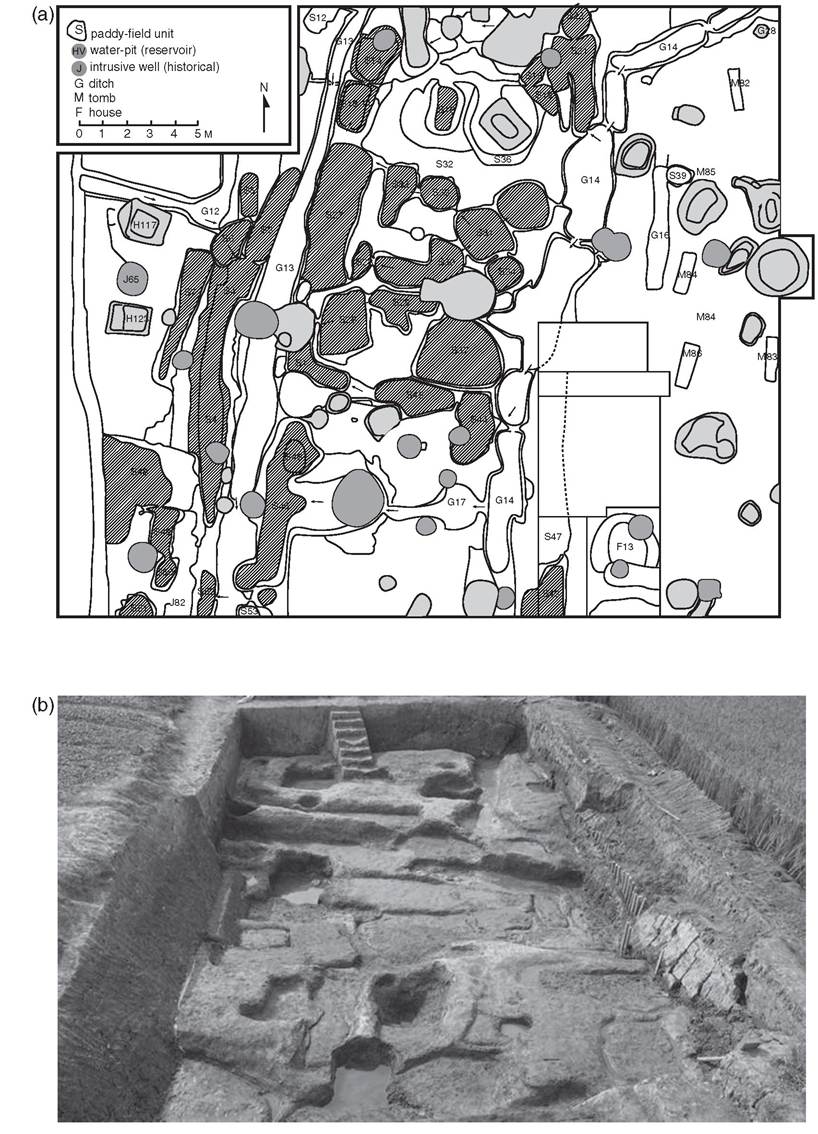
Figure 5.6 Early paddy-field systems at Chuodun, lower Yangtze, China: (a) plan; (b) paddy-field unit showing connecting canals.
Korea
The earliest evidence of crops in the Korean peninsula appears around 3500 cal bce, midway through the period of the Chulmun culture (c. 5500-2000 cal b c e), which is characterized by pointed-based pottery and semi-subterranean circular pit-houses. Dry-farming of millets, pulses, and other crops was practised alongside a range of intensive foraging activities, including pit storage of acorns, fishing, and hunting.[255] It appears that cultivation initially served to perpetuate a continuation of hunter-gatherer strategies. During the subsequent Mumun period (c. 2000-500 bce), archaeobotanical finds indicate the establishment of wet rice cultivation and continued farming of dry-field crops. Available faunal data are as yet very limited. Water buffalo may have formed part of wet rice farming in the late Mumun, as in the subsequent Three Kingdoms period. Domesticated pig has been reported from Chulmun sites, but the earliest secure evidence dates to the first millennium ce. Preserved fields provide glimpses of actual farming landscapes of the Mumun period and later. In the Nam River valley of south-central Korea, ‘dry' (non-paddy) fields with ridges and furrows suggestive of ploughing were uncovered across an area of 1.8 ha; Mumun period houses and hearths nearby yielded crop remains including millets, legumes, barley, and wheat (Figure 5.7).[256] The earliest rice paddy fields also date to the Mumun period. It appears that both dry- and wet-field cultivation of an intensive type was practised in the second to first millennia bce.
The layout and domestic architecture of Chulmun and Mumun settlements reflect social adjustments to a subsistence spectrum ranging from pre- agricultural sedentary foraging to intensive farming.
Excavations along the Han River in the central peninsula included large-scale investigations that provide a sense of changing settlement layouts. An early Chulmun settlement at Amsa-dong contained circular pit-houses, each with a square central hearth edged with river pebbles. Chulmun pit-houses range in size from 3-6 m in diameter and had thatch roofs supported on posts. The Amsa-dong pithouses were clustered close together, suggesting that external activities were conducted on their periphery. External storage pits and concentrations of large storage pots may reflect supra-household storage.Later Munun period settlements are often located on hillsides, with riverside land presumably reserved for farming; houses are generally larger than in the Chulmun and vary from circular to rectangular. Some contain multiple
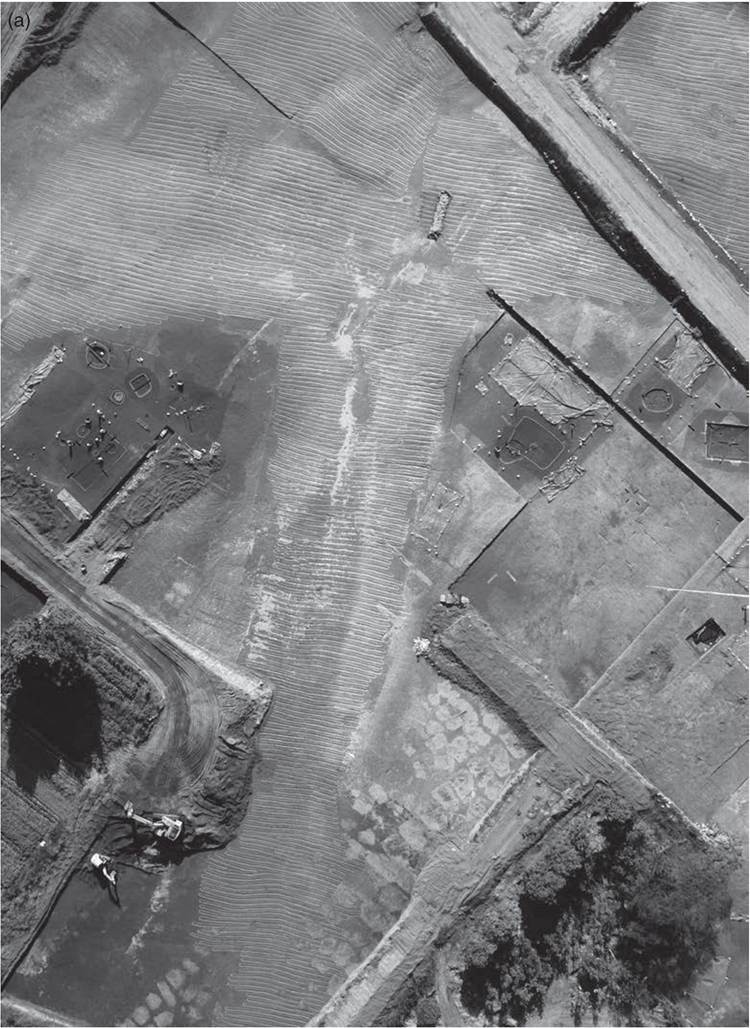
Figure 5.7 (a) Dry-fields and adjacent houses of the Chulmun period at the Pyeonggeodong site, Jinju, South Gyeongsang province, South Korea; (b) plan of dry-field areas and associated houses, hearths, and pit features of the Mumun period, Daepyeong I, Jinju, South Gyeongsang province, South Korea.
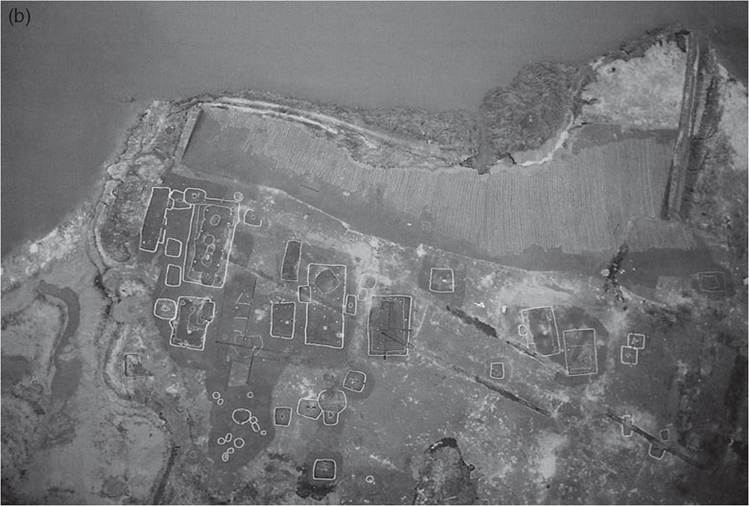
Figure 5.7 (cont.)
hearths and might have housed extended families; household clusters with shared storage facilities have also been identified. The hillslope site of Hunamni on the Han River consisted of dispersed rectangular dwellings constructed over several centuries. Household inventories included net weights, projectile points, maceheads, spindle whorls, axe-adzes, semi-lunar reaping knives, and stone swords. Archaeobotanical sampling in one house yielded a range of crops including barley, foxtail millet, and rice.
The establishment of wet rice cultivation in Korea is broadly linked with metallurgy and possibly with use of water buffalo as draught animals.
The arrival of this ‘package' in the Mulmun period coincides with the proliferation of dolmens (megalithic tombs) across the peninsula, in a development that resonates with the spread of funerary monuments at the opposite end of Eurasia (see above and Figure 5.8). In contrast to the collective burial tradition often linked with the western European monuments, Korean dolmens are generally associated with single burials, and their interpretation has been tied into an account of increasing social disparity. Dolmens often occur in clusters, suggesting that they represented groups of select individuals from nearby communities. Larger settlements tend to be associated with relatively large clusters of dolmens. It is clear that dolmens were much more than the territorial markers of intensive agriculturalists, though in practice that may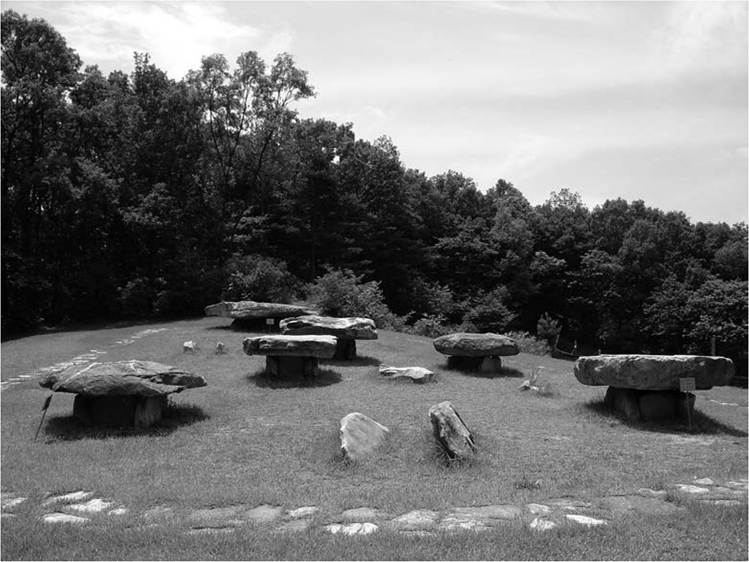
Figure 5.8 Dolmen cluster at San 125, Osang-ri village, Naega-myeon subcounty, Gyeonggi province, South Korea.
have been part of their function; they were plausibly a focus of periodic rituals that commemorated the dead while also renegotiating the social landscape of living communities.