A first walk across Neolithic Europe
Anyone crossing Europe in the fifth or fourth millennium cal bce would have encountered landscapes busy with people and their animals, and seen over and over again many signs of human activity.
Clearances in woodland, garden cultivations, and some areas of pasture would have been recurrent; numerous settlements would have been visible in most regions, except in the uplands;1 people would have been out and about nearly everywhere (Figure 22.1), not only in and around the places where they lived, going about their everyday tasks, but also more widely in what has been called the taskscape,[1217] [1218] tending herds and flocks of animals; and a traveller would have met other people on the move, some over considerable distances,[1219] carrying sometimes by boat but often on foot the many objects and materials which by now were circulated between different areas of the continent.A walk across Europe, however, would not have been the same in 4500 cal bce as in 3500 cal bce, and the experience of a wanderer would have varied quite markedly from place to place; this was not a static, timeless world, but one with its own distinctive history. In southeastern Europe, for example, new things and practices, very probably brought initially by new people, but perhaps also rapidly adopted by indigenous people, had appeared as far back as the seventh millennium cal bce; novelties included pottery, houses, crops,
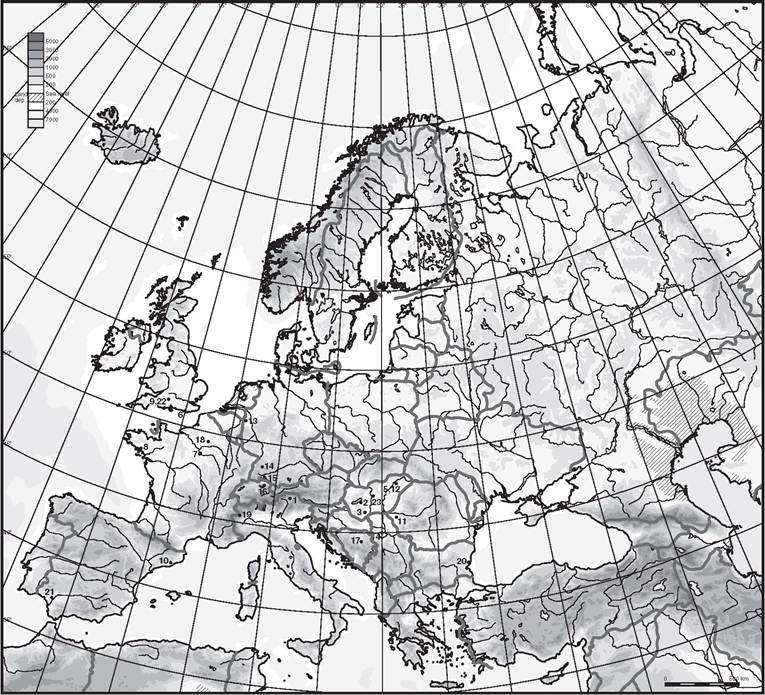
Map 22.i Europe, showing the principal archaeological sites mentioned in Chapter 22: i. Iceman; 2. Balatonszarsz6-Kis-erdei-dUio; 3. Alsonyek-Bataszek; 4. VinCa-Belo Brdo;
5. Tiszapolgar-Basatanya; 6. Whitehawk; 7. Passy; 8. Locmariaquer; 9. Durrington Walls;
10. La Draga; 11.
Uivar; 12. Csciszhalom-Polgar; 13. Aldenhoven; 14. Vaihingen;15. Hornstaad-Hornle; 16. Arbon Bleiche; 17. Okoliste; 18. Cuiry-les-Chaudardes; 19. Monte Viso; 20. Varna; 21. Valencina de la Concepcion; 22. Stonehenge; 23. Budakalasz.
and domesticated animals. In western Hungary, to take just one example, scattered communities of the Starcevo culture had come into the territory of dispersed (and archaeologically here nearly invisible) hunter-gatherers by around 6000 cal bce,[1220] to be in turn succeeded by more numerous and larger settlements of the Linear Pottery culture (or LBK)[1221] from after 5500 cal bce; excavations in advance of motorway construction on the south side of Lake Balaton revealed a village at Balatonszarsz6-Kis-erdei-dUl0[1222] with numerous substantial post-framed longhouses of a style widely found in central parts of western Europe in the later sixth millennium cal bce.[1223] By 4500 cal bce, even larger settlements of the Lengyel culture were coming to an end, for example at the remarkable agglomeration at Als6nyek-Bataszek (Figure 22.2), where again excavations in advance of road building have given a slice across a settlement some 1.5 km by 800 m in extent, showing in the portion investigated over 100 post-framed houses (slightly smaller than their LBK predecessors, also present on this site), frequent pits both large and small, and getting on for 2,500 individual graves, dispersed across the settlement space in groups probably linked to household neighbourhoods.[1224] Als6nyek was what archaeologists call a flat settlement, but not far away to the east and southeast there were many settlement mounds or tells, where repeated occupation over many generations on the same spot had produced increasingly visible accumulations of settlement remains, successive inhabitants and users literally sitting on top of the residues and histories of their forebears.
A famous example is Vinca-Belo Brdo in Serbia (Figure 22.3), beside the Danube just south of Belgrade, where probably over 7 m of deposit formed between approximately the middle of the sixth and the middle of the fifth millennium cal bce.[1225] At some time around 4500 cal bce the main occupation of Vinca- Belo Brdo came to an end, and many other tells followed suit, around this time or subsequently.[1226] [1227] By roughly 3500 cal bce, the nature of settlement in the Carpathian basin, and widely through many parts of southeastern Europe as a whole, had changed quite markedly, with on the whole smaller, and more dispersed, occupations, and with burial grounds in some phases and areas more visible archaeologically (Figure 22.4) than the places of the living.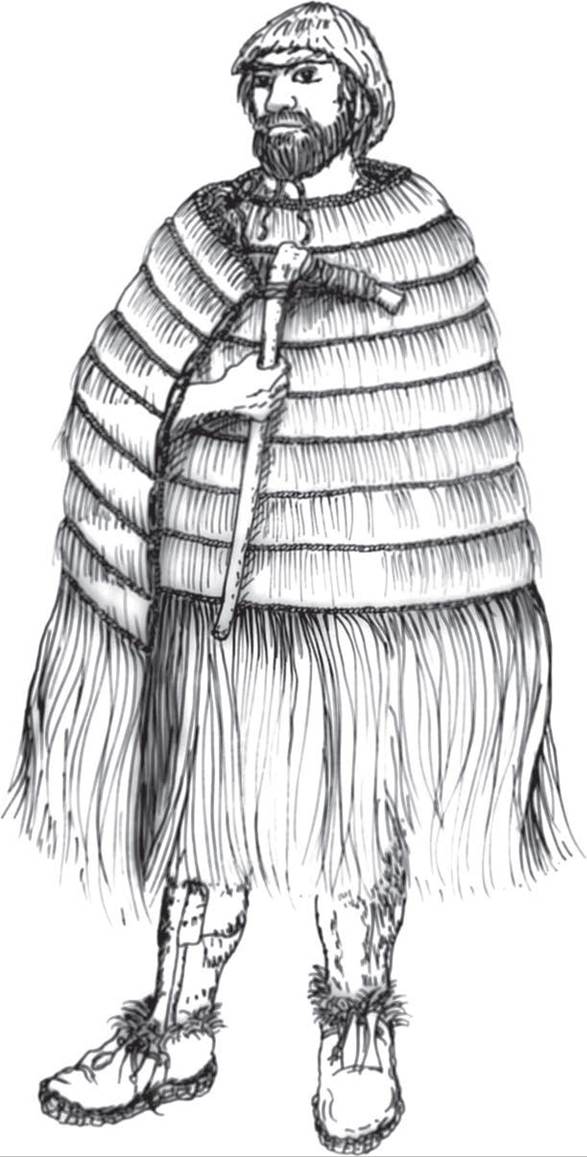
Figure 22.ι Reconstruction of the Alpine Iceman, dated to the later fourth millennium cal bce.
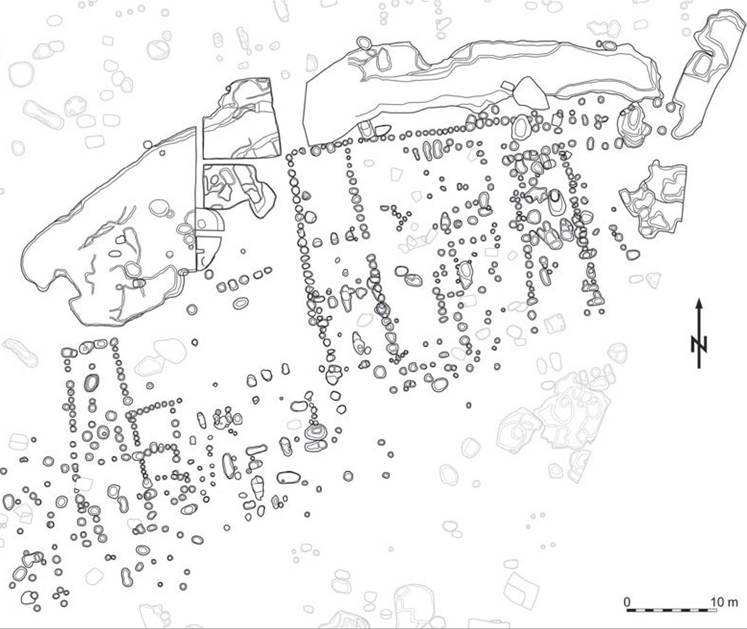
Figure 22.2 Houses of the Lengyel culture at Alsonyek-Bataszek, Hungary, dating to the earlier fifth millennium cal b c e.
Further north, in central and western Europe, what our traveller would have seen was rather different. New things, practices, and ideas had appeared in the middle of the sixth millennium cal bce with the LBK culture. A long- running debate continues here too about the identity of the people involved, whether incomers or locals or a mixture of the two; current research on aDNA appears at the moment to tip the balance back to a predominance of incomers,[1228] but the issue is complicated and the necessary research far from complete. Longhouse settlements of the LBK had been widespread between approximately 5500 cal bce to after 5000 cal bce, found on fertile soils through the river valleys of the region. Following a period of changes, perhaps even involving some kind of decline or even crisis and hiatus in some areas,[1229]
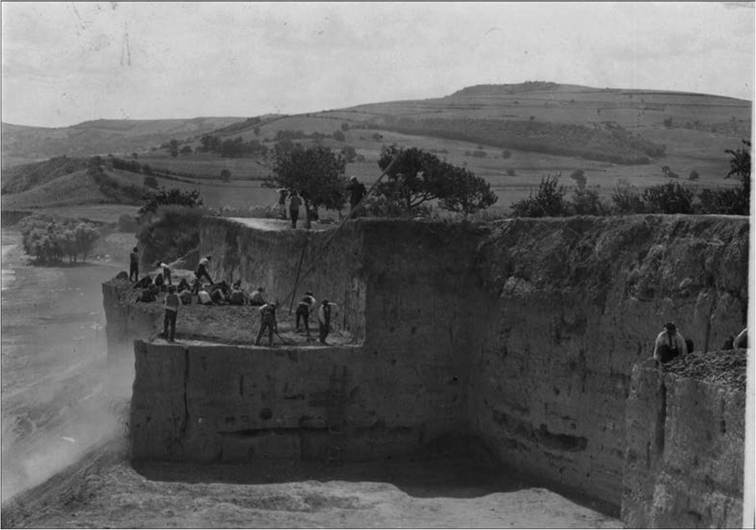
Figure 22.3 The section excavated by Miloje Vasic at the tell of Vinca-Belo Brdo, in 1933.
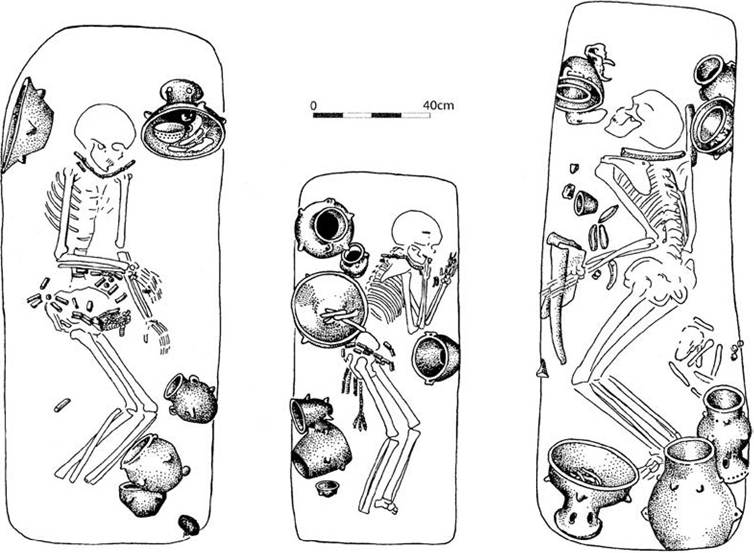
Figure 22.4 A portion of the burial ground at Tiszapolgar-Basatanya.
Ionghouse settlement continued to roughly the middle of the fifth millennium cal bce; during this long period, there were hunter-gatherers to the north, on the North European Plain, around the Baltic and away northwards, to the west, in the Rhine-Meuse estuary, on the fringes of the Paris basin, and in northwest France, and to the south, in the Alpine foreland. By around 4500 cal bce, the last longhouses were being built (see Chapter 23), and from the later fifth millennium cal bce onwards much altered. New things, practices, and ideas spread further, bringing changed ways into Brittany (probably in the first half of the fifth millennium cal bce), the Alpine foreland from around 4300 bce, and into southern Scandinavia and Britain and Ireland from just before 4000 cal bce onwards.[1230] In many areas a very different world came into existence. Settlements are regularly elusive in the archaeological record, though not everywhere. We know of a short, early burst of house construction in Ireland, for example, probably from the late thirty-eighth into the thirty-seventh century cal bce;1[1231] and there is an enduring and puzzling contrast between the wonderfully preserved settlements of the Alpine foreland (Figure 22.5), with their detailed biographies revealed by dendrochro- nological analysis of house timbers, and the relative dearth of structures elsewhere.1[1232] In some kind of compensation, while the places of the living come and go in the archaeological record, various constructions are much more prominent. Ditched, banked, and palisaded enclosures are one characteristic sign, presumably of communal effort, and were probably more used for periodic assembly, exchange, and shared ritual, and sometimes also for defence, than for permanent occupation (Figure 22.6).
These ‘monuments' had a long history across the Paris basin and environs, the Rhineland, and points east,1[1233] but recent research has shown a surprisingly short floruit in southern Britain, where new enclosure constructions can now be dated between the late thirty-eighth and mid thirty-sixth centuries cal bce.[1234] The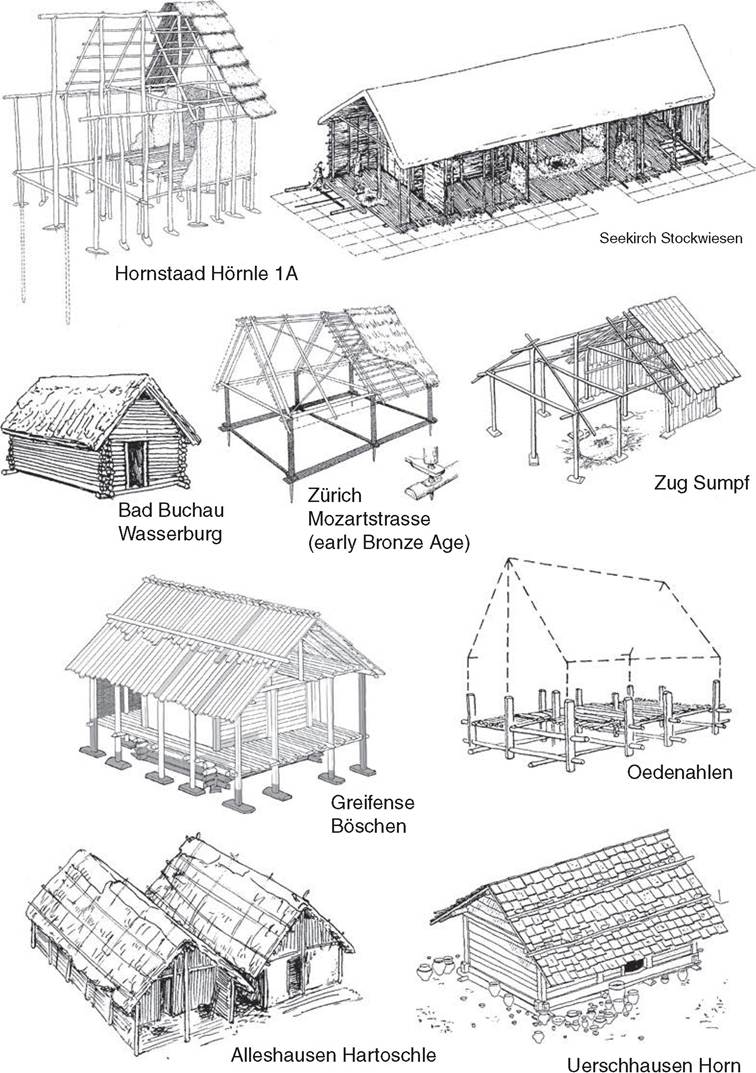
Figure 22.5 Varieties of houses in the Alpine foreland.
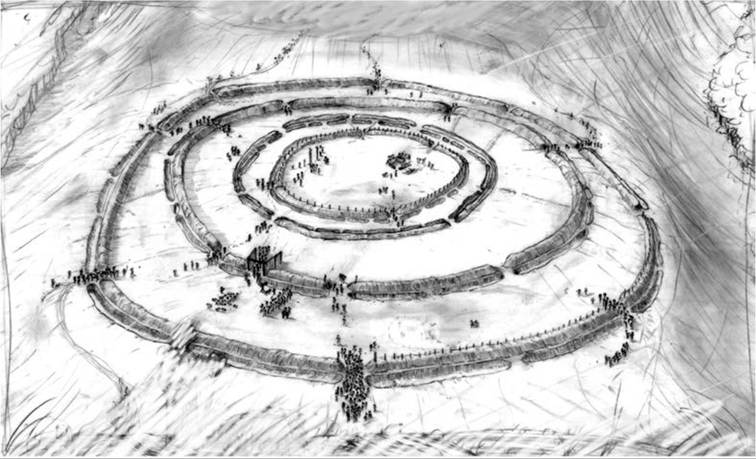
Figure 22.6 Reconstruction of the causewayed enclosure at Whitehawk, Sussex.
other recurrent but very varied form of monument was the mound or cairn containing burials, often in some kind of inner structure. These too had a long and complicated history. Elongated earthen mounds covering varied burials, at Passy and other sites in the Paris basin, and perhaps overlapping with the last longhouses in that region, are one candidate for an early stage of development, monumentalizing the idea and memory of the house and formalizing it by association with the dead.[1235] Long and round cairns in Brittany (Figure 22.7), with both closed cists and chambers accessible by linking passages (tertres tumulaires and so-called passage graves), are another candidate for an early date.[1236] Other variations on the theme follow widely in the early fourth millennium cal bce in Britain and Ireland, perhaps mainly from about 3800 cal bce, and in northern Germany and southern Scandinavia; surprisingly short biographies have recently been shown for both southern British and northern German examples, and this raises again the question of the social significance of the people whose remains were accumulated
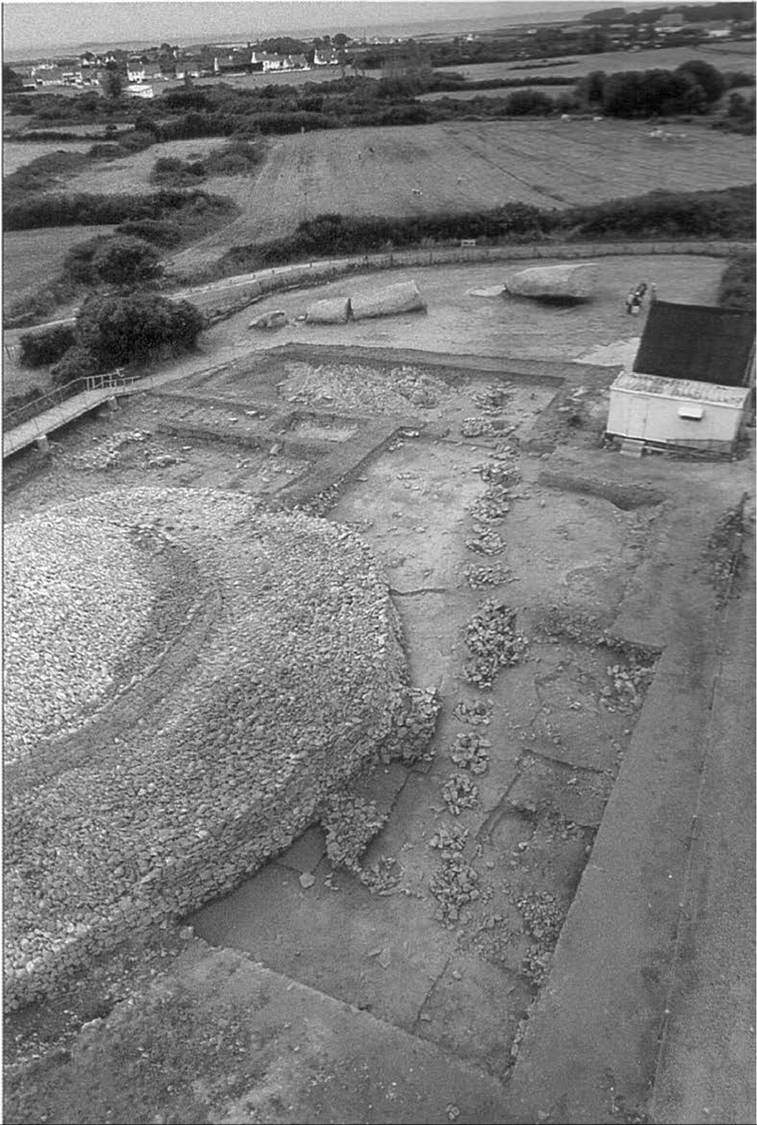
Figure 22.7 The monument complex at Locmariaquer, Morbihan, Brittany, including the Er Grah long cairn, stone row with the fallen Grand Menhir Brise, and the passage grave of La Table des Marchands.
Early agricultural society in Europe together in these structures.[1237] In the southern British case, by about 3500 cal bce a passing observer would have seen a fascinating mixture of old and new forms: the latest innovation in the form of linear cursus monuments, some enclosures still in use, and the occasional long barrow or chambered tomb still being built in archaic style.[1238]
Similar contrasts could be drawn in the Mediterranean world, though in a brief chapter like this the reader will have to forgive incomplete and selective coverage.
New things and practices spread in the early sixth millennium cal bce (with comparable debates about the people involved), and there was a somewhat diverse settlement record across the sixth and fifth millennia cal bce in Italy, southern France, and Iberia.[1239] Varied burial monuments then appeared in Iberia, for example, probably from the later fifth millennium cal bce onwards, first chambered tombs or dolmens, then rock-cut tombs, and tholoi from the late fourth millennium cal bce or the start of the third.[1240] There was again no single history. Ditched enclosures are found in southeast Italy as early as the sixth millennium cal bce, while those in southern France of the later fifth millennium cal bce, for example in the upper Garonne valley, share many features with those further north at this time.[1241] Nor were these disconnected worlds. Beads found in early monuments in Brittany, for example, made of a greenstone called variscite, were very probably of Iberian origin.[1242]All these features, from numerous people on the ground and repeated occupations of place, from innumerable houses and the rich arrays of accompanying material culture, from gardens and herds, to monumental accumulations and constructions including tells, enclosures, and tombs, were all part of the new world with agriculture which came into being in Europe from the seventh millennium cal bce onwards. We should not deny huntergatherers their own history, nor rob them of an undoubted ability, when they so chose and when the circumstances enabled them, to build, to maintain occupation of place, to use their dead to mark place and territory, and to construct elaborate worldviews.[1243] We should also be very careful not to create too rigid distinctions between hunter-gatherers and early farmers. But most of the European examples of this kind of elaboration among hunter-gatherers (such as in the Danube Gorges in the late seventh millennium cal bce or in the western Baltic in the fifth millennium cal bce )[1244] belong to periods of probably intense contact with farming communities. In this sense, the examples presented so far, albeit briefly, are among the consequences of the introduction of agriculture into Europe.
That claim needs to be put into context, in three important ways. It was not only agriculture, in the form of the cultivation of cereals and the husbandry of cattle, sheep and goats, and pigs, that produced this changing world; we could think of agriculture as a necessary but insufficient condition by itself for producing all the changes visible in the archaeological record. Second, while it can seem attractive to think of a ‘package' of new things and practices, it is evident from even this initial survey that there was much diversity across time and space. The challenge now is to forget past theoretical divides, including ‘science wars', and to unify economic and demographic with social, conceptual, and symbolic dimensions of what we choose to call the Neolithic way of life; it was farmers who operated early farming, and farmers could be diverse in their values, goals, and worldviews. Third, I believe that the overall trajectory of the development of the Neolithic in Europe is actually a surprising one, which does not show steady linear development from the seventh to the third millennia cal bce, in either economic or social dimensions, and it has taken a long time for European
Neolithic research to come to terms with this. This lack of steady development is a characteristic not confined to the Neolithic period, but one which in my view spills on into the Bronze Age in Europe, though full coverage of that story would take up more space than is available here.[1245]
Neolithic Europe has by now seen well over a century of research, and the pace of investigation shows no sign of slackening. Modern infrastructural changes, including road building, have given many opportunities for investigations on a scale far larger than normally possible in purely research conditions, and the battery of techniques still being developed, including, for example, high resolution geophysical survey, isotopic and genetic analysis, and formal chronological modelling, enables many more detailed insights than were available to previous generations of researchers. There is thus no shortage of things to report, and a chapter of this kind can only hope to give a selective impression of the dynamic nature of research. To illustrate my three points above, I will discuss three principal, linked themes, those of community, making a living, and worldviews, and will round things off with my view of what happened in Neolithic histories in Europe.