Global patterns, Eurasian specificity: 3OOO BCE-800 CE
The Holocene Epoch climatic processes continued, bringing dependable if somewhat drier climate during the past 5,000 years. Societies on every
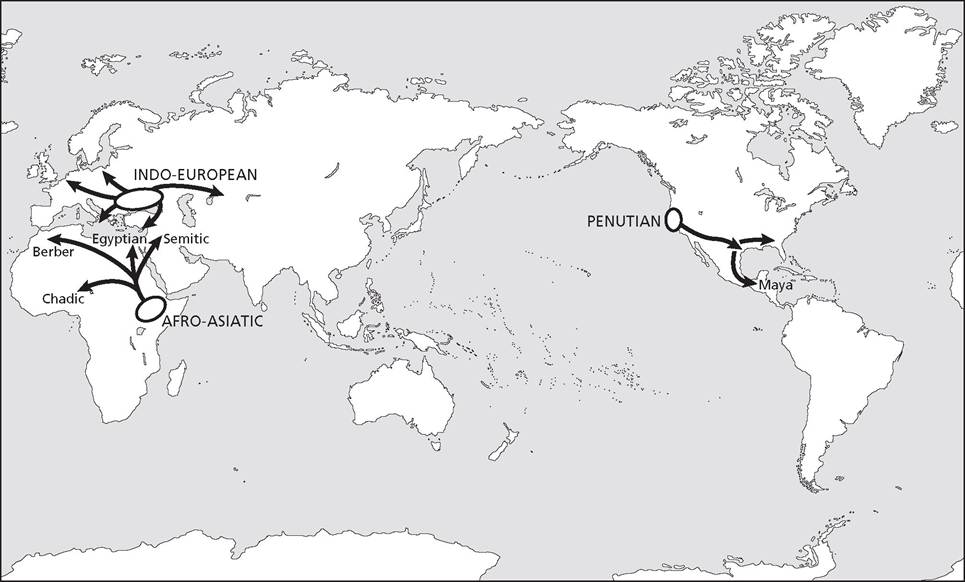
Map i2.4 Language migration and expansion, c.
10,000 to 5,000 years ago.continent were able to expand the types of their productive activities, including domestication of new plants and animals, the expansion of villages and population centers, the development of new systems of social organization, and migration processes that carried innovations to new areas of settlement. For this time period it was the Eurasian continent that experienced the greatest social and technological change. Land that had previously been dry and unproductive now blossomed, and populations growing wheat, barley, rice, and yams - and caring for sheep, goats, cattle, and water buffalo - grew significantly. Early Holocene migrations, at much the same time as those mentioned just above, brought the expansion of substantial civilizations: Semitic languages, descended from Afroasiatic languages based in Africa, became predominant in the Fertile Crescent and Arabia. Indo-European languages, which spread both east and west from the Black Sea region, became predominant in Europe, in Iran, and in much of South Asia. Chinese languages, descended from Sino-Tibetan languages of the upper Yangzi Valley, spread north along the Pacific coast to the Yellow River Valley.
Interactions among these groups came with a late-arising domestication - that of horses, domesticated in the Central Asian steppes. The process took place through several stages requiring thousands of years, with breeding of horses for food as an early stage and harnessing of horses to pull chariots as a later stage. When harnessed to two-wheeled chariots, horses enabled peoples of the Caspian Sea region to raid and conquer in all directions.
Surrounding states, at first suffering conquest, learned the new technology and later expanded their realms. Later, as saddles were developed, the cavalry formed to become an even more formidable tool of war. The military use of horses was sufficient to remake the political map of Eurasia from end to end, bringing migration both by conquerors and conquered. Horses became both the symbols and the motive force for hierarchical power - states and enslavement expanded from the Mediterranean to the Pacific. By 3,000 years ago horses had spread to almost every region of Eurasia and into northern Africa, bringing military, economic, political, social, and cultural change. In the wake of the restructuring of society around horses, new social structures evolved within the same Eurasian region: commerce, empires, and major religions (see Map 12.5). Camels came later, just 2,000 to 3,000 years ago, and brought a parallel but smaller effect.In the terminology we use today, early civilizations gave rise to empires. In the rise of localized civilizations (initially along the Nile and Tigris- Euphrates Rivers), before the military use of horses, densely populated communities shared language and culture. Additional dense and coherent societies continued to emerge in various parts of the world. Empires, in contrast, were rather different structures, that could take form only through aggregation of distinctive societies. Imperial military force and prestige brought together numerous units differing in language, culture, and political system. From the first large-scale empire, that of Persia, to those that followed it in rapid succession - the Hellenistic, Mauryan, Roman, Qin, and Han - the powers of monarchies and bureaucracies now dispatched armies and navies in distant campaigns, brought artists and craftsmen to their capitals, and encouraged travel within their domains. The succeeding empires of the Gupta, the Umayyads, Abbasids, Tang, and Song similarly stimulated migration both within and beyond their borders.
Empires thus caused migration through the movements of armies, refugees, officials, captives, and subject peoples required to move. But empires were not alone as causes of migration. Documents from this era show how migrations of small numbers of people, especially merchants and religious missionaries, could bring major social transformations.The expansion of formal trade in the first millennium bce - with the development of money, the beginnings of banking, construction of ports and caravanserai - enabled merchant families to travel and sustain long-distance connections necessary to the movement of commodities. Just as early politics laid the groundwork for empires, the ancient heritage of long-distance exchange laid the groundwork for formal commerce. In parallel, the formation at much the same time of large-scale religions - Zoroastrian, Judaic, Buddhist, Jain - and the subsequent rise of Christian, revived Hindu, Muslim, and other religions - brought migrations and connections among the faithful. Networks of family, faith, and commercial interest sustained the movement and connection of migrants over large areas: the Islamic hajj remains the largest, most persistent religious pilgrimage. Religion, in particular, may have expanded more through the preaching of individual missionaries than through the invasion and conquest of armies.
The rise of empire, commerce, and perhaps even religion also provided scope for the expansion of enslavement. For those captured, whether in war or by kidnapping, their movement and sale required a network of a different sort, including those who guarded them, fed them, and transported them to their destination. Forced migration, the expulsion of people by human or natural causes, led migrants into catastrophic departure from their home, movement through unfamiliar regions, and settlement in lands of destination. Forced migrations had most likely existed for all human time, but increased in this era. Enslavement, an outstanding form of forced migration, likewise expanded, especially at the fringes of states from the Mediterranean
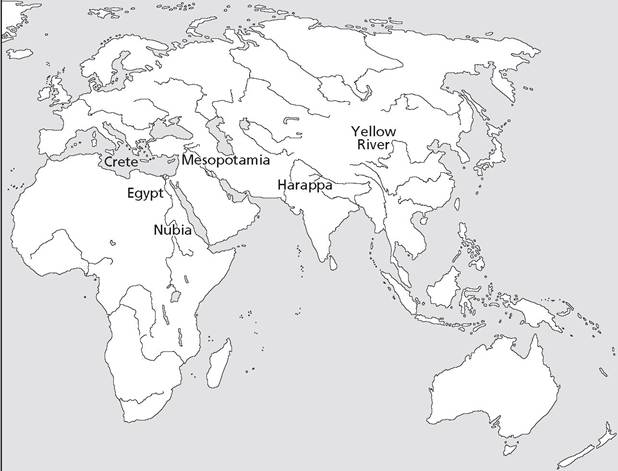
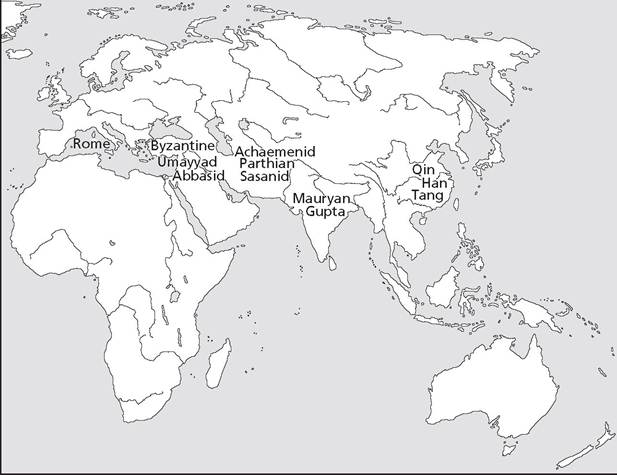
Map 12.5 Eurasian developments, 3000 bce to 800 ce.
through Iran. This expansion of slavery drew captives from regions to the north and south and also within the core areas of Mediterranean and southwest Asian empires. Slavery in India developed less fully; in China slavery never became institutionalized as firmly.
The societies that absorbed the enslaved put them to work in building diasporas. Phoenician merchants spread west from the Levant along the southern Mediterranean; their Aramaic-speaking cousins, also merchants, spread eastward to the frontiers of India. A Greek-speaking diaspora spread both west and then east - all the way to Bactria under Alexander the Great. Later, migrants spread the Latin language throughout the huge Roman Empire. In these same centuries, the Buddhist religion spread from the Ganges throughout India to Central Asia and to China where it grew rapidly until a Tang dynasty repression of Buddhist monasteries in 845. Many more such stories add up to a remarkable set of Eurasian interconnections, linking lands from Britain to Vietnam, and from the Levant to Japan.
As striking as the growth of early cities, in this era, were the migrations and the social transformations of large regions, as documented through study of language and archaeology. In particular, linguistic studies show not only that agriculture thrived in major river valleys, but that agricultural migrants spread their ways of life over large areas (see Map 12.6). Rice-farming Austronesian speakers spread from Taiwan to the Philippines and throughout maritime Southeast Asia. As their outrigger canoes moved east, they met and intermarried with Papuan peoples of New Guinea and islands to the east. Out of this cross-cultural exchange emerged the Polynesians, now cultivating taro rather than rice, with a technology and social order enabling them to sail into the far reaches of the eastern Pacific, colonizing the remaining islands in the time from 1000 bce to 1300 ce. At a similar time, Bantu languages, which developed out of a Niger-Congo subgroup that cultivated yams, spread from West Africa's Niger-Benue Valley far to the southeast.
Once in the highlands of East Africa, the Bantu speakers adopted millet from local farmers, and spread its cultivation as they migrated further south and west. Overall, Bantu speakers occupied a territory as large as that of the Indo-European speakers. Penutian languages, based in California and Oregon, gave rise to migrants who moved east to the Caribbean coast (see Map 12.4). While they were not initially farmers, at some point these migrants adopted maize cultivation. Some of their descendants cultivated maize along the lower Mississippi River; others moved all the way to Yucatan, where their languages and ethnic groups became known as Maya. From the Maya archaeological record, we can estimate that these migrants must have reached the Maya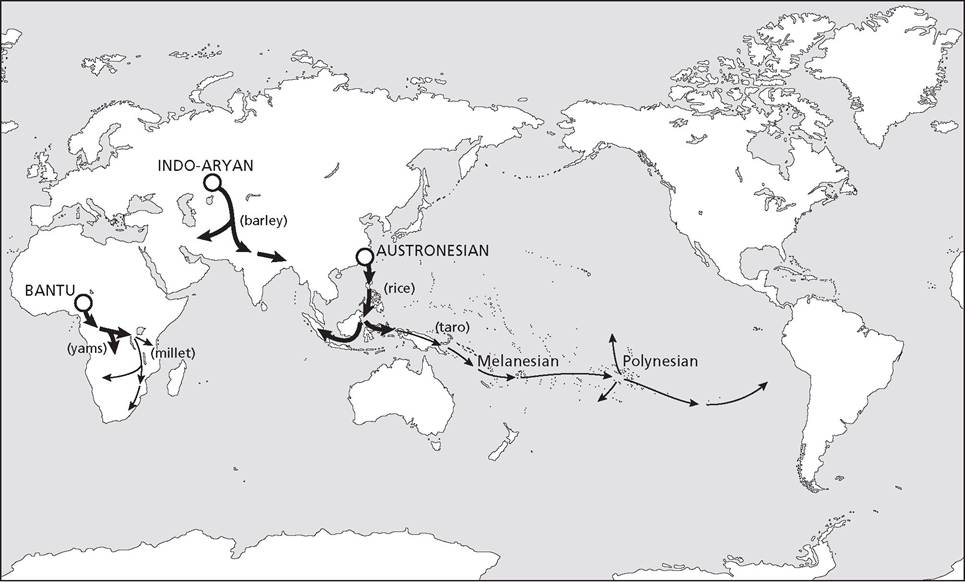
Map 12.6 Agricultural expansion, 3000 bce to 800 ce.
region 3,000 or 4,000 years ago. Yet another group of migrating agriculturists were the Indo-Aryan speakers, members of an Indo-European group who moved east to Central Asia and then south to settle in Iran and South Asia. Some of the songs and poems retelling the lives of these migrants were long preserved - as the Vedas they were incorporated into what became the Hindu religion. Other groups, smaller in number but still of historical importance, included the Na-Dene speakers, who moved from Central Asia to the Canadian region of Athabasca; a portion of them later moved south to become the Navajo.