Art
ROBERT BAGLEY
Introduction
A chapter that covers two millennia and the art of the world cannot trace a connected history. A chronological narrative would be too general to say much, and no periodization - no subdivision of the time - could be useful cross-culturally.
Nor can the chapter limit itself to the art of any one social or political form (state, empire). The material to be discussed comes from imperial courts and Irish monasteries, from Maya city-states and Inner Asian nomad tribes. What the chapter can reasonably attempt is to give some hint of the richness and variety of the world's artistic traditions and to sketch a framework of ideas helpful in understanding them.To decide what belongs in the chapter, we need a definition of art. By some definitions, the chapter has nothing to cover and no reason to exist. We are sometimes told that art is a Renaissance European invention and that nothing made in earlier periods or outside Europe can properly be called by that name. This opinion need not detain us. Though art made in Europe since the Renaissance has had some distinctive features (but perhaps not so many nor quite so exclusive to post-Renaissance Europe as is sometimes claimed), to make such recent and local developments an essential part of the definition would be ethnocentric and parochial. Design no less than music is a human universal. Picasso did not hesitate to apply the word “art” to the Palaeolithic cave paintings of southern France and northern Spain, and we should not hesitate to follow him. If the cave paintings are to be excluded from the category of art because they had a function, then the paintings in the Sistine Chapel must be excluded too.
The author would like to thankJohn Baines, Thomas Leisten, Hugo Meyer, Kyle Steinke, and Wang Haicheng for valuable comments on drafts.
For the purposes of this chapter, art will be defined as artifacts - anything from garments to wall paintings to planned cities - whose functions required that they be designed for visual effect: artifacts designed to attract attention and shape response, to elicit awe or wonder, exaltation or delight.
This definition would accommodate most of what is displayed in the Metropolitan Museum of Art, an institution that does not confine its attention to the painting and sculpture of post-Renaissance Europe, and it would strike the average museum-goer as uncontroversial. (Ephemeral works such as dances, pageants, and temporary settings for ceremonies are omitted here only because our evidence for them is indirect; in their time they may have been more important to their sponsors than many works that do survive.) In focusing on function and the quest for effects - on the intent to elicit a reaction from an audience - the definition is both more fundamental and less Eurocentric than the discourses of self-expression and communication that we have inherited from the Romantic period. It also accommodates more naturally the role of the patron. In treating the visual arts as first and foremost visual, it does not overlook that the arts are sometimes called on to convey or amplify verbally formulated meanings, but it does insist that visual art is the product of visual thinking, and that words are not the medium of visual thinking any more than they are the medium of musical thinking.Much is sometimes made of the absence of words for “art” and “artist” in premodern and non-western cultures. We are told that if a culture had no word for the thing, then it cannot have had the thing. By this logic, many societies have not had a religion or an economy either. The argument is sometimes extended to other words, such as “beauty.” If, for example, a society praises artisans not for making things “beautiful” but only for infusing them with “spiritual power,” we are told that the society did not value beauty but only spiritual power. Yet beauty might be what viewers understood as spiritual power, or took as a guarantee of spiritual power. The makers of the Book of Kells certainly made this equation. Its great pages inspire wonder - it is said to have performed miracles - and this response was not obtained by accident.
The barely credible labors that created the Kells pages testify that their beauty was deliberately sought, whatever name it was sought under. Had this not been so, the book's makers would have written out a legible copy of the gospels and called it a day. The labels a culture applies to objects, makers, and effects are of interest as sociological facts about it, but whatever the labels, the reality behind them is that many human products are designed to make an effect on viewers. Everything discussed in this chapter had effects on an audience that were consciously intended and effortfully achieved.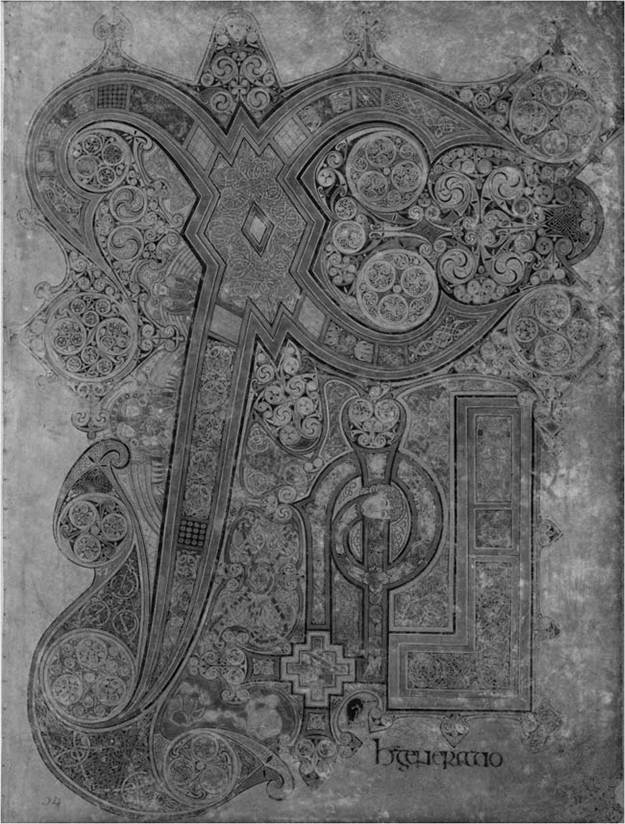
Figure 8.ι Chi-rho page from the Book of KeUs. Ink and color on vellum. 33 x 25 cm.
Trinity College, Dublin. Eighth or ninth century C E, probably from an Irish monastery on Iona, an island off the coast of Scotland (The Board of Trinity College Dublin)
Figure 8.ι is a page from the Gospel of St. Matthew in which three letters abbreviating the name of Christ - chi, rho, and iota - have been enlarged and decorated to the point of crowding the rest of the text off the page (a small residue can be seen near the bottom right corner). “The talismanic conception of the holy word underlying the development of the grand initials in the Hiberno-Saxon Gospels has here reached its most resounding expression in the huge size of the X and in the shimmering mass of ornament swirling around it like a cloud of incense.” (Nordenfalk)
The word “patron” is a useful shorthand for the sponsor or purchaser of a work and thus the employer of its makers. (It is a label for a role; if a king on occasion invents a design for his artists to execute, he temporarily steps outside his normal role to take the role “artist.”) Art, especially the art made in materials durable enough to have survived from antiquity, is usually costly, and its patrons accordingly come from the part of society that controls great resources: rulers, the state, the church, sometimes a wealthy middle class (e.g.
Pompeiian villa owners). Patrons shape the development of art by funding what most pleases them or best serves their purposes. Their ability to specify in advance what the artist should make is limited, if only by the impossibility of specifying in words the exact appearance of the thing to be made, but their power to choose among options presented to them - their power to hire and fire - may be absolute. Like natural selection, they are not the source of variation, but they choose the variants that survive to have offspring. We tend nowadays to lament that premodern artists, at the beck and call of their employers, lacked “artistic freedom,” yet our museums are filled with the work of artists who were not obviously hindered by the necessity of pleasing their patrons. Indeed, for all our talk of artistic freedom, it is not obvious that artists today are free from the need to please patrons. Architects certainly are not. The demands of today's patrons may differ from those of earlier patrons, and they may be exerted less directly (think of “market forces”), but they do not operate less powerfully. The artist is free only when his art does not matter to anybody, and he is then unemployed.In recent years the idea of art has come under attack as elitist. Some would prefer to abolish the word and to study all objects of human invention together under the leveling rubric “visual culture.” Denying any artifact the cachet of art, treating all artifacts as equal, is claimed to be scientific and objective. But objects have not been equal in the eyes of patrons. Tutankhamun and Hadrian made judgments of quality, and their judgments are facts of history that affected history. Moreover, they are judgments that in some degree we can understand and share. A sensibility that prefers gold to earthenware, that feels spiritual power in a Buddhist cult image, that envies the beauty of the vizier Ramose or his wife, is not alien to us. When we read an ancient author, Homer or Horace, we do not suppose that all the emotions of the text are inaccessible to us; we put a cautious trust in our own reactions, controlled by whatever knowledge of the original audience is available to us.
Our approach to the visual arts of the past should be the same. To us the Chi-rho page from the Book of Kells seems finer than the pages of the average Bible, and we cannot doubt that its earliest viewers saw it the same way. When we judge the reliefs in Ramose's tomb to be exceptionally fine, we can be confident that Ramose and his contemporaries would not have disagreed. We need not shy away from judgments that no one will challenge. The artifacts of Tutankhamun's Egypt were no more equal than its people were.Some examples
Let us turn from generalities to specific works. The selection that follows, arranged more or less chronologically, has no claim to comprehensiveness; major artistic traditions and large areas of the world are absent. However, the works chosen will raise questions for discussion, supply examples to make discussion concrete, and afford instructive comparisons. Once they have been introduced, we will return to general issues to discuss the settings and functions of art, some of the forms it has taken, materials and techniques, and artists.
[Fig. 8.2] Ramose was vizier of Egypt under Amenhotep III. His rock-cut tomb in the Theban Necropolis was abandoned unfinished, perhaps when the court moved to Amarna in the reign of Amenhotep IV (Akhnaten). The tomb's main pillared hall has reliefs on its entrance wall and back wall (see Fig. 8.2). On the back wall are two images of the king. On the entrance wall Ramose takes part in a ritual banquet along with his wife, parents, and other members of his family, identified by inscriptions above and around them. The figures of his brother and brother's wife illustrated here come from this banquet scene. The brother, a high court official, holds a scepter and wears a gold necklace. His wife, embracing him, wears a circlet with a lotus bud and flower. Both wear wigs whose sharply cut patterns contrast with the sensuous smoothness of their faces. Eyes and eyebrows are the only parts of Ramose's reliefs that were ever painted, but those touches of black are enough to bring the figures to life.
The reliefs are part of the decorative program of a tomb whose function was to sustain the deceased Ramose in an afterlife in which he would enjoy, in
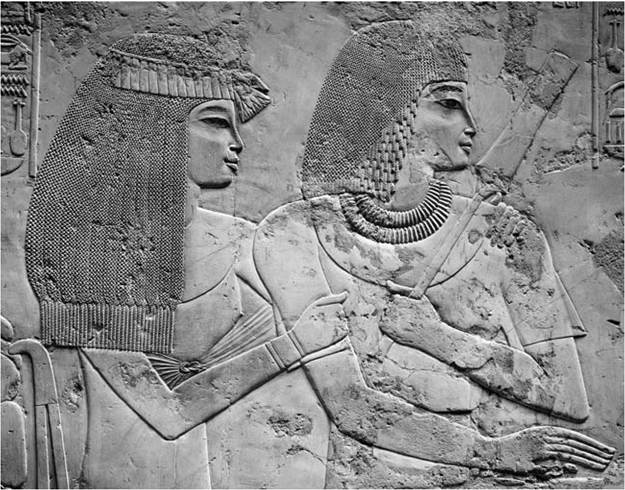
Figure 8.2 The brother of Ramose and his wife. Limestone relief from the tomb of Ramose. Fourteenth century bce. Egypt, ancient Thebes (modern Luxor) (De Agostini Picture Library / G. Dagli Orti / Bridgeman Images)
perfect youthful beauty, all the comforts of this life: loving family, prosperous estates, royal and divine favor. Had his tomb been finished and used, priests supported by an endowment would have made regular offerings to a statue of him in the tomb chapel, a statue that represented him not because it resembled him but because it was inscribed with his name. Egyptian sculptors were seldom required to capture a likeness. Ramose's artists have not depicted people they ever saw. The faces in the reliefs hardly vary. Ramose's parents look no older than his brother and brother's wife or than he himself. The pursuit of likeness leads away from perfection; emotion likewise distorts the features and does not befit noble bearing. To make an image of an ideal man into a portrait of Ramose, all that was needed was a label. Indeed in any culture, whether the taste of the moment demands close resemblance to the sitter or no resemblance, only a label can make an image into a portrait.
Ramose's reliefs owe their beauty to a team. The walls of Egyptian tombs were decorated by crews of specialists. Once the content and arrangement of texts and scenes had been decided, a master draftsman laid them out in outline. He was followed by carvers who painstakingly lowered the surface outside the outlines, leaving figures and hieroglyphs in relief, and then shaped the relief parts and added interior details (the zigzags of a wig, the pleats of a dress). Last would come painters who colored everything and added further details that did not exist in the stone: the grain of wood, the feathers of birds, the veins in a stone vase.
[Fig. 8.3] At Abydos, a center of the cult of Osiris, Sety I built a temple with seven main chapels dedicated to seven gods, one of them the deceased Sety. There are also rooms for rituals connected with Osiris, a hall dedicated to Sokar and Nefertem leading to two further chapels, and a gallery on whose wall Sety and his son Ramses II offer incense to an edited list of their predecessors stretching back to the beginning of Egyptian history, the seventy-eight legitimate kings whose rule they inherit.
The relief shown in Figure 8.3 belongs to a series in the hall of Sokar and Nefertem. It was never painted, though it was certainly meant to be (and other reliefs in the temple are). Sety, holding a censer from which smoke rises, pours water over lotuses, while Sokar gives him hieroglyphs for “life” and “power.” The side of Sokar's throne is textured with hawk plumage and at lower left bears an emblem of the unity of Upper and Lower Egypt. The plinth below is patterned with the hieroglyphs for “all life, power, and stability.” The vulture goddess above the king offers protection and “all life and power.” The writing next to her records speech of Sety and Sokar, who adds martial qualities to his other gifts. The depiction of Sokar is so natural and matter of fact that we scarcely notice that his head is that of a bird. The lucid and stable composition of the relief is a visual analogue of the cosmic order the god bestows.
What is depicted here is a transaction that took place every day in every Egyptian temple. The king, on behalf of humankind, makes offerings to the gods in acknowledgment of the order and stability they have granted. Though in practice the offerings were made not by the king but by priests acting as his deputies, in relief after relief it is only the king who addresses the gods honored in the temple. His role as guarantor of an ordered cosmos is impressed upon the modern visitor with relentless insistence. But who saw the reliefs in Scty's time? Who besides the priests and the king had access to the rooms that contained them? Royal art often functions as propaganda aimed at the people who pose the greatest threat to the king, those nearest him; it is his relatives and high nobles who must be made to feel the sanctity of his person. However, if those people seldom or never saw the inner parts of Sety's temple, then the reliefs must have been made for the gods.
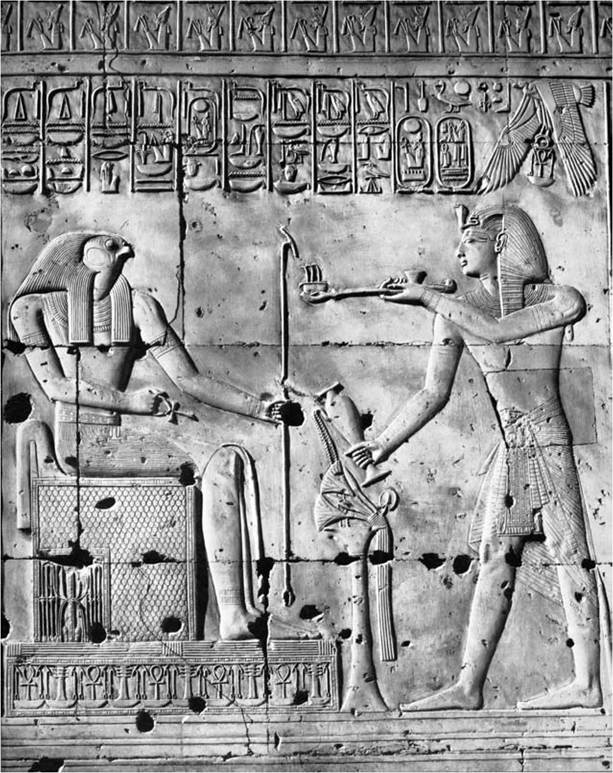
Figure 8.3 Limestone relief from the temple of Sety I (c. 1290 -1279 bce). Abydos,
Egypt. (Hirmer Fotoarchiv)
[Fig. 8.4] The bronze ritual vessel, cast complete with lavish decoration and dedicatory inscription, was the principal artifact of elite material culture for the first thousand years of Chinese civilization. Some vessels were deposited in tombs with offerings of food and drink for the deceased; others were used above ground for periodic offerings after the funeral. We know nothing about the offering ceremonies, but they must
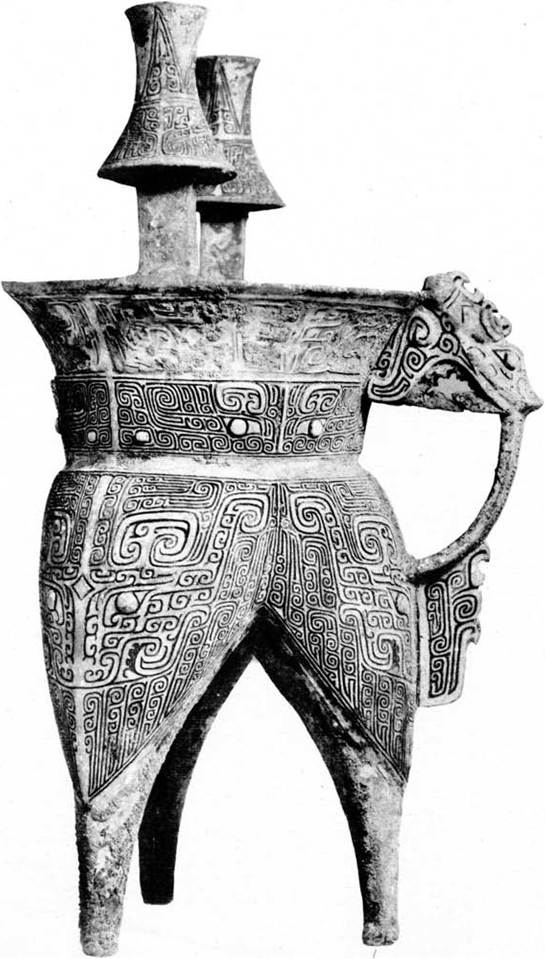
Figure 8.4 Chinese bronze ritual vessel. Height 39.5 cm. Early Bronze Age, thirteenth century bce. Said to be from Anyang. Museum fur Ostasiatische Kunst Koln C76,2
have been elaborately choreographed, for by the time of the relatively early object shown here, the wealthiest tombs already contained a good twenty distinct vessel types. Like liturgical objects on the altar of a church, the vessels were beautiful instruments that dignified the ritual and made it compelling in the eyes of both audience and actors. All the elite made offerings to their ancestors. Probably for most of them the ceremonies were family affairs, but at the early Bronze Age Anyang site, thirteenth to eleventh century bce, the king's rituals must have had a larger audience, for his sometimes involved the sacrifice of dozens or hundreds of human victims at the royal cemetery. Rituals that link descendants with ancestors are a claim to legitimate inheritance, a ratification of privilege. The association between bronze ritual vessels and royal legitimacy remained strong enough in later periods for writers to imagine that in ancient times one particular set of tripods had given divine sanction to the rule of the dynasty that possessed it.
The vessel illustrated in Figure 8.4 is a lobed tripod with a circular upper part, two capped posts on the rim, and a strap handle with a curly bracket at the bottom and a feline head at the top. The oldest examples of this vessel type have a pair of tiny stubs on their rims, perhaps remnants of some metalworking process. Whatever their origin, the stubs were soon transformed into massive posts, a purely visual feature, large and dramatic, devoid equally of technical cause and practical function.
The vessel was cast from a clay model into which all its decoration had been carved in sunken line. After casting, the lines were inlaid with a black pigment to make them stand out against the golden color of the metal (now corroded green). The decoration consists of a bilaterally symmetrical pattern unit on each lobe and a band of decoration higher up containing three more pattern units, these centered midway between lobes. (A second band just below the rim is obscured by corrosion.) On the lobes the patterns are staring faces; in the band higher up, paired eyes and horns give vaguer hints of animate presence. Both patterns originated two centuries earlier in a single configuration, a pair of eyes unaccompanied by any other facial feature - a hypnotic glare. The endlessly varied creatures elaborated from this starting point are very different from the imaginary animals of western art, which are almost invariably constructed, like Sokar, as composites of real animals. Imaginary animals continued to be the raw material of ornament throughout the Chinese Bronze Age. Nothing plantlike appeared until about 500 bce, and plant ornament did not become common until half a millennium after that, when western imaginary plants like those seen on the Hildesheim dish (Fig. 8.9) arrived in company with Buddhist art.
[Fig. 8.5] In the three centuries of their empire, about 900-600 bce, the Assyrian kings built a series of capitals and palaces in northern Mesopotamia. The palaces were mud brick, but the lower parts of their interior walls were paneled with slabs of fine gypsum carved in relief and painted (the upper parts were only painted). The crews executing the reliefs worked much as their Egyptian counterparts did, with one notable difference. In Egyptian reliefs the hieroglyphs and the figures were parts of a unified design, executed together at every stage, from the first outline drawing to the final painting. The inscriptions in Assyrian reliefs, written in a script with no iconic content, were chiselled in after the reliefs were finished. Sometimes they run continuously across ground and figures, as though oblivious to the images, adding only the king's titulary repeated over and over.
The themes of the reliefs are ritual, war, and the royal hunt. The scenes of war show the army marching, fording rivers, camping, storming cities, fighting battles, pursuing the defeated, and counting the spoils. They seem to be the earliest narrative art anywhere. The scenes in Egyptian tombs, though they go back far earlier, do not tell stories; they are vignettes of life on the Nile and of productive activities on the estate of the deceased. The same vignettes occur in different tombs differently arranged, as though the patron picked his favorites from a pattern book.
The relief illustrated in Figure 8.5 comes from the palace of Assurbanipal at Nineveh, from an extraordinary series showing the king hunting lions. Mesopotamian rulers were depicted hunting lions as early as 3000 bce, but for drama and for its images of dead and dying animals, Assurbanipal's hunt is unsurpassed. The detail illustrated here barely hints at the impact of the wall of reliefs now in the British Museum. Caged lions have been released into a hunting ground ringed by soldiers and huntsmen with savage dogs. Within the circle the king hunts sometimes on foot, sometimes from his chariot. Here we see him in a large chariot that holds also his driver and two spearmen. The king aims forward, his horses leap over a lion he has already killed, and his spearmen stop a lion that lunges at him from the rear. The composition of four active overlapping figures is complex, but its design is so lucid that it does not seem so. The calm geometry created by the chariot box, the spokes of the wheel, and the diagonal of the spears and lion conveys the king's self-assurance in a scene of devastation. The modern viewer of these reliefs probably feels most strongly the poignant suffering of the slaughtered animals, and the carvers too must have felt it - and studied it - to convey it so compellingly. But for the Assyrian viewer living in a dangerous world, the demonstration of
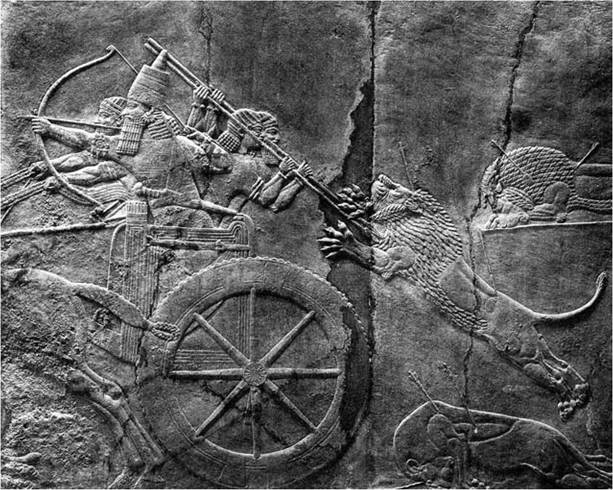
Figure 8.5 Lion hunt. Detail of gypsum orthostat. Palace OfAssurbanipal (r. 669-631 bce ) at Nineveh. London, British Museum (© The Trustees of the British Museum. All rights reserved)
his king's vigor must have been welcome, and to visiting ambassadors it was a threat.
[Fig. 8.6] The Persian Empire familiar from Herodotus was ruled by the Achaemenid dynasty, three of whose kings bore the name Darius; the first Darius built Persepolis. The inscription of the bowl in Figure 8.6 uses the cuneiform script to write “Darius, the Great King” three times in the three official languages of the empire, Old Persian, Elamite, and Neo-Babylonian. The king may have used the bowl at table, or he may only have stored it in his treasury along with the other precious metalwork that we see brought to him in tribute on the staircase walls at Persepolis.
The bowl was shaped from a flat disk of gold by hammering, that is, by a process of gradual deformation. Because iron must be hammered hot, the blacksmith needs tongs, but the smith working other metals hammers them cold and can thus hold the object with his hand, giving him good control. He uses hammers of a soft material, bone or stone, so as to stretch the metal without tearing it. In the ancient world, whether in gold, silver, or bronze,
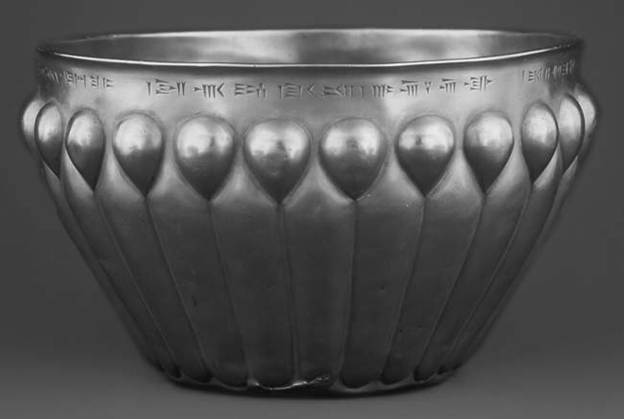
Figure 8.6 Gold bowl. Inscribed “Darius, the Great King.” Height ii.i cm. Persian, Achaemenid, fifth century bce. New York, Metropolitan Museum of Art 54.3.i (© The Metropolitan Museum of Art. Image source: Art Resource, ny)
simple shapes were routinely made by hammering to conserve metal. Metal could be hammered much thinner than it could be cast, and the cost of metal meant that in most places (China is the exception) casting was the technique of last resort, used only for shapes that could not be made by hammering. This economic logic applied even to bronze, though with more force to more expensive metals. The smith was normally under such pressure to conserve metal that he was sometimes obliged to make an object in several parts by several techniques. If his patron demanded a replica in gold of a stone bowl carved with projecting animal heads, he might be forced to cast the heads and rivet them onto a hammered bowl (compare Athena on the Hildesheim dish, Fig. 8.9). Here, however, he was left to his own devices, and the result is a softly swelling shape in which it is the material that speaks.
[Fig. 8.7] The motif of animal combat, typically a predator killing a herbivore, originated in Mesopotamia in the fourth millennium bce. It figures spectacularly on the staircases of Darius' fifth-century palace at Persepolis. But it is associated above all with the portable art - ornaments, clothing, even tattoos - of the Inner Asian nomads of the first millennium bce, who made it
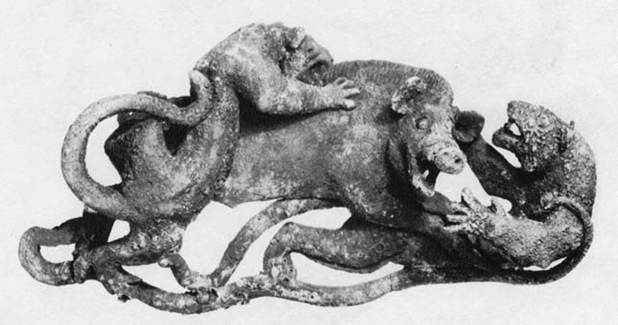
Figure 8.7 Bronze plaque from the Kingdom of Dian. Height 8 cm, length 16 cm. Second- first century bce. Shizhaishan, Yunnan, southwest China
their own and carried it across the steppes as far as China and Siberia. On the nomads' favorite ornaments, flat plaques of gold or bronze, the depiction of combat tends to be less naturalistic than patterned and formulaic. In some examples the victim's hindquarters are rotated 180 degrees so that its hind legs are in the air, a posture we take to express its agony until we notice that the predator's hindquarters are rotated too.
The animal combat illustrated in Figure 8.7 is not from the steppes, however, and though steppe versions inspired it, it could scarcely be more different. It is cast bronze, an ornament for a buckle, from a kingdom of farmers and cattle herders located in what is now southwest China. In Chinese sources of the second century bce, the kingdom is called Dian. Rich graves at Dian cemeteries of the last few centuries bce have yielded a wealth of bronze artifacts, including lively three-dimensional figural scenes depicting every aspect of daily life. Animal-combat plaques likewise occur in great variety, and with a violence unmatched in the whole history of the motif. In the example illustrated here, a boar is attacked by two leopards and a snake. The leopards are howling and the boar is terrified.
[Fig. 8.8] The tomb of the King of Nan Yue, a ruler of south China who died about 122 bce, was discovered in Canton in 1983. About 200 jades were found on or near the king's body. Some were antiques he had collected. Most, from pendants to sword fittings, were jewelry.
Jade, meaning nephrite and other hardstones with similar qualities, was prized in what is now northeastern China as early as the fourth millennium bce.
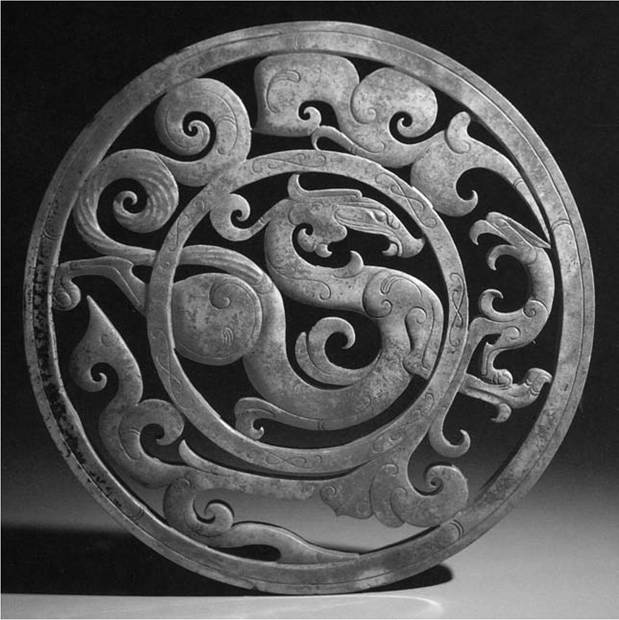
Figure 8.8 Jade ornament belonging to the King of Nan Yue. Diameter 10.6 cm. Second century bce. Guangzhou (Canton), China
Because of its hardness it had to be worked (sawn, drilled, ground to shape) entirely with abrasives. The first step in manufacture was to saw a pebble of raw material into slabs; hence jades tend to be flat. The next step was for a specialist to draw a design on the slab, avoiding flaws and exploiting any attractive patterning. Workers then cut the design out by sawing and drilling, and subsequently finished the surface by grinding and polishing. This procedure gave birth to an art form that put its emphasis on surface and silhouette. It stimulated the imagination of the designer drawing on the slab by challenging him to adapt a familiar shape or subject to a specific piece of precious material. Shapes and subjects had many sources. Disks and axe blades were popular shapes with prehistoric origins; dragons were a favorite subject because their forms could be freely varied. What mattered above all was the coloring and luster of the material and the inventiveness and finesse with which it was worked. The value set on the material is attested by the frequent reworking of broken jades and the occasional making of gold settings for unsalvageable fragments.
Perhaps the finest of the Nan Yue king's jades is the disk illustrated in Figure 8.8, which was found on a veil covering his face. Two creatures are fitted into the spaces defined by two concentric rings. A dragon compressed into the inner ring is exploding out if it. The dragon faces to the right, its fanged jaws gaping wide over its neck, and its fore and hind legs thrust through the inner ring to brace against the outer one. A bird standing on the dragon's foreleg turns backward to squawk at it. The space between the two rings is mostly filled by a billowing crest that rises from the bird's head and an even longer tail plume, but the twisting tail of the dragon also contributes a curl or two. In this elegant and witty confrontation of two irate animals, we see the Chinese artist's transformation of the northern nomads' animalcombat motif.
[Fig. 8.9] This dish in comes from a find made in 1868 near Hannover, the largest hoard of Roman silver yet unearthed outside the frontiers of the empire, perhaps an imperial gift to a formidable barbarian. The collecting of silver plate became part of patrician life after the second Carthaginian war (218-201 bce) gave Rome access to the silver mines of Spain, brought booty from cities like Syracuse and Tarentum, and inspired Roman philhellenism. Vast sums were paid for antiques; a vast demand for new pieces was supplied by Greek smiths. In imperial times a middle-class family might own both a set of table silver for dining and a collection of showpieces (heirlooms, wedding gifts) like the Hildesheim dish for display on side tables. A painting in a Pompeiian tomb depicts such a display.
The dish consists of a central medallion and a border of plant ornament. The medallion, which bears a seated figure of Athena, was apparently cast; the dish to which it is attached was hammered. (Two handles not shown in the illustration were also made separately and attached.) The ornament, palmettes and other frondlike motifs joined by arcs that suggest a stem, is of a kind ubiquitous in Greek and Roman art. The background to the plants has been gilded, as have Athena's gown and the rock she sits on. She holds a shield in one hand and a plow in the other, and a tiny owl perches on the rock in front of her.
The center of attention is Athena and above all her gown. Drapery in classical art had at least three functions. Depicting cloth convincingly was the least of them. More important were to reveal the articulation of the
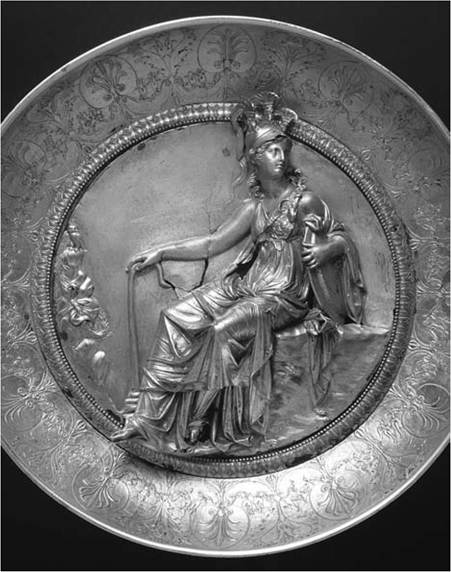
Figure 8.9 Roman silver dish from Hildesheim, Germany. Partly gilded. Diameter 25 cm.
Made in or shortly after the reign of Augustus (27 bce - 14 ce ). Staatliche Museen, Berlin (bpk, Berlin / Art Resource, ny)
body beneath and to create pleasing patterns of light and shadow. When ideas from classical statuary were adopted into other artistic traditions (Buddhist Asia; Netherlandish painting), the relative weights given to these functions might change dramatically.
[Fig. 8.10] This figure shows a room in the house of a well-to-do Pompeiian family. Architectural features divide the walls horizontally into a dado, a middle zone, and an upper zone, and vertically into two broad niches for paintings and, flanking the niches, windows through which we glimpse airy structures that look like stage sets. The dado consists of rectangles of red marble alternating with yellow squares. A white ledge separates it from the middle zone. Slender white columns in the middle zone stand directly above the yellow squares. The columns, paired with pilasters in the wall behind them,
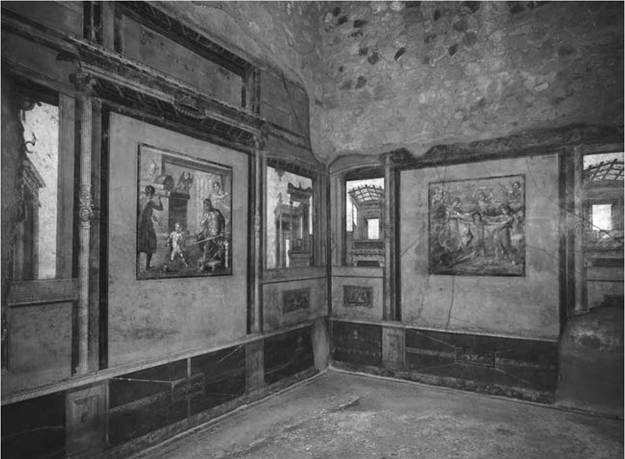
Figure 8.10 Pentheus Room, House of the Vettii, Pompeii. First century ce, between the earthquake of 62 ce and the eruption of Vesuvius in 79 ce. (Scala / Art Resource, ny )
carry the roofs of shallow porches (aediculae) that shelter the two niches. Within the niches are large panel paintings hung on a yellow wall (yellow, which also surrounds the windows and fills the upper zone, is the dominant color in the room). The room is a picture gallery (pinacotheca), and the pictures are probably copies of famous Greek originals: on the left wall, the infant Hercules strangling serpents, on the right, Pentheus assailed by the Bacchae.
The room has been described above as though the features mentioned were real, but they are only paint on flat walls of plaster. The room has no windows, no aediculae, no marble, no panel paintings. What it has in abundance is illusion and fantasy. The interior decorators who created it had mastered all the tricks of perspective, foreshortening, and light and shadow, and they painted with the room's actual sources of light and likely angles of view in mind. For the “old master paintings,” they no doubt consulted their patrons, who chose from their pattern books. The Hellenistic ancestors of Roman wall painting imitated palaces that had real marble, real niches, and real paintings or even statuary in the niches. But the cheap imitation of
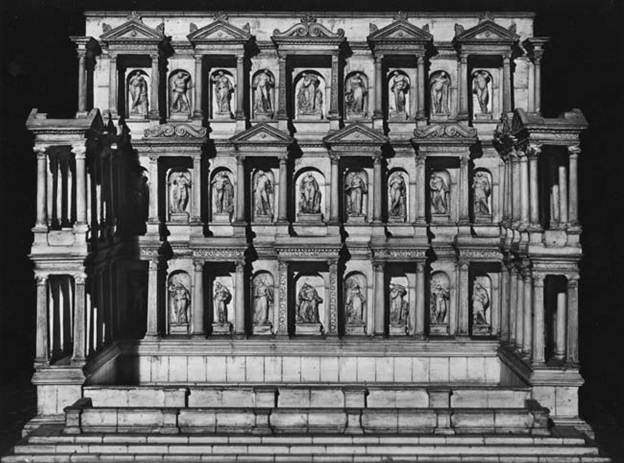
Figure 8.ιι Nymphaeum (model), Miletus, Asia Minor. Built to honor the father of Trajan. Second century ce. Rome, Museo della Civilta Romana (Alinari / Art Resource, N Y)
expensive interiors quickly turned into an arena for virtuosity. The House of the Vettii is contemporary with Nero's Golden House in Rome, where painters much more skilled than those available to the middle class of a provincial town took the same delight in creating layer upon layer of illusion.
[Fig. 8.11] A nymphaeum is a setting for a fountain, a backdrop, one of several Roman building types (theater stages were another) that were all surface. In Figure 8.ιι a blank wall has been made three-dimensional and filled with energy by encrusting it with deep porchlike aediculae staggered so that a porch in one storey aligns with the space between porches in adjacent storeys. Both the porches and the spaces between them contain statue-filled niches.
The reason for illustrating a model here rather than an actual building is that the model restores the original complement of statues, without which the building is an incomprehensible riot of columns, entablatures, and pediments. The statues give the niches a reason to exist; the niches also give the statues a reason to exist. Both are components of a system for enlivening surfaces. The statues thus represent one end, the anonymous
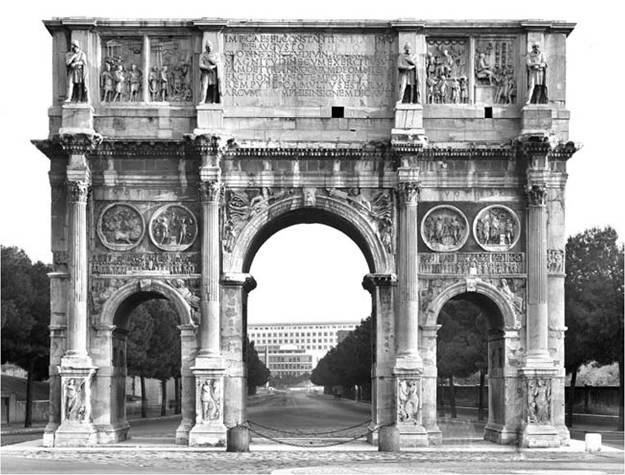
Figure 8.12 Arch of Constantine. 315 ce. Rome. Height 21 m, width 25.9 m, depth 7.4 m (Deutsches Archaologisches Institut)
end, of the gamut of functions served by statuary in the classical world. The barbarians in the attic storey of the Arch of Constantine are close to this end (Fig. 8.12). At the other end - an isolated image of a god or emperor or hero - the statue is the uncontested focus of attention, and its identity counts for everything.
The decorative idea seen in Figure 8.11 at its most basic has been immensely important both in and beyond architecture. Instead of treating a large surface as the field for a large picture, it breaks the surface up into an ordered set of bounded units and turns the boundaries into frames by giving them something to frame. On the sarcophagus of Junius Bassus (359 ce ), for example, an aedicular framework divides the surface into compartments for figural groups depicting Christian subjects. Once alerted to the device, we will see it everywhere, from the ceiling of the Sistine Chapel to the exteriors of Cambodian temples (where the frames are large expanses of luxuriant plant ornament). Many buildings that once were statue-filled are today untenanted because they have been mined over the centuries by collectors seeking sculpture (though the loss of the finest classical statues has occurred mainly because they were metal and have been melted down). The statues we encounter as freestanding works in museums are more often than not fragments extracted from ensembles. The extraction always impoverishes. Sometimes it also puts a spotlight on objects that were meant only to be seen, not looked at.
[Fig. 8.12] The triumphal arch is a monument type that has never lost its appeal for men envious of the power of Rome. The earliest examples in stone, from the second century bce, were enlarged and permanent versions of the temporary structures traditionally erected for the triumphs of victorious generals. In form the monument is a sort of apotheosis of Roman engineering, a freestanding display version of the arches that in series create aqueducts and bridges. Most surviving examples have only one arched opening instead of Constantine's three. On top was normally a sculpture group in gilded bronze, including a horse-drawn chariot bearing the victor. The sides displayed sculptures, reliefs, and in the attic storey, an inscription in cut or bronze letters, all related to the events commemorated. In imperial times triumphal arches were built all over the empire. More than fifty are recorded in Rome alone.
Constantine's arch, one of the largest, spans the processional route taken by emperors when they entered the city in triumph. Commemorating his victory over his rival Maxentius in 312, it was dedicated to him by the Senate and People of Rome in 315. It is a massive block of masonry pierced by a large central arch and two side arches. In the spandrels of the arches are winged victories. Above each side arch is a horizontal frieze and a pair of roundels. The piers of the arches are fronted by Corinthian columns on high pedestals bearing relief panels. The columns carry an entablature, above which the attic storey displays the Senate's dedicatory inscription, large panels sculpted in relief, and, over the columns, freestanding statues of barbarians (like victories, always appropriate to the celebration of a triumph). Using the post-and-lintel architecture of the Greek temple (columns, entablature) not for any structural purpose but to organize the surfaces of an otherwise inarticulate mass, the Arch of Constantine is a deeply satisfying architectural composition, one that has been an inspiration to classically minded architects ever since the Renaissance. It provides ready-made, for example, a design for the west front of a church.
As early as the Renaissance it was recognized - by the painter Raphael, in his capacity as supervisor of antiquities for the pope - that the reliefs on the arch differ in style and were not all made in the fourth century. The roundels were taken from monuments of Hadrian (r. 117-138), with Hadrian's face recarved to resemble Constantine's. Other parts come from monuments of Trajan and Marcus Aurelius. Nor, it seems, were these spolia fitted into a new arch. Recent investigation of the core suggests that the lower part of the arch is a drastically remodeled arch of Hadrian.
The discrepancy between the lounging classical figures in the Hadrianic roundels and the regimented figures of the Constantinian friezes below them has excited much comment. The Renaissance made the classical style of Greece and Rome into an artistic norm, the only correct style, and the inexplicable abandonment of correctness in the Constantinian friezes came to be seen as the death of art and the onset of the Middle Ages. Since about 1900, scholars friendlier to medieval art have tried to view the Constantinian friezes not as a failure to maintain classical standards or as the artistic manifestation of a dying civilization but as a deliberate choice made in the service of new purposes. But though the question is no longer formulated as “Why did art die?” the conviction of an earlier generation of scholars that the change of style should hold some deep meaning lingers.
[Fig. 8.1] The Book of Kells is a manuscript of the four Gospels made in the eighth or ninth century, probably in the scriptorium of an Irish monastery on Iona, an island off the Scottish coast. Monasticism first took root in the British Isles in sixth-century Ireland. The script now called Insular majuscule (a tiny bit appears at bottom right on the page illustrated in Fig. 8.1) was developed by Irish monks copying books brought from the Continent, but it was soon adopted by the English as well. Heirs to Celtic and Germanic artistic traditions, Insular scribes preferred ornament that lies flat on the page to illusionistic pictures that evoke depth and volume. They accordingly found it natural to fuse the illumination of a page with the writing, thereby transforming their continental models in ways that with the help of missionaries were soon to be influential on the Continent. The decorated initials of Romanesque and Gothic manuscripts originated in the British Isles.
Kells is the latest and most lavishly decorated of surviving Insular Gospel books. Its great decorated pages, like those in earlier books (the Book of Durrow, the Lindisfarne Gospels), are the creations of artists who had no habits inherited from the papyrus rolls of the ancient world. For the Insular scribe, a book was a codex; when he decorated a book, his invention was focused on an upright rectangle. Typically, each of the four Gospels opens with a page portraying its author (the evangelist), a page filled by a decorated cross, and a page that begins the text with a spectacular initial. Other pages might also be singled out for special treatment. The Chi-rho page seen in Figure 8.1 is a passage in the Gospel of St. Matthew that begins the genealogy of Christ.
An Insular innovation still found in book design today is the practice of opening a chapter with a large letter followed by smaller ones that merge into the body of the text with a diminuendo effect. The Kells Chi-rho is the supreme exemplar. The word “Christi” is abbreviated to three letters, the first of which, chi, stretches like a starfish down the page; the next two, rho and iota, are entwined, forming a vertical support for one arm of the chi. After these the text continues briefly at bottom right, below a reverse-L- shaped bracket, in normal script (“autem generatio," "autem” abbreviated to one letter). A cloud of decoration, mainly red, yellow, black, blue, and purple, envelops the big letters in a mixture of animal interlace, geometric ornament (simple frets; circles and volutes whose swinging movement was created by complex compasswork), and charming figural motifs (cats and mice near the bottom, between the chi and the rho; below the iota, an otter with a fish). Other pages of the Kells book have more text and less decoration but fuse the two no less astonishingly, sometimes in initials, sometimes in tiny ornaments full of whimsy that burst from the text without apparent provocation, as though the scribe carefully forming elegant letters now and again suffered an ornamental seizure. Sudden but seamless shifts between word and ornament suggest that writer and decorator were the same person, though more than one writer-decorator may have worked on the book. Insular scribes turned the decorated book into a magical object, the chief adornment of the altar during the divine service. Their labor was itself an act of devotion, “another way to attain communion with God” (Nordenfalk).
[Fig. 8.13] Inspired by the Prophet's house at Medina, the first Muslim places of public worship took the form of an enclosed courtyard with a covered prayer hall on the side toward Mecca. The earliest great mosque that survives in something close to its original form is the one in Damascus (see Fig. 8.13a), capital of the Umayyads (661-750). Founded by the caliph al-Walid, it was built on a site previously occupied by a temple of Jupiter and then by a Christian church. To make architecture into propaganda for the new faith, the Umayyads required new building types that not only met religious needs but also were splendid enough to compete with Christian churches. They had the means to hand in the revenues of their newly conquered empire and in its Hellenistic and Byzantine architectural traditions.
Al-Walid's Damascus mosque is a courtyard enclosed on three sides by covered arcades and on the fourth, the south side, by a prayer hall. Minarets at two corners of the prayer hall announced the arrival of Islam on the city's
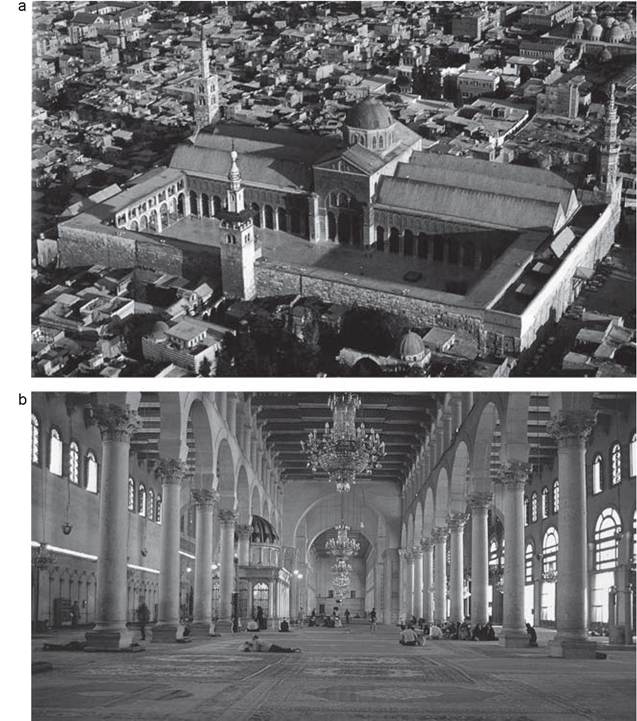
Figure 8.13 Great Mosque, Damascus. 706-715 ce. (Hermann)
skyline. The hall consists of a domed central block, its gabled courtyard face resembling the front of a Christian church, and low flanking wings with triple roofs. The interior view reproduced in Figure 8.13, in which we see nothing of the central block but two big arches, might at first glance suggest that we are in a basilica, that is, a hall divided by arcades into a central space and two aisles. If this were a Christian church, we would be looking from the high altar at the east end toward the main entrance in the west front. But the Muslim users of this space turn at right angles to the photographer's orientation. The wall on the left is the qibla wall, the one the congregation faces to pray; the windowed wall on the right affords entrance from the courtyard. The domed central block, reserved for the caliph, was probably modeled on the throne room of a Roman palace, but instead of a throne in the back wall it has a mihrab, a niche indicating the direction of Mecca (there are two more in the public part of the mosque). The building may thus have originated as a creative recombination of pre-Islamic church and palace types. But if certain of its features had secular sources, those that were retained by later mosques, such as the mihrab with a dome in front of it to signal its importance, quickly lost their secular associations.
The monolithic Corinthian columns of the prayer hall are spolia from older buildings. Other materials as well as craftsmen were imported from Egypt. Of the original decoration only a little survives. Openwork grilles carved from marble derive from the same Roman interlace that inspired Insular manuscript illuminators. Marble paneling of dadoes follows Byzantine precedent, and the wall mosaics, dominated by green and gold, have Byzantine sources too. The walls of the arcades around the courtyard are covered with mosaics of the utmost splendor. In subject they recall Roman wall paintings, with great trees, verdant landscapes, and fantasy architecture, but human and animal figures are absent, country and town unpopulated. Perhaps this is the landscape of paradise, awaiting the faithful.
[Fig. 8.14] Like the silver dish from Hildesheim, this bowl was probably intended for display in a prosperous home. Its aesthetic of elegance and restraint may owe something to religious objections to precious metals and figural motifs. Deeper than it appears in the illustration - the sides slope at about forty-five degrees - it is an Iranian response to white porcelains imported from China. Unable to reproduce the hard white body and high- fired glaze of Chinese wares, potters in Abbasid Iran put an opaque white slip on an earthenware body and decorated it with an inscription written by an expert calligrapher in a dark-brown slip. The letters have been shaped to consist almost entirely of horizontal strokes running around the circumference and descenders aimed at the center.
In Islamic art, writing occurs on all surfaces, from bowls to buildings, in a multiplicity of script variants, sometimes boldly legible, sometimes impenetrably patterned. Iranian bowls like this one are among its earliest occurrences as principal motif. Their inscriptions are proverbs and expressions of good wishes, in cryptic language, sometimes sacrificing orthography to composition. The Kufic script in which they are written - angular, clear, formal, and monumental - was the script of the first Quranic manuscripts.
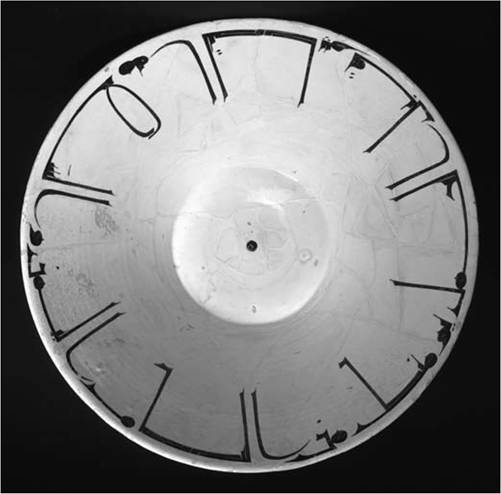
Figure 8.14 Slippedearthenwarebowl. InscribedinArabic "Planningbeforeworkprotects you from regret. Prosperity and peace.” Diameter 45.7 cm, height 17.8 cm. Ninth or tenth century C E. Nishapur, Iran. New York, Metropolitan Museum of Art 65.106.2 (© The Metropolitan Museum of Art)
Written with a simple reed pen, Islamic calligraphy has a line quality closer to that of Latin scripts like the Insular majuscule of the Book of Kells than to the always varying line width encouraged by the soft Chinese brush.
[Fig. 8.15] Dedicated to Amaterasu, the goddess from whom the Japanese imperial family descends, the Inner Shrine (see Fig. 8.15) is the most important of a large complex of Shinto shrines in a forested setting of great natural beauty at Ise. Shinto is the name given after the arrival of Buddhism to the religion that prevailed before its arrival, an animism that sees divinity in nature and builds a shrine at any natural site whose marvelous character might attract a god to dwell there. The Inner Shrine at Ise is a group of three wooden halls surrounded by four wooden palisades. Amaterasu, represented by a bronze mirror, resides in the main hall. Building a house for her fixed a location where the emperor could communicate with her, and the high priest or
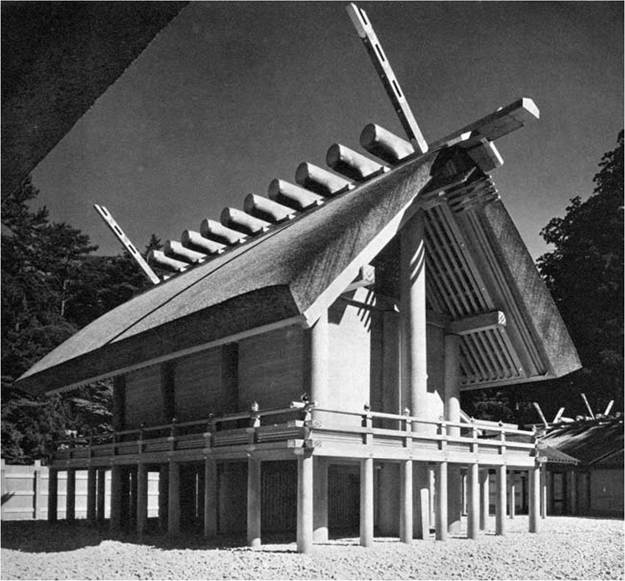
Figure 8.15 Main HaU of the Inner Shrine at Ise, Japan. Rebuilt at intervals since 685 ce.
First built perhaps two or three centuries before that (George Braziller, Inc.)
priestess in charge of the shrine has always been a member of the imperial family. Since the seventh century it has been the custom to rebuild the shrine every twenty years in a ritual act of renewal. The practice has been interrupted in troubled times, but the rebuilding that took place in 2013 was the sixty-second. The shrine preserves, with a faithfulness that can be assessed from depictions of similar structures on bronze mirrors, a building form that antedates the arrival of Buddhist architecture from the Continent.
The main hall is a thatched house encircled by a verandah and raised on piles. Access is by a stair that leads up to a door in one of the long sides. The building's appearance is dominated by an immense roof with sheltering eaves. The roof ridge is supported by a large pillar at either end. Forked finials are extensions of the bargeboards. Logs laid across the ridge are, like certain features of Greek temples, traditionally explained as transformations of some once functional component. Apart from a few metal fittings and the reeds used for thatch, all parts of the building are cypress. Horizontal beams and planks are squared, vertical posts are round. Surfaces are planed smooth and left unpainted. Workmanship is of the utmost refinement, most obviously in the trimming of the thatch.
Today the building is inevitably seen as one of the supreme manifestations of a potent strain in Japanese aesthetics, a hyper-refined rusticity combined with an extreme sensitivity to unprocessed (“natural”) materials. At the time when it was first built, however, more splendid buildings and less natural materials were unknown, and its original viewers are unlikely to have seen anything rustic about it. No change of form in the course of sixty-two rebuildings can have been so great as the change in the mental comparisons that determine the reactions of viewers.
[Fig. 8.16] This image was made in northeast India at Sarnath, then a great monastic center, in the fifth century. It probably stood in a place open to public worship, either outdoors against the base of a stupa or indoors against the rear wall of a small shrine. It is not inscribed, but other Sarnath images have dated inscriptions naming their donors, sometimes monks.
After achieving enlightenment, Shakyamuni, the former Prince Siddhartha, now the Buddha, announced his path of escape from the weary cycle of rebirth by preaching a sermon in the Deer Park at Sarnath. The base of this image depicts the sermon. Six kneeling auditors flank a wheel that symbolizes the doctrine, and below them two partly obliterated deer identify the place. However, the preaching Buddha who should be at the center of the scene is missing. The main character in the story has been lifted out, enlarged, and converted into a cult image, a focus for meditation and worship, and the narrative scene has become a footnote.
The image is a symbol composed of symbols. The Buddha's monastic robe, on which traces of red paint survive, signifies renunciation of the world, as do curls remaining from princely hair now cut short and earlobes distended by ornaments the prince no longer wears. The cranial bump signifies transcendental wisdom, the crossed legs are in the posture of meditation, and the hands form the mudra of Setting the Wheel of the Law in Motion, which alludes specifically to the Sermon in the Deer Park. The Buddha sits on a throne whose back panel is ornamented with fantastic animals. The disk behind his head, signifying the light that radiates from his body, bears a densely packed vine scroll and two celestial beings who strew flowers. A pearl-bordered blank circle at its center concentrates our attention on his face. It is not the face of a speaker engaged with an audience. The sculptor's
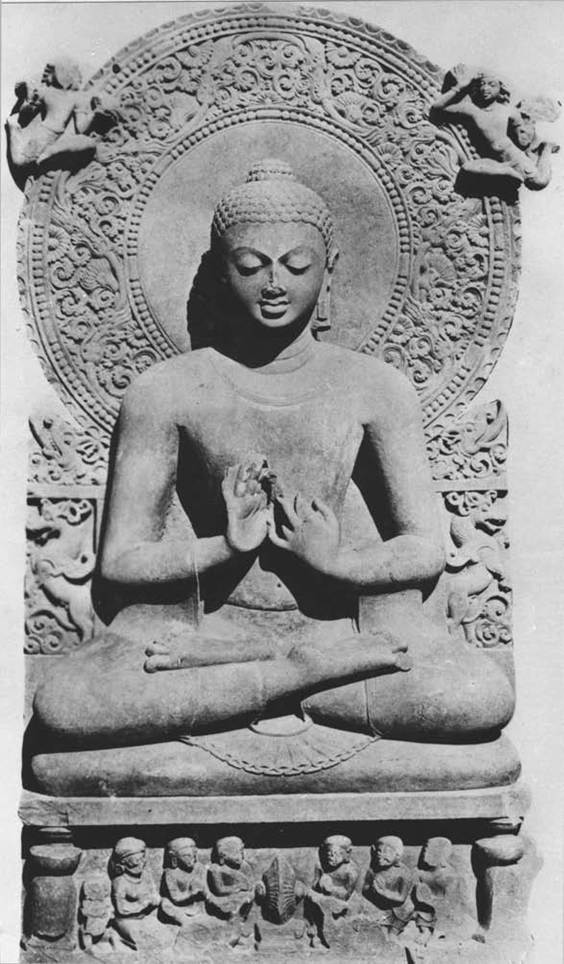
Figure 8.ι6 Teaching Buddha. Sandstone, originally painted. Height 158 cm. Gupta period, late fifth century ce. Sarnath, India. Archaeological Museum, Sarnath (Josephine Powell Photograph, courtesy of Special Collections, Fine Arts Library, Harvard University)
task was to render the sacred in human form, to render approachable and appealing a being who has passed into nirvana (extinction; bliss without consciousness of self). The means he found include the body's sensuous surfaces, set off by the ornate richness of throne and halo; its stable geometry, an equilateral triangle with the mudra at its center; and above all the perfection of the face (fuller and rounder than it appears in the illustration), the serene inwardness of its smile and downcast eyes.
In the first centuries ce,as Buddhist art was taking shape, it encountered classical art in Gandhara, the eastern limit of Alexander's conquests. Two features of this image, the plant ornament on the disk and the pleats of the monastic robe, have classical sources; on the Hildesheim dish (Fig. 8.9), Athena too wears a cloth garment and is framed by a pearl-edged ring of imaginary plants. But the Indian sculptor cared more for the plants, on which he lavished his invention, than for the cloth, which he could not allow to obscure the Buddha's perfect bodily form. A small semicircle of pleats spills onto the front of the throne, but drapery contributes nothing essential. It was the body that had to speak.
[Fig. 8.17] Buddhism arrived in Japan from China by way of Korea in the sixth century ce. Horyuji, the Temple of the Flourishing Law, was founded at the Japanese capital in 607, and this bronze trinity was cast for the altar of its image hall in 623. The caster, named Tori, was the grandson of a Chinese sculptor who had immigrated to Japan a century earlier, in 522, and his images are faithful to the Chinese style of his grandfather's time.
The central figure of the trinity, shown seated wearing a monastic robe, is Shakyamuni. Though he is presented here as an accessible deity whose gaze and gestures are addressed to the worshipper, early Buddhists would have said that after renouncing household life, achieving enlightenment, preaching his doctrine, and entering nirvana, the Buddha was no longer active in the world. The figures flanking him wear crowns and princely garments because, though comparable in spiritual attainment, they have vowed not to enter nirvana until all sentient beings have been saved. They are Bodhisattvas, the active, compassionate deities of Buddhism, the product of doctrinal developments that widened the religion's appeal beyond the arduous path of individual striving prescribed by the founder. The trinity of a Buddha and two Bodhisattvas, a configuration whose symmetry belongs not to narrative but to a transcendental realm, is both the archetype and the core of most larger groupings of Buddhist figures (Seckel).
Indian images were the hallowed prototypes for the Buddhist images of the Far East. Behind the head of Tori's Shakyamuni, the circle with its pearls
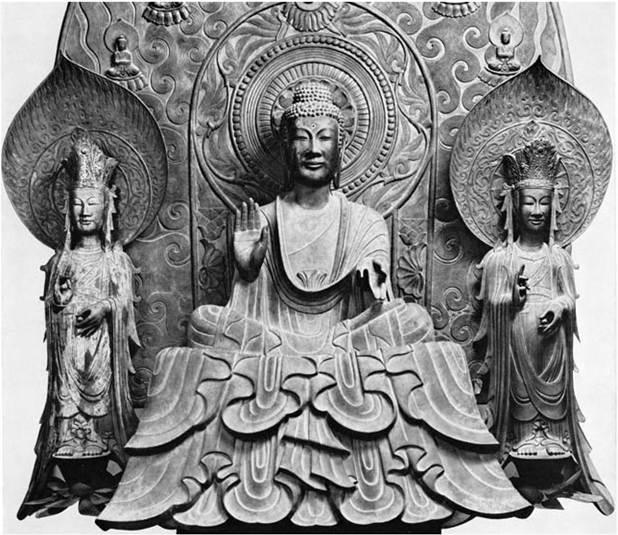
Figure 8.17 Bronze trinity, Shakyamuni and two Bodhisattvas. 623 ce. Height of seated figure 86 cm. Horyuji, Nara, Japan (Propylaen Verlag)
and vine scroll reminds us of the disk behind the Sarnath Buddha's head. (Outside the circle the flames on the nimbus signify the Buddha light; seven small Buddhas allude to the Lotus Sutra's promise of an endless succession of future Buddhas.) But Indian prototypes did not travel across Asia unaltered. Whether in sculpture or in painting, the human body has never been the focus of artistic thinking in China. In Tori's trinity the Sarnath sculptor's priorities have been reversed. Shakyamuni's monastic robe is not notably austere even where it enfolds the inanimate lump of his body; when it cascades over the dais it becomes the chief visual argument for the miraculous nature of this being. Unlike the drapery of a classical figure, the robe tells us nothing about the body beneath - beneath most of it there is no body - and it bears no resemblance to cloth, but as a three-dimensional pattern it is voluptuous and breathtaking.
The vine scroll behind Shakyamunfs head, called a half-palmette scroll, belongs to a family of imaginary plants that includes also the vine on the Hildesheim dish. On the dish, four distinct frondlike elements, all unknown to botanists, are joined by a stem formed of repeated arcs. Here a frond was cut in half and the halves were laid on alternate sides of a winding stem. Throughout Asia and Europe motifs like these have been copied and reworked for millennia. They originated in the second millennium bce, in Egyptian floral borders contrived mostly from buds and flowers of lotus and papyrus - in Figure 8.3 Sety offers two buds and two flowers to Sokar - and in vaguely plantlike Minoan designs that had no real-world referent. Assyrian versions were adopted in Greece, reworked there, then carried westward by Rome, eastward by the conquests of Alexander and the spread of Buddhism.
[Fig. 8.18a-c] Buddhism spread to Southeast Asia and Indonesia direct from India. Its greatest monument in Indonesia is Borobudur, a stupa built in the eighth century (see Fig. 8.18a). In India the stupa is a burial mound. Erected over relics of the Buddha, it became Buddhism's first building type, an object of pilgrimage and worship. It is also Buddhism's central symbol, signifying the Buddha, the nirvana, and the Absolute. The ritual of worship at a stupa,
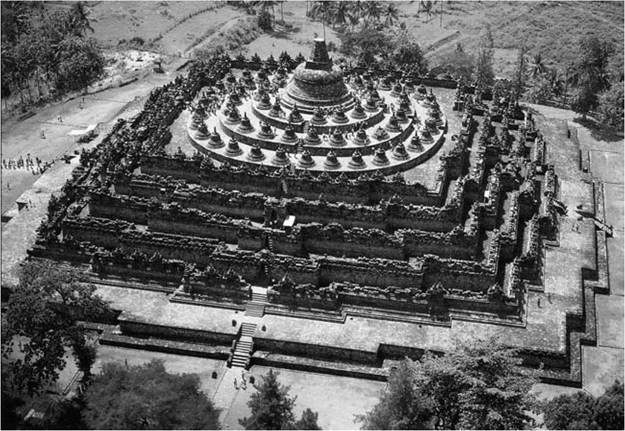
Figure 8.18a Borobudur. CentralJava. Volcanic stone (andesite) masonry encasing an earthen core. Late eighth century ce (Photograph © Luca Invernizzi Tettoni)
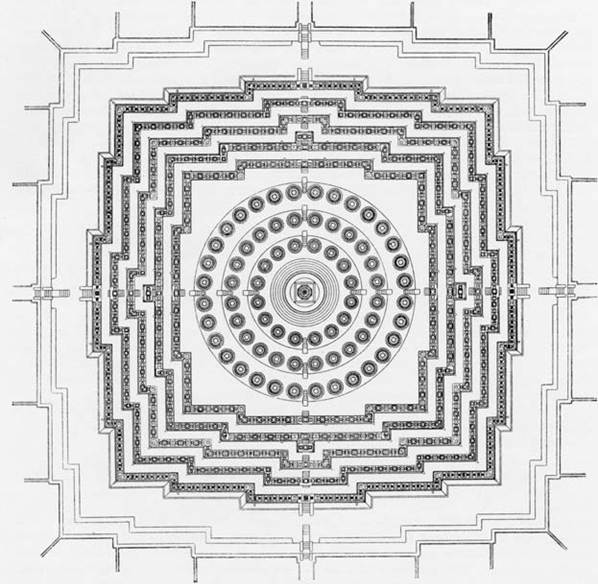
Figure 8.ι8b Plan of Borobudur. The outermost square is about 100 metres on a side.
regardless of its exact architectural form (in the Far East the pagoda), is Circumambulation.
At Borobudur circumambulation takes place on a series of stepped terraces (see Fig. 8.ι8b). The first four terraces are square (a fifth one concealed in the base was buried unfinished, probably for reasons of stability). The pilgrim who climbs the stairs to the first terrace finds himself enclosed in a gallery with a high balustrade on one side and a wall on the other, his view forward and backward limited by kinks in the plan, the walls to either side covered with narrative reliefs. The reliefs, several kilometers of them, are done in a Javanese offshoot of the Gupta style we have met in the Buddha from Sarnath. The pilgrim works his way around each terrace studying the reliefs, and then climbs to the next terrace. The terraces represent planes of existence and stages of consciousness - higher and higher stages on the way
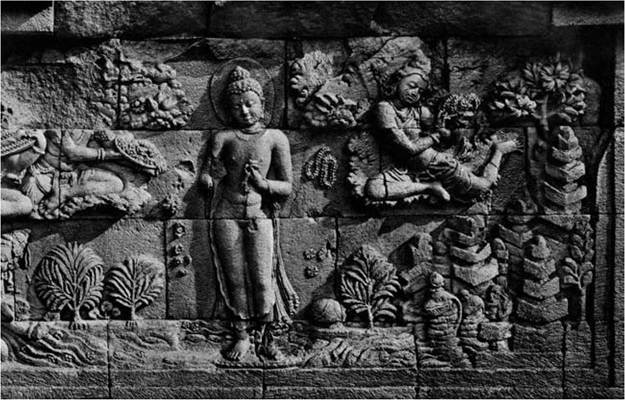
Figure 8.ι8c Borobudur. CentralJava. Panel depicting the Shakyamuni Buddha bathing in a river just before his enlightenment (Photograph by Luca Invernizzi Tettoni)
to enlightenment - and the reliefs vary in theme accordingly. The reliefs of the buried terrace depict the world of desires; desires lead to rebirth. The next terrace, the first the pilgrim sees today, recounts the life of Shakyamuni, thereby teaching the path of escape from the cycle of rebirth. In the detail illustrated in Figure 8.ι8c, he bathes in the river just before his enlightenment, adored by celestial beings scattering flowers. The higher terraces illustrate the Gandavyuha sutra, which narrates the miracle-filled pilgrimage of the boy Sudhana, who seeks instruction from a series of teachers that culminates with the Buddha Maitreya. The reliefs vary in feeling from one level to the next. The world of desires is full of violence. The reliefs illustrating the life of Shakyamuni are serene. The reliefs higher up, when Sudhana reaches the jeweled paradise of Maitreya, are all stillness and bliss. The pilgrim who has studied them and completed the circuit of the square terraces ascends another staircase to the circular terraces. At this point he emerges from closed galleries into the open air, with sweeping views in all directions. He has risen from the world of forms to the world without form, from the world of samsara, the cycle of rebirth, to the realm of nirvana. Here on the circular terraces, seventy-two bell-shaped stupas have openings in their sides that give shadowy glimpses of Buddhas seated within. At the summit of the monument is a closed stupa.
Borobudur's stepped square lower part and round upper part connect it with a stupa type that originated in the early Buddhist art of Gandhara. From Hellenistic architectural decoration, Gandhara adopted the decorative system of statues in niches that we have seen in Trajan's nymphaeum, and this motif spread, in richly elaborated forms, throughout Indianized Asia. At Borobudur, niches set high on the inner walls of the galleries frame seated Buddhas, identified by their mudras, who face outward from the sides of the monument. The monument is oriented to the cardinal directions, and each side has ninety-two niches with ninety-two identical Buddhas: on the east Akshobhya, on the south Ratnasambhava, on the west Amitabha, on the north Amoghasiddhi. By the eighth century a magical form of Indian Buddhism heavily influenced by Hinduism had reached Java. Called Vajrayana or Esoteric Buddhism, it made much use of mandalas. A mandala is a diagram of the metaphysical structure of the cosmos centered on a sacred being; by meditating on it the believer seeks to re-incorporate himself into the mystic Absolute, that is, to achieve enlightenment. The two most important Vajrayana mandalas center on the Buddha Vairocana, who represents the Absolute, and on one of them he is surrounded by the Buddhas of the four directions, the same four as in the niches at Borobudur. Borobudur is thus a mandala as well as a stupa, and the pilgrim ascending from terrace to terrace is moving toward the center of the mandala.
This brief sketch does not exhaust the complexities of the monument. As Seckel says, sacred buildings always have some deeper meaning, and Borobudur has many, but interpretation is made difficult by the absence of inscriptions and the lack of any Buddhist text from Java of this period. But the reliefs on the terraces are an astonishing flowering of classical Javanese art: packed narrative scenes full of expression and activity, marvelously evoked plant and animal life, the musicality of dancers captured in motion, all hypnotically beautiful. A modern observer who knows the Tahitian paintings of Paul Gauguin will recognize some of the figure compositions in the Borobudur reliefs, for Gauguin owned a set of photographs of them.
[Fig. 8.19] Temple 23 at Yaxchilan was dedicated in 726 to the main consort of the city's ruler, Shield(?) Jaguar II (r. 681-742). A tomb beneath it may be hers (as she died in 749, the interment would have taken place well after the building of the temple). The lintel shown here is the central one of three placed over doors that looked onto the main plaza of the city. When it was in position, the side illustrated was parallel to the floor; the edge of the slab that faced toward the plaza displayed an
ROBERT BAGLEY
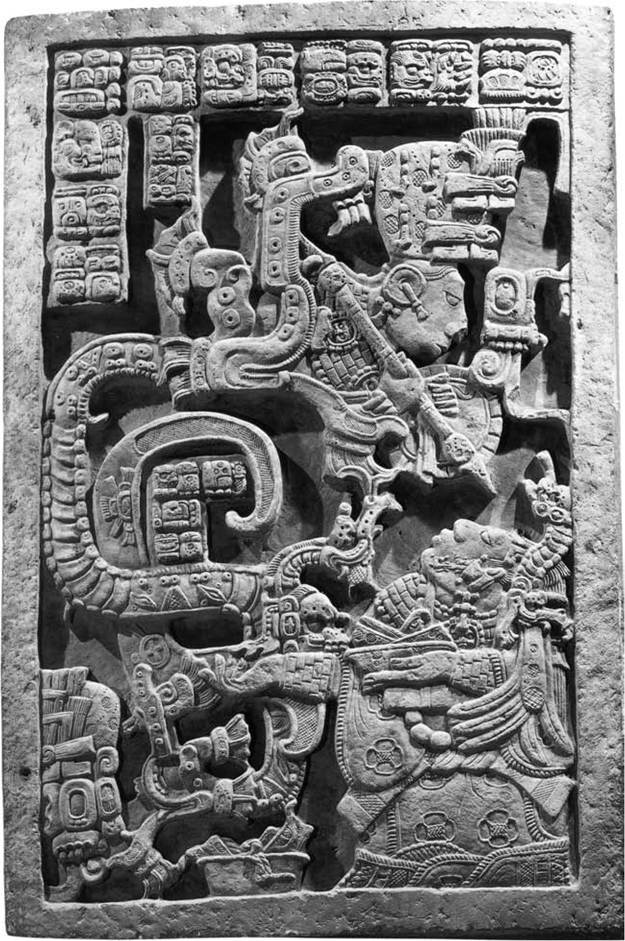
Figure 8.19 Lintel 25 from Yaxchilan Temple 23, the House of Queen Ixk'abal Xook. Limestone, 118 x74 cm. Linteldedicated 723 ce. London, BritishMuseum (© The Trustees of the British Museum. All rights reserved)
inscription not visible here. Further inscriptions within the scene help us to understand what it depicts, but its meaning is complex and much remains obscure.1
The bejeweled and richly dressed queen is supplying the food that war gods eat. She kneels holding a bowl that contains bloodletters (an obsidian blade, a stingray spine) and blood-spotted paper that will be burned in sacrifice. A bowl on the ground in front of her holds another blade and more bloody paper together with a thorn-studded cord that she has drawn through her tongue. What may be a curl of smoke begins with a crosshatched hook under her right wrist and winds upward to end in a larger hook that embraces four glyphs. The queen gazes toward a youthful warrior armed with shield and spear who emerges from the jaws of a monstrous two-headed snake. The warrior has butterfly features (warrior souls were thought to reside in butterflies, which fluttered down to drink blood on the battlefield) and the attributes of the Mexican storm god Tlaloc. Part of Tlaloc's image is affixed to his headdress, part floats in front of his face, and the whole image is repeated issuing from the jaws at the other end of the snake.
The inscription on the lintel's edge refers to its dedication in 723, but the inscription that runs across the top of the scene and down its left side dates the action depicted to the day of Shield Jaguar's accession in 681. It says that the king is summoning a dynastic god, presumably the warrior emerging from the snake's jaws, who is probably to be identified with the king himself. But the summoning king is described as over sixty, not his age at his accession but his age when the lintel was made, so his old self is calling his young self to the throne. The lintel shows the queen because she was instrumental to the summons. A second inscription that begins with two small glyphs pendant from the king's text and continues further down with the four glyphs encircled by the smoke curl explains what the queen is doing. Impersonating a goddess, she offers incense at a place the inscription names, presumably in Yaxchilan. Thus, it would seem that her assistance at her husband's accession - some ritual she performed, theatrically perhaps, before an audience in one of the plazas of the city - is being celebrated, forty-two years after the event, in a building dedicated to her. The scenes on the other two lintels, both of which show queen and king together, are related in theme though they depict events dated to other years, 709 and 724. All three lintels [291] are signed by their carvers, whose names reveal that they were not from Yaxchilan.
The inscriptions that refer to the king and queen are easily recognized as writing even by viewers who do not read Maya hieroglyphic, but they are not the only writing in the scene. Much of its surface enrichment consists of glyphs or distinctive glyph parts. The stingray spine and obsidian blades, for example, are the glyphs that write those words; the cross-hatching on the curl of smoke is taken from the glyph “black,” as are the bloody spots on the paper and the spots on the warrior's headdress that identify it as jaguar pelt. These are not just visual enrichments but enrichments of meaning, and they pervade Maya art. Because Maya word signs are ultimately pictorial in origin, and because their identity resides less in fixed contours than in diagnostic markings, they can combine with representational elements in endlessly varied ways. A glyph, or just a distinctive part of it, may stand in for the object it names; a container may be labeled with its contents; the throne a ruler sits on may be his name, or his name may form part of his headdress - a part that stands out only for the literate viewer. This interpenetration of art and writing, seen not only in stone carving but also in supremely accomplished painted ceramics, assures us that the artists and their patrons were not merely literate but highly sophisticated literates. The Maya writing system itself, at least in the manifestations of it that survive, was the province of great artists.
Setting and audience
For the works introduced in the foregoing pages, our information about original settings and intended audiences varies enormously. The Arch of Constantine has not moved since it was built, and though the city around it has changed, the setting in which the Roman public saw it and the processional route it straddles can be reconstructed. The interior decoration of some Pompeiian villas is still in place (much of the best has been cut out and removed to museums), and we know what sort of people it was made for and seen by. They were, among other things, people who collected objects like the Hildesheim dish. We know far less about the lintel from Yaxchilan. Archaeologists can reconstruct the building it belonged to, indeed the entire complex of buildings around the plaza it overlooked, but what went on in or in front of the buildings and who had access to them are questions to which only very general answers can be given. The making of the Book of Kells was no doubt an act of devotion, and once made it became an object of devotion itself, but where it was kept and how it was used are undocumented. Tori's bronze trinity still sits on the altar of an image hall, beneath a jeweled canopy from which music-making angels descend (its setting and even part of Shakyamuni's nimbus have been cropped out of our illustration). But the teaching Buddha from Sarnath comes to us detached from its original context. Its worshippers probably saw it against a surround of architecture and other images, things with the power both to enrich meanings and to shape response. As for the bowl from Nishapur, experts on Abbasid Iran can only guess what stratum of society could afford it and would enjoy its calligraphy and its proverb.
Setting and audience matter because they are clues to the purposes that shaped a work, clues to the effect it was meant to have. We need those clues because apart from the object itself we have so little else. For many of the works illustrated here, the patron is unknown to us. For none of them do we have any written record of the patron's wishes; we can only assume that what he wanted is what he got. But did Constantine ask the makers of his arch for regimented friezes that would clash with the classical roundels above them, or was he oblivious to the difference of style? Either way, how do we account for the new style? Our goal is to understand any work as the response of its designers and executants to the situation in which they find themselves, “situation” being understood to include their patron's demands and resources, the materials and technology available to them, and their training and experience of existing works. Our knowledge of these factors is never complete, but no historian ever works from complete knowledge. We do our best with what we have, and we must begin from a clear awareness that most of the works we study were not made to serve as furnishings of an art museum.
Functions of art
Writers of a philosophical bent have sometimes defined art as “useless things,” but the effort to distinguish “aesthetic” from “utilitarian” leads only to confusion. Of what possible use is a definition that excludes architecture from the realm of the aesthetic? To suppose that a work of art had no function is to forget the purposes of the patron or even to forget that there was a patron. It is also often a way of reassuring ourselves that nothing was lost when an object or fragment was transplanted from its original context of use into a museum. This, of course, amounts to assuming that it was made for display in the setting in which we see it, an assumption that in the case of almost everything in the Metropolitan Museum would be incorrect. As the works introduced above show, objects designed for visual effect have performed a host of functions. There can be few human purposes that art has not at one time or another been called upon to serve.
The tasks that Buddhism set its artists have been listed by Seckel: building religious edifices for ritual purposes and for monastic life; creating valid images to convey the idea of the Buddha, Bodhisattvas, monks, and other sacred personages; representing “sacred history,” the treasury of stories and legends, with their abundance of narrative motifs; setting up a vocabulary of symbols to convey the main religious ideas; and, last but not least, devising convincing visual images of the world's metaphysical structure, and especially the structure of the spheres lying beyond the limits of the empirical terrestrial world.
The works of Buddhist art presented above illustrate most of the functions on Seckel's list, and readers will probably have no difficulty supplying Christian counterparts for all of them. They represent art in the service of a missionary religion that addresses its doctrines to all strata of society.
Art in the service of rulers serves their interests, and their first interest is power. Statues of the king in public places make him a permanent presence. Constantine's arch, even if the initiative for it came from the Senate, was meant to enhance his power, to which the Senate looked for stability in troubled times. The Yaxchilan lintel, however dimly we understand it, is about securing power, and the Assyrian king's lion hunt is a dramatic display of power. Because ideologies of power derive it from the gods, royal religion and political legitimation are inseparable. The king's religion, Sety's or Shield Jaguar's, centers on his transactions with the gods or, in the case of the Anyang king, with his ancestors. When rulers in Cambodia or China are identified as incarnations of the Buddha, or when European kings rule by divine right, this shows missionary religions and secular powers coming to terms with each other. Mosaics in the church of San Vitale in Ravenna show Justinian, his empress, and their attendants approaching the high altar (548 ce); reliefs in the Binyang temple in north China show the Northern Wei emperor, empress, and their court bringing offerings to the Buddha (523 ce). Neither ensemble seems different in underlying purpose from Sety's reliefs or even, perhaps, from the relief on the Yaxchilan lintel. Another recurrent theme in royal art is the king triumphing over a defeated enemy: the pharaoh smiting enemies of Egypt, Darius king of kings receiving captives on a cliff at Bisutun, the Sassanian king Shapur triumphing over a Roman emperor on another cliff, Maya kings humiliating prisoners. Victors are larger, more richly dressed, on horseback or otherwise towering over the vanquished. The iconography of dominance in such scenes is a cross-cultural universal.
The needs of the elite are similar to the king's, if less extravagantly supplied. Their competition for status, like his, employs display, and display mobilizes luxury possessions of every imaginable kind, from palaces to Pompeiian villas, from the robes of Shield Jaguar's queen to jades like the Nan Yue king's. Yet we must not make the mistake of supposing that social competition is the sole reason for the existence of these things. Rich clothing and jewels are not worn solely to inspire envy in others. Luxuries give pleasure. Pompeiian villas answered the requirements of a particular form of social life, but they were also pleasant to live in, and they would have been less pleasant if their walls had been bare. To an extent we find hard to conceive, the rich and powerful of the past lived lives in which everything - books, houses, entertainments, clothing - was designed by artists. The most ordinary practical possessions of a king were beautiful because... why should he be obliged to look at anything that was not? Art historians have tended to be less interested in ornaments and luxuries than in art with a message; art with anything resembling verbal content invites exegesis, which is what academics do. But throughout history patrons have spent fortunes to make things ravishing.
A further realm of art intensely important to the elite is death and the afterlife. Whatever the prevailing conception of the afterlife, if it was life of any kind, it required art. An Egyptian tomb required a statue of the deceased to accept food offerings. Its walls depicted things he possessed in this life and counted on in the next, his wealth and his pleasures. Funerary art also serves purposes for the living. It can comfort the bereaved; it can bolster claims to inheritance. The ancestor portraits cherished by Roman patricians were the focus of family pride, tokens of achievement and ideals. The bronze vessels that accumulated on the altars of Chinese ancestral temples had the same function, as the inscriptions of early first-millennium bce examples attest.
Human purposes rarely being simple, most works of art have more than one function. Religious art both teaches and persuades. A tomb may be built both to secure the afterlife of one king and to assert the legitimacy of his successor. Gardens can be places of relaxation and metaphors for paradise. The Parthenon was the home of a goddess, the site of offerings to her and of festivals in her honor, but it was also an assertion of civic pride and power addressed to the whole Greek world. All these functions require design, or are better served by good design.
The collecting of art, which removes works from their original settings and deprives them of their original functions, is not a new phenomenon. The Romans were collectors on a vast scale; it was their appetite for Greek art that stripped Greek sanctuaries and created the classical tradition. For them, as for many before and after, art was one of the fruits of conquest (think of Napoleon, who sought to make Paris a new Rome). Chinese aristocrats collected ancient jades at least as early as 1200 bce, and in Mesopotamia and Egypt the collecting of antiquities is known even earlier. Whether done by an emperor or an art museum, collecting changes the function of an object. A statue that in Greece was worshipped becomes an ornament for a Roman villa or a museum exhibit. The museum is at once the greatest advocate for art and the greatest obstacle to understanding it.
Materials
Elite patrons monopolize the finest materials and artists, and their artists use and often invent the highest technology of their time. The most daring premodern engineering is found in architectural marvels such as the Pantheon in Rome and Hagia Sophia in Constantinople. The most sophisticated premodern metallurgy is found in decorative techniques: granulation, depletion gilding, pattern-block casting, pattern welding, chemical surface treatments, and many more. Fine craftsmanship, rare or exotic materials, building stone transported over long distances, hard materials difficult to work, all these speak of wealth and power. Durable materials seek to conquer time. The hunger of civilized centers for the raw materials they prized has often had transformative effects on simpler societies thousands of kilometers away. The demand for turquoise in Central Mexico had such effects in the American Southwest. Afghanistan was the ancient world's sole supplier of the lapis lazuli seen in the beard of Tutankhamun's gold mask and, ground into ultramarine, in the blue pigment on the Kells Chi-rho page. The procurement of metals for use in art was a major enterprise in many ancient societies, and it is not just precious metals that were sought. Pliny reports that in the first century ce the island of Rhodes still had 3,000 bronze statues and that Athens, Olympia, and Delphi had similar numbers. In China one tomb of the fifth century bce contained ten metric tons of bronze.
Cultural preferences for specific materials were established very early, often in prehistoric times. Some persist to this day. Even materials that are prized in many cultures - gold, silver, turquoise - are prized in different degree. Favorites in Egypt, from a very early time, were ivory, gold, linen, and polished stone; in China, silk, jade, bronze, lacquer, and high-fired ceramics; in pre-Columbian Mesoamerica, turquoise, jade, obsidian, and feathers; in the Andes, gold, silver, and wool. Whatever contributed to the establishment of these preferences, it was not merely local availability. China and Egypt both have fine stone, but in China stone was not used even for buildings until a comparatively late period, while in Mesopotamia, which lacked it, it was used for statuary even though it had to be imported.
A design is likely to be in some sense natural to the material in which it was invented. The carver in soft stone has no difficulty making a shape that is extravagantly three-dimensional. The smith whose patron tells him to copy the shape in hammered gold faces considerable difficulty. The bronze caster told to make it will have trouble forming and venting the mold. In such cases the metalworker's response to the patron's demand can involve modification of the design or technical innovation or both. The lost-wax process may well have been invented in response to such a demand.
Nevertheless the transfer of designs from one material to another happens often. An appealing design may be transferred from the material in which it was invented to any or all of the other materials currently in use. When one material is replaced by another in a particular function (in buildings, wood by stone; in containers, pottery by metal), trifling details native to the old material may be copied in the new one, perhaps simply because they have become so familiar that their absence would surprise. Basketweave patterns of no great intrinsic interest have sometimes been copied in media such as Roman mosaic because a pattern simple to create in three dimensions becomes a tricky challenge in two.
Certain art forms, perhaps because of the resources invested in them and the talent they consequently attract, are particularly fertile sources of designs. Architecture, which urgently needs ornament to break up blank surfaces and articulate boring volumes, has supplied it to other arts in abundance. The Romans turned Greek post-and-lintel structure into surface ornament, married it to a different structure (an engineering based on arches and concrete), and propagated the result throughout their empire. The cornices and moldings and vegetal motifs of their architecture are all around us, in objects large and small, because the needs they satisfy in buildings - to articulate, embellish, and relieve monotony - are not limited to buildings. Nor are they confined to Europe and the Mediterranean. The plant ornament of classical buildings, which originated in Egypt and Crete, spread across Asia as far as Java and Japan. It was this part of Greek art, not the statues of gods and athletes, that the rest of the world has found irresistible.
Ornament
This is a vexed category. No writer has been able to give a definition that meaningfully connects all the things to which the words “ornament” and “decoration” are commonly applied. But three important design families to which they are uncontroversially applied deserve comment. The most important, ornament constructed from plants, has been introduced in connection with the Hildesheim dish, the Sarnath Buddha, and the Horyuji bronze trinity (and plant ornament frames the reliefs at Borobudur). The plants, usually imaginary, are sometimes two-dimensional (as in Greek vase painting), sometimes three-dimensional (especially in architecture), sometimes both: Roman mosaicists, fascinated with the illusory third dimension, depicted monstrous three-dimensional versions inhabited by birds and animals. Vegetal ornament ultimately of Egyptian and Minoan origin ranges from Greek palmettes and Corinthian columns to all the arabesques of Islamic ornament, including the border patterns of Persian rugs. Its history and geographical spread are probably unrivaled by any other theme in the history of art. Before 1492 there seems to have been nothing quite like it in the New World, though flowers were important motifs in Mesoamerican art. Its usual functions are articulating (imposing structure), enriching (thus declaring the importance of the object enriched), and framing (declaring the self-sufficiency of what is framed).
Ornament based on animals, real or imaginary, has had a more limited role in art because it is ill-suited to be a frame for something else. Animals are centers of attention. In Figure 8.4, inspection of other parts of the object always ends by returning to the eyes. Ornament constructed from imaginary animals dominated art in China until about the time of the Nan Yue king's dragon-and-bird jade, the second century bce, when the rise of figural art marginalized it. In Europe the greatest animal ornament is that of Insular manuscripts.
Ornament that evokes neither plants nor animals we might call geometrical. Simple examples are fret patterns. Among the most complex are the geometrical patterns of Islamic ornament and the roundels on the Kells Chi-rho page, intricate compasswork constructions inherited from Celtic art. Under this heading we might also include interlace, which all over the world originates in the imitation of baskets and textiles. Roman mosaics that depict a lattice of interwoven ribbons intrigue because of the designer's skill in arranging light and dark so as to create the illusion of ribbons passing over and under each other in three dimensions. The makers of Insular gospel books mastered this device - apparent lights and shadows that the perceptual system interprets as evidence of a third dimension - and then made interlace enthralling by giving the ribbons heads and limbs. Because the viewer who has detected a bit of an animal cannot resist searching for the rest, converting ribbons to animals enabled the scribes to complicate their interlace fantastically, adding colors that sometimes help disentangle but sometimes mislead. The summit of this art is the carpet pages of the Lindisfarne Gospels of about 700 ce.
Writing
Though not an art of high prestige in our culture, in all the ancient literate civilizations writing had major artistic roles, sometimes from the moment of its invention. It figures in more than a third of the works illustrated here. In Egypt and the Maya cities, beautiful writing might stand alone, but it was also part of the fabric of pictorial art. On the Arch of Constantine, the Pantheon, and the Column of Trajan, handsome inscriptions dedicate and dignify public monuments. In the Book of Kells writing becomes a thing of awe and magic. In the Islamic world it derives special status from association with the Qur'an. In China it has long been the most admired of the visual arts; by the fifth century c e China had a full-fledged art market in calligraphy, with all the usual concomitants, including forgers and critics. Almost any function performed by everyday writing can be performed in a more exalted or dignified or pleasing way by fine writing. It can beautify a sacred text; it can also, as on the Nishapur bowl, make a sentiment worthy of a fortune cookie into an object of delight. It can be done for an audience of one in a Book of Hours, for the public at large in a royal proclamation carved into a cliff, for the gods alone in a location sealed from human view. Display inscriptions serve endlessly varied functions, and no literate culture is without them.
Beautiful writing had several origins and takes several forms. In Mesopotamia writing originated in bookkeeping, and it did not acquire artistic functions until its use had spread to such elite concerns as the labeling of figural scenes on royal monuments. The qualities it then cultivated had arisen earlier from the pride and professionalism of the scribe, whose advancement must always have depended on his hand, but once the elite had seen the possibilities of fine writing for display, the scribal artist became a specialist. In China the inscriptions on ritual bronzes were the work of specialists whose everyday writing was done with brush and ink but who used a stylus to produce the soft clay originals needed by the bronze caster, cultivating fine writing in a medium used for no other purpose and in the process creating a distinctive script style native to it.
Most signs of the Chinese and Mesopotamian writing systems began as pictographs but within a few centuries had, like the letters of our alphabet, lost all trace of iconicity. In Egypt and Mesoamerica, by contrast, writing never lost its iconicity. In both places artistic systems that combine writing and pictorial art seem to have come into being along with writing itself. The scripts ancestral to Maya writing may have originated in vocabularies of religious iconography. Egyptian writing may have arisen in a context of royal display. In both civilizations, allowing writing to lose its pictorial content would have disrupted arts that served indispensable functions. The creation of the Egyptian system may actually have been part of the rise of kingship; the cognitively complex, ideology-laden hybrid of writing and pictures we see on the walls of Sety’s temple was the invention of early third-millennium courtiers with artistic gifts and a political agenda. Scty's relief and the one from Yaxchilan do not begin to exhaust the possibilities of the two systems, which are far too complex for description here. But it should be emphasized that, wherever writing is central to the art of the elite, that elite was literate. Maya temples, Roman monuments, and Chinese bronzes were not supplied with inscriptions for the benefit of scribes.
The paths to beauty in writing are diverse. The lettering of Roman monuments was an art of design that sought one perfectly satisfying form for each letter. Shapes and proportions of main elements and serifs were exquisitely calculated, as was the shape of the cut chiselled into the stone, though adjustments of size and spacing were made during the writing of an inscription to prevent monotony and give life. Similarly, the hieroglyphs of Egyptian inscriptions, whether they accompanied pictures or not, were more designed than written. All trace of hand and process was suppressed.
In Chinese writing this has never been the goal. Chinese writers are taught that exact repetition is deadening and that a character which appears more than once in a piece of writing should look different at each appearance. This aesthetic governs even monumental inscriptions, which reproduce every nuance of a handwritten original. Knowledgeable viewers mentally reenact the process of writing, stroke by stroke. Emphasis on hand and process may reflect the value that elite practitioners attached to handwriting as an expression of a gentleman’s character. Though beautiful writing had existed already in the Bronze Age, in the fourth century ce men of status made it into a class recreation, and soon thereafter imperial patronage made it a precondition of high rank. The art of writing became calligraphy, a sort of cult, distinguished not by anything in the writing itself but by a set of social practices surrounding writing. The word has similar connotations in the Islamic world.
The decorations in the Book of Kells represent a third and more unusual path to the beautification of writing. The Insular majuscule of the main text, like all the forms of writing discussed so far, sought beauty in the forms of the letters. But the big letters on the Chi-rho page were made beautiful by the addition of dazzlingly colored ornaments unrelated to writing; smaller bursts of ornament were attached to the small ink letters on other pages. The impulse to decorate writing with ornaments that relate neither to the letters nor to the content of the text treats letters as precious objects.
Representation, human activity, and the human figure
Representation, art that depicts something, is no easier to define than ornament. The plants on the Hildesheim dish and the animals on the Chinese bronze are imaginary. The palmettes on the dish were not drawn by artists looking at real palmettes, for there is no such plant. To call them depictions seems wrong; it would misstate the way they were invented. But how should we draw a line between them and art that does depict? Is the image of Sokar in Sety's temple a depiction? Shakyamuni on the altar at Horyuji? Similar questions could be asked about scenes of figures - human or divine, active or still - and about landscapes. The reliefs at Borobudur were not created by artists sketching the action as it happened. For Egyptian viewers the relief of Ramose's brother was an image of him, but it would not have helped them pick him out on the streets of ancient Thebes. Images with even less objective resemblance to anything human have been accepted as portraits by other cultures, including ours (see Picasso's Portrait of Kahnweiler). To make a marble head a head of Socrates, a Cubist painting a portrait of Kahnweiler, or an Assyrian relief the Sack of Lachish, we need a label. Perhaps we should put aside as unhelpful what might be called a photographic theory of representation, which supposes that the camera captures what the world “really” looks like and that art is representational if it approximates a photograph (to some unspecified degree). We should ask not about resemblance but about intentions, relying on labels, functional contexts, and cautious guesswork to decide how an artist meant his image to be understood by viewers. We should be alert to a range of possibilities. A relief showing an Assyrian king killing lions could be a celebration of a particular hunt or the eternal enactment of a royal ritual or both at once. What it was not striving to be is a snapshot, and its power to move the beholder does not depend on approximating a snapshot.
In artistic traditions that have made use of representation, the focus has usually been on humans, gods, animals, and their activity. Other themes have tended to emerge as by-products of these - landscape for instance as a background for figures. Whether in two dimensions or three, arrangements of figures might be sorted into two rough categories, one that involves action or storytelling and one that does not. Sety before Sokar, Assurbanipafs lion hunt, the infant Hercules strangling serpents, Shakyamuni bathing in the river, all these would fall into the first group. Art of this kind serves countless purposes. What distinguishes it from the second category is the asymmetry of real life. As we saw at Horyuji, sacred figures are often presented in arrangements whose symmetry, frontality, and hierarchical scale drain them of narrative content and distance them from our world. Apart from the mudras, the Horyuji trinity lacks all trace of narrative. The relative positions of the three figures tell us not where they stand, in this world or any other, but how they relate theologically. A king and his court can be depicted in the same way, for similar reasons. A Byzantine silver plate from 388 ce shows three frontal figures, a very large emperor Theodosius flanked by two small co-emperors. The configuration makes a slight compromise between presenting the emperor as a god and depicting an imperial act, for the emperor's right hand unobtrusively gives a silver plate to a tiny bowing figure, but his power to inspire awe does not suffer. The same symmetry governs the regimented friezes on Constantine's arch, each of which centers on a frontal image of the emperor gazing at the beholder (in the classical roundels above them the emperor is harder to find). In the Ravenna mosaics, locating Justinian and Theodora in a symmetrical scheme centered on the altar draws them into the suburbs of a divine realm. Symmetry is one of art's most powerful devices, partly because we are seldom aware of how it is affecting us.
Images of single figures, in two dimensions or three, show a similar range of effects. An asymmetrical figure, a discus-thrower for example, belongs to our world. A symmetrical statue in an Egyptian tomb is timeless. Images that make eye contact involve the beholder psychologically. The feeling that an image in some way partakes of the nature of the person or god depicted - the feeling that images can come alive - is of course part of their attraction. But for the same reason, images can inspire unease or fear, and they have sometimes, in some contexts, been proscribed (Judaism, Islam, Byzantine iconoclasm, the Protestant Reformation). Images of gods - a cult statue, or a mosaic Christ in the dome of a church - are places where gods can manifest themselves and where humans can communicate with them. Portraits can preserve a likeness, but as we have seen, this is not always their function. The subject may instead want a face that conforms to some ideal of beauty or gravity, or a face that looks like the ruler's; the ruler may want a face that looks like his or her god's; or the subject may only need a substitute to act for him or her in some capacity in which a generic face will do. In all cases, inscriptions or attributes or context will supply identification.
Art that reduces the three-dimensional world to two dimensions has special problems and possibilities. One problem, that of maintaining intelligibility, is brilliantly solved in the detail reproduced here of Assurbanipal's lion hunt. Another is the trade-off between two-dimensional design and the illusion of a world behind the picture surface. The Egyptian artist opted for surface design, which allowed pictures and writing to mix (Fig. 8.3); Roman painters opted for making the surface vanish from our awareness (Fig. 8.10). The picture frame, a leitmotif of Roman art, is a window frame, a signal to the viewer that “here a different space begins.” The illusory third dimension has great fascinations, and no one explored it more inventively than the Romans, not only in pictures but also in geometrical patterns. However, as modern cartoonists are well aware, illusion has a cost in legibility; storytelling is more immediate and engaging without it. This was well understood by the painters of Maya vases, whose ability to capture body language is perhaps rivalled only by depictions of the dance in Indian art. A century ago art historians had constructed only one history of pictorial art, the story of a progress that began in classical antiquity, suffered a setback in the Middle Ages, and resumed in the Renaissance. In this story the Greeks were credited with supplying essential techniques, such as foreshortening, that all other cultures had failed to discover. As art history broadened to include nonEuropean cultures, the techniques were found to be not uniquely western, while western painting itself began to look more idiosyncratic, less easy to characterize as a scientific quest for optical truth. Since no two-dimensional picture can convey all the information present in a three-dimensional scene, the painter must choose, and if choice is possible, multiple histories of painting are possible, none with a unique claim to optical truth. And, of course, some traditions have not sought optical truth. Cultures that have asked different things of pictorial art have created different pictures (for example, the evangelist portraits in the Book of Kells). The traditional formula “an increasingly accurate approximation to nature” is not an adequate account even of the history of western painting.
The geographical broadening of art history also led to the discovery that human subject matter, pictures, and even representation itself, though widespread, are not universals. Bernard Berenson said that the drawing of the female nude is the highest task of art; a fifth-century Athenian might have said the male nude. It is now more obvious than it once was that these are statements not about art but about the culture of the speaker. A few artistic traditions, notably those of ancient China and the Andean civilizations, have shown little interest in the human image, human activities, even in representation itself. The Inka made gold and silver cult images of gods and rulers, but otherwise their art consisted mainly of utensils and personal ornaments, patterned textiles and pottery, and megalithic buildings. Their most aweinspiring visual statements were stone walls whose baffling masonry wrote power on the landscape. As for China, in the first thousand years of Chinese civilization art was almost synonymous with ornament constructed from imaginary animals. The human image was rare and unimportant, there were no pictures, and there were no images of gods or rulers. Cult images arrived in China with Buddhism. The first statues of Chinese rulers set up in public places date from the twentieth century (statues of Chairman Mao seated in an armchair are copied from the Lincoln Memorial). This lack of interest in portraiture and tepid interest in representation are, like their opposites, cultural orientations that originated in prehistoric times for reasons we are unlikely ever to know. They have large consequences for the way we visualize the past. The name Tutankhamun immediately brings to mind a face; for ancient Chinese rulers we have only names. Egyptian tomb reliefs show us life in ancient Egypt; the art of ancient China tells us little about ancient China beyond what its art looked like.
Artists
The makers of art have varied widely in social status. The architects of Hagia Sophia ranked higher than the artists who made its mosaics; cameo makers at the Roman imperial court sometimes had greater fame than sculptors or painters; the signatures of Maya vase painters sometimes identify them as members of the royal family. But whatever his art or status, the artist is likely to have learned his trade by some sort of apprenticeship, and his training will have centered on the copying of existing works. The apprentice, who through long practice had acquired the ability to reproduce what the master of the workshop made, had mastered his craft. He had also internalized the tastes and standards of his patrons, the recent achievements of his art, and the existing repertory of designs. In these circumstances, competence was easy to judge, and the judgment of art was less problematic than it is today. In some times and places, competence has included mimetic skills, but the pursuit of mimesis has many facets, from the careful rendering of shadows in Greek and Roman painting to the lively narrative of Maya vase painting, and it has often been subordinated to other goals, such as the order and legibility demanded by Egyptian patrons or the supernatural awe inspired by Byzantine churches and Maya temples.
For both artist and patron, the starting point for a new work is existing works. All continuity in the history of art - continuity of style, technique, object types, designs, subject matter - follows from this. The patron asks for what he already knows; the artist starts from what he has previously made or seen. But many factors act to promote change. Some are social, such as the competition of patrons for prestige and of artists for patronage. The patron may ask not for what he knows but for some variation on it that will put old versions in the shade; the artist may invent something new to catch the attention of a patron. Invention is likely also to have intrinsic appeal for both artist and patron. The aesthetic response involves difference. This is not a social fact but a fact of perceptual psychology. Repetition and sameness dull response; change refreshes it. Conformity to existing styles may sometimes be enjoined by strong forces, and in any society some novelties will fail to catch on, but the conservatism of exotic traditions has often been overstated by observers only casually acquainted with them. Egyptian statues, Greek vases, Maya reliefs all look alike to observers who have not learned to tell them apart, but their original owners saw differences, and Egyptologists, Hellenists, and Mayanists learn to see them too. A good Egyptologist can date a statue by its style.
Art historians looking back over centuries of artistic production sometimes find patterns of long-term change that appear so logical as to seem predestined. Particularly when the period under study is too remote to have left any written record of the thinking of artists or patrons, historians have sometimes been tempted to replace human actors with disembodied agents such as the spirit of the time (Zeitgeist), the spirit of the people (Volksgeist), or some inner drive of the artistic forms themselves. These entities change, we are told, obeying mysterious laws of their own, and their changes cause the changes visible in the works. One effect of such explanations is to deprive patrons and artists of agency; the artist has no choice but to create what the Zeitgeist tells him to. To avoid this descent into metaphysics, we must keep our eyes firmly fixed on individuals, even if we do not know their names. Many things condition the patron's demands, and many more condition the artist's response, but all external factors, from passing fashion to political repression, act through individuals, with consequences that are never wholly predictable. The works of a given time and place have features in common - the features we point to when we speak of a period style or a national style - because of their common point of departure in what already exists. The concentration of artists at royal courts can act powerfully to create a unified style, not least by inspiring emulation beyond the court, and consistency of style across media is sometimes promoted by artists who work in more than one medium. But however logical and systematic change may seem in retrospect, at the time it is happening its direction is open. The actors in the history of art are the patron and the artist. The history of art is the history of their decisions.
Belief in a spirit of the time or race has been appealing for some art historians not only because it seemed to explain long-term patterns but also because it held out the prospect that art history might make a contribution to “real” history. If the style of the work - the style of the regimented figures on Constantine's arch for example - expresses the Zeitgeist, should not the skilled art historian be able to read the Zeitgeist out of the work? Should he not be able to furnish new, independent information to the “real” historian? The interpretation of works of art as symptoms of the society that produced them, keys to its essence or spirit or inner life, has been one of art history's major preoccupations, but not one of its major successes. A great deal more has been read into images than out of them. Something similar could be said about attempts to relate the visual arts of a given time to contemporary music, literature, and other cultural phenomena, all presumed to express a single Zeitgeist. Both Bach and Rembrandt are routinely called Baroque artists, but nowadays it is increasingly often confessed that this means only that they both lived in Europe a few hundred years ago. The spirit or inner life of a society or a time is a figment of the historical imagination, one that ascribes a real past existence to a retrospective generalization.
Our understanding of art and artists has been shaped in unfortunate ways by European developments of the last few centuries. Italian Renaissance efforts to win higher social status for the makers of certain kinds of art have made it customary to distinguish “artists” (workers in “the fine arts”) from “craftsmen” (“minor arts”). But the merit of a work is not measured by the social status of its maker, and we should be wary of allowing taboos on the use of the word “artist” to impose unconsidered value judgments. Sorting the world's art into Renaissance categories - architecture, sculpture, painting, and minor arts - distorts our understanding even of Renaissance art, not least by removing “sculptures” and “paintings” from larger ensembles. Equally unfortunate consequences have flowed from the social-climbing artist's anxiety to downplay the role of manual labor in his profession. The pretense that the making of a work falls into two separate stages, a creative stage that produces the work complete in the artist's head (“conception”) and a mechanical one unworthy of notice (“execution”) makes the artist into a white-collar worker whose ideas never change or grow in the course of making, one who never gets ideas from the interaction of his hands with his materials. This separation of invention from execution is untrue to the experience of most artists. Even in the realm of the architect and the industrial designer, initial conceptions never completely determine the final appearance of the work.
Further distortions have been imposed by the Romantic cult of artistic genius, which insists that the work of art is the creation of a solitary inspired hand. Most works are collaborative - buildings, films, bronze statuary, Egyptian reliefs - and to insist that only one member of the team is creative while the rest are “mere executants” is to turn a blind eye to realities, including the reality that many artists do their best work under the stimulus of collaboration. Other legacies of Romanticism are the cult of the unique work of art (which cannot logically be reconciled with the value we set on old master prints) and the demand for originality before all else. These prejudices are so deep and widespread as to have exerted a large and harmful influence on the study of art. Perhaps the worst misconception is that the artist today is in some essential way different from his predecessors. If artists in our day, to quote one observer, “transcend established aesthetic traditions by dramatic acts of personal creativity,” this is only because that is what the art market demands of them.
Conclusion
What survives of ancient art today is mostly what was made in durable materials, and most of it is in some way altered or in ruins. Even monuments that are substantially intact have lost their marble cladding or their original coloring. Much that was polychrome lives in our imaginations bleached. Further damage is done when objects or fragments are transferred from their original settings to the art museum. A statue of a prophet in the gallery of a museum does not make the effect it did when it was part of a group clustered at the portal of a cathedral. And much of our experience of art is an experience not even of objects but of book illustrations, which reduce great buildings and small ornaments to the same size, flatten them, and, more often than not, render them in shades of gray. Buildings enclose us and take control of our experience in a way that photographs of buildings do not. Reduced to illustrations, the objects discussed in this chapter have lost much of the visual power that was their raison d’etre. To understand why art mattered to the patrons who commissioned it, we must try to recover, in imagination at least, what ancient viewers actually saw. This demands both knowledge and sympathy, and it is not easy.
Works of art can supply the historian with information of many kinds. Our knowledge of premodern technology, for example, rests not on texts but on technical study of the most sophisticated artifacts. The vast geographical distribution of the animal-combat motif tells us about cultural contact and exchange across Asia. Egyptian tomb reliefs tell us things no text could about life in ancient Egypt. (The historian seeking information from pictorial art must exercise caution, however; if we overlook the purpose for which a picture was made, we are likely to misinterpret what it shows.) But these contributions are not the only reasons for including a chapter on art in a history of the world. Art belongs in a world history less because it is a source of information about other things than because it is itself a part of history. Not a very important part, we might suppose, if we judged by the role of “the fine arts” in our own society, but that would be a bad way to judge. In most times and places art has mattered enormously, for a host of reasons, and a good historian will take it as seriously as its patrons and practitioners did.
Further Reading
Bagley, Robert, Gombrich among the Egyptians and other Essays in the History of Art, Seattle, WA: Marquand Books, 2015.
“Meaning and Explanation,” Archives of Asian Art 46 (1993): 6-26.
Baines, John, “What Is Art?” in Melinda K. Hartwig (ed.), A Companion to Ancient Egyptian Art, Chichester and Malden, ma: Wiley-Blackwell, 2015, pp. 1-2.
Belozerskaya, Marina, Rethinking the Renaissance: Burgundian Arts across Europe, Cambridge University Press, 2002.
Boas, George, “Historical Periods,” Journal of Aesthetics and Art Criticism ιι (1953): 248-54. Brilliant, Richard, Roman Artfrom the Republic to Constantine, London: Phaidon, 1974.
Bunzel, Ruth, The Pueblo Potter, New York: Columbia University Press, 1929. Repr. New York: Dover Publications, 1972.
Cooper, Jerrold, “Writing,” in Eric Barnouw (ed.), The International Encyclopedia of Communications, New York: Oxford University Press, 1989, vol. iv, pp. 321-31.
Cormack, Robin, Byzantine Art, Oxford University Press, 2000.
Davies, W. V., Egyptian Hieroglyphs, London: British Museum, 1987.
De Hamel, Christopher, Scribes and Illuminators, London: British Museum Press, 1992. Dehejia, Vidya, Indian Art, London: Phaidon, 1997.
Gombrich, Ernst, “In Search of Cultural History,” in Gombrich, Ideals and Idols, Oxford: Phaidon, 1979, pp. 24-59.
Haskell, Francis, and Nicholas Penny, Taste and the Antique, New Haven and London: Yale University Press, 1981.
Hillenbrand, Robert, Islamic Art and Architecture, London: Thames and Hudson, 1999.
Honour, Hugh, and John Fleming, The Visual Arts: A History, 7th edn., Englewood Cliffs, NJ: Prentice Hall, 2009.
Jettmar, Karl, Art of the Steppes, New York: Crown Publishers, 1967.
Kesner, Ladislav, “On Alien Art and Experiencing Art Fully,” Umicni 42 (1994): 107-15. Kitzinger, Ernst, Early Medieval Art, London: British Museum, 1940, 2nd edn., 1955, rev. edn. 1983.
Ling, Roger (ed.), The Making of Classical Art: Process and Practice, Stroud: Tempus, 2000.
Miksic, John, and Marcello Tranchini, Borobudur: Golden Tales of the Buddhas, Boston: Shambhala, 1990.
Miller, Mary, and Simon Martin, Courtly Art of the Ancient Maya, New York: Thames and Hudson, 2004.
Morphy, Howard, and Morgan Perkins, “The Anthropology of Art: A Reflection on Its History and Contemporary Practice,” in Morphy and Perkins (eds.), The Anthropology of Art: A Reader, Oxford: Blackwell, 2006, pp. 1-32.
Nash, Susie, Northern Renaissance Art, Oxford University Press, 2008.
Nishi, Kazuo, and Kazuo Hozumi, What Is Japanese Architecture? Tokyo: Kodansha International, 1983.
Nordenfalk, Carl, Celtic and Anglo-Saxon Painting, New York: George Braziller, 1977. Pacht, Otto, The Practice of Art History: Reflections on Method, London: Harvey Miller, 1999. Pye, David, The Nature and Art of Workmanship, Cambridge University Press, 1968. Reade, Julian, Assyrian Sculpture, London: British Museum, 1983, 2nd edn., 1998.
Robins, Gay, The Art of Ancient Egypt, Cambridge, ma : HarvardUniversity Press, 2000, rev. edn., 2008.
Seckel, Dietrich, The Art of Buddhism, New York: Crown Publishers, 1964.
Simpson, William Kelly, “Aspects of Egyptian Art,” in Denise Schmandt-Besserat (ed.), Immortal Egypt, Malibu, ca: Undena, 1978, pp. 19-25.
Smith, Cyril Stanley, A Searchfor Structure (Cambridge, ma: MIT Press, 1981), chapters 8 (“Art, Technology, and Science: Notes on Their Historical Interaction”) and 9 (“Metallurgical Footnotes to the History of Art”).
Snyder, James, Medieval Art: Painting, Sculpture, Architecture, 4th-14th Century, New York: Abrams, 1989.
Stalley, Roger, Early Medieval Architecture, Oxford University Press, 1999.
ROBERT BAGLEY
Stone, Andrea, and Marc Zender, Reading Maya Art: A Hieroglyphic Guide to Ancient Maya Painting and Sculpture, London: Thames and Hudson, 2011.
Summerson, John, The Classical Language OfArchitecture, Cambridge, ma : MIT Press, 1963.
Trigger, Bruce, Understanding Early Civilizations: A Comparative Study, Cambridge University Press, 2003, chapter 16 (“Art and Architecture”).
Trilling, James, The Language of Ornament, London: Thames and Hudson, 2001. Wittkower, Rudolf, Sculpture: Processes and Principles, New York: Harper & Row, 1977. Zanker, Paul, Roman Art, Los Angeles: J. Paul Getty Museum, 2008.