Regional study: Confucianism and the state
XINZHONG YAO
‘Confucianism' was derived from the Latin transliteration of ‘Confucius' (kongfuzi T Master Kong, a reverent title for Kong Qiu 7Lfi or Kong Zhongni JLiΨM, 551-479 bce), the foremost thinker and culture-shaper in the history of China.
‘Confucius-ism' was in fact coined later in the nineteenth century for the ru tradition that was interpreted by Jesuit missionaries in sixteenth- and seventeenth-century China, rightly, as the ‘school of scholars' or ‘sect of the literati'.1 The rendering of the ru tradition into ‘Confucianism' was clearly intended to show that the tradition was initiated by Confucius or was focused on the faith in, and the teaching of, Confucius, following the similar line as ‘Buddha-ism' or ‘Christ-ianity'.[582] [583] This meaning of a religiously enriched term might have truth in the reality at that time, but may well be misleading as far as the origin and nature of the ru tradition is concerned.[584] In this chapter we shall examine what exactly Confucianism was, how it came into this stage of world history, and why it became such an influential ideological power that shaped the political culture of China during the period from 1200 bce to 900 ce. In our enquiries a particular focus will be placed on the questions concerning its implications for, and impact on, political institutions in China and beyond: how did Confucians (ru), descended from ritual masters and educationists, help shape a unique type of statecraft and state ideology in China which subsequently led to the rise of a ‘Confucian sphere' in East Asia? How much influence did Confucians exert on government via education and moral cultivation that formed an explicit or implicit political legacy in China and extended to other countries such as Korea and Japan? These questions cannot be properly answered unless we come first to examine the origin and evolution of Confucianism both as a doctrine and as an ideology that was substantially involved in the establishing and justifying of political power.Confucianism: origins
In the morning of a day in the fifth century bce, probably not too far away from the year of 479 bce when the thinker died, Confucius uttered the following sentence which was duly recorded in the Analects: ‘I am getting dreadfully old. It has been a long time since I last saw in a dream the Duke of Zhou.'[585] Who was the Duke, a cultural hero in the heart and mind of Confucius, who apparently appeared frequently in his dreams when his physical conditions were not so declined? What kind of relation was there between the Duke and the formation of the ‘ancient culture' that Confucius vowed to transmit and to expand?
The Duke of Zhou, with his personal name as Dan H, was a son of King Wen (r. 1099/56-1050/45 bce), the founder of the Zhou dynasty (c. 1045-256 bce), and a younger brother of King Wu (r. 1049/45-1043 bce) who, after the death of their father King Wen, launched a powerful military campaign against and finally overthrew the Shang dynasty (c. 1766 - c. 1045 bce), probably around 1045 bce.[586] Following the death of King Wu the year after this conquest, the Duke enthroned the young son of King Wu as King Cheng (r. 1042/35-1006 bce), and he himself acted as the Prince Regent (r. 1042-1036 bce) for his nephew. Apart from his success in consolidating the new empire and suppressing rebellions,[587] the most important contribution made by the Duke was said to be his institutionalising of a ‘ritual system' (religious, political and ethical codes) for the Zhou. The ritual system was later claimed in Confucian texts both as the central element of the religio-ethico- political culture of the Zhou dynasty and as the chief power or tool for sustaining this culture; it was also believed to be the sublime representative form and content of the ‘ancient culture' to which Confucius devoted all his time and energy to preserve, expand and transmit to later generations.[588]
This system, known as li yue in Chinese, literally meaning ‘rites' and ‘music', played a significant role in the formation of the ru or Confucian tradition.
Ritual and music were an essential part of religious and political institutions that characterised the civilisation of early China,[589] and the Zhou inevitably inherited and transformed the rituals and music that were formed and practised in earlier times.[590] Therefore to trace the origin of Confucianism, we are necessarily led to the ritual system of the later Shang dynasty when sacrifices to spirits and ancestors were central to the state administration.[591] Some modern scholars have even gone further to claim that predecessors of Confucians were, in fact, the dancers and musicians in religious rituals in the Shang and early Zhou, who then became ritual masters and music teachers and were specialists in the ‘six arts' (liu yi A⅛), namely history, poetry, music, astrology, archery and mathematics, which were closely related to rituals in the Western Zhou period (1045?—771 bce).This origin points directly to two features that distinguish the Confucian tradition from other schools of thought in early China. First, Confucianism was associated with rituals that were closely related to political institutions. Secondly, it was rooted in education. These two characteristics explain why LiuXin (? bce - 23 ce), a leading scholar of the Han dynasty (206 bce - 220 ce), located the formation of Confucianism in the profession of ritual masters and asserted that Confucians were later characteristic of a devotion to the ‘six classics' (namely, The Book of Poetry, The Book of History, The Book of Rites, The Book of Music, The Book of Changes and the Spring and Autumn Annals), and why he traced the early ‘Confucians' to a government office (situ zhi guan i?∏⅛⅛W, Ministry of Education) whose function was said to ‘assist the ruler to follow the way of the yin-yang and to enlighten [the people] by education' (zhu renjun, shun yinyang, mingjiaohua ⅛',A, M⅛ ?,0WA).11
Evidence shows that a system of formal education in China was instituted by the Shang court.
Referring to a divination question recorded in the oracle bone inscriptions concerning whether or not it would rain when the aristocratic sons returned home from their school, Yang Kuan confirmed that there was already official education during the Shang, that the state education in the Western Zhou further developed into a comprehensive system comprising primary schools for the young (xiao xue /Jλ⅛) and the higher education (da xue A⅛) for adults, and that the higher education was mainly concerned with ritual, music and archery.[592] [593] The state education system continued in the Eastern Zhou (771-221 bce), but at the same time private education also sprang up before the time of Confucius. Confucius became the most famous leading master in private education, and his reputation was confirmed by the large followers he gathered throughout his life. In transmitting ancient culture, Confucius made use of certain earlier records as textbooks for education. According to Sima Qian (145?—86? bce), the author ofShiji AfS (The Records of the Historian):
In the time of Confucius, the House of Chou [Zhou] had declined and the rites and music had fallen into neglect. The Shih (Book of Odes) and Shu (Book of History) had become defective. (Confucius) made researches into and transmitted the rites of the Three Dynasties (Hsia, Shang and Chou), and arranged in order the recitals in the Shu... Thus the records of the Shu and the Li Chi (Book of Rites) both come to us from Confucius.[594]
The era in which Confucius was born and lived was called the Spring and Autumn period (722-479 bce), a period during which the Zhou's feudal system had become fragmented.[595] The old order of social and political life was rapidly collapsing and the new one was yet to be established. This distressing reality forced great thinkers of the time to reflect on the cause of social chaos and to search for ways to rebuild political order.
Confucius campaigned for restoring the early Zhou tradition through an enhanced cultural transmission as a way to re-establish social and political stability and harmony. He believed that chaos and disorder arose from the misuse and abuse of ritual/ propriety (Ii) and music (yue), and that these misuses and abuses could not be corrected under a bad government in which neither the ruler nor his ministers behaved in accordance with the true values of their roles. This prompted him to focus on instituting a virtuous government, in which the ruling classes acted and behaved in the way established in the rites. For him, what made a government good was the power of moral virtues rather than the terror of cruel and punitive laws. He believed that moral virtues could produce trust and faith in the people, while penal measures might stop wrongdoing momentarily but could not address the root of bad behaviour. In order to set up guidelines for good political, family and communal life, Confucius reinterpreted the meaning and methods of learning and education, which he believed were essential for cultivating a good character and for encouraging people to become morally noble and politically capable. This idealised moral character was called junzi 1S^, a gentleman or virtuous person who was believed to have great leverage in improving the quality of communal life, who could be an effective tool for overcoming current problems and lead people to a refined and redefined world of goodness and harmony.In a mainly educational career, Confucius was also involved in policymaking and political counselling in order to put his ideas into practice and even to change the course of history, which included his participation in the administration of his home state, Lu (502-497 bce), and his travels among different states in search of a ‘virtuous' ruler who consented to his vision and could take his policies into the core of the state administration (497-484 bce). None of these can be said to have been successful, however, and he returned home and instead devoted the rest of his life solely to educating students and editing classical texts.
Confucius was born an ordinary man, and while he became an influential educator and political adviser during his lifetime, he gained an increasingly huge following and admiration after his death, mainly through his students and followers which eventually made him the top culture-maker and standardsetter in China (see Confucian temple in Qufu, Fig. 16.1).[596] In the words of Karl Jaspers, Confucius was one of the FOUR ‘paradigmatic individuals’ - ‘It would be difficult to find a fifth of equal historical stature’ - who ‘by being what they were did more than other men to determine the history of man. Their influence extended through two millennia down to our own day.’[597]
Confucianism: evolution and institutionalisation
Tradition holds that Confucius had 3,000 students, among whom 72 were his close disciples. These students and their followers naturally developed different understandings and interpretations of Confucius’ teaching, which eventually led to the rise of different sects within Confucianism. According to Han Fei (?-233 bce), by the time of the Warring States period (479-221 bce) there were already eight prominent Confucian schools.[598] Among the eight, two exerted a lasting impact on the evolution of the Confucian tradition: the School of Zi Si^M (KongJi 7L⅛, >-402 bce) and Mengzi Qr(Mcng Ke ⅛ W, 372?-289? bce) and the School of Xunzi λ>∣l f' (Xun Qing 313?-238?
bce). Although there were differences among these schools, without these later Confucians the master’s teachings and influence might have been lost.
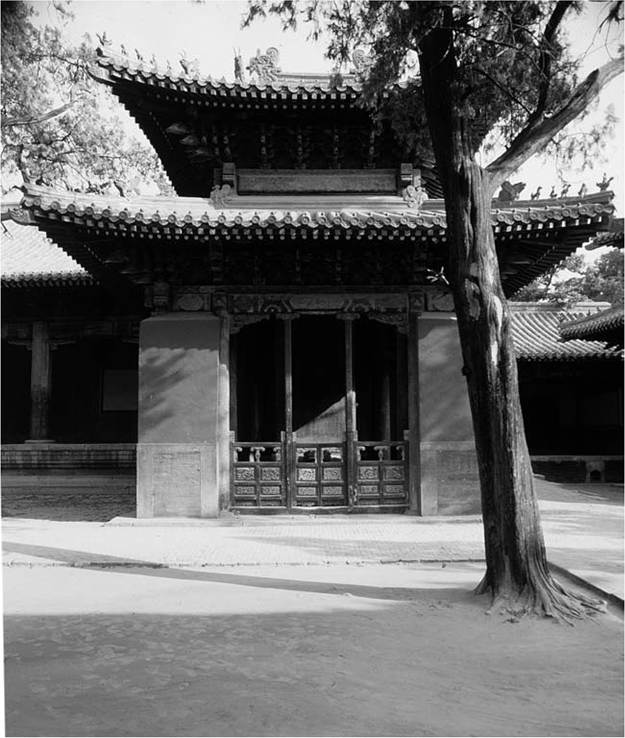
Figure 16.1 The temple of Confucius at Qufu (Werner Forman Archive / Bridgeman Images)
Zi Si was the grandson of Confucius and is claimed to be the author of the Doctrine of the Mean, one of the Four Books that became central to the later Confucian tradition,[599] while Mengzi is credited with authoring another of the Four Books that bears his name. Zi Si and Mengzi shared the common
conviction that human nature is innately good, and that by extending the original heart/mind (xin 'L'), that is, by practising humaneness (ren D and righteousness (yi ⅛) and by cultivating sincerity (cheng ^) within, humans are able to understand Heaven, to achieve sagehood or to be one with Heaven and Earth. Mengzi admired Confucius and proclaimed him the greatest sage.[600] He followed Zi Si in furthering a religio-ethical discourse which claimed that Confucianism originated in the works and lives of ancient sage-kings and was exemplified in the teachings of Confucius. Throughout his life, Mengzi vigorously defended the Confucian way, engaging in a fight on two fronts: on the one side against the misuse of political power by dukes and princes (zhuhoufangzi i⅞{^½^), and on the other against ‘the pervasive doctrines' of non-Confucian scholars (chushi hengyi ⅛i^⅛). Like Confucius, Mengzi travelled extensively around the states, offering advice on the ‘kingly way' (wang dao or ‘benevolent or humane government'
(ren zheng t½) in opposition to the ‘way of a despot' (ba dao ®^). He attacked fiercely what he described as heresies and took it as his life's mission to drive away the doctrines of Yang Zhu (44o?-36o? bce ) and Mo Di S
M (479?-381? bce) and to banish excessive views and heresies, because he believed that ‘If the way of Yang and Mo does not subside and the way of Confucius is not proclaimed, the people will be deceived by heresies and the path of morality will be blocked.'[601]
The architect of the second most influential school in the Confucian tradition was the sophisticated and pragmatic thinker Xunzi. To safeguard the Confucian way, Xunzi not only attacked non-Confucian doctrines as heresies but also criticised some of the Confucian sects, including that of Mengzi, as ‘following the model of the ancient kings in a fragmentary way', because ‘being mysterious and enigmatic, they lacked a satisfactory theoretical basis' and were therefore branded as ‘vulgar' Confucians.21 Despite this, Xunzi absorbed elements from many sources available at the time into his own grand theory for constructing a comprehensive Confucian system; for example, his discussion of Heaven (tian ^) as Nature is derived from a Daoist understanding of the metaphysical Way, while his interest in logic shows the influence of the School of Logicians (mingjia ⅜^). Unlike Confucius, who stressed the importance of humaneness or benevolence (ren D, and Mengzi, who placed an emphasis on rightness or moral principle (yi ⅛), Xunzi made codes of conduct, or ritual/propriety (li ⅛) and law (fa '⅛), prominent in his theoretical construction and defined ‘Confucians' as those who ‘model themselves after the Ancient Kings', ‘exalt ritual and moral principle' and ‘esteem their superiors'.[602] Unlike Mengzi, who idealistically associated humans with ethico-spiritual Heaven, Xunzi consciously separated humans from natural Heaven and denied the commonly held correspondence between political conditions and heavenly will, or between human success or failure and changes in nature. From the perspective of a naturalist philosophy, he argued that humans were innately driven by desires and naturally tended to compete for resources necessary for satisfying these desires. These natural instincts could cause disorder and chaos in community and state if not restrained and guided properly. He regarded this as evidence that human nature was innately evil and that virtue was the product of posterior training and cultivation, which fundamentally set him apart from Mengzi. Notwithstanding these views, Xunzi was not totally opposed to the School of Zi Si and Mengzi. He insisted that despite these original tendencies towards evil, human nature could be transformed by ritual/propriety and by learning and education into a more virtuous nature, and that peace, harmony and goodness could prevail in the world through kingly government. He strongly believed that humans were capable of accumulating wisdom and virtues, and of making ‘whole of one's inner power', acquiring ‘a divine clarity of intelligence' and fully realising ‘a sagelike mind'.23 In other words, Xunzi was arguing for the same universality of the sagehood as Mengzi: ‘it is clear that the man in the street can become a Yu [sage-king]', because what makes Yu a sage is his ‘use of humaneness, righteousness, the model of law and rectitude' and ‘in each of these four there are rational principles that we can know and which we are capable of putting into practice'.24
Confucians suffered a huge setback in the hands of the First Emperor of the Qin dynasty (221-210 bce) who had adopted Legalism, the arch rival of Confucianism, as the ideological basis of state policies and overwhelmed the other six warring states in his powerful military campaigns. With the advent of the Western Han (202 bce - 9 ce), however, Confucians found themselves at a turning point, facing both opportunities and challenges. Han Confucians grasped these opportunities and took upon themselves the challenges necessary to transform Confucianism into a new type of doctrine that was closely associated with the needs of consolidating the Han empire. To
meet the new needs of the empire, Confucian scholars formed a new and eclectic doctrine by moulding into a single system the different ideas of Mengzi and Xunzi and by incorporating into Confucianism various other useful elements including those of Huang-Lao Daoism, the Yin-yang and the Five Elements (wuxing five agencies or activities), Mohism and Legalism. A
‘theological' or metaphysical doctrine of interaction between spiritual-natural Heaven and humans (Tianrenganying A A^W), for example, was established and consequently became the tool by which the authoritarian and authoritative power of the emperor was both justified and restricted. There was also a strong drive to develop the cult of Confucius, both as the ancient master and as the culture-maker, which eventually led to it becoming part of the state religion during the East Han dynasty (25-220 ce).[603]
AmongWesternHan scholars, DongZhongshu (195?-i05? bce) was
the most prominent and played an instrumental role in facilitating the victory of revised Confucianism. Dong submitted three memorials in response to Emperor Wu's (r. 140-87 bce) enquiries by proposing new ways to reform the government and to unify governmental rules and regulations. Dong encouraged the emperor to practise the five virtues (humaneness/benevo- lence, rightness/righteousness, ritual/propriety, wisdom and trustfulness), telling him, ‘if you do this, you will receive blessings from Heaven and from the spirits, while your good administration will spread to the four corners of the world, and all will be benefited'.[604] In addition to these memorials, Dong wrote many treatises, most of which are preserved in the book entitled Luxuriant Gems of the Spring and Autumn Annals (Chunqiu Fanlu ⅛⅞XW⅛).
Perceiving the urgent need of a unified ideology for the unified empire, Confucians became more and more exclusive with respect to other schools of thought. Dong made it clear in his memorial to the emperor, for example, that ‘whatever is not encompassed by the Six Disciplines and the arts of Confucius should be suppressed and not allowed to continue further, and evil and vain theories [should] be stamped out. Only then will unity be achieved, the laws be made clear, and the people know what to follow.'[605] Emperor Wu eventually took this advice and implemented it in governmental policies, decreeing that no other teachings apart from Confucianism be endorsed by the state. This marked the beginning of Confucianism as the official ideology and of Confucius as the state cult, becoming one of the three state sacrifices, along with sacrifices to Heaven and to royal ancestors, that lasted until the beginning of the twentieth century.
While practising Confucianism, the Eastern Han dynasty (25-220 ce) also saw the introduction of Buddhism from India and Central Asia to China and the increased popularity/significance of religious Daoism. After an initial stagnation which was the consequence of the perceived incompatibility between Chinese and non-Chinese cultures, Buddhism rapidly accommodated itself to the Confucian moral system and to the needs of the people, who suffered from war, famine and a longing for a sense of the spiritual, and spread to all corners of China during the periods of Wei-Jin and the Southern-Northern dynasties (220-581 ce). At the same time, as Arthur Cotterell notes: ‘The loss of the ancient heartland of China [to the “barbarian” tribes in the north] raised doubts as to whether Confucian ideology was a sufficiently strong shield in troubled times.'[606] Under the joint pressure of Buddhism and Daoism, Confucians had to retreat on many fronts and were forced to make significant changes to their doctrinal and practical contents in order to survive in a less favourable political, religious and intellectual environment.
A three-dimensional structure of ideology was gradually embraced by the people where Confucianism was responsible for education and politics, Daoism for spiritual living, and Buddhism for after-death wellbeing. Some scholars even championed a new doctrine of the three-in-one: ‘Confucius, Lao Tzu, and Buddha were one, and the apparent differences between them were caused by customs, rules, and ceremonies, which were outward appearances', but not substantial.[607] A great effort was made to reconcile Buddhism to Confucianism, and in the terms of Yan Zhitui (53i-59i) Buddhism
was posited as the teaching for the inner realm and Confucianism for the outer world.[608] In the period of the Sui (581-618) and Tang (618-906) dynasties,
although Buddhism and Daoism were popular, both with ordinary people and in the court, Confucians nevertheless gradually regained the control of administration, by means of education and civil service examinations. Tang Confucians, in particular Han Yu (768-824), took it as their mission in
life to ‘restore a Confucian social and political order to a society long acclimated to Buddhist and Daoist teachings’.[609] Han Yu, for example, argued that there had been a fine tradition in China, transmitted from the ancient sage-kings, Yao, Shun, Yu, Tang, King Wen, King Wu and the Duke of Zhou, to Confucius and Mengzi. He claimed that after Mengzi the transmission of the Way had stopped, and that if the transmission succeeded, people would enjoy peace and harmony, and the state would flourish (see the statuette of Confucius, Fig. 16.2). The Confucian efforts as such paved the way for the rise of a new form of Confucianism, what we call ‘Neo-Confucianism’ in the West, during the Song dynasty (906-1271 ce).
Theoretical foundation of Confucian politics
The natural starting point for a discussion of Confucian politics is the concept of divine kingship, which can be traced to the earliest records of shaman diviners who conducted divination on behalf of the state. Confucians inherited and transformed this concept into the core of their politics. The reinterpretation and expansion of the political value of Heaven and the Mandate of Heaven were the first steps. Early Confucian political thought was fed on religious beliefs and practices, and was centred on a religio-ethical conviction that human rulers must be responsible to Heaven and that their virtues must be answerable to the ‘Mandate of Heaven’ (tian ming ^^). According to one of the Five Classics,[610] The Book of History (shu W), ‘Heaven graciously distinguishes the virtuous... Heaven punishes the guilty’, and the greatest possible crime for a king would be committed if he did ‘not reverence Heaven above, and inflicted calamities on the people below’.[611] In The Book of Poetry (shi b⅜), the founding king of the Zhou was hailed as the bearer of the great Mandate of Heaven, which enabled him to overwhelm the Shang.[612] However great a state was, it would collapse as soon as Heaven withdrew its
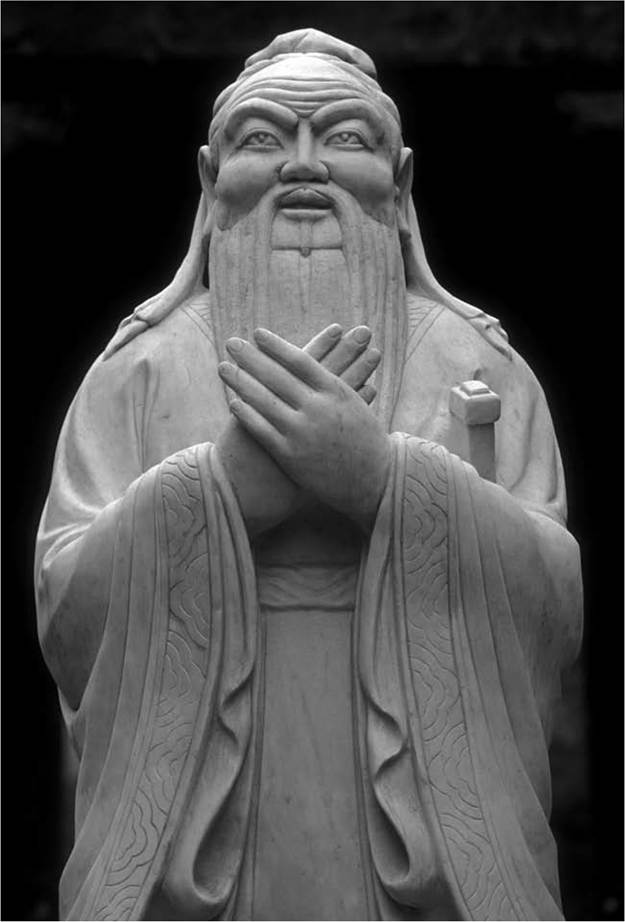
Figure 16.2 Statue of Confucius at Confucius Temple, Beijing, China (Robert Fried / Alamy)
mandate. The only way to keep the Mandate was to ensure that ‘the king should have reverent care for his virtue', and it was only because the rulers of earlier dynasties ‘did not reverently care for their virtue that they early let their Mandate fall'.[613] The message Confucians tried hard to deliver to contemporary politicians was loud and clear: no government would last unless it was blessed by Heaven, and no rulers could be justified unless they cultivated virtues and acted morally in exercising administrative power.
Prominent in Confucian classics is the usage of the title for the king, ‘Son of Heaven' (tian zi The Son of Heaven was said to rule ‘over the myriad
regions, and all officers depend on and reverence him'.[614] This title linked human rulers to Heaven in a son to father relation, recognising the central position of the king and adding divine legitimacy to his power.[615] While as the Son of Heaven the king enjoyed the privileges of ruling over the world and mediating between Heaven and earth, he bore huge responsibility towards the people on earth and the spiritual authority in Heaven. This can be seen from Mengzi who not only confirmed that ‘Heaven alone can grant success'[616] but also identified Heaven or the Mandate of Heaven with the people or the people's wishes, quoting from the Book of History that ‘Heaven sees with the eyes of its people. Heaven hears with the ears of its people.'[617] Mengzi argued that the king would be abandoned by Heaven if he behaved like a tyrant; however, if he exercised ‘humane/benevolent government' towards people, then he would be regarded as the saviour and welcomed by the people with food and drink. Mengzi took the ‘way of a despot (ba dao)' to be the rule by force with harsh punishment and killings and to be the way to lose the empire (tian xia literally meaning ‘under the sky'). By contrast, a kingly government was the way to win and keep the empire: to win the empire, the king must first win the people and to win the people, the king must first win their hearts.[618]
To highlight the sacredness of kingship, Confucians added the word for ‘sages' or ‘sagehood' to the word ‘king' and formed a new term, the
‘sage-king' (sheng wang In ConfUcian texts, the first appearance of the
term is found in the Mengzi, where Mengzi deplored the fact that ‘After the death of Yao and Shun, the way of the Sages declined' and ‘No sage kings have appeared since then.'[619] While in Mengzi the sage-king is confined to a couple of early cultural heroes who had been appraised and admired by Confucius, Xunzi refilled this title with state responsibilities and gave it to tens of former kings (xian wang ⅛?), identifying the ‘way of the sage-king' with the administrative tasks of employing people according to their virtue and abilities. He further defined ‘the sageliness' as a comprehensive grasp of human relationships, and the kingship as a comprehensive grasp of the regulations for the government, while ‘a comprehensive grasp of both is sufficient to become the ridgepole for the world'.[620]
The idea of the sage-king was regarded as the pivotal point in Confucian politics, underlying the whole structure of state administration. Through analysing the Chinese character for king (wang, Ξ), Dong Zhongshu instituted the king at the religious, moral and political centre of the world. In his words, the three horizontal lines of the character are connected by a vertical line running through the centre to designate the king: ‘The three horizontal lines represent Heaven, Earth and humankind, while the vertical line that connects them through the center represents comprehending the Way... one who acts as king is no more than Heaven's agent.'[621]
Confucius did not simply accept the earlier beliefs in Heaven and sagekingship but, instead, developed or expanded them into an ethico-religio- political system. Strongly believing that Heaven had produced virtue in him and had given him a mission to transmit ancient culture,[622] Confucius rendered political administration an exercise in ethical virtues, in the sense that only moral qualities were believed to lead to effective governing. He equated the ruling by virtue with the Pole Star that would remain in its own place while the multitude of stars revolved around it.[623] For him, to govern was to set the right example for people to follow, as he believed that, cultivated by those who were in high position, moral virtues would naturally produce trust and faith in the people. While calling on everybody to be a virtuous person through learning and practising, Confucius emphasised that it was more important for political and social elites to cultivate virtues, because their virtues would powerfully affect or shape how the people of a lower status behaved and led their lives.[624]
By emphasising that human rule must be matched with the virtue of Heaven, Confucians placed politics as being essential to the process of education and self-cultivation. In fact, most Confucians can be said to be educationalists, as they gathered around them a larger or smaller group of students who studied classics and exegeses from their master, and who in turn transmitted their learning to future generations. Confucian education must not be thought of as we know of it today. It was more about character cultivation and about the effect this cultivation could have on other people, family and state administration. Therefore, one of the criteria for education was whether or not students were able to speak adequately and to behave properly in accordance with what is required in the books on poetry and rites.[625] Concerning the effect of one's behaviour upon others, we may gain an insight from the following reply Confucius made to the question of how to make people respectful, loyal and zealous: ‘Approach them with dignity and they will be respectful. Be yourself a good son and a kind father, and they will be loyal. Raise the good and train the incompetent, and they will be zealous.'[626] Confucian learning, performing rituals and playing music were never intended to be merely a matter of increasing knowledge and following certain rules. Rather, whether at the personal level or in the social sphere, they were central to character cultivation, in which people would be ‘stimulated by poetry, established by the rule of propriety, and perfected by music'.[627]
From his theory of evil as the result of self-negligence and learning as the way to recover the original good heart, Mengzi illustrated how education came into existence and what education was about: in order to prevent people from degenerating to the level of animals (i.e. without education and disciplines), the ancient sage-king appointed a minister of education ‘whose duty was to teach the people human relations: love between father and son, duty between ruler and subject, distinction between husband and wife, precedence of the old over the young, and faith between friends'.[628] For Mengzi, good politicians were first and foremost good educators, and when compared, administrative measures were not as effective as educational practices, because ‘Good government does not win the people as does good education. He who practises good government is feared by the people; he who gives the people good education is loved by them. Good government wins the wealth of the people; good education wins their hearts.'[629] Since the empire has its basis in the state, the state in the family, and the family in one's own self, to win the people's hearts, there was no need for the ruler to use force or power. Being correct in one's self, a king would bring the whole empire to himself, and ‘If only everyone loved his parents and treated his elders with deference, the Empire would be at peace.'[630] In this sense Mengzi said that a humane ruler had no match in the world.
Disregarding Heaven as the spiritual source of human government, Xunzi referred to ancient sages and former kings as the source and resource of political and moral order. Like Confucius and Mengzi, Xunzi also believed moral influence was central to political administration and compared the ruler to the wellspring of the people, reasoning that if the wellspring is pure, then the outflow is pure, while if the wellspring is muddy, the outflow will be muddy.[631] Differing from earlier Confucians, however, Xunzi did not justify sage-kingship by the spiritual power of Heaven; rather, he derived human authority from natural and moral reality and enlisted morally superior humans (junzi) as responsible for enforcing moral and political codes.[632] From this realistic perspective on politics, he regarded learning (xue), teaching (jiao ¾ and transforming (hua -ft) as the most effective tools for state administration and for establishing the kingly government.
Confucianism and state administration
In its early stage, Confucian participation in government was based more on ideas and inspirations than on reality. When asked why he did not take part in government, Confucius answered by quoting from the Book of History that ‘simply by being a good son and friendly to his brothers a man can exert an influence upon government' and confirmed that ‘In so doing a man is, in fact,
XINZHONGYAQ
taking part in government.'[633] Apart from a brief period in which he was said to serve the Duke of Lu, Confucius mostly played a role of political counsellor, offering advice to the heads of different states and advocating his way of ruling by virtue. He confirmed on one occasion that if any of these rulers entrusted him with the state administration, he would first put into practice the rectification of names (zheng ming 117∙^∣), reasoning that if the names were not correctly defined, what people said would not fit in with their actual roles and that this would cause corruption in the ritual system and bring failure to the state administration.[634]
Since Confucian solutions to the political, economic and social problems of the time were more idealistic than realistic, Confucian policies were not heeded seriously, and few of Confucius' followers in the Spring and Autumn period and the Warring States period were given a sufficiently high position in government for long. They had to be content with being counsellors or advisers for smaller states on matters of ritual ceremonies, administrative skills or occasionally on policy-making.
The Han dynasty provided the stage on which Confucians were for the first time given an opportunity to practise their theoretical ideas in realpolitik. Considering Legalism as the cause of failure in the Qin dynasty, Confucians advanced their vision as an alternative and won the ear/support of certain Han rulers by arguing that, to avoid the disasters of the previous dynasties and to build a Han empire that would endure, they must instal Confucian policies. This was clearly seen in Dong Zhongshu who, in synthesising earlier teachings by Confucius, Mengzi and Xunzi, produced a political strategy composed of three key elements: ‘listen to Heaven', ‘educate the people' and ‘enforce good laws'. Among the three measures, following Heaven or Heaven's will was regarded as the divine justification of human governance, education as the most effective and efficient way for governing, and enforcing laws as concrete practice to keep the state in order: ‘A real ruler sincerely listens to Heaven and follows its decree. He educates the people to complete their nature and upholds the law to maintain the social order and check the desires... Having carried out these three measures, the ruler will have a solid foundation for his empire.'[635]
Education was the primary path for Confucians to enter government. Confucian education functioned as a way to train students as candidates for governmental posts. As described in the History of the Western Han Dynasty,
after proper training in schools ‘the best students became candidates for official positions, while those of lesser ability received an honorary title'.[636] It is recorded that following the appeal by Confucian scholars, Emperor Wu established ‘professorial chairs' (bo shi Mi) of the Five Classics in 136 bce and founded the Grand Academy (tai xue ^⅛) in the capital in 124 bce. The academy initially admitted fifty students under the instruction of the professorial chairs but rapidly expanded so that by the year 8 bce the number of students was said to have increased to 3,000, the number traditionally ascribed to the students of Confucius.[637]
Along with the transformation of Confucianism from a school of thought to the state ideology, the nature and function of Confucian learning also changed from cultivating good character and practising moral virtues to being the primary tool for establishing a meritocratic government. How to select the able and virtuous for administrative posts was already central to early Confucians' deliberation on good government. However, it was not until the Western Han era that they could actually influence the selection criteria and procedure, which involved ‘inspection' and ‘recommendation' of those who had a public reputation of being ‘filial pious' and ‘morally upright'.
The collapse of the Han and the ensuing long period of disunity (317-518) between the north and the south and constant wars between different states revoked or made redundant Confucian meritocracy. The Confucian selection of government officials through learning and merits was replaced by the older aristocratic system whereby governmental vacancies were filled up by sons of aristocratic families, while ordinary people were confined to lower social and military statuses and ranks. Although a half-hearted restoration of the Confucian examination system was decreed by the second emperor of the Sui (581-618), Yang Guang ⅛W (r. 604-618), which was followed by the first emperor of the Tang (618-906), it was the second Tang emperor, Li Shimin ^iK (r. 626-649), who installed a scholarship system to encourage learning and enhanced civil service examinations to widely recruit civil servants.[638] While the Tang civil service examinations were not exclusively based on knowledge of the Confucian classics, they did give momentum to Confucians who, acting as bureaucrats, gained access to the day-to-day administration of the state.
The Tang was at the zenith of the history of Chinese civilisation and attracted all sorts of foreigners to its capital for trade and diplomatic missions as well as for cultural exchange and learning. Among the foreigners were a large number of Koreans and Japanese who, with great enthusiasm for the Tang, studied and carried back to their own countries not only the system of administration and Buddhism but also ‘every possible element of Chinese culture’.[639]
Before he acceded to the throne, King Muyol of the Kingdom of Silla (365935) in the Korean Peninsula went to Tang China in the year 648 to inspect the Chinese national university. When he became king, he sent a large number of Silla students to the Tang capital to study Confucian doctrines.[640] A quasi-religious and military system, hwa-rang do (the way of the flower youth) was established based on Confucian and Buddhist teachings, members of which practised the Confucian way of learning and self-cultivation, and were instrumental in the unification of the Korean Peninsula in 669.[641] The penetration of Confucianism into Korean culture enabled a great Confucian scholar of the Silla period, Choi Chi-won (858-951), to say that Korean native religion was a composite of Confucianism, Buddhism and Daoism.[642] This laid a solid foundation for later generations. Under the influence of NeoConfucianism, the Koryo dynasty (918-1392) established the Kwako (civil service examination system), and the Kukjakam (in Chinese guozi jian l⅛'l F ⅛, National University). During the reign of King Munjong (1047-1082), private Confucian schools (sowon, in Chinese shuyuan Wβ⅞) also flourished.
Confucian learning and scholarship also had great impact on the Japanese. Confucian ethics and politics were at least partially implemented in the formation of Japan’s state administration. There is little doubt that the first Japanese constitution, Junano Kenpd (Constitution of Seventeen Articles), credited to Prince Shotoku (573-621) in 604 ce, was written under the influence of the Confucian religio-ethico-political vision, and its primary objective was to define the relations between the sovereign and the state, and between the emperor and the subjects.[643] The Prince ‘accepted the Chinese [Confucian] concept of the emperor as “Son of Heaven,” who was to rule the nation with the help of his bureaucratic officials'.[644] Emperor Tenchi (r. 662-671) established a system of education composed of national and provincial academies (daigaku), local and private academies and schools, in which the textbooks were mainly taken from the Confucian classics. The reign of the next few emperors and empresses witnessed the implementation of a type of Confucianism, ‘an eclectic system developed during the Han period, [which] providedJapan with the first rational norm for inter-personal relationships'.[645] Although the first wave of Confucian impact on Japan soon gave way to that of Buddhism, its legacies survived and awaited a new surge of Confucian influence in the coming centuries that dramatically changed Japanese culture and state administration.
Before 900 ce Confucianism in these countries was still mostly copied from China, but thereafter Koreans and Japanese made evident efforts to adapt Confucianism to their own culture and added unique intellectual elements to the Confucian system of state administration. Confucianism in this part of East Asia was finally brought to its maturity in the period from the thirteenth to the sixteenth century when Neo-Confucianism took firm roots in Japan and Korea where the whole Confucian system, including its ethical codes, political blueprints and civil service examinations, was transplanted and then transformed. These shaped a unique culture and state administration and contributed eventually to the formation of a Confucian sphere in East Asia.
Further Reading
The Analects of Confucius, trans. Simon Leys, New York: W. W. Norton and Company,
1997.
Bak, Ki-yong, ‘Historical Review of Korean Confucianism', in Yunesuk1 o Han’guk Wiwtinhoe, Main Currents of Korean Thought, Arch Cape: Pace International Research, 1983.
Berthrong, John H., Transformations of the Confucian Way, Boulder, co: Westview Press,
1998.
Bilsky, LesterJames, The State Religion of Ancient China, Taipei: The Chinese Association for Folklore, 1975.
Brooks, E. Bruce, and A. Taeko Brooks, The Original Analects: Sayings of Confucius and His Successors - A New Translation and Commentary, New York: Columbia University Press, 1998.
Bu Gong f I, Wenming qiyuan de zhongguo moshi T Beijing: Kexue
chubanshe, 2007.
Ching, Julia, Mysticism and Kingship in China: The Sage-King Paradigm, New York: Cambridge University Press, 1997.
Chung, Edward Y. J., The Korean Neo-Confucianism of Yi Toegye and Yi Yulgok, New York: SUNY Press, 1995.
Creel, H. G., Confucius: Man and Myth, London: Routledge & Kegan Paul, 1951.
The Origins of Statecraft in China, University of Chicago Press, 1970.
de Bary, William Theodore, and Irene Bloom (eds.), Sources of Chinese Tradition, New York: Columbia University Press, 1999, vol. I.
Deuchler, Martina, The Confucian Transformation of Korea: A Study in Society and Ideology, Cambridge, ma: Harvard University Press, 1992.
Fingarette, Herbert, Confucius: The Secular as Sacred, New York: Harper & Row, 1972.
Han Fei Tzu, Basic Writings, trans. Burton Watson, New York: Columbia University Press, 1970.
Henderson, Gregory, and P. Key Yang, ‘An Outline History of Korean Confucianism', Journal of Asian Studies 18 (1958): 81-101.
Hsiao, Kung-chuan, A History of Chinese Political Thought, trans. Frederick W. Mote, Princeton University Press, 1979, vol. I.
Jensen, Lionel M., Manufacturing Confucianism: Chinese Traditions & Universal Civilizatian, Durham, nc: Duke University Press, 1997.
Lee, Peter H. (ed.), Sourcebook of Korean Civilization, New York: Columbia University Press, 1993, vol. I.
Lee, Thomas H. C., Education in Traditional China, Leiden: Brill, 2000.
Lin, Yu-tang (ed. and trans.), The Wisdom of Confucius, Mumbai: Wilco Publishing House, 2005.
Loewe, Michael (ed.), Early Chinese Texts: A Bibliographical Guide, Berkeley: The Society for the Study of Early China and The Institute of East Asian Studies, University of California, Berkeley, 1993.
McDermott, Joseph P. (ed.), State and Court Ritual in China, Cambridge University Press,
1999.
Mencius, trans. D. D. Lau, New York: Penguin Books, 1970.
Roetz, Heiner, Confucian Ethics of the Axial Age: A Reconstruction under the Aspect of the Breakthrough toward Postconventional Thinking, Albany: State University of New York Press, 1993.
Rule, Paul A., K'ung-tzu or Confucius: The Jesuit Interpretation of Confucianism, London: Allen & Unwin, 1986.
Schwartz, Benjamin I., The World of Thought in Ancient China, Cambridge, ma: Harvard University Press, 1985.
Shryock, John K., The Origin and Development of the State Cult of Confucius, New York: Paragon Book Reprint Corp, 1966.
Tsunoda, Ryusaku, William Theodore de Bary, and Donald Keene (eds.), Sources of Japanese Civilization, New York: Columbia University Press, 1958.
Tucker, John Allen, Moral and Spiritual Cultivation in Japanese Confucianism: The Life and Thought of Kaibara Ekken (1630-1714), Albany: State University of New York Press, 1989.
Xunzi, trans. John Knoblock, Beijing: Foreign Languages Press, 1999.
Yao, Xinzhong, An Introduction to Confucianism, Cambridge University Press, 2000.