South Asia
Shonaleekakaul
South Asia is a term that corresponds broadly to the Indian subcontinent, covering the modern nation-states of India, Pakistan, Nepal, Bangladesh, Bhutan, Sri Lanka, and the Maldives.
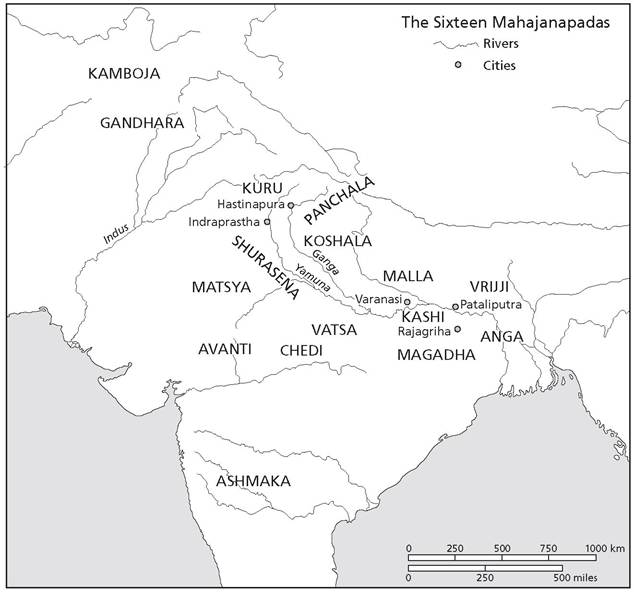
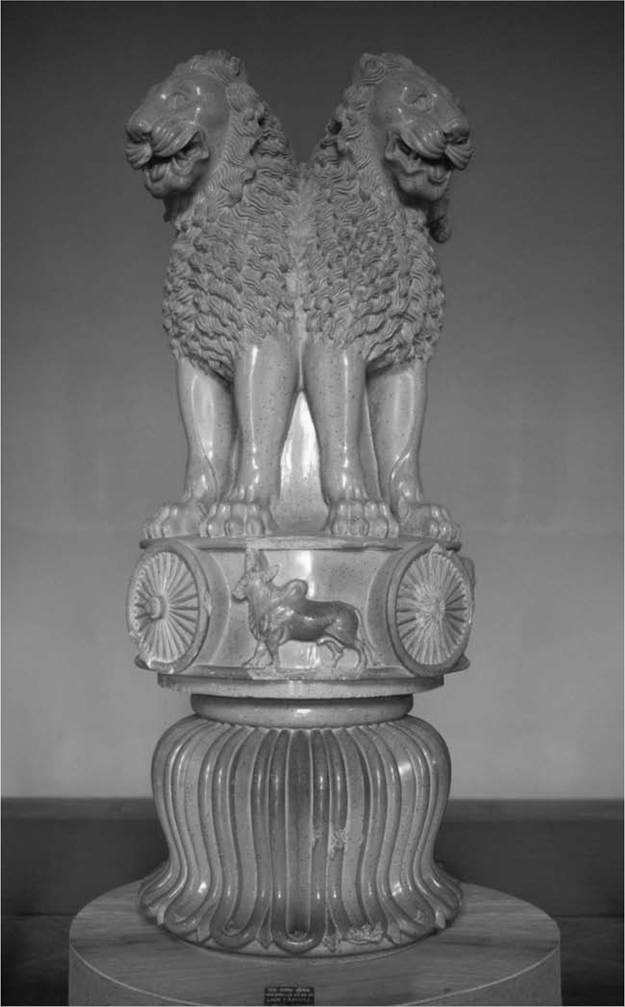
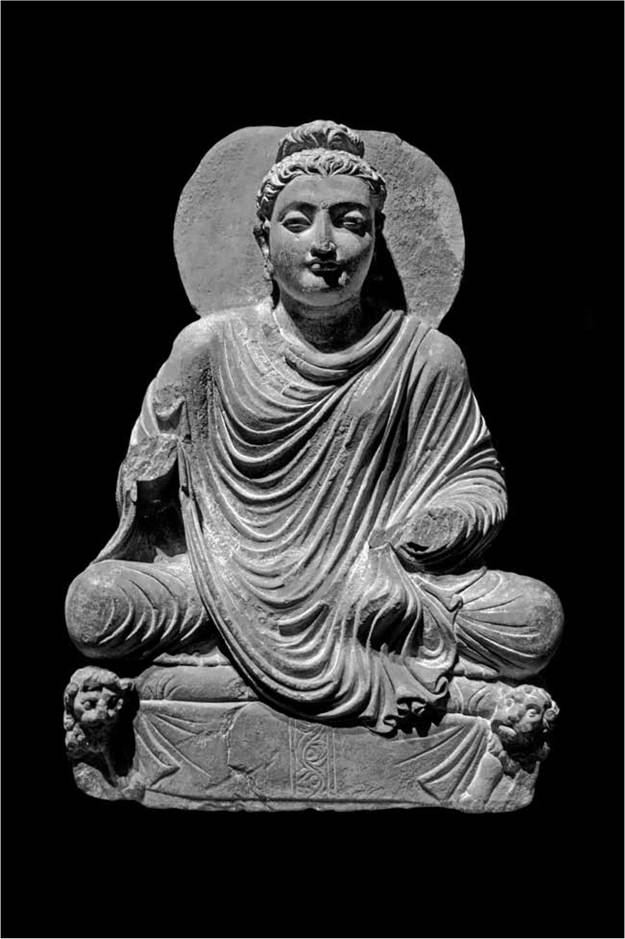
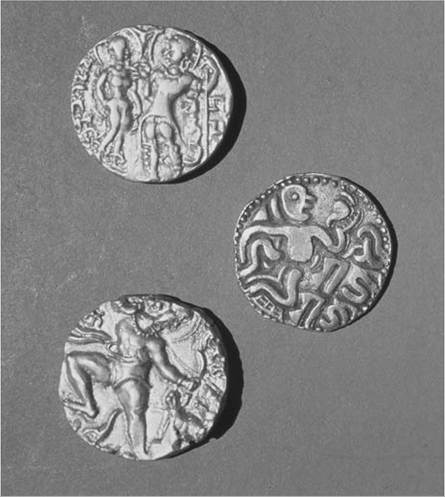
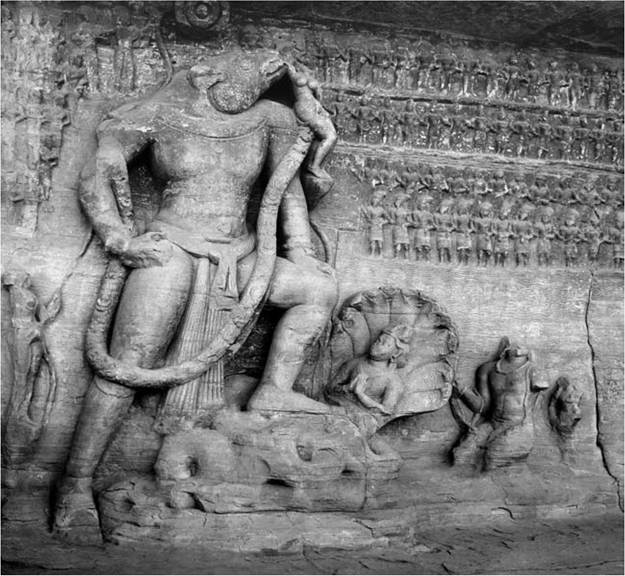
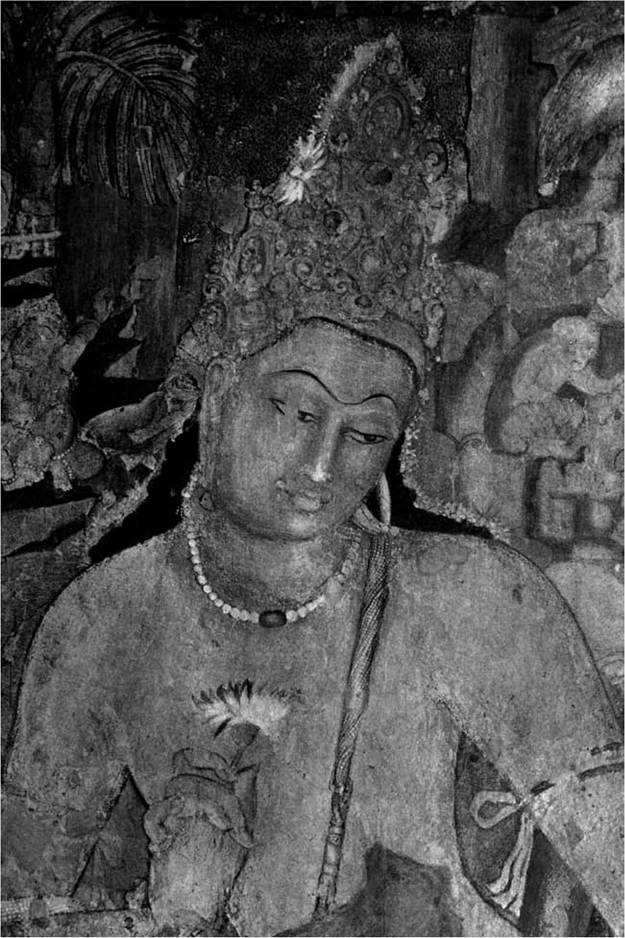
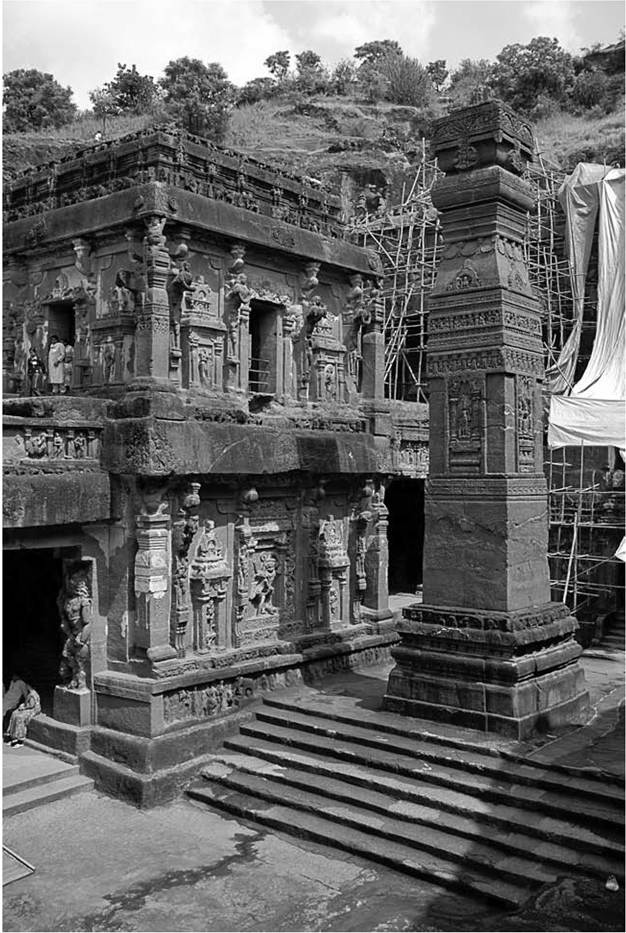
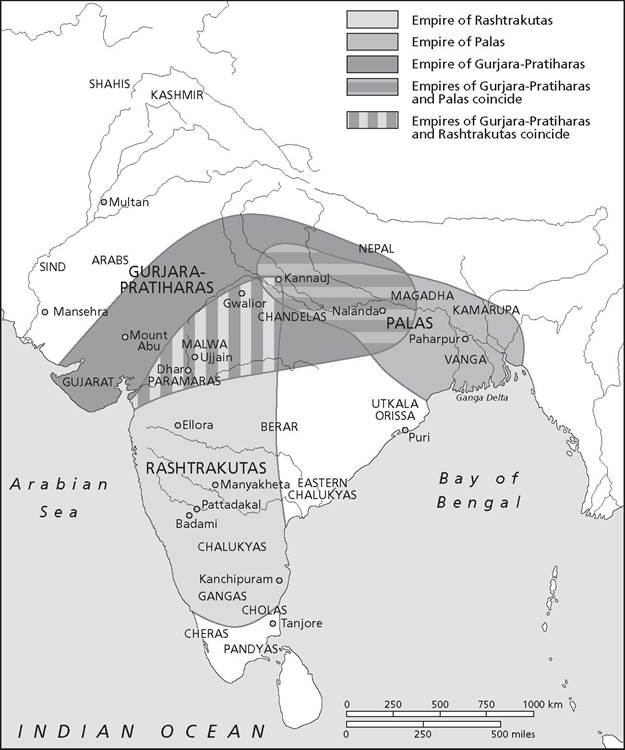
With an area in excess of 4.5 million km2, this is a region that encompasses a tremendous diversity of topography, climate, and ecology, and therefore considerably uneven historical trajectories. To hope to capture all or even most of those trajectories - the divergent yet interacting histories of subregions - over a span of time from 1200 bce to 900 ce that saw changes of a fundamental and complex order, would be an ambition that far exceeds the scope of a chapter. This chapter therefore seeks merely to outline phases and developments conventionally regarded as mainstream in the foundation of civilization in mainland South Asia.That story of the foundation of civilization1 is usually traced to the banks of two mighty South Asian rivers, initially the Indus and for the most part the Ganga that, starting in the upper reaches of the western Himalayas, charts a vast and highly fertile flood plain all the way to the Bay of Bengal in the east. It is along the multiple tributaries of the Indus (Saptasindhavah = seven rivers) in modern-day Punjab that one of the most ancient texts of the world, the Sanskrit Rig Veda Samhita, a collection of hymns and invocations, seems to have been composed at a date that is usually but conservatively put at c. 1500 bce.2 This text constitutes only the oldest stratum of a massive corpus [655] [656] that includes three other Veda (the Sama, Yajus, and Atharva) and their many sub-parts, which are all linguistically later than the Rig and believed to have been composed farther east between c. 1000 and 500 bce. So they are taken by historians to correspond to a Later Vedic period. The transition from the Early Vedic to the Later Vedic saw a growing complexity in ecological, economic, social, and political conditions that resulted in the transition into agrarianism, state society, and urbanism in the post-Vedic period. The history of these early times is reconstructed almost entirely on the basis of these sacred texts since their archaeological context, though hypothesized to be the sparse Grey Ware and Painted Grey Ware (PGW) cultures of the north-west of the subcontinent, is inadequate and uncertain. Early Vedic people were Indo-Aryan speaking, that is, they used a form of archaic Sanskrit that belongs to the Indo-European family of languages.[657] Mainstream historiography maintains that they were pastoral and semi- nomadic. Their chief occupation seems to have been cattle-rearing, as evident from the large number of terms deriving from the Sanskrit word for ‘cow’ found in the Rig Veda Samhita, though they were not unfamiliar with crops such as barley and therefore perhaps with cultivation. Accordingly, cattle rather than land was their chief source of wealth as well as the object (apart from horses and women) of the frequent battles they waged. The Battle of the Ten Chiefs (Dasharajnya) seems to have been one such great event. Early Vedic tribes (jana) were led by a tribal chief (rajan) who received voluntary offerings (bali) from the rest of the tribesmen in return for leading them in war. In a pre-state and pre-class society, political organization was coterminous with social organization, which was kin-based and, at the most, differentiated in rank between senior (rajanyas) and junior (vish) lineages. There are references to various clan gatherings (sabha, samiti, gana, vidatha) among whose functions was possibly the redistribution of war-booty. When seen together with the offerings made to the chief, this ceremonial community consumption of the spoils of battle points to the prevalence of something of a reciprocal gift exchange system. In Later Vedic literature one sees an eastward movement or expansion of tribes into the Indo-Gangetic divide and the upper Ganga basin (the area referred to as Kuru-Panchala), corresponding to modern Punjab, Haryana, and western Uttar Pradesh. The most significant change that historians postulate for this period is the growing importance of agriculture over pastoralism. We now get references to cereals apart from barley, like wheat and rice and also lentils, where earlier there was none; these are the staple foods of South Asia till today. The centrality of cultivation now is not only reflected in a number of clear references to ox-driven ploughs and to agricultural and fertility rituals found in later Vedic texts but also seen in archaeology. PGW sites have yielded crop remains from this period as well as 3- to 4-metre- thick deposits, significantly suggesting continuous habitation and the onset of sedentism. This all-important shift to a reliance on agriculture, with its greater capacity for surplus generation as reflected in the settling down of Later Vedic tribes, may have been in large part due to the access to the highly fertile alluvial soil and greater precipitation in the Ganga basin that these tribes gained. Some historians influentially believe that abetting their exploitation of the wetter and more productive conditions of this region was the discovery of iron and its application to the clearing of dense forests and to the cultivation of the rich clayey soil. Indeed the Later Vedic coincides with the first phase of the use of iron in north India, with stark references in the texts to the ‘dark metal' (krishnayas) employed in agriculture. However, archaeological evidence for the role of iron in subsistence activities in this early period is not substantial and, on present research, seems to acquire intensity and frequency only from the sixth century bce onwards (even though the earliest iron objects per se - nails, arrowheads, and the like - archaeologically recovered from the Ganga valley are from 1100-900 bce in association with Black and Red Ware and PGW). There were two direct consequences of these developments. One was that the jana now transformed into the janapada (literally, ‘footprint of the jana'), that is to say, tribes began to occupy and identify themselves with fixed territories under the aegis of specific ruling clans known as rajanyas or, increasingly, kshatriyas (warrior class). Janapadas were not yet full-fledged states, but more in the nature of chiefdoms; however, we do find in them traces of the clear emergence of a ruling elite that staked claim to a greater share of the produce and other resources. Thus, the bali now ceased to be voluntary offerings from the people to their chief and became an obligatory prestation, the earliest form of a compulsory tribute perhaps. Further, the rajan and his kinsmen organized lavish public sacrifices (shrauta yajnas), such as the horse sacrifice (ashvamedha) and the chariot race (vajapeya), that in different ways enacted the claim to superiority of the kshatriyas over the rest of the populace that now had become subjects (praja). Facilitating and collaborating in the conduct of this ‘prestige economy' were the priests (purohitas, who coalesced into the brahmana class), the ritual specialists who conducted these sacrifices and received a fee in return that took on a more and more elaborate form such as the rajan gifting land (which was now an object of value in a settled society) to brahmanas in addition to gifting gold, cattle, and horses. The other concomitant of the generation of a social surplus was occupational diversification and stratification. As a result, for instance, in the Later Vedic period we find the first reference to the fourfold caste system (varna) that, with all the complexities it acquired in the centuries that followed, became the hallmark of social organization in South Asia. The period from 500 to 300 bce represents the onset of the early historic period in South Asia for which we have plentiful literary and archaeological evidence. It saw the fruition of the several processes of transition that started in the Later Vedic and culminated in the rise of the sixteen great states Map 18.1 India 600 bce (mahajanapadas) all along the upper, middle, and lower Ganga basin as well as in the north-west and central parts of the subcontinent, indicating a robust spurt in the process of state formation (see Map 18.1).[661] These states included Kamboja, Gandhara, Kuru, Panchala, Shurasena, Koshala, Kashi, Vrijji, Magadha, Anga, Malla, Matsya, Vatsa, Chedi, Avanti, and Ashmaka. These were distinguishable into two kinds: monarchies (rajya) and oligarchies (gana- sangha) that were in a state of perpetual aggression against one another, the strong gradually expanding at the cost of the weak. Out of this process four monarchies finally emerged as contenders for supremacy: Koshala with its capital at Shravasti, Vatsa, its capital at Kaushambi, and Magadha with its capital at Rajagriha and later Pataliputra, all based in the middle Gangetic valley, and the fourth, Avanti, with its seat at Ujjayini, in west-central India. Corresponding to the process of state formation and expansion, and significantly interacting with it, was a complex of socio-economic advances that fructified in this period. Among these were the expansion of ploughbased wet rice agriculture, the growth of population and settlement sizes, craft specialization and a spurt in artisanal manufacturing, the beginnings of metallic money, a burst in long-distance trade, and the development of writing. The earliest deciphered records of writing in the subcontinent date to the late fourth century bce and are in the script called Brahmi. The same script over the centuries diversified into regional variations that ultimately became the many different vernacular scripts of this part of the world. Thus, civilization in South Asia as we know it today, in all its antiquity and continuity, was inaugurated in this period. Taken together, these processes are evidence of what has been termed the ‘Second Urbanization', marked by the emergence of many new towns and cities located particularly in the Gangetic valley, but also elsewhere in Northern India. We get vibrant accounts of these in early Buddhist texts in the Pali language, the Tripitaka (Three Baskets), especially in the Jatakas that are a later part of the corpus.[662] These included, in geographical order from the north-west to the south-east, Takshashila, Hastinapura, Mathura, Ayodhya, Shravasti, Varanasi, Vaishali, Kaushambi, Rajagriha, Pataliputra, Champa, Tamralipti. In the south-west, they include Ujjayini, Pratishthana, and Mahishmati, along with others that are mentioned in contemporary Buddhist texts, and the remains of which we find evidence of in the archaeological record. Some of these appear as metropolises (mahanagaras), while others were smaller towns. Excavations have shown that most had massive ramparts constructed around them. The sheer size of these bastions and their elaborate gateways and moats demonstrates that these were settlements with great significance in the social, political, and economic landscape. A number of these urban centres developed out of markets or nodes of exchange of produce; they were mostly all manufacturing hubs as well, and the larger ones were typically capitals of kingdoms. Contemporary texts enumerate a wide range of crafts practised in such towns. These included textiles, woodwork, leather work, metallurgy, ivory carving, basket making, pottery, goldsmithing, and perfume making, among others. We are also told of a range of occupations professed by the citizens, such as cultivation, animal rearing, trade, and service of the king. It should be remembered that crafts were produced in both a rural and an urban context, but everywhere they seemed to be localized. In other words, an entire village would be involved in the manufacture of one particular product, such as pots, or one quarter of the city would be inhabited by those who lived by a single craft, such as gold- smithing. Market towns were located along a dense network of overland and riverine commercial routes that came to crisscross South Asia at this time. For example, the Northern route (Uttarapatha) that ran from Takshashila in the north-west to the port of Tamralipti on the east coast, through all the major nagaras in between, such as Mathura, Kaushambi, Shravasti, and Rajagriha, served as both suppliers and consumers for the raw materials as well as finished goods travelling up and down the route. Similarly, the Southern route (Dakshinapatha) connected practically the entire Northern route through Kaushambi to Ujjayini and Pratishthana in the Deccan, and onwards to the port of Bhrigukaccha (Barygaza) on the west coast. Significantly, in times to come, sea routes from the coasts would extend the lines of trade to other lands like West Asia and the Mediterranean on the one hand and East and South-East Asia on the other. Fittingly, big merchants and bankers (setthi-gahapati) appear as an extremely wealthy and influential new social group in this period with special access to the king.[663] Thus a giant network of interregional commercial and cultural contact spanned the subcontinent, dotted by the great cities. This is clearly attested in archaeology, specifically in the recovery of the Northern Black Polished Ware (NBPW), a fine, glossy deluxe ceramic type, and its attendant material culture, across very many Second Urbanization sites in the period from the seventh to the second century bce. The NBPW assemblages typically entailed cast copper coins and punch-marked silver coins - the first metal money (called karshapanas in the texts) in South Asian history. Additionally, burnt-brick buildings with drains, ring wells, iron tools, and instruments, semi-precious beads, and terracotta figurines and seals are other material remains typically found. The urban culture10 of the sixth-fifth centuries bce seems to have spawned an age of intellectual ferment. It saw the birth of two landmark faiths and systems of religious thought: Buddhism and Jainism. Founded by broadly contemporaries, Gautama Buddha and Tirthankar Mahavira respectively, these faiths did not accept the sanctity of the Veda and the ritual authority of the brahmanas. Buddhism, which especially gained great popularity among the ruling dynasties of kingdoms like Magadha, preached the four noble truths (Aryachatvarisatyani) that identified desire as the root cause ofhuman suffering and the renunciation of desire as the path towards salvation (nirvana), which lies in the cessation of the endless cycle of birth and rebirth and the misery that it entailed. Like Jainism, which came up as an even more austere and ascetic philosophy that also emphasized celibacy and non-covetousness, Buddhism advocated non-violence toward living beings, which is known as ahimsa. The Buddhist and Jaina monastic orders (sangha, matha) that were formed attracted large followings among the laity and were sponsored by donations made by a cross section of society, especially, but not only, affluent social groups like the merchant class. In time Jainism came to be confined to south and west India, while Buddhism attained a far wider presence both within and without the borders of South Asia from where it momentously travelled to Tibet, Korea, and Japan apart from Afghanistan and other parts of Central Asia in the early centuries of the Common Era.11 the Ganga Valley (Delhi: Oxford University Press, 1990); and Uma Chakravarti, The Social Dimensions of Early Buddhism (Delhi: Oxford University Press, 1987). 10 For a discussion of this vibrant urban culture in slightly later poetry and drama in Sanskrit, see Shonaleeka Kaul, Imagining the Urban: Sanskrit and the City in Early India (Delhi: Permanent Black, 2010). 11 There is a vast body of work on the philosophy and history of Buddhism and Jainism. Readers can begin with A. K. Warder, Indian Buddhism (Delhi: Motilal Banarsidass, 1970); and then for more recent reflections see Richard F. Gombrich, Theravada Buddhism: A Interestingly, among the greatest supporters and propagators of these heterodox religions were the Mauryas of Magadha under whose rule (321-181 bce) the first and largest empire in South Asian history was inaugurated. The Mauryan Empire was founded by Chandragupta Maurya, who is said to have defeated the Seleucids led by Alexander's governor Seleucus Nikator in the north-west region of Gandhara and established a matrimonial alliance with the latter's daughter. Legend has it that Chandragupta was of obscure origins and succeeded thanks to the guidance and inspiration of a wily but moralistic preceptor, his prime minister Kautilya Chanakya, who plotted the expansion of Chandragupta's power from the north-west to the South Asian heartland, Magadha, by usurping the last of the mighty Nandas. It is perhaps no coincidence that Chanakya is credited with authoring the famous Sanskrit treatise on statecraft, the Arthashastra, which sets out imperial ideals and ambitions, and discusses statecraft from the point of view of a particular kind of king, the vijigishu - the would-be conqueror who desires to conquer the whole earth.12 This has parallels with the kind of ruler Chandragupta became in history. Chandragupta (321-297 bce) took the Magadhan kingdom to the heights of empire. Under him the territory from Gandhara (modern Afghanistan) in the north-west to Girnar (Gujarat) in the west of the subcontinent to Anga (Bengal) in the east and Karnataka (Deccan) in the south, straddling the Vindhyan mountains that cut the subcontinent in half, as it were, all came under one rule. His might is reflected in the testimony of Plutarch, the later Roman chronicler, who believed that 'Sandrocottus' (the Roman name for Chandragupta) overran the whole of ‘India' with a force of 600,000 men. Little is known about his son, Bindusara (297-273 bce), who succeeded him to the throne, except that under him the Mauryan Empire initiated something of a diplomatic outreach to emperors of realms outside South Asia, a trend that intensified under his son, Ashoka the Great. We learn from Strabo that Bindusara apparently asked Antiochus for some wine and dried figs as well as a sophist for his court! Pliny also mentions that Ptolemy the Second, the ruler of Egypt, sent an envoy to Bindusara. Social Historyfrom Ancient Benaras to Modern Colombo (New York: Routledge, 2006). On Jainism, see Padmanabh S. Jaini, The Jaina Path of Purification (Berkeley: University of California Press, [1979] 2001), and Paul Dundas, TheJainas (New York: Routledge, 1992). 12 R. P. Kangle (ed. and trans.), The Kautiliya Arthasastra, 3 vols. (University of Bombay, 1960-65). The accession of Ashoka (272-232 bce) - grandson of Chandragupta and the greatest of the Mauryas - is believed to be a watershed in South Asian history. Sources inform us that eight years after wresting the throne from his father and brothers, Ashoka initiated a military expedition against the region of Kalinga on the east coast that had resisted Mauryan conquest till then. With the bloody annexation of Kalinga, the conquest of the entire subcontinent (except the far south) was complete. The extent and boundaries of Ashoka's empire are marked out, as it were, by the large number of rock and pillar edicts engraved by Ashoka at over two dozen far-flung sites. The pillar edicts are especially striking: for the first time in stone, tall, highly polished columns, usually topped by magnificent sculpted animal capitals in the round (standing for royal power or the Buddhist tradition), inscribed with orders and proclamations of the king, loomed over the landscape, dominating it (see Fig. i8.i). These proclamations, which may have been inspired by Achaemenid royal practices of a similar kind, were addressed to the emperor's subjects and officials and conveyed a unique message of the king's power and piety. In a language known as Prakrit, they espoused a set of socio-ethical principles, such as non-violence, austerity, and concord, that the king claimed to practise himself and admonished his populace, whom he likened to his children, to follow. Scholars increasingly believe that these principles, termed dhamma in the edicts, were inspired by Ashoka's personal faith in Buddhism, to which he converted in the middle of what had been a violent and ambitious career. By all accounts, Ashoka zealously patronized Buddhism by innumerable donations to the sangha for the construction of monuments and monasteries, and for proselytizing missions to other lands, such as Sri Lanka.[664] But dhamma also seems to have been an imperial strategy to pacify and ideologically unify his sprawling, variegated realm. Consensus among historians is that the Mauryan Empire, though a political formation unprecedented in its size and authority, was not a centralized, monolithic power structure. Indeed it could not have been, given the kind and level of communications available back then. The Mauryan king, based at Pataliputra in the eastern corner of the subcontinent, did not exercise uniform power over the length and breadth of the empire. There were at least three tiers of state control: in diminishing order were the metropolitan area, Magadha; the core areas, that is the highly developed Gangetic valley and Avanti that had been annexed; and the periphery, which comprised all the hilly and forested extremities of Figure 18.1 Lion capitol at Sarnath, North India (Asia Alan King / Alamy) central and south India that were not brought under direct Mauryan administration but merely mined for their natural wealth. Thus, the Mauryan state spread horizontally across regions rather than vertically and maintained its unitary character through a sprawling bureaucracy, which included an array of regional governors (kumara) and ministers (amatya), a massive army, and perhaps also through the paternalistic despotism of its king. Subsequent to the collapse of the Mauryan Empire under Asoka's unremarkable successors, we see in the period between 200 bce and 300 ce the rise of a number of smaller territorial powers in its place in different parts of the subcontinent. In the Ganga valley, for instance, the Mauryas were immediately succeeded by the Shungas under Pushyamitra, the general of the Mauryan army who is believed to have assassinated the last Mauryan king in 180 bce. The Shungas, who ruled for about a hundred years, were replaced by the Kanvas, who quickly made way for the Mitras, each ruling over smaller and smaller areas. The rise of the Satavahana kingdom in the first century bce represents the spread of state polity and society to new areas in this period. The Satavahanas, with their capital at Pratishthana (Modern Paithan on the Godavari River), were a major ruling dynasty of the post-Mauryan period that held sway over most of the Deccan region from the first century bce to the early third century ce. There is uncertainty about who the Satavahanas were and where they came from. While in their inscriptions they claim to be exalted brahmanas (ekabahmana), the encyclopaedic texts composed at the end of the post-Mauryan period, known as the Puranas, call them Andhras, and describe them as lowly social groups. At any rate, the Satavahanas adopted the title of Lord of Dakshinapatha (lord of the South), and Pliny, the Roman chronicler, also says, though perhaps with exaggeration, that the Andhras had many villages, thirty walled towns, and a large infantry, cavalry, and elephant force.[665] The Satavahana territories were divided into a number of administrative divisions known as aharas, and we hear of different sorts of officials. However, the basic organization of the empire was feudatory and there existed a number of local rulers or subordinate chiefs in the realm, known as the maharathis and mahabhojas, over whom the Satavahanas seem to have exercised political paramountcy. Some of the major Satavahana kings were Gautamiputra Satakarni (c. 106-130 ce) during whose reign the kingdom territorially reached its peak, his son Vashishthiputra Pulumavi (130-154 ce), and Yajnashri Satakarni (165-194 ce). The use of metronyms by Satavahana kings and the fact that their queens issued inscriptions donating caves to the Buddhist sangha are interesting features. Another remarkable aspect about this dynasty is that they issued coins made of lead and its alloy, potin. At about the same time further south, we hear of the emergence of what appear to have been chiefdoms or early states. These were ruled by the Cheras from Uraiyur, the Cholas from Vanchi, and the Pandyas from Madurai. They seem to have been ruling chieftain families (muventar) in adjacent parts of the southernmost region of the Indian peninsula known as Tamilakam. Each lineage had its own emblem: the Chera bow, the Chola tiger, and the Pandya twin fish. There were smaller chiefs in the area as well, but these big ones are known for their many conflicts with one another. We know about these political formations mainly through the corpus of early Tamil[666] (oral) poetry, popularly known as Sangam literature,[667] but they are mentioned in Ashoka's edicts as well, indicating Mauryan contact with them, possibly for the purpose of procuring the natural bounties of the south such as pearls, ivory, and sandalwood. Some scholars argue that this contact and exchange may have catalysed a process of secondary state formation in this region. Archaeologically, the region in the period from circa 1000 bce till 300 ce is associated with the iron-using, farming, and animal-rearing Megalithic culture that is so named after the giant stones used to mark burials; the latter part of this period (300 bce - 500 ce) forms the early historic period in the south and corresponds to the conditions portrayed in the so-called Sangam poems. Descriptions in these poems, the bulk of which belong to the Ettutokai (Eight Anthologies), attest to the prevalence of a variety of economies, which displayed a range in terms of complexity, in different ecological niches (tinai) of Tamilakam. For example, kurinji (hills) was associated with huntinggathering, mullai (pastures) with cattle-rearing, palai (desert) with plundering and cattle-lifting, neytal (coast) with fishing and salt-making, and marutam (riverine country) was associated with plough cultivation and so with the seats of power. The early historic period was one of crucial transitions in the south, including the appearance of a Tamil-Brahmi script, the rise of market towns and ports like Kaveripattinam and Muchiri, the use of coins, the expansion of crafts including bead-working and weaving, and of trading contacts (see Indo-Roman trade below), and the sway of the polities detailed above. An important area of flux in the post-Mauryan period was the north-west and west-central parts of the subcontinent that witnessed the rule of not one but several dynasties of external origin, often simultaneously, as a result of tribal incursions from Central Asia. The first to come were the Indo-Greeks or Indo-Bactrians who were from the area north-west of the Hindu Kush mountains, corresponding to north Afghanistan. They expanded into the Indus valley and the Punjab and founded a kingdom there, occasionally making inroads as far as the Ganga-Yamuna inter-riverine tract, between the second century bce and the first century C e. They are known for and by their coins, which not only included the earliest gold coins recovered in South Asia but bore legends and portraits of individual kings, thus facilitating their identification. Indo-Greek rule in the region is also responsible for the growth of Hellenistic cultural influences seen in town planning, on the one hand, and sculpture, on the other. The most famous Indo-Greek king is Menander (165-145 bce) who seems to have embraced Buddhism. The next to invade was the central Asian tribe called the Scythians, or Shakas, as they came to be known in India. Different branches of the Shakas took over different parts of north and central South Asia, establishing their rule at Taxila (Pakistan), for instance, and at Mathura (the Ganga-Yamuna tract). Shaka chiefs were known as kshatrapas. The strongest and longest- lasting Shaka presence was in Malwa where it continued till the fourth century ce. The best-remembered kshatrapa of this line is Rudradamana I (c. 130-150 ce), who entered into a prolonged, oscillating conflict with the Satavahanas. This is something that both the Satavahana Nasik inscription and Rudradamana's Junagadh inscription (the first long inscription in chaste Sanskrit) tell us about. Close on the heels of the Shakas were the Indo-Parthians or Pehlavas, originally from Iran. They occupied a relatively minor principality in the north-west, their best-known king being Gondophernes (c. 20-46 ce). The last major central Asian force to enter the subcontinent in post-Mauryan times were the Kushanas. The Kushanas were a branch of a tribe bordering China known as the Yuezhi that, as a result of pressure from tribes in their homeland, moved out to other regions. A section known as the Little Yuezhi may have settled in north Tibet while the Great Yuezhi occupied five principalities in and around the valley of the River Oxus. During the first century ce, a chief by the name of Kujula Kadphises and his sons Vima Takto and Vima Kadphises brought together the five areas and laid the foundations of a unified Kushana Empire that by the early second century extended from the River Oxus in the north to the Indus valley in the south, and from Khorasan in the west to Punjab in the east. Kushana power reached its height under a king named Kanishka. During his reign, which started circa 127 ce (the date earlier assumed for the start of Kanishka's reign was 78 ce, from which a new era, later erroneously called Shakasamvat, was inaugurated),[668] the Kushana Empire extended further eastwards into the Ganga valley reaching right up to Varanasi, and southwards into the Malwa region. A vast expanse spanning diverse cultures - Indic, Greek, West and Central Asian - was thus brought under one umbrella, leading to the commingling of peoples and practices. Kanishka and his successors ruled till circa 230 ce. Their South Asian territories had twin capitals, Purushapura (Peshawar) and Mathura. Though they adopted titles like devaputra (son of god), kaiser (emperor), and shahanushahi (king of kings), the Kushana kings did not exercise direct and absolute control over the whole empire. Large parts were under subordinated rulers (like the Shakas) with the title of kshatrapa and mahakshatrapa. The Kushanas are a remarkable dynasty because they not only introduced new cultural features to South Asia, such as an improved cavalry with the use of reins and saddle or the trouser-tunic-and-coat style of dressing, but also vigorously embraced elements of indigenous cultures. This is reflected in their patronage as well as adoption of popular religions like Buddhism and Shaivism and their promotion of Sanskrit literature.[669] [670] Indeed the post-Mauryan period as a whole is very significant in the field of culture for it saw the founding of several new trends that came to typify in a sense South Asian religion, philosophy, art, architecture, and literature. For instance, the period witnessed the emergence of those beliefs and practices that we popularly recognize as Hinduism today. 19 These were bhakti and puja. Bhakti refers to devotion centred on a personal god (ishtadeva) in contrast to the Vedic cult of sacrifice. It manifested itself in three main theistic cults based on the worship of Shiva, Vishnu, and Shakti around whom complex mythologies were now built in texts like the Puranas and the Ramayana and Mahabharata and on whom elaborate ritual attention was directed. The coexistence of these godheads, who were the focus of independent cults but were part of a common pantheon, can be described as monolatory - the belief in a supreme god while acknowledging the existence of other gods. It is also worth noting that Puranic Hinduism developed in a syncretistic fashion, assimilating and bringing under the fold of these three main cults a number of subsidiary or folk cults. For example, the seminal Dashavatara concept associates the worship of Vishnu with that of ten other incarnations, including some that appear to be of totemic origin, such as the boar and the fish. The most popular of the incarnations who enjoyed a wide following already by this period is Vasudeva-Krishna. To him is attributed the Bhagavad Gita, the most sacred Hindu scripture, which was composed around the beginning of the Common Era and forms a part of the Mahabharata.[671] The most important ritual from this period onwards was puja, which refers to ceremonial worship involving bathing and anointing the deity and offering flowers, fruits, and camphor to it. The two natural accompaniments of this new form of ritual were image worship and worship in temples, both of which are paradigmatic of religion in South Asia and can be traced to this period. Earliest extant iconic representations of Shiva, Vishnu, and the goddess (at Mathura) are from 100-300 ce, while earliest extant remains of shrines in stone (at Vidisha and Nagari) are from 200 bce itself. Interestingly, devotionalism came to dominate and transform Buddhism too in this period with the messianic cult of the lofty-minded and merciful bodhisattva assuming centre stage in this form of Buddhism known as Mahayana (the greater vehicle). The direct result of these ideas was the deification of the Buddha and the bodhisattvas, growth of a Buddhist pantheon and mythology, and worship of their images in shrines. This was a significant change from the early faith where the Buddha was venerated only through symbols, and not even as god. Mahayanism was vigorously patronized by Kanishka who organized the fourth great Buddhist council in Kashmir. A number of impressive stupas (funerary mounds), chaityas (prayer halls), and viharas (monasteries) were built at Buddhist sacred sites across South Asia between 200 bce and 300 ce, including the Dharmarajik stupa at Taxila, the Great Stupa at Sanchi, and the Bharhut, Sarnath, and Amaravati . 21 stupas. Inspired chiefly by Buddhist themes, two important schools of sculpture developed. The Gandhara school flourished in the north-west from the first to the fifth century ce, initially under Kushana patronage. It used blue schist stone and later lime plaster to fashion standing and seated Buddhas in a style that showed distinct Graeco-Roman influence in the naturalism in body forms, heavy, three-dimensional folds of garments, sharp facial features, and wavy or curly hair (see Fig. 18.2). The Mathura school also flourished under Kushana rule. Its distinguishing feature was the use of local red, mottled sandstone. Images of the Buddha and bodhisattvas are in a clearly Indic style, showing a heavy, fleshy body, thin, clinging garments, stiff smile, and shaved head. Apart from developments in religion and art, the foundations of six classical schools of South Asian philosophy were laid in the post-Mauryan period: these were Mimamsa, Vedanta, Nyaya, Vaisheshika, Samkhya, and Yoga. So too were a number of early treatises composed on law (the Dharmasutra), grammar (Mahabhashya), metrics (Chhandasutra), prosody (Natyashastra), medicine (Charaka and Sushruta Samhita), and erotics (Kamasutra). Finally, to the post-Mauryan period can also be traced our earliest surviving texts of the kavya genre, or highly aesthetic Sanskrit poetry and drama; Asvaghosha's Buddhacaritam and Saundaranandam were composed in the first century ce at Kanishka's court, while Bhasa's thirteen plays, such as Avimaraka, Svapnavasavadatta, and Karnabharam, belong to the first three centuries ce.[672] [673] The burst of cultural effort sampled above can be understood against the background of proliferation of centres of political power and interaction with foreign traditions on the one hand, and a burgeoning urban economy with prosperous, upwardly mobile social groups who actively sponsored art, on the other. Indeed the post-Mauryan period can be said to represent the apogee of early historic urbanism. Not only did cities that arose in the sixth century bce primarily in the Gangetic valley and the Malwa region flourish, but new towns came into being and city life spread to new regions as well, Figure 18.2 Buddha on Lion Throne, Gandhara Takht i Bahi, second/third century ce (Peter Horree / Alamy) such as Kashmir, Sindh, Rajasthan, Gujarat, Orissa, Andhra, Karnataka, and the deep south. Cities in this period show not only extensive construction activity, complex burnt brick buildings, well-laid-out streets and drains, and fortification walls, but the adoption of new techniques such as the use of tiles in flooring and roofing. At the root of this urban efflorescence was undoubtedly a firm agrarian base and remarkable growth in crafts production. The Mahavastu, a Buddhist text from the period, lists thirty-six kinds of crafts in the Magadhan city of Rajagriha alone, and the Milindapanho enumerates as many as seventy-five. Some of the artisan groups mentioned are blacksmiths, goldsmiths, jewellers, stonemasons, carpenters, leather workers, oil-pressers, perfumers, garland makers, and also weavers, potters, ivory carvers, sugar manufacturers, corn dealers, fruit sellers, and wine makers! Craftspersons and traders were organized into guilds (shreni, nigama) and the post-Mauryan period saw a considerable increase in their number and the scale of their activities. Guilds were headed by a chief called the jetthaka or pramukha who could be close to the king. Guilds could issue their own coins and seals, as have been found at Taxila, Kaushambi, Varanasi, and Ahicchatra. They also functioned as bankers when people wishing to make a donation to the sangha deposited a sum of money with a guild. From the interest that accrued on that sum, the guild supplied at regular intervals provisions like grain or cloth, in accordance with the donor's wish, to the sangha. A large number and variety of coins were in circulation, issued by royal dynasties, guilds, and city administrations. They were made of gold (dinara), silver (purana), copper (karshapana) (the Kushanas issued a large number of coppers), lead, potin, nickel, etc. The range of metallic denominations shows that transactions at different levels - high value to small scale - were now being carried out in cash, indicating how deep the monetary economy had reached. And, finally, trade: if the sixth century bce was the ‘take-off stage, the post- Mauryan period saw trade activity, both internal and external, overland and maritime, acquire full-blown proportions. Literary sources mention various items involved in trade within South Asia - cotton textiles from the east, west, and far south, steel weapons from the west, horses and camels from the north-west, elephants from the east and south, and so on. Cities were renowned for particular merchandise, like the silk, muslin, and sandalwood of Varanasi, and cotton textiles of Kashi, Madurai, and Kanchi. Goods travelled up and down long distances connecting market towns by an intricate web of land and riverine routes that crisscrossed the subcontinent, such as the Uttarapatha and the Dakshinapatha, as we have seen. Another route ran from Mathura to Ujjayini and on to Mahishmati, on the one hand, and Bhrigukaccha and Sopara, ports on the west coast, on the other. Many routes then went further south. South Asia's internal trade networks were integrally linked up with its trans-continental commercial interactions - with Central and West Asia, South-East Asia, China, and the Mediterranean. External trade consisted of two kinds: terminal trade was in merchandise manufactured in India and exported to other shores, or imported for sale in India's internal markets; either way, India was a terminus. Transit trade involved such commodities that originated in and were destined for other lands and only passed through the subcontinent, which functioned as an entrepot. The chief stimulus for transit trade was the demand for Chinese silk in the western world. The famous overland Great Silk Route from China to the Mediterranean passed through the northern frontiers of the Kushana Empire - Kashmir and north Afghanistan, touching the cities of Purushapura, Pushkalavati and Taxila. Later, due to instability in the Central Asian region, a part of this trade was diverted south further into India, and then from the Indian ports on the west coast like Bhrigukaccha, Kalyana, and Sopara, travelled on to the Roman Empire via the Persian Gulf. This maritime route was facilitated by the south-west monsoonal winds. (India also had independent trade with China, exporting pearls, glass, and perfumes and importing silk.)[674] Indo-Roman trade, however, went beyond Chinese silk. The Periplus of the Erythraean Sea[675] and Sangam texts tell us that there was brisk commerce between first century bce and second century c e in spices, muslin, and pearls that the Romans imported from India. In return, the Romans, described as yavanas (foreigners), exported to India wine and certain kinds of jars known as amphorae and a ceramic type named Arretine ware. Most of all, it was Roman gold and silver that poured into the subcontinent as a result of the balance of trade being favourable to India. Pliny, the first-century Roman historian, complains of the drain of gold to India. Hoards of Roman coins, especially of the emperors Augustus and Tiberius, have been found at numerous sites in Maharashtra, Andhra Pradesh, and Tamil Nadu. Earlier it was believed that yavana traders founded trading colonies or ‘emporia' in South Asia at sites like Arikamedu, but historians now feel that this was not necessary since groups apart from Indians and Romans, like Arabs of the Persian Gulf and Greeks living in Egypt, may have played the role of middlemen in carrying out Indo-Roman trade.[676] The subcontinent also had commercial links with South-East Asia that expanded perceptibly in the post-Mauryan period. The Jatakas and the Milindapanho refer to traders undertaking difficult sea voyages to Suvarnadvipa (Malaysia and Indonesia) and Suvarnabhumi (Myanmar). Archaeological discoveries in this region corroborate interaction. Imports from south-east Asia to India included gold, tin, spices like cinnamon and cloves, sandalwood and camphor. Exports from India were cotton textiles, sugar, valuable beads, and pottery.[677] It is worth noting that social and cultural exchange went hand in hand with commercial contacts with the world. As we have seen, the north-west of the subcontinent was a cultural crossroads that witnessed the commingling of Greek, Persian, and Mongol populations and traditions with the Indic. In the case of China, interaction took the form mainly of the spread of Buddhism - doctrines, scriptures, relics, monks, and pilgrims travelled over many centuries between the two regions, and it is from China that the religion went further east to Japan and Korea and underwent significant transformations. Early South-East Asia was long believed to have been actually settled by people from India, or been the site of a process of 'Indianization', since the names, practices, religious affiliations, and rituals of the earliest kingdoms that arose in Java and Sumatra (seen in their inscriptions) are Sanskritic and brahmanical, while both Hindu and Buddhist sculpture and architecture prevail. However, it is now accepted that all this may be evidence only of cultural borrowing for political legitimation by local dynasties rather than of a direct Indian presence and role.[678] The period from 300 to 900 ce has relatively recently been christened the early medieval period in South Asian history.[679] The first 300 of these years are also known as the Gupta period after the pre-eminent reigning dynasty that founded the largest empire after the Mauryas, while the remaining centuries tend to be clubbed together as the post-Gupta period. However, according to one school of historians, the entire span was united by the onset and maturation of several fundamental changes in the socio-economic fabric of the subcontinent that marked the end of the early historic period and the start of a new formation. These postulated changes included the decline of long-distance trade and, relatedly, the end of a money economy, and the slow decay and desertion of urban centres. This happened along with a certain agrarian shift and ruralization subsequent to the royal practice of making land grants to brahmanas, temples, and officials, with a number of fiscal privileges and immunities attached to the grants. Together these were said to have constituted ‘Indian feudalism', a model of political and economic decentralization that was patterned closely on classical European developments.[680] Later scholarship, however, has shown the Indian feudalism theory to be deeply flawed and the image of a drastic and pervasive crisis of urban economy and state power as erroneous.[681] It has been shown that not only did trade networks and money not vanish from the subcontinent, but also several cities of the Second Urbanization, like Ahicchatra, Champa, Mahasthan, and Kanyakubja, continued to flourish even if several others, like Taxila, Varanasi, and Pataliputra, entered a phase of exhaustion. In any case, agrarian expansion, which was certainly marked in the early medieval period, was never counter to urbanization in South Asian history; on the contrary, the latter had been founded on a strong agricultural base. Indeed, by the eighth and ninth centuries ce, there is evidence of the rise of new urban centres that were commercial and political hubs in various parts of the subcontinent, for example, Tattanandapura and Prthudaka in western India and Kanchi and Thanjavur in southern India. This has, in fact, been termed Third Urbanization by some scholars, who also posit a new perspective in which to see early medieval developments.[682] They suggest that the real difference from the early historic was that, especially in the post-Gupta period, both urban and commercial networks as well as state formations that now arose did not have their epicentre in the Gangetic valley as before but were more diffused across South Asia and Subregionally rooted. They also propose a theory of integrative state formation in this period in contrast to the fragmentation presupposed by feudalism; they argue that religion and land grants played an acculturating role, bringing in new areas under cultivation and new groups into the brahmanical fold and caste society. This enabled kings, through their donations to temples and ritual specialists, to acquire sovereignty over a diverse and expanding realm.[683] A related consequence of this process of the intensified spread of state society was that the social structure acquired tremendous complexity in the early medieval period. There was, on the one hand, a proliferation of castes (subgroups of varnas called jatis) characterized by hereditary occupation and endogamy, accompanied by greater systematization and codification of caste laws in the legal treatises of the time. And, on the other hand, there was the emergence of a new intermediary landed class - the recipients of land grants, especially the agrahara brahmanas - that enjoyed the right to collect tax from villages granted to them. It is in this context that the developments and accomplishments of the Gupta and post-Gupta period can be seen. Gupta rule was founded in 319/20 ce by Chandragupta I in the middle and lower Ganga valley (Magadha and Ayodhya). Under his son and successor, the great general Samudragupta (335-375 ce), it expanded exponentially to cover the entire north and central parts of the subcontinent and reach deep into the south where ‘kings of Dakshinapatha' as well as of Simhala (Sri Lanka), the island country off the Tamil coast, were routed (but astutely spared annexation). We know details of his phenomenal expeditions and multifaceted personality - a man who could wield the lyre with the same proficiency as the battleaxe, apparently - from the ornate Sanskrit panegyric composed by his court poet and inscribed on the Allahabad pillar.[684] The process of Gupta expansion peaked under Chandragupta II (375-415 ce) who conquered western India as well and probably founded his capital city in Ujjayini. Legend links this king with an eponymous king Vikramaditya who populated his court at Ujjayini with learned luminaries. Kumaragupta (415-455 ce ) and Skandagupta (455-467 ce) maintained the strength of the empire for another half century (see Fig. 18.3). Figure 18.3 Dinars of Kumaragupta I (r.425-454) Chandragupta I (r.320-335) (gold), (National Museum of India, New Delhi, India / Giraudon / Bridgeman Images) Gupta kings adopted imperial titles like paramabhattaraka (supreme lord) and maharajadhiraja (great king of kings); however, they did not administer their entire empire directly but seem to have established a network of relations of paramountcy through their numerous battles and conquests. Similarly, they seem to have wielded influence over the neighbouring kingdom of the Vakatakas as well through a Gupta princess who married into the Vakatakas and ruled as regent. The Gupta territories were divided into provinces called bhuktis which were in turn divided into districts called vishayas, below which were municipalities and villages. They issued a number of stone and copper inscriptions. There can be no doubt that they attained considerable prosperity in their reign since they issued the choicest and largest number of gold coins in early South Asian history. They were also great patrons of culture and of Hinduism, particularly the worship of Vishnu. The earliest structural temples in brick and stone to have survived intact, such as at Deogarh, Bhitargaon, and Eran, belong to the Gupta period. They Figure 18.4 Relief depicting Varaha. Gupta Art. Early fifth century ce. Cave 5, Udayagiri, Madhya Pradesh, India (© Luca Tettoni / Corbis) are small and relatively simple, adorned with some of the earliest narrative friezes based on Hindu mythology. They represent the formative phase of the style of temple architecture known as nagara (cruciform plan topped by a spire), which developed into the magnificent, spiralling, and sprawling temple complexes of the medieval period at sites like Konark, Khajuraho, and Somnath. Also from the Gupta period are the rock-cut shrines at Udayagiri (see Fig. 18.4).[685] Buddhism also flourished during the Gupta period, notably at centres like Nalanda that emerged as a great monastery and university. Nalanda and like it, a little later, Vikramashila, attracted scholars from various parts of the Buddhist world, including China (Tibet), Korea, and Sri Lanka, serving as a site of cross-cultural encounters. Among the subjects taught were grammar, logic, metaphysics, astronomy, and theology. Faxian, the first Chinese monkvoyager to visit India, travelled to several different Buddhist pilgrimage centres across the subcontinent between 405 and 411 ce; he left a record of these sojourns that is called Gaoseng Faxian Zhuan. Among the attainments of the Gupta age, mention must be made of those in the field of science and mathematics on the one hand and the arts and letters on the other - attainments that inspired the label of golden age for this epoch among early historians. Aryabhatta, the great mathematician and astronomer, probably belonged to the fifth century ce. He was the first to give a scientific and correct explanation of eclipses, to discover that the earth rotated on its axis, to calculate the orbit of a planet and the length of a year (an accurate 365.2586805 days). His works also contain fundamental mathematical discoveries: deriving of square roots and cubes (which shows knowledge of the decimal system),[686] calculating accurately the value of pi, working out the sine functions and tables (modern trigonometry), and solving complex simultaneous equations (algebra). Later, Varahamihira (sixth century ce) gave us the earliest datable reference to zero as a number.[687] He also explained the seasons and meteorological phenomena like clouds, winds, and volume of rainfall. The works of others like Bhaskara I (early seventh century) and Bhaskara II (twelfth century) made further contributions, including the concept of calculus. Many of these works came to be translated into Arabic, which resulted in their spread to the whole world via the Arabs. Hence, some things like the system of numeral notation used globally today (1,2,3,4...) came to be named after the Arabs rather than those who probably invented it! It is in the Gupta period that a miracle of metallurgical technology, the Iron Pillar that stands at Delhi, was forged. Its chemical composition, a mystery to modern scientists, has defied rust and erosion despite being exposed to the elements for over fifteen hundred years! To the Gupta period also belong the celebrated Buddhist paintings on the walls of the caves at Ajanta, Badami, Bagh, and Kanheri, and the monumental sculptures in the rock-cut shrines of Ellora and Aurangabad (see Fig. 18.6); several of these painted and sculptural treasure-troves have been declared World Heritage Sites by UNESCO (see Fig. 18.5).[688] And between the fourth and ninth centuries, Sanskrit poetry and prose reached its high watermark, represented by the compositions of Kalidasa, Sudraka, Dandin, Bana, Magha, Bharavi, and Bhavabhuti. A number of the major South Asian religious texts, like the Puranas and the Mahabharata and Ramayana, also acquired their final form, while defining socio-legal treatises, like the Manava Smriti and the Narada Smriti, date from the Gupta period as well.[689] Somewhere around the middle of the sixth century ce, the illustrious Gupta Empire began to crumble. The challenges it faced were many, such as the emergence of various regional satraps as well as repeated Huna invasions from the north-west that could not be fended off forever. Some kingdoms that were broadly contemporaries of the Guptas but outlived them were the Gonandiyas and Karkotas of Kashmir (sixth-eighth century), Eastern Gangas of Kalinga (fifth century), the Kadambas of Banavasi, Karnataka (fourth-sixth century), and the Chalukyas of Badami in Karnataka (sixth-seventh century). In the far south the first major kingdom, that of the Pallavas, flourished from the fourth to the ninth century. Until the sixth century they had their base in Andhra and issued a number of inscriptions in Prakrit and Sanskrit, including on copper plates, most of which recorded donations of land to brahmanas (agraharas) and temples. After the sixth century, they expanded into the region around Kanchipuram called Tondaimandalam and issued the first bilingual Sanskrit and Tamil land charters. Land grants often aided the expansion of agriculture to virgin lands through the agency of the donees. The practice of making land grants to ritual representatives and religious foundations would acquire an enormous magnitude under the successors of the Pallavas, the Imperial Cholas, who usurped power from the Pallavas in the ninth century ce, but the pattern of brahmanically legitimated, agrarian-based kingship in the south was laid under the Pallavas. The greatest in a long line of Pallava kings were Mahendravarman I and Narsimhavarman Mammalla (seventh century ce) Figure 18.5 Padmpani Bodhisattva Frescoes at Ajanta caves, Aurangabad Maharashtra, India (Dinodia Photos / Alamy) Figure 18.6 Dhawajasthambha in Cave No. 16, Kailashonatha Temple, EUora, Aurangabad, Maharashtra, India (Universal Images Group Limited / Alamy) and Dantivarman (late eighth century).With their capital at Kanchipuram, the Pallavas were caught up in a long-running conflict with the Chalukyas of Badami, most memorably against their king Pulakeshin II, and with the Kadambas of Banavasi. They are perhaps best remembered for pioneering the southern style of temple architecture called Dravida (marked in its maturity by towering gateways and pyramidally stacked storeys above the sanctum sanctorum) in the structural temples at Kanchi, as well as for patronizing unique monolithic rock-cut shrines like those at Mamallapuram. The truly defining examples of the grandeur of Dravida architecture, however, belong to the reign of the Imperial Cholas. Back north, toward the end of the sixth century ce the Pushyabhutis rose to power among a host of other regional rulers. They were based in Thaneshwar (Punjab). Their most famous king, Harshavardhana (606-647 ce), pushed eastwards and set up his capital at Kanyakubja or Kannauj in the middle Ganga valley, which emerged over the next three centuries as an imperial city in its own right. Magadha was a part of Harsha's dominions which extended up to Orissa on the one side and Valabhi on the other, at one point. A major account of Harsha's reign is the Si Yu Ki left behind by Xuan Zang, the Chinese Buddhist pilgrim who travelled extensively across the subcontinent and stayed many years at Harsha's court.[690] He seems to have been in close proximity to Harsha, who comes across as a devout patron of Buddhism. The king donated the revenues of 200 villages for the upkeep of the Nalanda mahavihara. We also learn that there was an exchange of six diplomatic missions with the Tang dynasty of China in Harsha's reign. Harsha is known as a litterateur-king with three famous Sanskrit dramas attributed to him. He is also associated with the first royal biography in South Asian literature, the Harshacharita, composed by the Poet Laureate at his court, Banabhatta.[691] Harsha's death was followed by a period of political uncertainty. Kannauj, due to its strategic location, was fought over by a succession of powers. Indeed, it became the bone of contention in what has been termed the tripartite struggle among the Gurjara-Pratiharas of Malwa (seventh-eleventh century), the Rashtrakutas of the Deccan (seventh-tenth century), and the Palas of Bengal (eighth-twelfth century). The eighth to ninth centuries were dominated by these three large regional powers, each aspiring to stake claim to the resources of the Gangetic valley and to pan-regional imperiality. The Rashtrakutas, with their capital at Manyakheta, ruled over the entire western Deccan, reaching at their peak as far south as the Indian Ocean and as far north as the Ganga valley. Their most important kings were Dantidurga (who was married into the Pallava family), Dhruva Dharavarsha and his son Govinda III (eighth century), and Amoghavarsha I (ninth century). Amoghavarsha is labelled by historians ‘Ashoka of the South' for his pacifism and promotion of religion (Jainism) and the arts. The Rashtrakutas issued a number of inscriptions in both Sanskrit and the new vernacular, Kannada; earliest literary works in this vernacular were composed under their aegis. The magnificent Kailashnatha rock-cut temple at Ellora was also constructed by them (see Fig. 18.6). The Palas, whose most powerful kings were Devapala and Dharmapala (eighth-ninth century), ruled from Munger and later also Pataliputra. They were the undisputed lords of eastern India in the early medieval period, their territories reaching as far east as Kamarupa (Assam) and Utkal (Odisha) at one point, and also up to parts of the north-west of the subcontinent at their height (see Map 18.2). The Palas were great patrons of Buddhist art and architecture and are especially associated with tantric Buddhism (Vajrayana), contributing to its spread to Tibet, Bhutan, and Myanmar. The Palas also had extensive trade and cultural contacts with South-East Asia, as evident from the influence of Pala art styles in the architecture of the Shailendra empire of Java. The Gurjara Pratiharas, who had among their ranks the likes of Vatsaraja (eighth century), Nagabhata II, and the legendary king Mihir Bhoja (ninth century), started out based in the west with their capital at Ujjayini, but soon assumed the title of ‘King of Kings of the North' (maharajadhiraja aryavarta), even ingressing as far across as Bengal at their peak. While they, the Rashtrakutas, and the Palas took turns at ascending the throne of Kannauj following pitched battles with one another, ultimately after two centuries of conflict, it was the Pratiharas who annexed the imperial city and made it their capital. They were patrons of art and founded the open pavilion form of temple building at sites like Osian, and rebuilt the iconic Somnath temple in Gujarat. The Pratiharas famously repulsed and crushed Muslim Arab invasions from Sindh in the west in the eighth and ninth centuries and were the main resistance to the Turks as well when they came invading from the tenth Map 18.2 Tripartite struggle over Kannauj century onwards. In 1017, however, the Turk conqueror Mahmud of Ghazni finally succeeded in sacking the capital city of Kannauj, after which the power and position of the Pratiharas, already under strain from fighting off the Palas as well as local challengers, rapidly dwindled. Turkish invasions continued unabated until the foundation ultimately of the Delhi Sultanate under a Turkish slave dynasty, the Mamluks, in 1206 ce. This marked the beginnings of the medieval period for much of South Asia. Further Reading Primary sources in translation The Bhagavadgita in the Mahabharata, bilingual edition, ed. and trans. J. A. B. van Buitenen, University of Chicago Press, 1981. TheJataka, 7 vols., ed. Edward B. Cowell, trans. Robert Chalmers et al., London: Pali Text Society, 1957. The Mahabharata, 3 vols., trans. J. A. B. van Buitenen, University of Chicago Press, 1980-83, and vol. vιι, trans. James L. Fitzgerald, 2003. Pringee, David, The Yavanajataka of Sphujidhvaja: An Astrological Classic, 2 vols., Cambridge, ma: Harvard University Press, 1978. Ramanujan, A. K. Poems of Love and War: From the Eight Anthologies and the Ten Long Poems, Delhi: Oxford University Press, 1985. The Rig Veda: An Anthology, trans. Wendy Doniger O'Flaherty, Middlesex: Penguin, 1986. Secondary works Begley, Vimala, and Richard Daniel De Puma (eds.), Rome and India: The Ancient Sea Trade, Delhi: Oxford University Press, 1992. Bryant, Edwin, The Quest for the Origins of Vedic Culture: The Indo-Aryan Migration Debate, Delhi: Oxford University Press, 2002. Casson, Lionel, The Periplus Maris Erythraei: Text with Introduction, Translation, and Commentary, Princeton University Press, 1989. Chakravarti, Uma, The Social Dimensions of Early Buddhism, Delhi: Oxford University Press, 1987. Chattopadhyaya, Brajadulal, Studying Early India: Archaeology, Texts, and Historical Issues, Delhi: Permanent Black, 2003. The Making of Early Medieval India, Delhi: Oxford University Press, [1994] 2012. Devahuti, Damodar, Harsha: A Political Study, Delhi: Oxford University Press, [1970] 1983. Dundas, Paul, The Jainas, New York: Routledge, 1992. Flood, Gavin D., An Introduction to Hinduism, Cambridge University Press, 1996. (ed.), The Blackwell Companion to Hinduism, Oxford: Blackwell, 2003. Fuller, C. J., The Camphor Flame: Popular Hinduism and Society in India, Princeton University Press, 2004. Gombrich, Richard F., Theravada Buddhism: A Social Historyfrom Ancient Benaras to Modern Colombo, New York: Routledge, 2006. Huntington, Susan L., The Art of Ancient India, New York: Weatherhill, 1985. Jaini, Padmanabh S., The Jaina Path of Purification, Berkeley: University of California Press, [1979] 2001. Jaiswal, Vidura, Caste: Origin, Function, and Dimensions of Change, Delhi: Manohar, 1998. Kaul, Shonaleeka, Imagining the Urban: Sanskrit and the City in Early India, Delhi: Permanent Black, 2010. (ed.), Cultural History of Early South Asia: A Reader, Delhi: Orient BlackSwan, 2014. Liu, Xinriu, Ancient India and Ancient China: Trade and Religious Exchanges, Delhi: Oxford University Press, 1988. Meister, Michael W., and Madhusudan A. Dhaky (eds.), Encyclopaedia of Indian Temple Architecture, 2 vols., Delhi: American Institute of Indian Studies, 1983-88. Ray, Himanshu Prabha, and Jean-Franpois Salles (eds.), Tradition and Archaeology: Early Maritime Contacts in the Indian Ocean, New Delhi: Manohar Publishers, 1996. Raychaudhuri, Hemachandra, Political History of Ancient India: From the Accession of Parikshit to the Extinction of the Gupta Dynasty, Delhi: Oxford University Press, [1923] 2000. Sahu, B. P. (ed.), Iron and Social Change in Early India, Delhi: Oxford University Press, 2006. Shastri, A. M. (ed.), The Age of the Satavahanas, 2 vols., Delhi: Aryan Books International, 1999. Smith, Monica L., '"Indianization" from the Indian Point of View: Trade and Cultural Contacts with Southeast Asia in the Early First Millennium C.E.', Journal of the Economic and Social History of the Orient 42 (1999): 1-26. Thapar, Romila, Asoka and the Decline of the Mauryas, Delhi: Oxford University Press, [1963] 1987. From Lineage to State: Social Formations in the Mid First Millennium bc in the Ganga Valley, Delhi: Oxford University Press, 1990. Wagle, Narendra, Society at the Time of the Buddha, Bombay: Popular Prakashan, 1966. Warder, A. K., Indian Buddhism, Delhi: Motilal Banarsidass, 1970. Winternitz, Mauriz, History of Indian Literature, 3 vols., Delhi: Motilal Banarsidass, 1985-93.